A midlife crisis in the BTCC midfield: The John B&Q story
One of sport's most mellifluous quotes is undoubtedly Bruce McLaren's lyrical tribute to his friend and team-mate, Timmy Mayer, in his 1964 book From the Cockpit.
After Mayer was killed in an accident during a race in Longford, Tasmania, McLaren penned the illustrious eulogy: "To do something well is so worthwhile that to die trying to do it better cannot be foolhardy. It would be a waste of life to do nothing with one's ability, for I feel that life is measured in achievement, not in years alone."
Similar versions have been expressed in tributes ever since. Perhaps, in a way, it's tempting to think that some form of debased and cantankerous version of it might have been uttered at the funeral of John Batchelor, the former British Touring Car Championship driver and an expert in an array of hustles.
Batchelor, who died in 2010, did not live an ordinary life. It was one laced with eccentricity and eclectic endeavours that ranged between comic, bizarre, and downright mystifying and that in many cases involved dubious business practices that left trails of bafflement and ill-feeling for many years after.
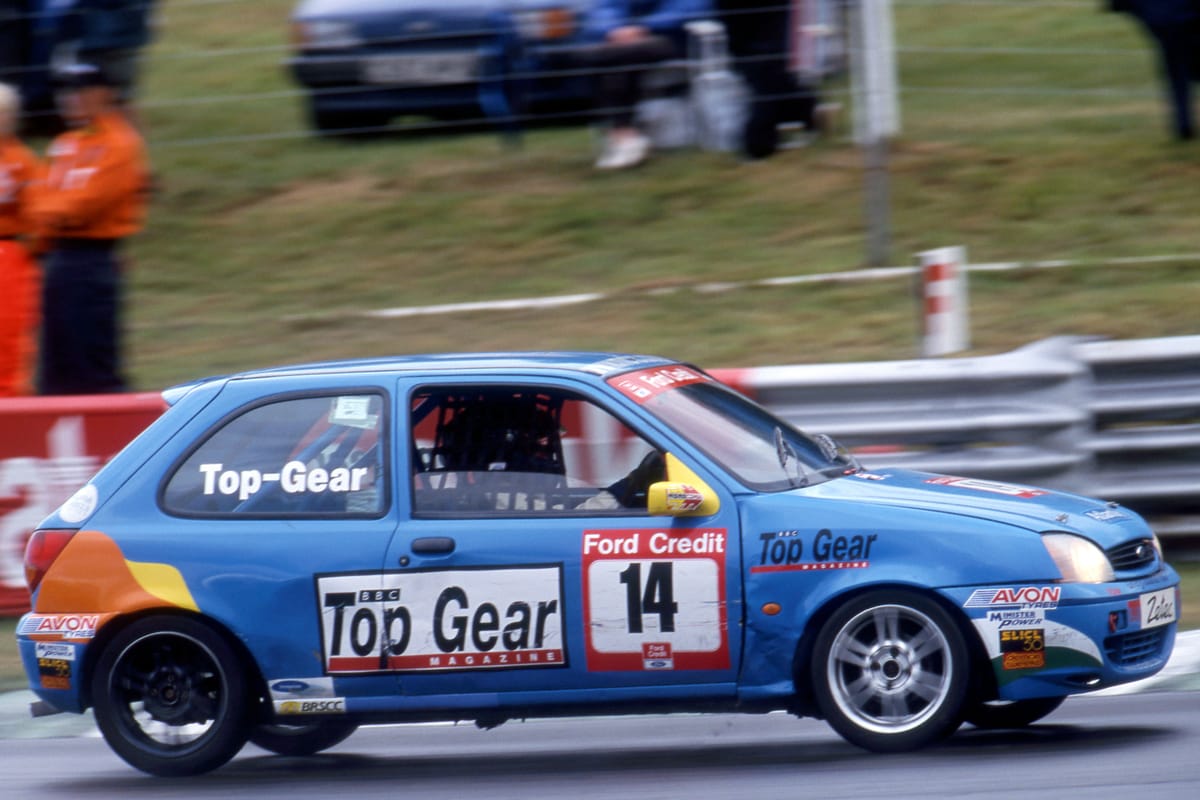
In his time, Batchelor not only raced in the BTCC under the alias of first a TV programme (Top Gear) and then a national hardware store (B&Q), but he also dabbled in politics, stand-up comedy and, perhaps most infamously, in lower-league football club 'ownership'.
And all of this from someone who, in his own words to The Guardian's David Conn in 2008, was "a toilet-roll salesman with nothing more than a load of debt".
Pinning down exactly who John Batchelor really was is no easy task. He seems to have been loved and loathed, although perhaps not quite in equal measure (with more than just a nod to the latter of those two stances).
But there is no doubt that he was in possession of a peculiar kind of magnetic charisma that appears to have been fuelled, for some of his adult life at least, by industrial amounts of alcohol. It was this last fact that ultimately contributed to his early death at the age of 51.
His legacy is one of a quirky cyclone of deals, obtuse schemes mixed with frankly unhinged ambition, delusions of grandeur and an obsessive quality of believing in projects which were sometimes nowhere near capable of coming to fruition - or indeed compatible to any business reality at all.
Indeed, you might say this is the story of several men. John Batchelor, John 'Top Gear', John B&Q, John 'Austin Powers' Batchelor and probably many others still yet to be officially known or recalled.
A different kind of life
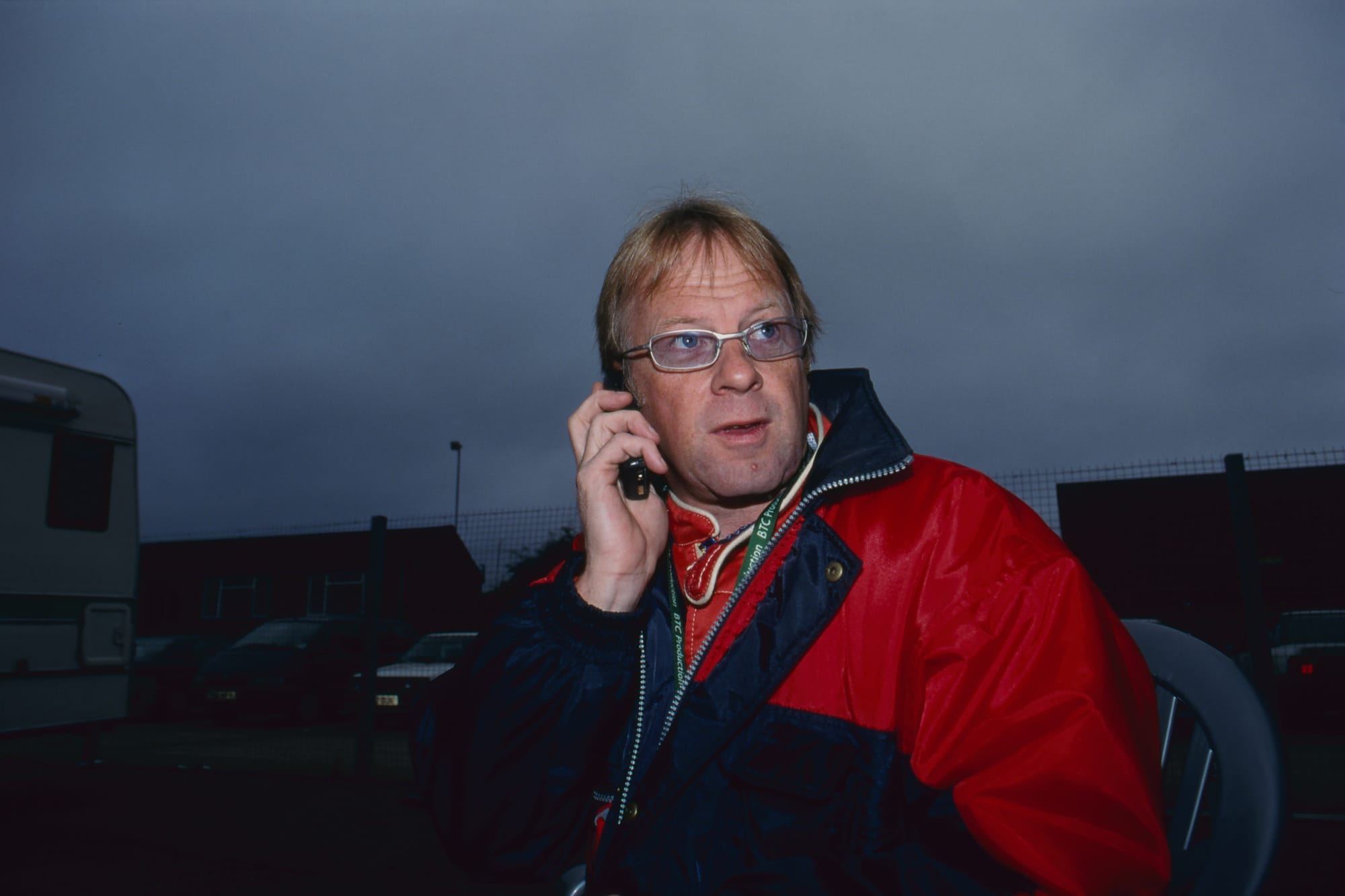
Batchelor was born in Sheffield in 1959. His great-grandfather, William, had founded Batchelor's Dried Foods at the turn of the 20th century and Batchelor was related to Ella Hudson Gasking, née Batchelor, a prominent businesswoman and industrialist.
According to a Daily Telegraph report in 2002, Batchelor's father was the food group's sales director until 1959 when he left to set up a company importing timber from Portugal.
"The outfit went bust in 1976 and when Sheffield-born Batchelor returned home from an exchange year in Oregon at 17, he was sent out to work, selling insurance door to door in East Lancashire."
But Batchelor wanted much more and set up the Systems Hygiene initiative as a "janitorial supplies" company, building it into the biggest independent supplier in the north of England before selling it in 1999.
Just prior to that, Batchelor had stood in the general election in 1997, running to be the member of parliament for Blackburn for the Common Sense Sick of Politicians Party, coming in last place in the constituency after winning 0.8% of the vote with 362 votes.
At a similar time, he also made several appearances in local clubs running a comedy routine that a fellow performer, Jamie Greaves, told The Race was a mixture of "rambling anecdotes about door-to-door selling" and "awful jokes in a Robin Asquith confessions style that was well out of date even in the '90s".
By the millennium, Batchelor, a Burnley FC fan, was turning his attention to more glamorous pursuits, firstly motor racing and then football. Indeed, he often stated himself that by the late 1990s he had endured a kind of midlife crisis, with the upshot being he needed "more excitement".
Neither motorsport nor football had any idea what was about to hit them.
Racing's Austin Powers
"A truly dreadful racing driver, in fact he was woeful."
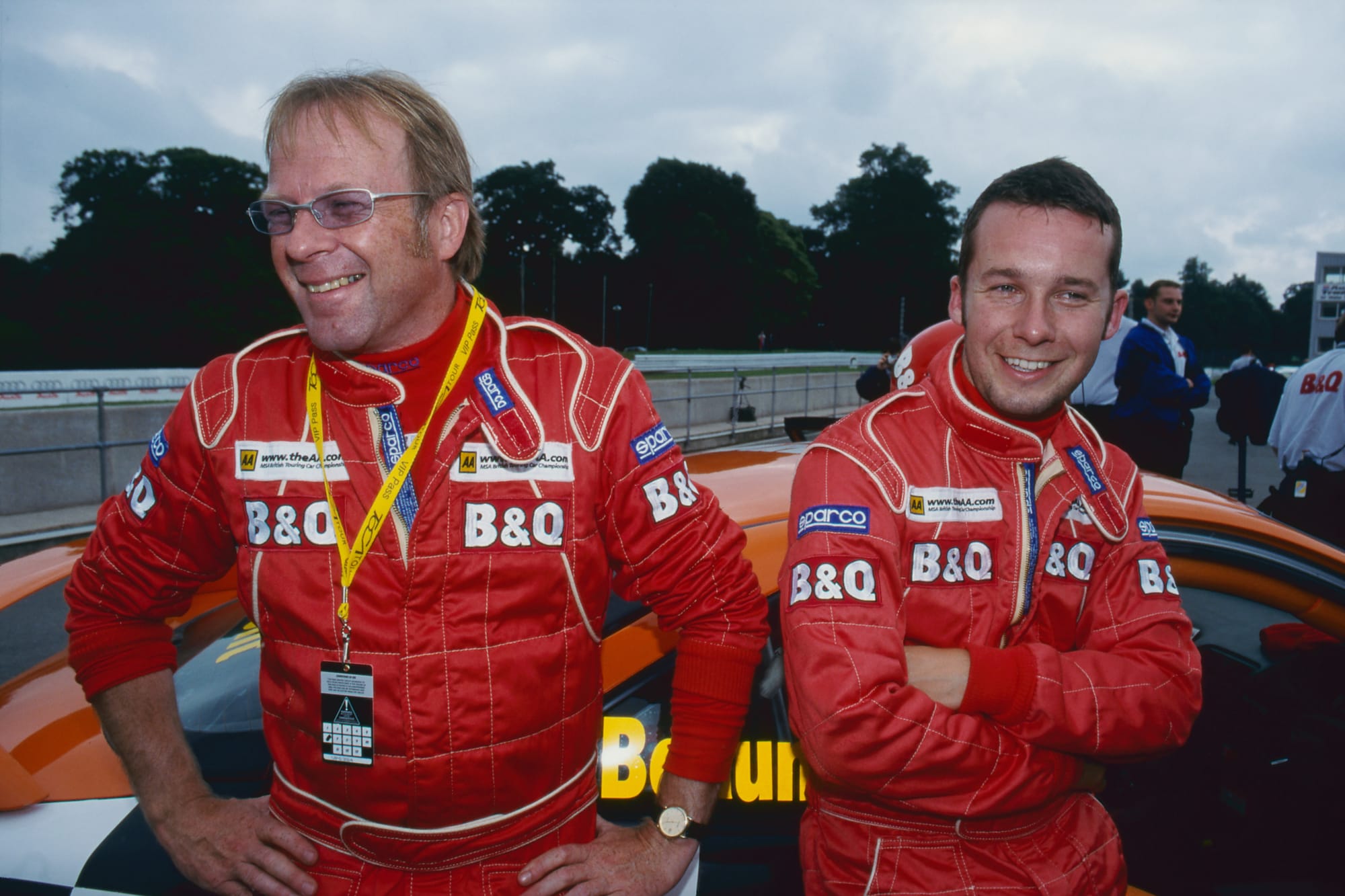
That's the verdict of Batchelor's team-mate in the BTCC, Nick Beaumont.
This slight is in fact said with some quizzical fondness, as Beaumont amusingly recalls one particular "terrifying" incident when they were competing against each other in Ford Fiestas in the late 1990s.
"It was John and Maxi Jazz from Faithless, who were always fighting against each other at the back of the field," says Beaumont.
"I will never forget when we did the night race at Snetterton one year, supporting British Touring Cars. I was coming down the back straight and all of a sudden there was a car coming towards me with headlights on!
"John and Maxi had hit each other, and then rejoined, but they both came the wrong way down the track. 'John, what the hell were you doing?' I asked. He goes, 'I just didn't know which way I was going'."
Beaumont clearly has affection for his former rival, entrant and colleague, saying that Batchelor was "a very colourful bloke, who helped a lot of people along the way".
In fact, Beaumont feels that Batchelor "isn't really given credit for what he actually did because he was very proactive in trying to help younger, up and coming drivers".
Batchelor's competitive itch had initially been scratched at Oulton Park, where he undertook some initial courses and track days in around 1997 as part of his self-confessed midlife crisis. As is often the case, he got hooked on racing and by 1999 had entered his first full season in the Super Road Saloons Championship.
Having met Batchelor at Oulton Park's racing school, Beaumont helped him understand racing more than his clearly initial lacklustre skills behind the wheel evidenced.
"One day I got a random phone call from him and he says: 'I've pulled off a deal, but you've got to change your name'," recalls Beaumont.
"I was like, 'This isn't really for me but, OK, I'll listen'."
It was Benson and Hedges, the tobacco giant, and Batchelor's simple but comically ingenious plan was for him to become Mr Benson and Beaumont to be Mr Hedges in order to get around the tobacco ban coming in at the time.
Benson and Hedges, then still in Formula 1 with Jordan and up to its own tricks with wordplay such as the memorable 'Bitten & Hisses' moniker, ultimately pulled the plug on Batchelor's deal. But undeterred, Batchelor dug in again and managed to charm B&Q, then the UK's largest hardware and DIY business, into a sizeable deal to sponsor a new team in the BTCC.
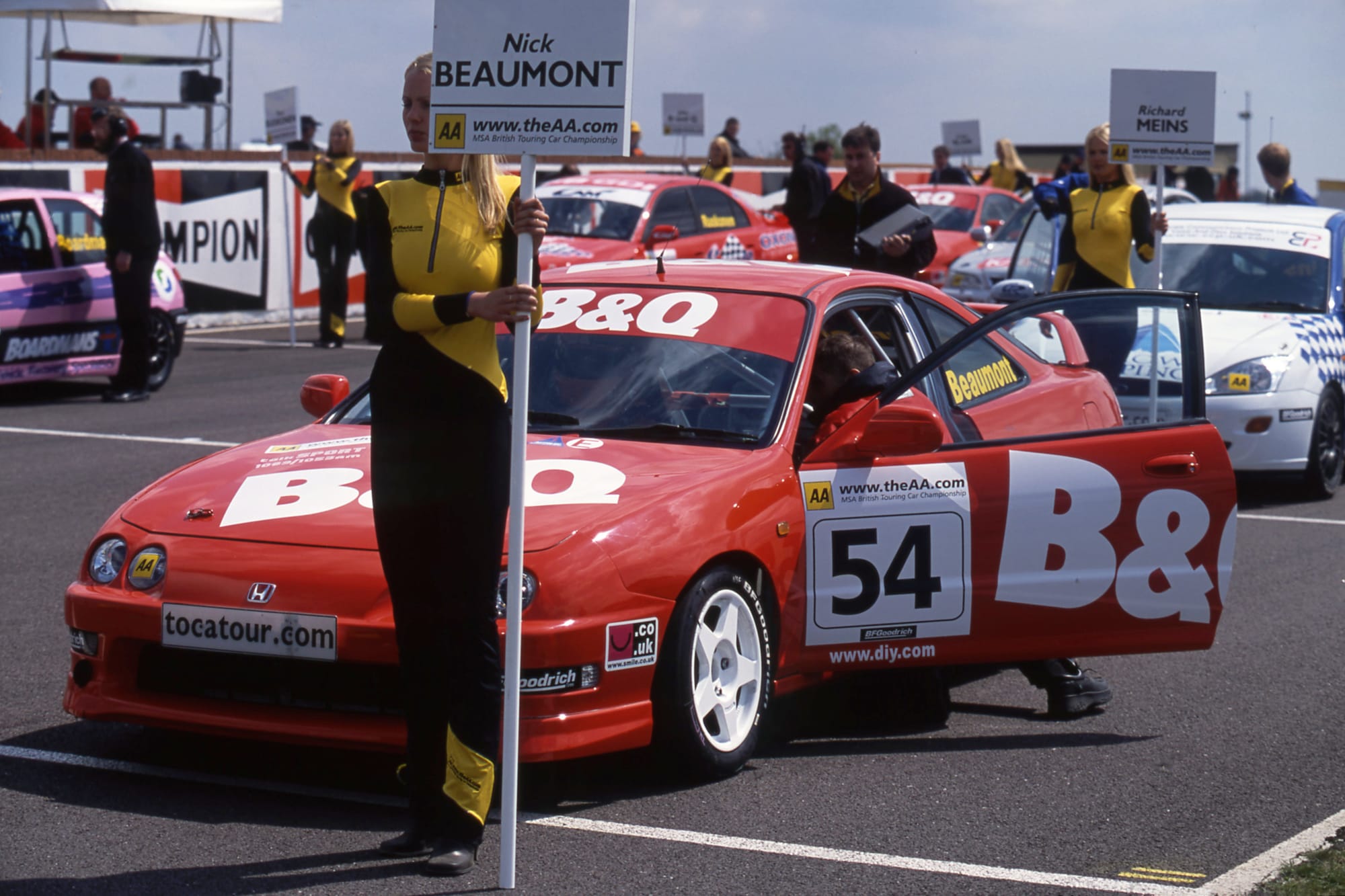
"It was a lot less budget than Benson and Hedges, hence why he went and got two Honda Integras and did the production class," says Beaumont.
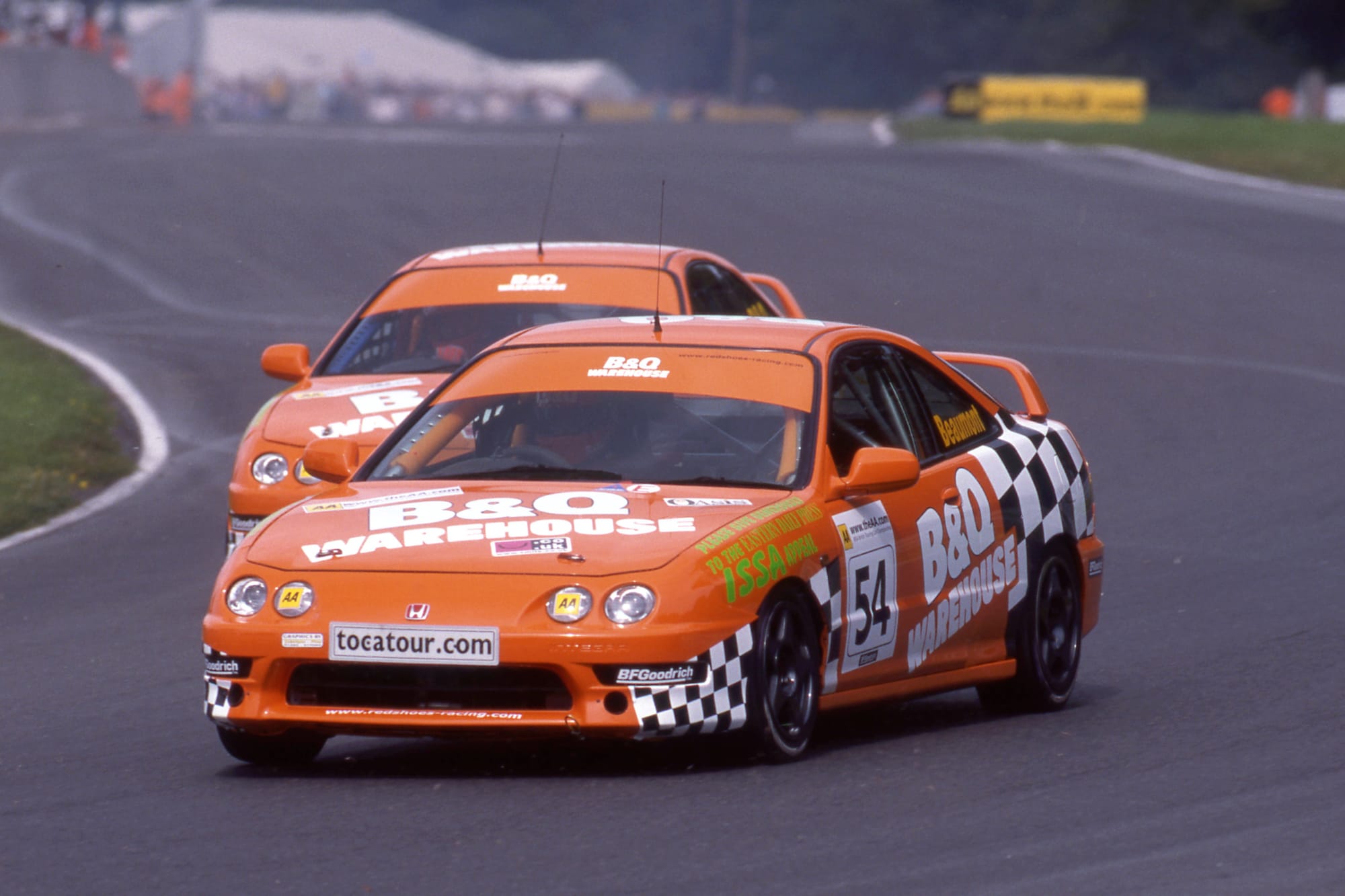
"But this was the time when B&Q were changing brand colours from red and white to orange. John played a blinder as he got the marshals to all wear B&Q caps as they matched their overalls.
"He was really clever on stuff like that and at Silverstone he got up early in the morning and got a load of people to go and put a B&Q cap on every single seat in the grandstands!"
The 2001 BTCC witnessed the Jason Plato vs Yvan Muller rivalry really kick off and it continued to gain strong viewing figures on British TV, something which Batchelor was thankful for in terms of exposure for his sponsor, but less so for his efforts on the track.
His results were extraordinarily modest. An eighth place in class at Donington Park in July (13th overall) was the highlight amid several clashes, excursions and generally poor pace which showed little sign of improving.
Beaumont meanwhile was at least semi-competitive, grabbing a sixth place overall - second in class - at Thruxton early doors and then regularly fighting in the top 10-12 of the oversubscribed production class that included some strong drivers such as Simon Harrison, James Kaye, Mat Jackson, Rob Collard and a one-off from future three-time series champion Gordon Shedden.
But at season's end, Beaumont, Batchelor (running under his John B&Q pseudonym for the whole season) and occasional third driver Joanna Clarke contributed only paltry points to end the campaign a lowly ninth in the production teams' standings.
Beaumont has numerous mad-cap anecdotes about his former team boss but perhaps one of an incident in which Batchelor appeared to mistake road for racetrack is the most illuminating.
"We were all going from the circuit back to the hotel from Silverstone and John had a little Mazda MX5 with a Union Flag painted on it," recalls Beaumont.
"We got this phone call and it was John who very calmly told us, 'Right, lads, I'm at the police station and in a bit of bother'.
"When we asked him why he told us quite calmly that he'd spun his car coming off a roundabout on the way back to the hotel. He was in his full race suit and the police weren't that impressed with him.
"They had this guy dressed in full race suit, looping his red, white and blue Mazda off the road. So obviously he became known to us as Austin Powers from that point on.
"It was hilarious because he was just one of the worst drivers you've ever, ever met but also one of the nicest guys with it. Just so happened he was racing in the BTCC at the time!"
Swapping blue flags for corner flags
In 2001, York City Football Club was at a kind of crossroads in its then 79-year history.
For the majority of that time, it had skirted around the lower leagues of English football, offering only the occasional flicker of the big time, notably in 1955 and 1985 when its FA Cup heroics hit the headlines, in the first of those instances by getting to a remarkable semi-final against Newcastle United.
A single season in the old Second Division (now the Championship) in 1974-75 was a novelty. Four years later the club, based at the cosy Bootham Crescent in the heart of the Roman city, was applying for re-election, a process in which it would essentially beg to stay in the football league and therefore remain a professional side.
Despite a modest following, which hovered around the 3000-4000 mark on a good day, York City was and still is a proud football club.
In a city that welcomes more than eight million tourists a year, that generates £1.7billion, supporting almost 17,000 jobs, York has bigger things on its agenda than football, and it's therefore no wonder it has remained on the fringes of the professional game.
In 2001, Batchelor was presented with what he saw as a great opportunity to add a new layer of spice to his midlife-crisis odyssey at Bootham Crescent.
The actual validity and motivation of his ambition to own a football club is in dispute even to this day but what is known is that he had previously looked at least one other club: Carlisle United.
But it was York City that properly caught his eye in 2002 amid the height of his BTCC exploits and he bought the club for £1 from the then majority owner Douglas Craig.
Craig, who died in May 2025, had lost business patience with the club he had served as chairman since 1991.
On one occasion, Craig threatened to close the club down but via a series of complex legal moves he and fellow stakeholders in the club had transferred all the club's assets, including the Bootham Crescent ground and land that it was on, to a new company called Bootham Crescent Holdings (BCH).
This became a key detail when in March 2022 Batchelor became the new owner of the club, although crucially this did not include Bootham Crescent itself. The transaction was reported to have been completed for the token £1 previously mentioned, though some reports say as much as £50 changed hands!
Whatever the financial detail, Batchelor's brief time in charge can be best described as fitfully chaotic and it ended just nine months later with a host of recriminations, absurdist plots, and administration.
Prior to that, though, Batchelor wasted no time in activating wandering plans to have a base for a racing team at Bootham Crescent, a change of strip that incorporated a chequered flag, a range of branded women's lingerie and, perhaps most bizarrely of all, a change of name to York City Soccer Club so that the club could be marketed in the US.
James Richardson, who in 2002 was a young commercial manager at Bootham Crescent, initially took Batchelor at face value.
"John didn't like tradition or anything that had been done at a football club for a long time," Richardson tells The Race.
"He wanted to rip it up, including the logo. 'We don't like spaces in between York and City do we?', it was that odd! So, he changed the badge and he changed the shirts. Changed lots of things in fact.
"Anybody within the club who questioned this, he just said that we were 'stuck in our old ways' and 'you have to see the light and follow me'. That was his schtick."
Many York City fans wanted answers and clarity about this new presence but they never really got that. There was later an inquiry into Batchelor by the Department for Trade and Industry, brought on by some York City Trust supporters, where it was revealed he had made a profit of over £300,000 from his association with York and while the club was enduring financial difficulties he bought a house for £250,000.
"Basically, I was lying to them. There is no way of dressing it up," confessed Batchelor in an interview with The Guardian's David Conn in 2008.
"I have realised if you follow the right procedures you can borrow against a company's assets to take it over. I target companies in financial distress. We try to fix them - some of my companies have gone on to do very well and I have sold them. Where I can't, I can arrange a 'pre-pack', agreeing beforehand what I will pay for assets, then put the company into insolvency. The suppliers and creditors fall away and I am left with a clean company."
Naturally, this left a bitter taste in many York City supporters' mouths and Batchelor's name was, and to a large degree still is, mud. And that is being kind.
By the end of 2002, players weren't being paid and the club had lapsed into administration. It was ultimately only saved by the collective help of the Supporters Trust, which still owns 25% of the club to this day. The team is third in the National League at the time of publication and looking for a way back into the football league.
Back in 2002 and 2003, as York City faced the abyss of complete deletion, its brief period in the madcap world of John Batchelor came to an end. The man himself made a swift exit.
"When the proverbial s*** hit the fan he disappeared and we never saw him again," remembers Richardson.
"The club secretary Keith Usher addressed everybody and said, 'I'm really sorry, we're going into administration'. Batchelor was gone, never seen again, and that fitted entirely with his character."
"Conman is possibly too strong, but it's not far off," adds Richardson. "What was the end goal? Because although we didn't know he didn't have any money, he must have known. So, what the hell was he thinking he would be able to do here?"
There is no evidence to suggest that Batchelor really had a plan other than to, in his own words, benefit financially from the despondent situation.
'Yorkie' the Lion
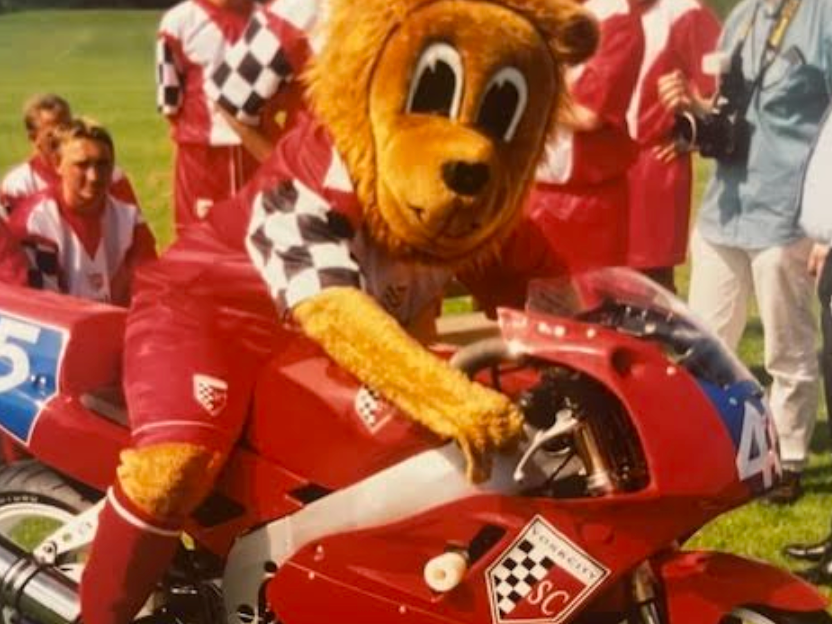
One man, or rather lion, that got to see Batchelor's York City adventure close-up was Steve Ovenden.
Go to most York City games and you'll see a bright yellow, six-foot-tall lion somewhere around the ground. York City's mascot is a fun addition to the crowd and is held in fond regard up and down the country as The Minstermen chase a return to the football league.
It seemed quite apt that Batchelor and the giant furry Lion should first meet in a pub back in early 2002. The Winning Post, on Bishopthorpe Road, is a famous boozer locally where legendary punk bands such as The Stranglers, The Jam and Generation X thrashed their sounds across the unmistakable 1930s built bar, all within a stone's throw of York Racecourse on the Knavesmire, to which it claimed its name.
From that point on, 'Yorkie' - or for sanity's sake let's go with Ovenden - was on a wild ride with Batchelor, one that took him to Silverstone, Croft and several other special projects that drew a sketchy link between the UK's premier national motorsport series and lower league football.
One of Ovenden's first missions as 'Yorkie' was to support Batchelor in the 2002 at the second round of the season at Oulton Park.
"While I was in full 'Yorkie' costume he came up to me and goes, 'I'd like you to be a grid girl'," says Ovenden.
"So, I did. All the other teams have got these grid girls and there I am holding up the board in front of Batchelor's car before the race starts. It was great fun."
That was until Batchelor - or 'John B&Q' as he was actually officially entered - failed to come around after the first lap.
Instead, Ovenden, still in full 'Yorkie the Lion' guise, watched helplessly as the wreckage of the Honda came back in several pieces after a huge accident just beyond the Foulstons complex had catapulted a hapless Batchelor into the air and into the medical centre.
Batchelor's initial reaction was to break free from well-meaning medics and shake his fist at rival Steve Wood, who was generally nonplussed by the shunt, TV replays of which clearly showed Batchelor erratically drove across Wood exiting the chicane and essentially tipped himself into the tyrewall.
"It was so prophetic," says Ovenden. "There were loads of guests there and lots of York City people and he crashed the car on the first lap then didn't make it to the grid for the second."
The B&Q-backed team continued on in 2002 with Jim Edwards Jr, Hyla Breese, and Peter Cate, but Edwards' 10th place at Brands Hatch was as good as it got.
By the end of 2002, both of Batchelor's sporting enterprises were dead or dying and for Ovenden it was no big surprise.
"Although he was funny, Batchelor was a massive part of the downfall of York City," he suggests.
"We [the Supporters Trust] had to try and buy the ground back. Also, 'Brassy' [player Chris Brass] got the manager's job, and he was doing it with one hand tied behind his back at the age of 27.
"Then we fell out of the Football League for nine years and we always struggled to be on a decent footing.
"I blame Batchelor for the demise of York City. Ultimately, he was the one that took it into administration. He was just a really odd Walter Mitty character at the end of the day and his legacy here just looked like a kind of sick joke really."
The final deal that never came
Batchelor's ambitions in football and motorsport didn't stop with his messy York City episode and the 2002 BTCC escapades.
Even in 2008, he was eyeing a purchase of Mansfield Town Football Club. But this faltered after a bizarre disclosure that he might rename the team Harchester United after a fictional team that was dreamt up as part of a Sky TV series called Dream Team.
He even talked to Accrington Stanley, which was not enamoured with his idea of renaming them Lancashire United. Around this time, the reality was starting to bite and Batchelor was disqualified in 2010 from acting as a company director for seven years.
There was even a tenuous plan to enter Le Mans, in which Batchelor worked briefly with past BTCC champion and convicted drug trafficker Vic Lee.
A plan to bring the Chinese manufacturer Brilliance into motorsport never got off the ground in what Batchelor's former BTCC team-mate Beaumont called "a plan that never had a chance of being close to coming off, ever".
Even 'Yorkie the Lion' had been roped into a bizarre publicity stunt to try to drum up support for Batchelor's Le Mans dreams, in what has to be one of the lamest and most curious of all promotional ideas.
"He got this Vauxhall sportscar from somewhere and he told me to get in it and dress up as 'Yorkie'," recalls Ovenden. "We had the roof down and he drove me around York city centre. I was in the passenger seat waving at people and he thought it was absolutely fantastic."
By this time, the jokes were wearing thin and Batchelor was also battling alcoholism, which ultimately contributed to his early death at 51.
Rumours were even abound in motorsport circles that he may even have occasionally competed when he was drinking, although this is something refuted by Beaumont. "A lot of people said over the years that he used to race when he was drunk but I never saw that. I mean, he was bad enough when he wasn't drinking, so..."
Towards the end of his life, Batchelor spent time at a rehabilitation facility and Beaumont recalled seeing him in hospital a week before his death and essentially seeing a man in denial of his own serious situation.
"The last week that we saw him, which was a week before he died, he was still trying to buy a business and do a deal," remembers Beaumont. "And we were laughing about it, saying, 'You're never going to pull this one off, John'.
"He was still the same guy, buzzing about and seemingly full of energy, but unfortunately he never managed to complete the deal because he died the week after."
While many mourned his death, others - notably the footballing community and in particular those in York and Mansfield - clearly did not.
Batchelor was a divisive character, and there was a slightly comedic feel to his ambitions in two high-level sports. But in one respect, there are some who believe he may have been ahead of his time in some respects too.
"I can't thank the guy enough for what he did in motorsport and for me personally," Beaumont says.
"He was just a bit ahead of his time. Look at the Superleague Formula series [that race from 2008 to 2011]; John had looked at similar synergies in the past, so he was a very innovative and enthusiastic kind of guy."
But there was to be no extra time, nor one final lap for Batchelor. His brief, colourful, often chaotic time in the public eye flickered as erratically as his driving, and as unpredictably as his attempts to popularise down-on-their-luck football clubs.
Batchelor certainly found the excitement he so clearly craved after his midlife crisis. It's just that along the way he managed to do it all in such an unconventional and aggravating way that his legacy is, at best, likely to always be framed via the inventively absurd.