Why Aston Martin's car is as bad as Honda's engine
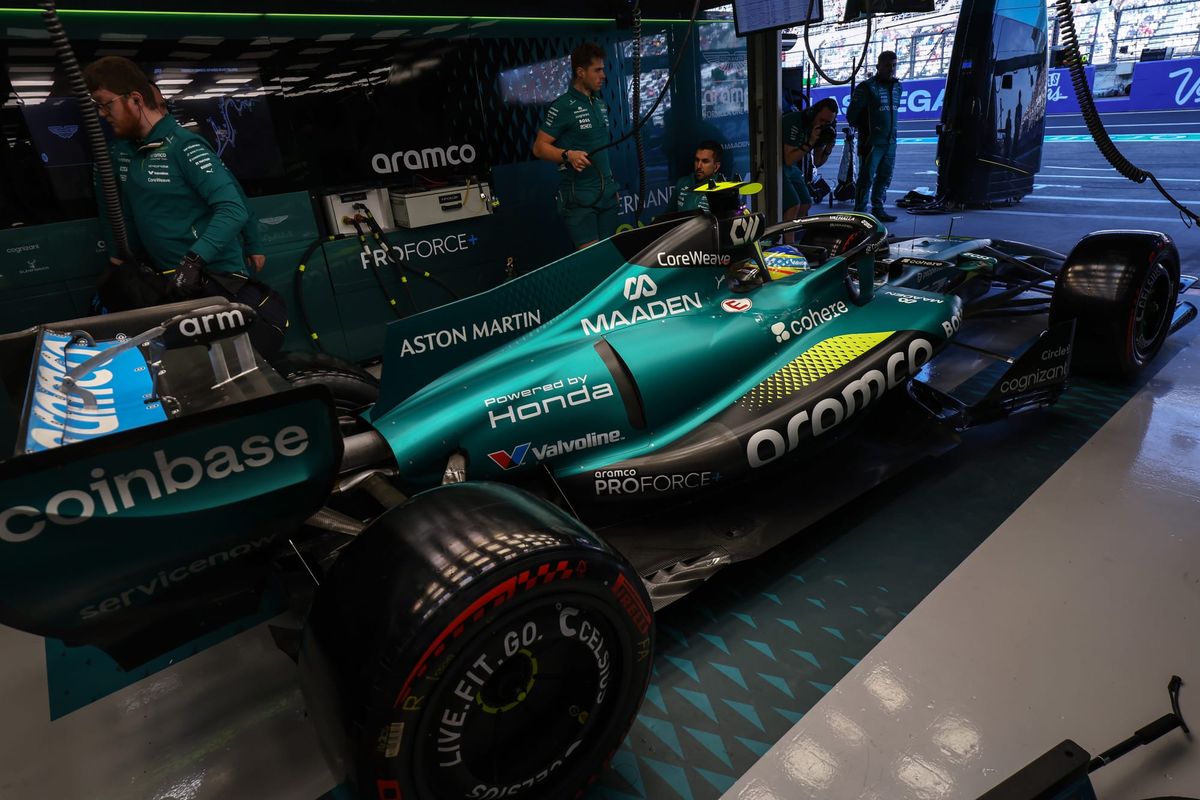
Honda's engine has been a lightning rod for criticism in a woeful start to its new Formula 1 partnership with Aston Martin.
But Aston Martin's car is at least as bad and while the prospect of short-term progress is at least greater on the chassis side, the team admits it must be "honest" about its part in the terrible deficit the AMR26 has at the start of 2026.
Honda's engine problems are well established, as it is down on power and suffers from poor reliability, but they do not explain everything that has gone wrong so far to leave Aston Martin around 3.5 seconds slower than the fastest pace in qualifying.
As Aston Martin chief trackside officer Mike Krack said in Japan: "We are not great in high-speed corners. We are not on the weight limit."
This is a chronically troubled package that gets to corners slower, goes through them slower, and accelerates off them slower. Minimum speeds being down by as much as 20km/h (12mph) to the fastest cars in qualifying at the last round at Suzuka showed that even when the drivers were approaching corners much slower than rivals, they still had to be conservative.
The downforce just seems to be surprisingly lacking for a car team boss and technical chief Adrian Newey reckoned pre-season was probably already a chassis that could run in the top 10 if engines were not a factor.
"I look at our package and I don't feel as if we've particularly missed anything," he said at the Australian Grand Prix season opener.
"So therefore I believe that the car has huge tremendous development potential in it.
"It will take of course a few races for us to fully realise that potential. We've got quite an aggressive development plan under way.
"It's fair to say that here in Melbourne we are a bit behind the leaders. Probably I would say maybe we're the fifth-best team, so sort of potential Q3 qualifiers, on the chassis side.
"Obviously not where we want to be, but with the potential to be up front at some point in the season."
There is no obvious caveat here that Newey meant 'in time we will be potential Q3 qualifiers with this chassis' once that development plan kicks in. He was talking as though that was the AMR26's immediate place in the pecking order, and it could become a frontrunner in time, but was being dragged down by the engine.
As the season has unfolded, that position has seemed less and less valid.
Aston Martin is 2-2.5s adrift of the lead midfield teams which includes Alpine, using a Mercedes engine. For Newey's claim that Aston Martin's chassis could qualify in the top 10 to be true, Honda's engine would need to be 2.5s a lap worse than the benchmark.
Nobody seems to believe this is the case, even though it is impossible to put an exact figure on what the split in responsibility really is. An equal responsibility for the deficit would put it at around 1.5-1.7s each for car and engine, but some even think the car might be a bigger problem right now.
Newey's position may have shifted since the season started, of course. Certainly there has been no attempt from Krack to side-step Aston Martin's role in the troubles.
He said in Japan: "We have some major steps to take, not small steps that we have now done with reliability." And when he said there is a "big mountain to climb", he did not just mean for Honda. Do not forget that Aston Martin is producing its own in-house gearbox for the first time since 2008, too, and this has been speculated to be overweight as well.
Separating what is car and what is engine has never been harder in F1 given how symbiotic the two parts are in the new energy-limited 2026 formula. The whole purpose of a works partnership is to have everything working together beautifully in tandem. But trying to incorporate each other's desires can also be fraught with peril.
Honda has previously said a desire from Aston Martin to make the overall engine length shorter and more compact, for example, prompted revisions to most of the engine's peripheral equipment and how it is integrated into the car.
Although the design of the engine itself did not have to be changed, these kinds of demands could be part of how Aston Martin is potentially responsible for some mechanical engine weaknesses. Another example is the chassis itself.
When Honda's engine started the year shaking itself to pieces with excessive vibrations, which in turn also caused reasonably significant driver discomfort, the finger was effectively pointed at the engine manufacturer.
As time has passed, though, the possibility of this being at least partly a chassis problem has not been discounted.
That could be the construction of the chassis itself somehow being more prone to transmitting the vibrations or, perhaps more likely, the way the engine has to be integrated with it - especially as the MGU-K and battery are mounted to the chassis.
This could be why Honda Racing Corporation president Koji Watanabe said at Suzuka: "In the test on the dyno the vibration is an acceptable level, but once we integrate in the actual chassis, that vibration is getting much more than the test on the dyno.
"So, of course [we] cannot solve the problem [with] only the power unit, so we are really closely together with Aston Martin to solve the problem, not only the power unit but also together with the chassis."
So, while Honda has underdelivered so far, it is obviously fair to conclude that Aston Martin falling so far below its own expectations is not solely the responsibility of its engine partner.
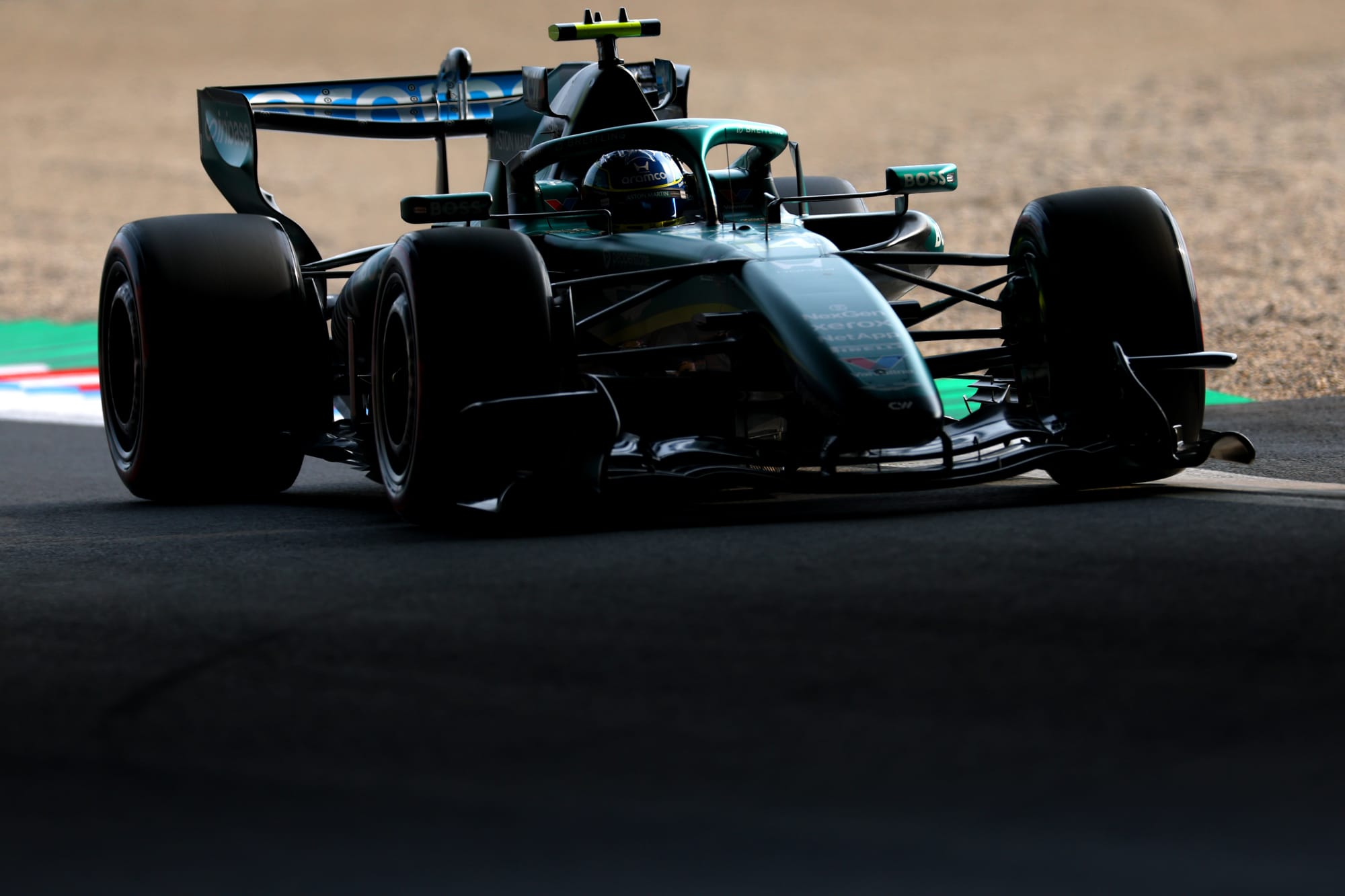
And lead driver Fernando Alonso has dropped several hints that a car overhaul could be required.
Alonso told DAZN Spain that the car is going to stay the same way "for the next 10" races, although it seems unlikely Aston Martin won't have any car upgrades at all. What Alonso probably meant is that nothing meaningful is going to change and it's the final part of 2026, at the earliest, where there could be a big overhaul, as he said Aston Martin will not change too much on this car if it knows "it will change completely in a few months' time".
As Newey claimed the car itself has a strong foundation, it will be interesting to see if Aston Martin's development will be based on that or mean having to go in a different direction. Either way, Alonso's not expecting a drastic change in fortune until after the summer break.
If there is a load of hidden goodness in the AMR26, then more track time and extensive development work could unleash it. It's fair to say this remains F1's most underexploited 2026 package because the car simply hasn't done enough laps to optimise.
And Alonso is still fully on message that there is "very, very huge potential on the car and on the engine as well". He's referenced McLaren going from being at the back at the start of 2023 to scoring podiums that year, then emerging as a race and title-winning force.
And while he admitted that is an optimistic reference for Aston Martin as its circumstances are so different, it is certainly true that a rubbish start to the year doesn't have to mean the whole season's a write-off.
April is also a very useful gap to make some progress. It will allow a load of work already ongoing to hopefully come to fruition, with some weight to be taken off the car by Miami and maybe car upgrades to start addressing the high-speed load and balance problems.
Krack said "you cannot produce miracles" in five weeks, though, so whatever progress can be made is likely to be minor compared to what Aston Martin will hope is possible over the rest of the year.