Honda's surprise engine gains for Aston Martin
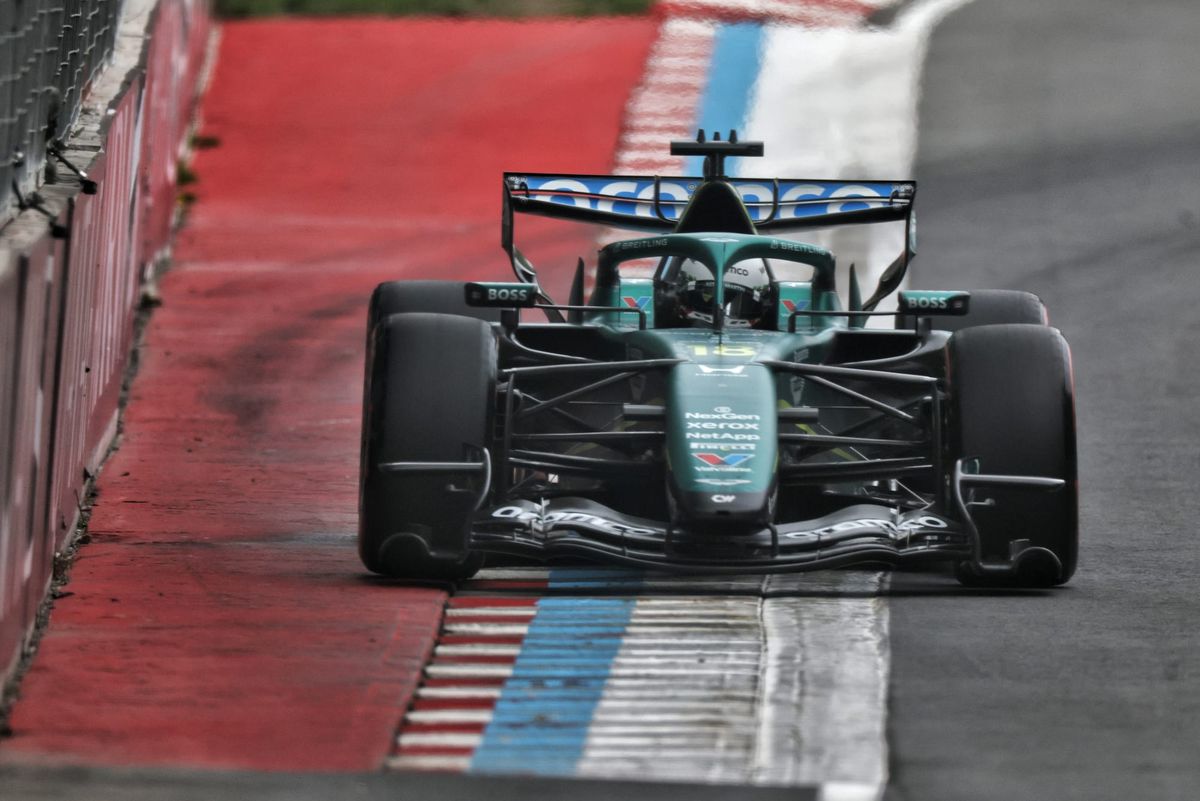
Honda may not have its first proper engine upgrade available until around Formula 1’s summer break, but it says driveability improvements should arrive as early as this weekend’s Monaco Grand Prix.
Honda has had a challenging start to the 2026 campaign with Aston Martin, as it has battled reliability problems triggered by excessive vibrations.
However, a lot of progress has been made in addressing the early difficulties and that means the focus has shifted to delivering performance gains.
Work is ongoing at Honda’s Sakura R&D facility in Japan to unleash an engine upgrade for later in the season, but that does not mean it is sitting back and not trying to make progress before that arrives.
In fact, Honda’s trackside general manager, Shintaro Orihara, has revealed that engineers in Japan have found a way to improve driveability, which comes ahead of a Monaco weekend where that characteristic is really important.
“Driveability is very critical in Monaco," said Orihara. "So the positive thing is we found the way to improve our driveability.
"So in HRC Sakura, our development factory, they will work hard to improve by Monaco - that is our main target.”
While no single factor has held back Honda on the driveability front, Orihara said that efforts across a number of metrics had helped unlock more performance.
“It’s data settings, for example, and calibration," he said. "So, ignition timing, lambda [air-fuel ratio] setting, injection timing. We have a lot of parameters to control driveability.”
Honda has also "conducted specific driver-in-loop sessions" at Aston Martin's Technology Campus to optimise its energy management settings for Monaco.
“On the cooling side, Monaco’s slow speed sections make this challenging," Orihara added.
"We need to find a good cooling specification, working closely with Aston Martin [fuel supplier] Aramco to achieve this for the power unit in clean air and heavy traffic, which is common here."
Upgrade plan
While the short-term work is on improving driveability, Honda’s efforts for the planned engine upgrade will revolve around improving combustion and reducing friction.
“We know where we need to improve," said Orihara.
"For example, on the combustion side we have some ideas to improve and we have seen some positive signs on the dyno data.
“Also, we need to reduce friction to improve performance. So that type of list we have now in the factory, and we keep working to improve those things. Then once we get something, we will boost our development phase.”
Asked about the timeframe for the next development step to come through, Orihara said: “Engine development is a long-term job, but it won’t be at the end of the season.
“At some point, let's say around the summer shutdown, we will see some improvement. That is our target.”
Longer term, Honda says its development plans for 2027 will not be impacted by any potential change to hardware for next season aimed at improving the current rules.
The FIA is currently trying to pull together a proposal to shift the 50/50 power ratio between combustion and battery nearer to 60/40 - but it does not yet have the necessary support from manufacturers.
Honda appears to be on the fence over the issue, with Orihara saying that its job will be unchanged by whatever is finally decided by the FIA.
“Performance-wise, the direction is the same,” he said. “We need to improve the combustion performance - and it doesn't matter if it's 60%, 40%, or 50-50. We need to improve our combustion.
“Then, if the fuel flow rate is increased next year, we will just do additional tuning. But the direction is the same.
“We will keep working hard for this year, and that will connect with next year's engine development. But reliability-wise, it's maybe quite challenging if we had more fuel flow rate. That is a more challenging point from this regulation change.”