Why the Isle of Man TT has suspended sidecar racing
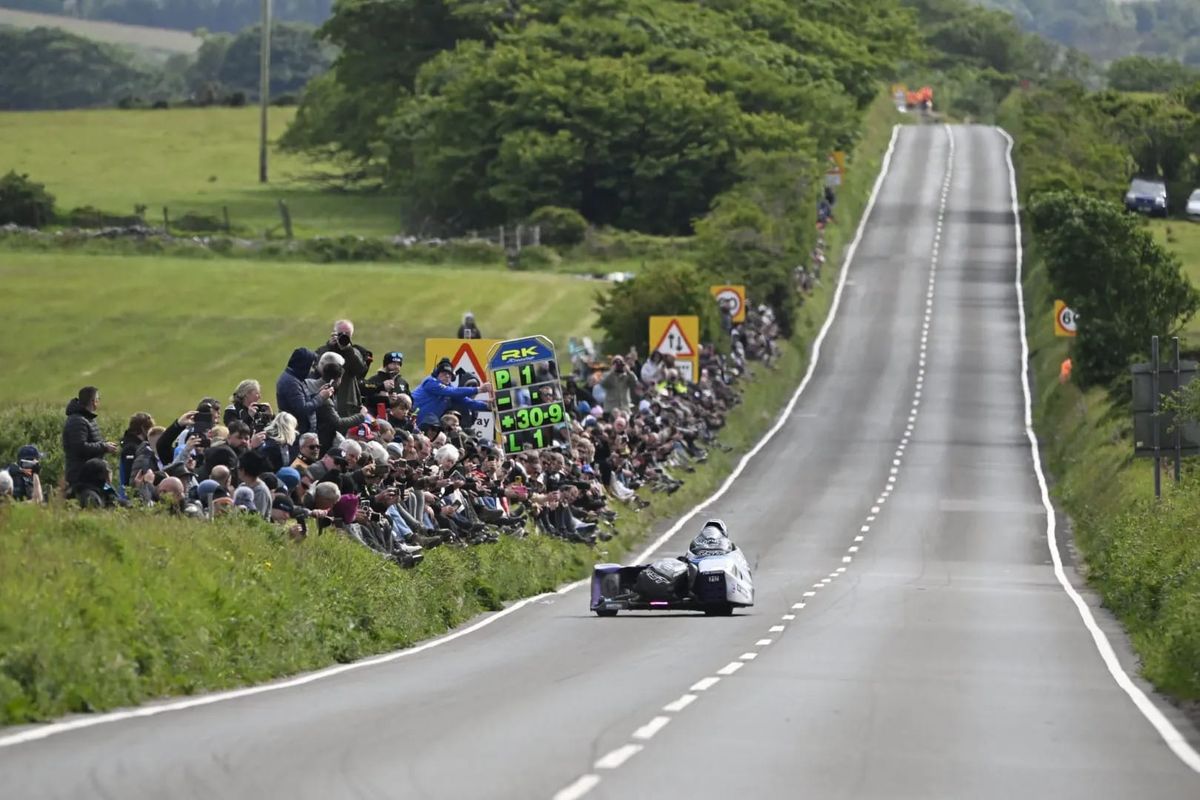
The news that the sidecar class has been suspended from the 2026 Isle of Man TT came as a huge shock - not just for fans, but for the TT paddock, given that regulation changes had already been put in place for this year’s event to try to slow the class down.
Those changes were put in place after a big qualifying crash 12 months ago for victory contenders Peter Founds and Jevan Walmsley, but with a very similar crash for dominant pre-race favourites and quadruple back-to-back winners Callum and Ryan Crowe during this year’s practice week, organisers took the unprecedented step of pausing the class’ participation.
The next step is ‘an immediate technical and operational review to assess the circumstances surrounding the incident and the continued participation of the Sidecar class at the event’.
Over the last few years, the sidecar class at the TT has made big leaps and bounds forward in terms of performance. Where there was no TT action in 2020 and 2021 due to COVID, it gave the top sidecar outfits - led at the time by Tom and Ben Birchall - the opportunity to do a lot of experimentation while everyone was stuck at home in lockdown.
At that time, they weren’t just the fastest two guys racing around the TT but were also the leading TT sidecar developers, having taken over famous Swiss brand LCR's production and started building their outfits as well as racing them.
Experimenting with aerodynamics, they had started to do some things to smooth out the airflow around the front of the bike to create better downforce, mainly working with fairing shape.
The class saw the benefits of that when the Birchalls came back in 2022 and had an exceptional TT that essentially led to their Project 120, becoming the first outfit to do a 120mph lap around the TT course in 2023.
They’re able to do that because, in many ways, the sidecar is the last true prototype class in road racing. The rules are considerably less restricted, not just in terms of custom chassis and aerodynamics, but also with features like engine development, where they're running supersport powerplants, but with an even greater flexibility to tune.
That in turn triggered something of an aero arms race. TT organisers were aware of this and there were big changes put into this year's regulations to try and slow things down again, by fitting restrictor plates to the engines to deliver less fuel with the intention - according to the organisers - of reducing lap speed by as much as 3-4mph.
However, that, it turns out, didn't really address the root cause of the problem last year with Founds and Walmsley, and then again this year with the Crowe brothers.
One of the key areas they’ve been working on is a Formula 1 style flat floor, a sealed unit underneath the sidecars that can create downforce in a manner more akin to F1 than MotoGP.
However, with the TT far from a flat and smooth race track and featuring numerous very fast jumps (like Crosby, where the Crowes crashed, and Rhencullen, where Founds and Walmsley were lucky to escape last year), those areas have the unintended effect, especially in high wind conditions, of creating lift rather than downforce when the front wheel comes up off the ground.
Importantly, the designs in question are not prohibited under current TT regulations, even with 2026’s major update. The latest rules continue to permit these aero floors, meaning the machines involved were operating fully within the existing framework.
Despite that, several teams had already raised concerns about the risks associated with that kind of design prior to the recent crashes, and had opted against pursuing similar solutions of their own.
“It's a careful, planned-out process,” Tom Birchall told The Race of the Birchalls' own aero development process earlier in the week before the Crowes’ crash and the subsequent news that the class would be suspended.
“It's not just been a stab in the dark, because it's unknown territory, and what we don't want in sidecar class is blokes in sheds making aerodynamic packages. It's got to be really spoken about openly with everybody - because if it's not right, it needs addressing pretty soon.
“We saw some difficult pictures last year with Founds and Walmsley. I think them doing what they did, what they thought was right, was maybe just a bit of misguidance. We've got to be careful with that, and ideally somebody should get involved and give a good overview of all of it.
“For guys like Ben and the Crowes, they came up with a package last year and they've had outside help with it. But not everybody can achieve that, so we just need to monitor that for everybody really in the class. At the end of the day, what the guys are putting a sidecar through at the TT is not like anything else in the world.”
A number of potential solutions have already been suggested by the sidecar paddock, too.
One proposal would see the banning of fully enclosed floors in favour of more open or perforated structures, allowing air to pass through the chassis and reducing the potential for significant downforce - or unintended lift - to be generated.
Another, more comprehensive option would involve the introduction of a homologated aerodynamic bodywork package, similar in principle to regulations used in NASCAR, where all competitors would be required to use a standardised, tested shell proven to meet specific aero criteria.
Finding a solution is viewed by organisers as essential for the long-term future of the sidecar class at the Isle of Man TT. Throughout the week, they’ve been keen to emphasise that the current pause and review of the category should not be interpreted as a permanent cancellation. There remains a strong commitment within the organisation to ensuring sidecar racing continues at the event.
TT Clerk of the Course Gary Thompson has spoken openly about the desire to retain the class. Beyond their status as road racing's last true prototypes, sidecars occupy an important place within the TT schedule, providing a break in competition for solo riders while delivering a unique spectacle for fans.
“We’re not saying that’s it for sidecars,” he told Manx Radio. “We’re going to have a consultation process after this event, and see what we can do to stabilise sidecars, to make them safer, and hopefully for them to continue.”