This part of 2026 F1 car designs will change massively for 2027
Promoted by Brembo
So much of the focus of the 2026 Formula 1 regulation changes has been on what the radically different engines and the moveable aerodynamics meant for designs, driving styles and the nature of the racing.
The knock-on impacts on other car components and their design trends have gone relatively under the radar but are still considerable, having a big influence on car performance, and are the subject of frantic behind-the-scenes development work.
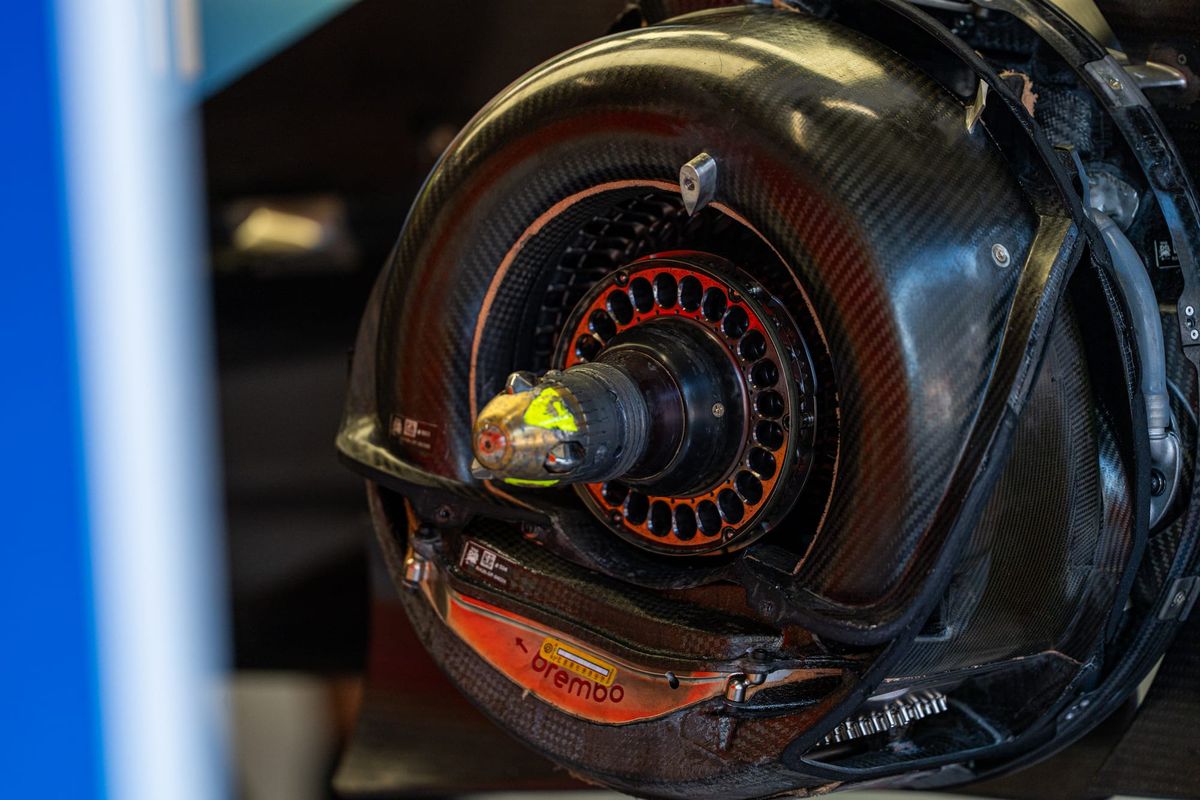
For instance, the emphasis on energy harvesting under braking has prompted a huge change in the role of the rear brakes. The energy harvesting effect under the 2026 regulations is so powerful that last year some teams wondered whether they’d even need traditional rear brakes at all.
To avoid things being taken to extremes on this front, the FIA put a maximum brake disc thickness in the rules and mandated that the system itself must produce a minimum amount of power - 2500Nm of torque at each rear wheel without assistance from the power unit or MGU-K.
But the lower usage of the rear brakes has a big influence on their temperatures, as Brembo F1 race engineer Pavan Stefano explains.
“This year the temperatures on the rear are very, very low compared to the past,” he told The Race.
“An optimal range of the temperature for the carbon material is from 200-250 degrees to 500-550 degrees for the starting temperature of the braking. This year, on the rear, we noticed a lot of braking under 100 degrees, especially some races. And the average is 150.
“So it's not easy for the carbon material, because at that temperature it’s difficult to have consistent behaviour of the material.”
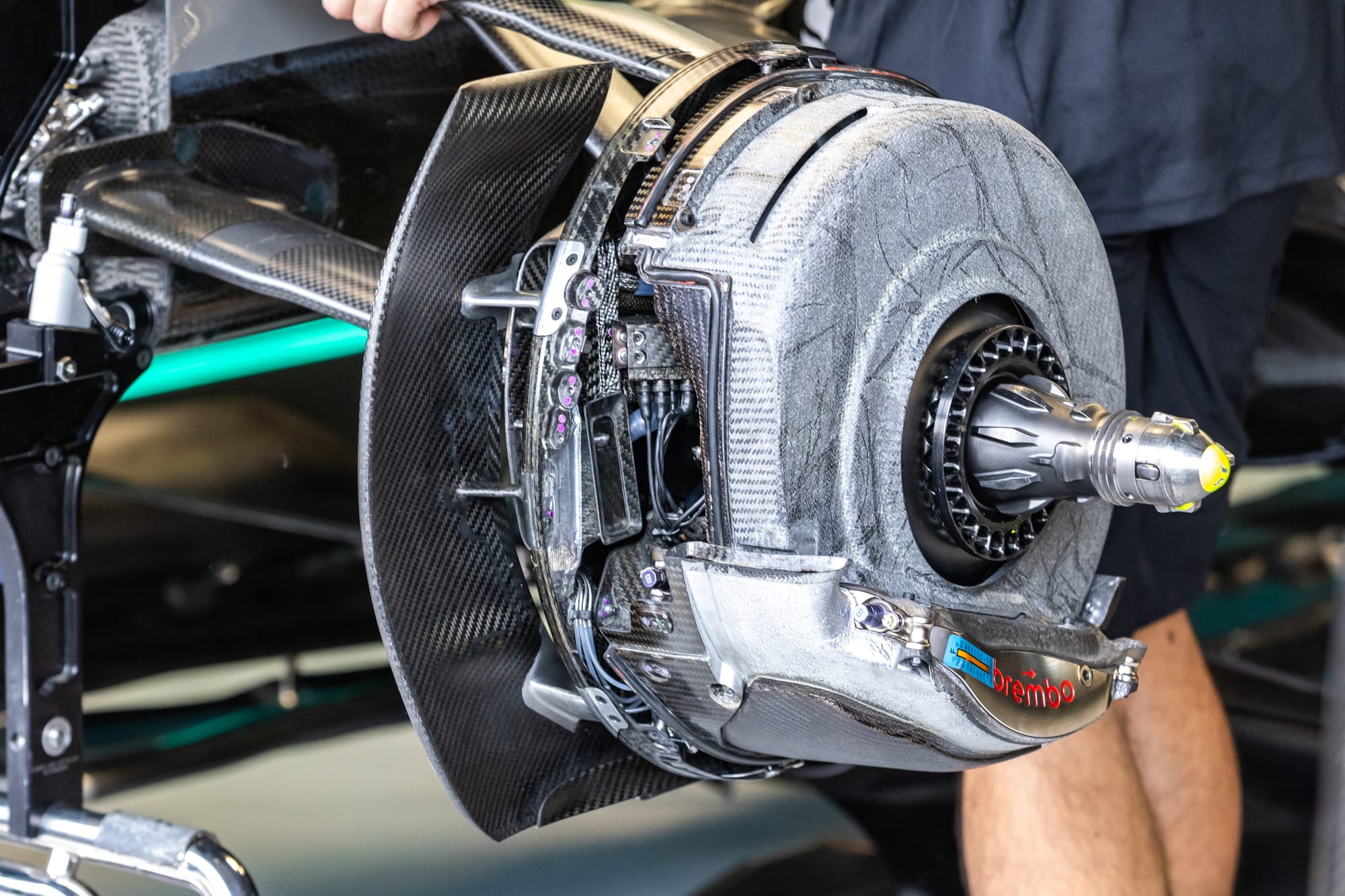
That feeds into drivers’ comments through the season - in particular championship contender George Russell - about unpredictable behaviour from the brakes when they’re running cool.
“For the driver it's difficult to find a good feeling of the brakes because there is no chemical behaviour but it's more abrasive, so it's mechanical behaviour from disc to pad,” Stefano said.
“This also doesn't help for the wear rate because our material has characteristics of a very, very low wear rate, but we see that in races that are very cold this wear rate increases.”
Adding to this challenge is that Brembo is working across different design choices among all the teams it supplies, and the teams themselves have learned far more about the brakes’ behaviour in real life over the opening 2026 races than could be ascertained through simulation.
“It was a little difficult at the start of the season to imagine the temperature,” said Stefano.
“We had our thinking about the temperature, but we saw a lot of different designs from one team to another team, and a different dimension of the discs, a different dimension of the pads, also for the callipers.
“It was very difficult also for the team to predict the torque, the pressure, the temperature that they had to face at the back.
“Since the first day of the test in Barcelona, some teams requested some changes on their braking system in order to solve the different temperatures compared to the past.”
Teams’ differing energy recovery strategies plus drivers’ and cars’ different sensitivities to brake warm-up, and how all of that has evolved with more and more on-track experience of these cars means Brembo’s work has been relentless. Some of it will only come to fruition in 2027.
“We are trying to develop new material,” said Stefano.
“We are constantly studying new material, in order to apply in a better way to the conditions that we see on the track.
“If we have to rework some discs, some parts, in order to change the geometry, it's easier. But if we have to produce new material, the lead time is longer. It's difficult to put in place new material in two to three months. It's more something that we study for the future.”
One definite change Stefano is expecting is around the size of teams’ brakes. There was an expectation last year that many would go for extremely small rear brakes given their reduced role. Now many feel they are actually still oversized.
“This also happened in 2022 when there was a big change of the regulations,” Stefano recalls.
“Considering that it's a safety component, we and the teams prioritised safety at the start. So like in 2022, some components were oversized, because we had to work only with the simulation. It's not easy to simulate one year before the car and the performance that we see at the track.
“Because of this, at the start of the season, with the new big changes, we take a safety point of view.
“And then, when the season goes to the races, for sure we have changes of the geometry, and we are already studying the components for the future, for the next year.
“It's also a process of continual improvement for us.”