Mercedes finds legal way to revive banned F1 qualifying trick
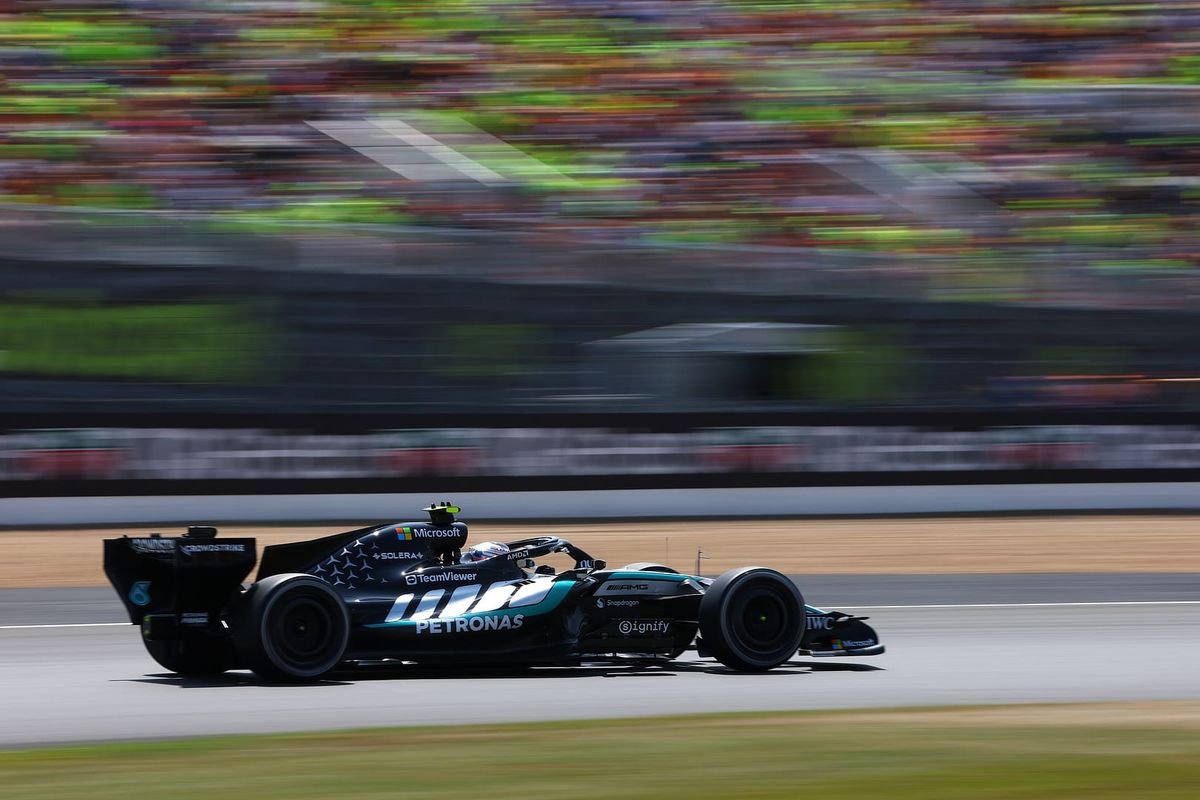
The Mercedes Formula 1 team has found a legal way to regain the benefits it got from a qualifying trick that was banned by the FIA earlier this year, The Race can reveal.
It is being achieved through what seems to be a bizarre behaviour by drivers Kimi Antonelli and George Russell of lifting off the throttle just before they cross the timing line on their quick laps.

As can seen above in a Silverstone sprint qualifying telemetry trace from GP-Tempo, which shows Antonelli (light blue) and Hamilton (red) – the Mercedes driver comes off the throttle before the line, in contrast to Ferrari's pole position man Lewis Hamilton who is flat out throughout.
The tactic, which only appears to have been employed by Mercedes so far at Silverstone but has now been spotted by rival teams, is aimed at ensuring its drivers maximise power on the run to the line.
It is very similar in concept to what Mercedes was doing at the beginning of the year when it achieved the same gains through a more technically complicated route – which the FIA swiftly clamped down on for safety reasons.
The original trick
Over the first races of the year, Mercedes cleverly found a way to bypass mandated power reduction demands that need to be followed as cars burn through their battery energy in the run to the timing line in qualifying.
Rather than being in a ramp down rate – where power normally needs to be reduced by 50kW every second to avoid a sudden drop off – Mercedes and rival Red Bull had found a way to run at the full 350kW for as long as possible.
This helped deliver a 50kW-100kW advantage for a short period of time in the dash to the line compared to rivals whose power had started to cascade down.
The two squads had been able to employ the trick through an allowance in the regulations that meant the ramp down rate did not need to be followed if the MGU-K was shut down.
So drivers had been able to stay at the maximum 350kW for as long as possible before triggering what was known as this ‘continuous offset' mode.
But following concerns about safety implications of cars slowing on track, and even stopping, because they were without the MGU-K for a mandatory 60 seconds, the trick was banned after the Japanese Grand Prix at the end of March.
The FIA had made clear that it would not tolerate the immediate shutdown of the MGU-K unless it was for genuine emergencies.
Back in play
The FIA's ban appeared to have brought an end to the maximum deployment tactic, but it has been resurrected in a different form at the British Grand Prix.
The layout of Silverstone, which has a relatively short run from the final corner to the timing line, means that there can be a gain to be had from not being in ramp down rate for this last dash.
The Mercedes drivers are now making use of additional allowances in the technical regulations that means the regular 50kW drop every one second can be avoided if certain criteria are in play.
These are if ‘the driver power demand is negative' and ‘the ICE power is negative and the ERS-K power needs to be reduced further to achieve the driver demand'.
So as long as the drivers lift off the throttle before the battery is empty after running at 350kW throughout, then they fully comply with the regulations and are not in breach of ramp down requirements.
FIA sources confirmed to The Race that the tactic was fully in compliance with the regulations as long as the power never reduced by more than 50kW in one second before the throttle lift.
The theoretical gains
While there will be a speed and time loss from lifting off the throttle before the timing line rather than staying flat, Mercedes will have calculated that the gains from having maximum power earlier outweighs the downsides.
Analysis of Antonelli and Hamilton's exits from Club show both drivers have similar speed traces before the extra power gives the Mercedes a 7-8km/h advantage prior to Antonelli coming off the throttle.
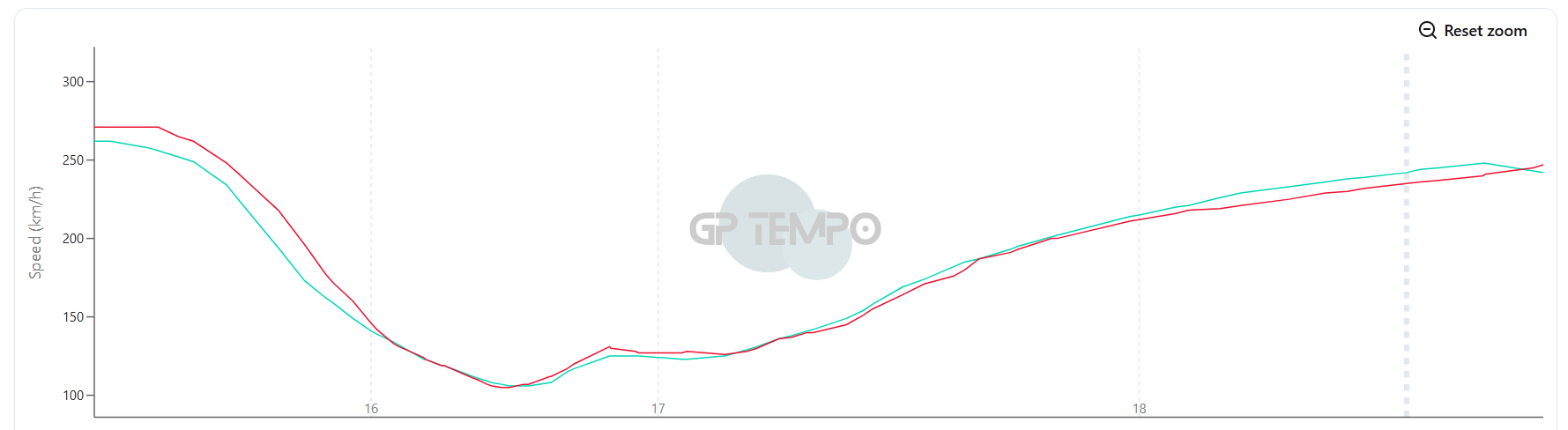
As they cross the line, Antonelli has fallen back to be 5km/h slower.
In timing terms, Antonelli goes through Club around 0.125 seconds behind Hamilton before he closes it on the run to the line to be just 0.002s adrift at one point thanks to the maximum deployment tactic.

The difference between them then stretches to 0.011 seconds at the timing line.
Had Antonelli stayed flat out then he would likely have taken pole position on track, but would potentially have put himself in a place where the ramp down requirements had not been followed.