Just spend more? Mercedes' intriguing theory for McLaren's PU deficit
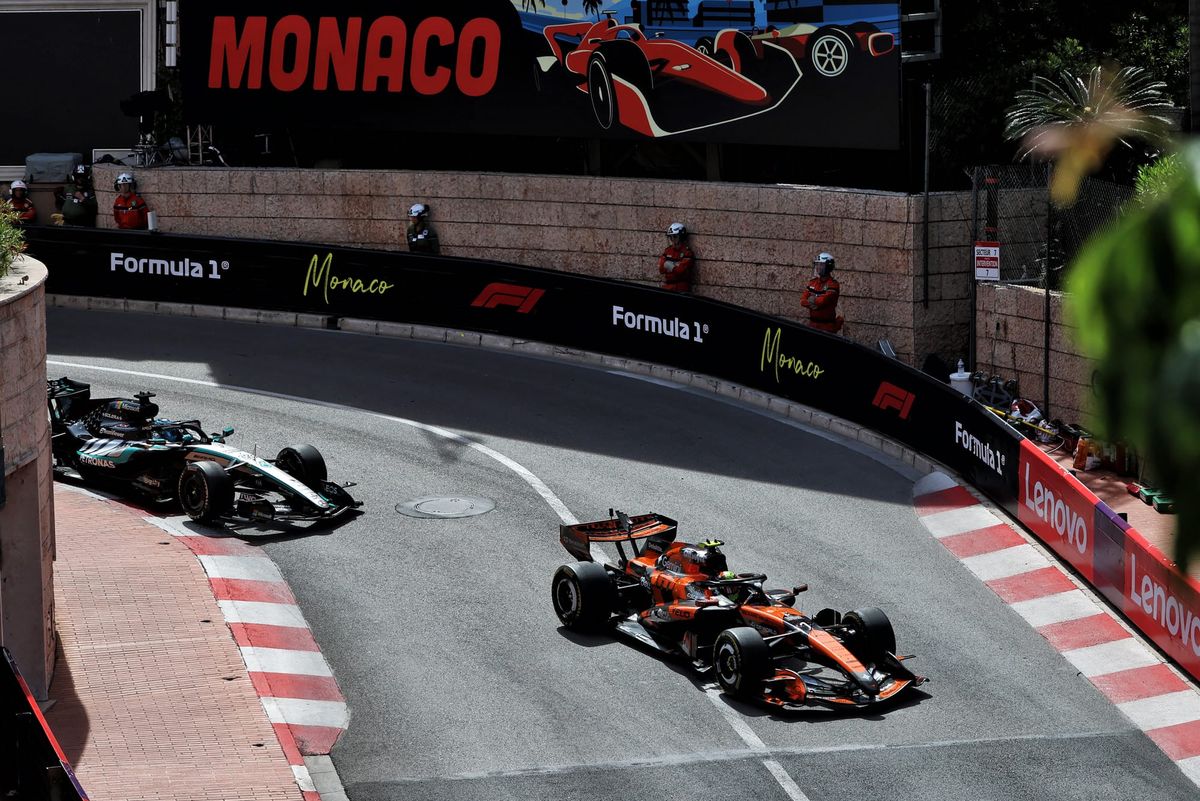
Mercedes has a different explanation for why customer team McLaren has not been able to exploit its 2026 Formula 1 power unit as effectively as the works operation.
Defending champion McLaren not getting as much out of the power unit as Mercedes has been one of the major behind-the-scenes topics in the development of this year's title fight, and has been known to be a source of at least mild frustration for McLaren - one it has at least hinted at, if never fully expressed publicly.
Back at Silverstone in July, where McLaren expressed surprise at the qualifying power trick being used by the factory Mercedes cars, team principal Andrea Stella said: "There's definitely conversations ongoing with HPP [Mercedes High Performance Powertrains] at technical level to make sure that we use what is available in this power unit, which is brilliant. It's a really piece of great technology. There's a lot of performance, which is also in the details of the exploitation.
"...Definitely there's some other factors that we need to keep discussing with HPP, because when we look at the performance in the straights, even taking into account the fact that they [Mercedes] may have less drag, there's still some question marks."
The shorter gear ratios picked by McLaren at the start of the year based on early Mercedes info have been one such point of differentiation.
But according to Mercedes deputy team principal Bradley Lord, simple intellectual property logistics and matters of spending - rather than any deliberate strategy from Mercedes to give its factory team a leg up - have been central to any difference in power unit exploitation.
"Everything is in the rules and everything is in the contract. I think McLaren and the other customer teams, Alpine and Williams, are great partners to work with, they're rightly demanding. They've chosen Mercedes because they choose to work with a company that provides excellent support and a great product," said Lord.
"The [power unit] team at Brixworth have proven over the last however-many-years of customer supply that they do that in a very even-handed and correct way.
"Where there have perhaps inevitably been perceptions of differences, or they [customers] have...felt potentially one step behind is in the...a lot of the simulation tools, the ability to predict behaviour of the power unit and the chassis and things like that.
"And a lot of those toolsets are things that we've developed not just at Brixworth but between MGP [Mercedes F1 team] chassis team and HPP at Brixworth - and obviously the technical regulations are very clear on what chassis team IP can and cannot be shared between teams as well.
"So, in some instances there is unpicking that needs to be done before elements can be then provided to the customer teams - or the customer teams themselves are needing to do work and spend, invest their own cost cap resource into developing the tools to be able to get the most from the power unit.
"So that's probably one of the complexities that we've bumped into - but kind of understandable in a brand new ruleset and a new ruleset that is more complex than the previous one."
'Out of the main loop'
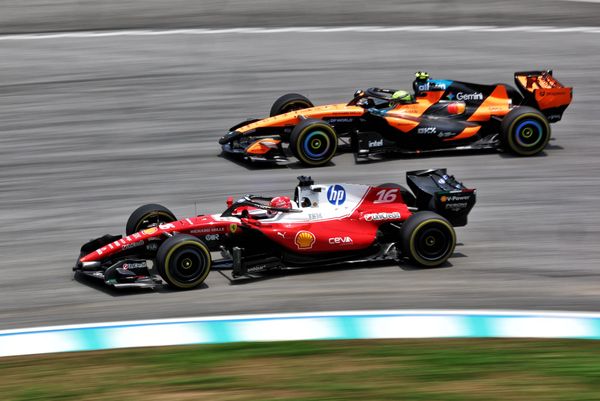
McLaren beat Mercedes by 364 points in the constructors' standings last year, the final season of that regulation cycle, but currently trails by 159 points - though it did dominate the Hungarian Grand Prix with Lando Norris.
An interview it released with technical director for performance, Mark Temple during the summer break shed some more light on matters of power unit exploitation, and backed up some of what Lord said, while also stressing a fundamental "out of the main loop" characteristic of the team's customer status right now.
"I think some of it comes from how much influence you have over the design and the installation. We do have considerable input, but ultimately MGP [the Mercedes race team] have the final say with HPP on what happens. That shouldn't be taken to mean we're ignored - we're ultimately just not the ones in complete control.
“The way HPP work on a race weekend is with a main team and customer support teams. We work very closely with our customer support team and have good relationships with people in the main programme. From that, we have influence on what's happening within the main programme - but we don't have guarantees they'll accept things we request.
"We're a little out of the main loop in that respect, working in a side loop that feeds into the programme, but it means we don't always get the configurations we want and that would suit us.
"It's the same with the timeline. In the run-up to a race, we receive information from HPP, but there's decision-making and evolution we're not part of. When we find out what we've got, there's often not a huge amount of time to react and respond - so part of what we're trying to do this year is build and improve our process to make this less of a limitation."
Temple indicated this was a matter of further developing and acclimatising McLaren's new "power unit performance team, which we didn't have before".
"As a normal activity, HPP will do simulations and come up with a configuration for a particular event and a given session and present a multitude of different options of how best to use energy around the lap.
"We want to then check that against our tools and the specific requirements of the MCL40, plus variables like the wind direction, the grip level, the amount of fuel in the tank, and so on. So, we explore all of those things and compare them against what we think is optimal and then make recommendations to our race engineers alongside the HPP engineers.
"It's a very collaborative process - but we use some of our tools differently, and indeed have slightly different tools, to HPP, so it's a combination of the two approaches."