Why McLaren's so convinced its failed tyre gamble wasn't 'stupid'
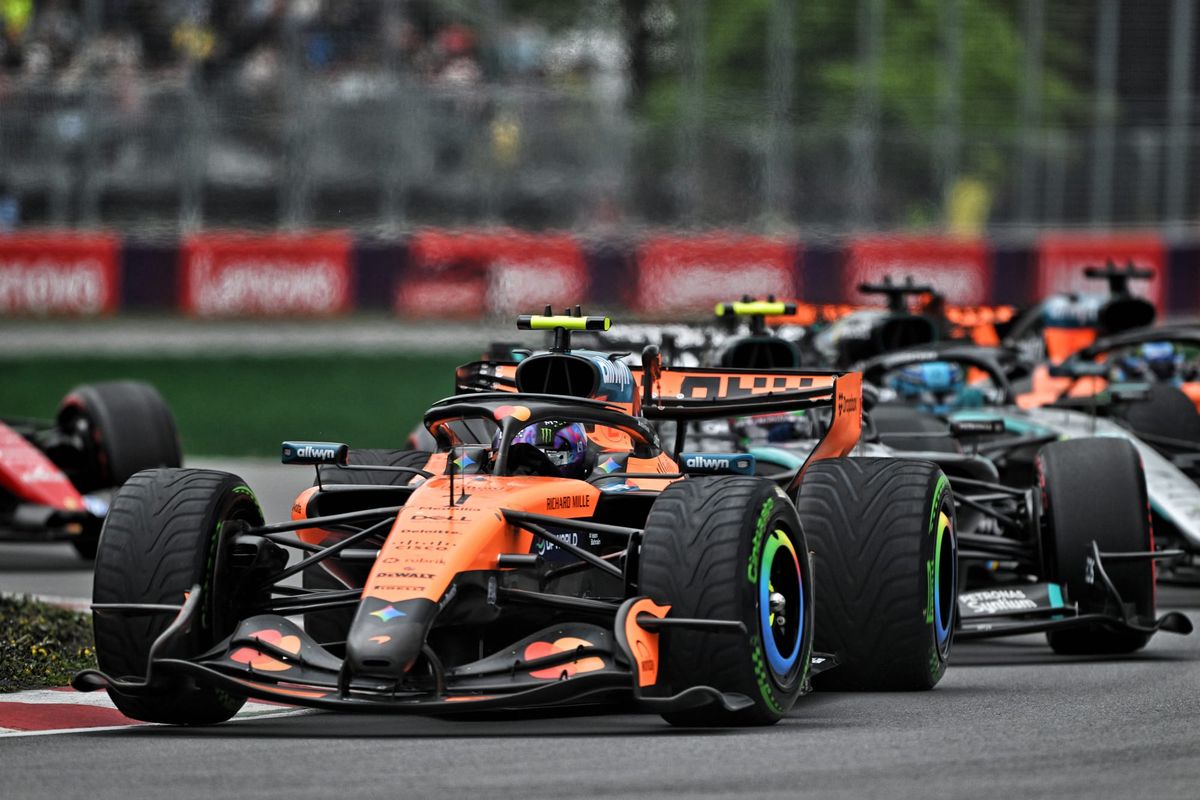
Lando Norris insists the intermediate tyre choice that derailed McLaren's hopes in Formula 1's Canadian Grand Prix was not a "stupid" one despite ultimately backfiring.
Second-row starters Norris and Oscar Piastri were two of seven drivers - as well as the two Audi drivers, the two Cadillacs and Carlos Sainz in the Williams - who opted not to start on slicks in the uncertain conditions.
But it quickly became clear that the choice was not a good one, with both McLaren drivers feeling on the formation laps that they were on the wrong tyre and it was probably worth switching to slicks.
The duo duly took the start on intermediates, though, with Norris surging into the lead at the first corner. But it was clear that the wet-weather rubber was not going to last.
Piastri pitted for slicks at the end of the opening lap while Norris followed him in a lap later just as he was about to be passed for the lead by Mercedes' Kimi Antonelli.
While the inter choice was ultimately a wrong one, the team's drivers and management are convinced that unusual circumstances made its strategy look to be a worse call than it was.
And this, Norris said, was backed up by the fact that even with factors conspiring against McLaren, he was still able launch past the slick-shod Mercedes duo of Antonelli and polesitter George Russell at the start.
"I just had a lot more grip," he said. "Simple as that, honestly.
"It shows how slippery it was for them in the beginning, and I had a two-second gap after one lap.
"It wasn't like it was stupid to be on that tyre. It was just drying out - and of course when they got a bit of temperature into the tyres, it worked out for them.
"1% more rain or a few little bits of drizzle here or there and it really would have suited us a lot more."
McLaren argued that it was not just the rain easing off that worked against its intermediate choice.
It felt that the delays caused by an unusual call for two aborted starts meant that a time window to capitalise on the wet-weather compounds had closed.
Shortly before the original start was due to get going, Arvid Lindblad's Racing Bulls car caused the light procedure to be aborted when it suffered a suspected gearbox problem.
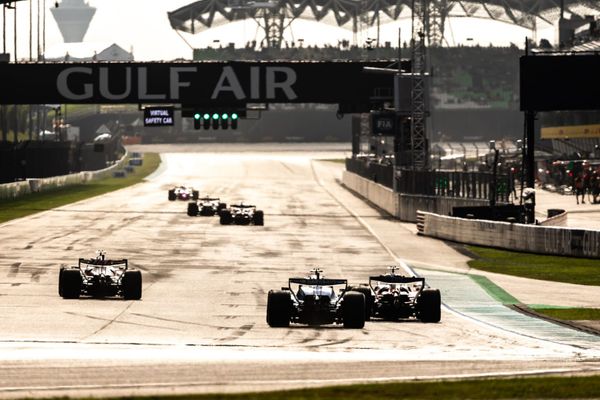
A second formation lap was called and a third then followed because Lindblad's car had not been cleared off the grid before the pack came around to their slots again.
The third formation lap proved successful but, with more than six minutes having elapsed by this time, conditions had improved by some margin.
And it was this shift that McLaren team principal Andrea Stella felt potentially made all the difference in holding back the advantage of the intermediate and not hurting the slicks.
Stella noticed in this phase that "if you looked at the pitlane, it went from being dark grey to grey, like dry" as the drizzle faded.
"I would have been pretty interested in seeing the cars with the dry tyres had the race started at the time it should have started," he said.
"I think it's a bit unlucky with the fact that the rain just stopped, and the fact that there was a double extra formation lap which I'm not sure exactly when is the last time that we saw it.
"So, in hindsight, we were penalised by the decision. But at the time that the decision needed to be made. I think the conditions existed to fit an intermediate tyre."
He later added: "With the rain lasting for a few more minutes and the race start happening at the right time, we could have seen, I think, cars struggling on dry tyres."
McLaren said that the call to go for the intermediate tyre did not feel like a gamble at the time it was made and that both drivers and team management all supported the idea prior to the three-minute board, when tyre selections have to be made.
Piastri, who said over the team radio before the start that he felt being on the intermediates was a mistake, said the feeling had been very different in the moments McLaren committed to the tyre.
"It was a group call, I was one of the people that said yes to the inters," said Piastri, who was ultimately classified two laps down in 11th having also hit Alex Albon's Williams during the race.
"Between the [Canadian national] anthem and getting in the car, it had got significantly wetter on the ground.
"And given how difficult getting to the grid was, I thought that the inters, if you could get temperature into them, would be faster. That was our whole thinking."
Stella said: "It [the decision] was relatively shared by the people and the drivers. I even gave my input myself because when, like I said before, a call needed to be made. I just wanted to be sure that we were on a tyre that we could withstand the first lap."
Norris said the call was more motivated by feeling that "the slicks would be terrible" and he felt that there were "valid reasons for doing what we did".
And he reckoned that while with hindsight McLaren could have minimised the damage by pitting for slicks on any of the formation laps, there were justifiable reasons why it felt better to commit to the race.
"We thought there would still be a very high chance of a safety car and things like that," said Norris, who eventually retired with a gearbox failure having climbed back into the top 10.
"Even with staying out on track, our safety car loss is 10 seconds. I was leading by two - and, if a safety car came out, not everyone would be on their delta.
"I still could have come out on a new slick, probably inside the top 10, maybe even better. I probably would have been better than that even.
"There were a lot of positive things that could have come from it. Just none of those things came our way. It was a shame.
"Apart from the very good start and a good lap one, we were just unlucky."