The fact and fiction of Raikkonen's unique F1 reputation
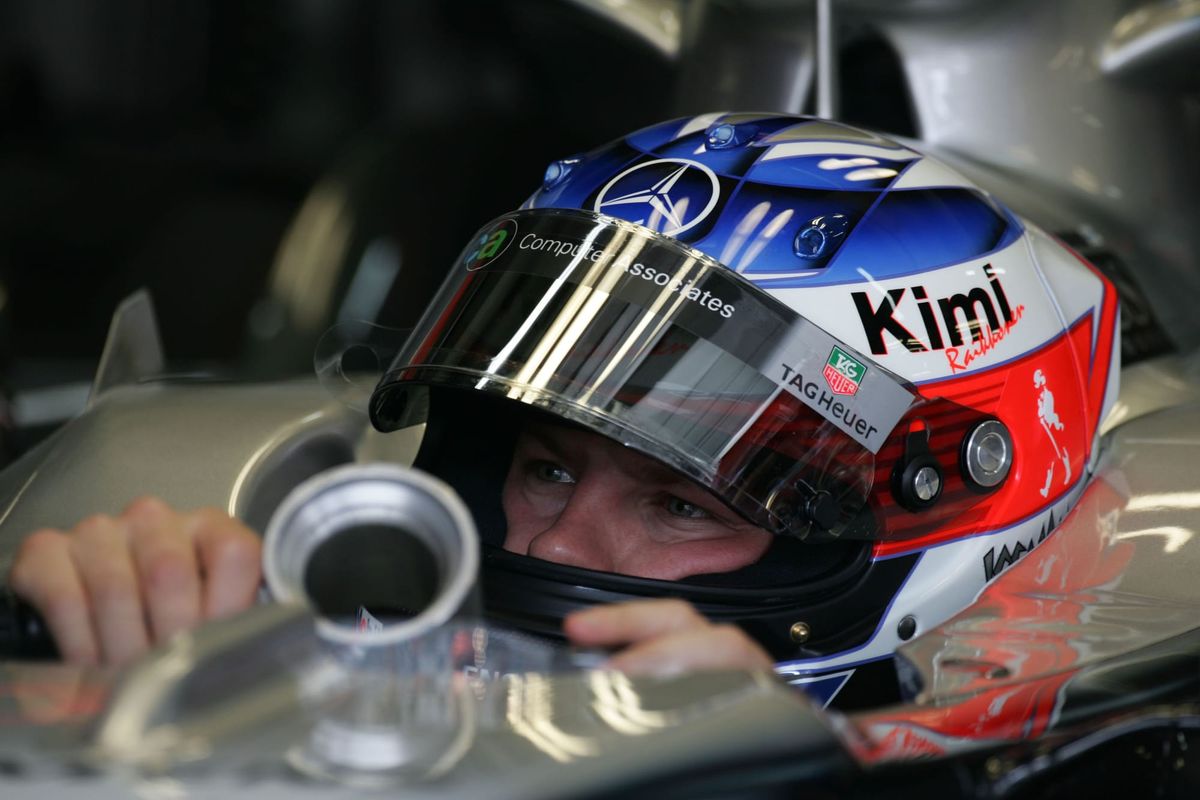
Few Formula 1 drivers - if any - have accrued quite the same enigmatic reputation as Kimi Raikkonen.
But how far is the myth from the reality, and how well does the laidback, care-free persona align with what Raikkonen, still Ferrari's most recent F1 drivers' champion, was like behind the scenes and at the wheel?
Raikkonen is the subject of episode two of the third season of our Driving Style Secrets series, where Mark Hughes and Edd Straw take an unapologetically deep dive into the driving techniques of F1's biggest names.
Between them, Hughes and Straw have seen Raikkonen's entire F1 career and spoken to him and key figures around him in great depth, so are well-placed to tell the real story of one of the most misunderstood - or perhaps even miscaricatured - drivers of the 21st century.
Here's a taste of what you can expect from the episode, which is available to watch in full in The Race Members' Club - the only place to also get episodes on the likes of Max Verstappen and Lewis Hamilton.
'A fantastic feel for what was possible'
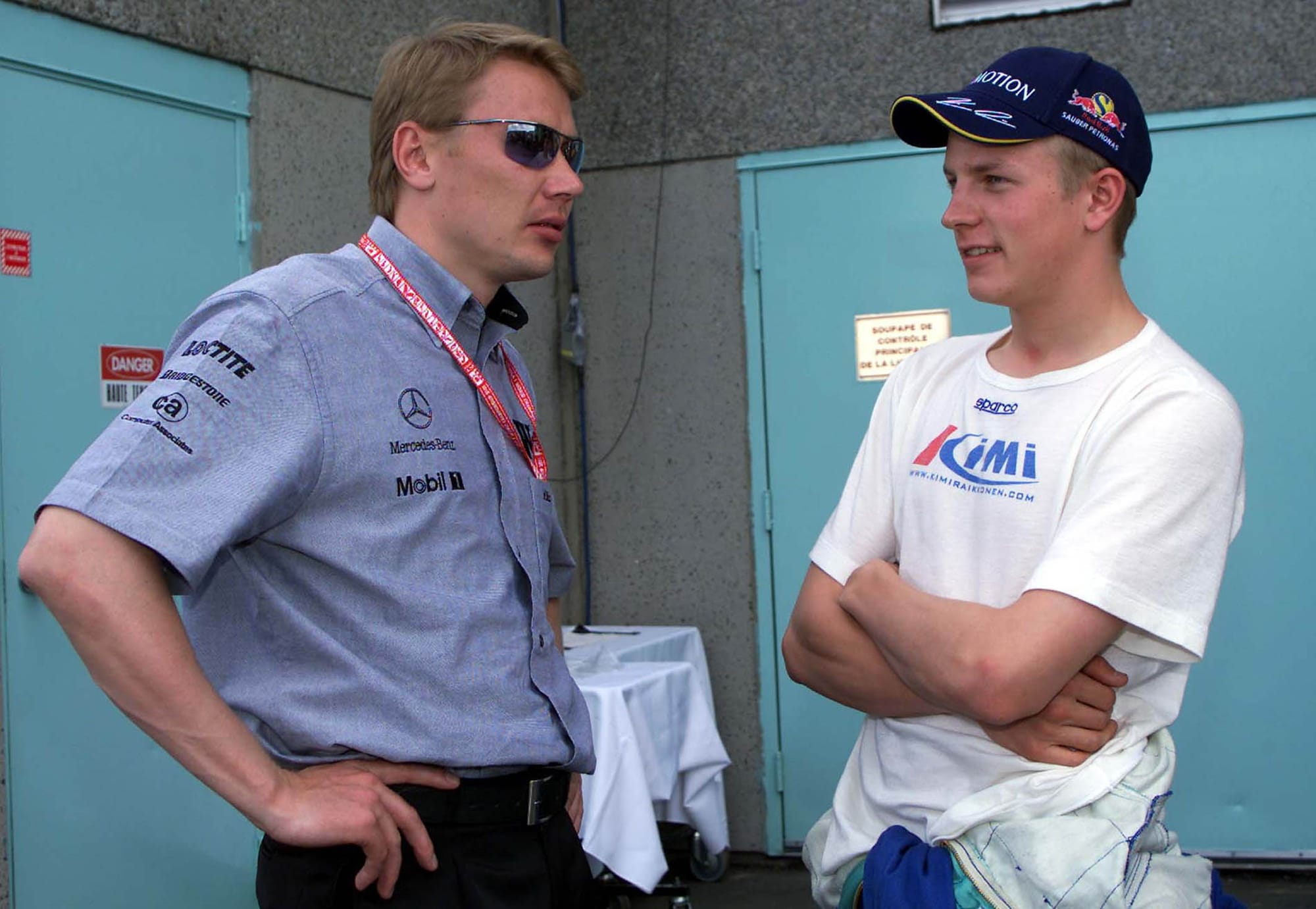
It's a story well-told that Raikkonen's trajectory was anything but ordinary. Thrust into grand prix racing in 2001 after just one season in British Formula Renault, Raikkonen hit extraordinary peaks during the mid-2000s and was still a force on his day into the 2020s - even as those big highs became fewer and farther between.
It's that blend of periods when he was arguably the best driver in F1 with times when he was a solid but unspectacular performer that, in contrast to his a reputation for being simple and straightforward, makes Raikkonen a complex driver to understand.
Still, it was unquestionably during his time at McLaren - where he spent five years, having joined ahead of his second season in F1 - that Raikkonen showed his razor-sharp edge most consistently, even if a title eluded him.
"He was a fantastic performer at his peak," says Hughes. "I don't think he was ever quite as impressive at Ferrari as he had been at McLaren, even though he won his title in his first year at Ferrari.
"There's two evolutions of Kimi, if you like. There was the raw youngster that came in with only a season of Formula Renault behind him and was incredibly quick immediately in the Sauber, so much so that Ron Dennis bought out his contract and funded Sauber's windtunnel; that's how impressed everyone was with Kimi Raikkonen.
"And he had this amazing ability to just flick the car into corners at high speed, almost like a rally driver, just a fantastic feel for what was possible on the outer edges. He just seemed quite relaxed about being on that outer edge, and he would use kerbs to flick the car and was very flamboyant.
"Probably he finessed that early into his McLaren years and what came out of the finessing of that was even more impressive because he could sit a little bit like what Max Verstappen can do now in terms of his rotation with the car.
"He does so much with weight transfer and hardly any with the steering. Kimi was very, very reluctant to use the steering wheel any more than he had to; it's almost like a thing of last resort, the steering wheel.
"It was all done on a little bit of steering and then how you manipulated the brakes to put the weight over the four corners exactly where it needed to be in that split-second, and he was so beautifully attuned to being able to do that. And you saw that at his best expression when he was on the Michelin tyres during the tyre-war years."
The stubbornness
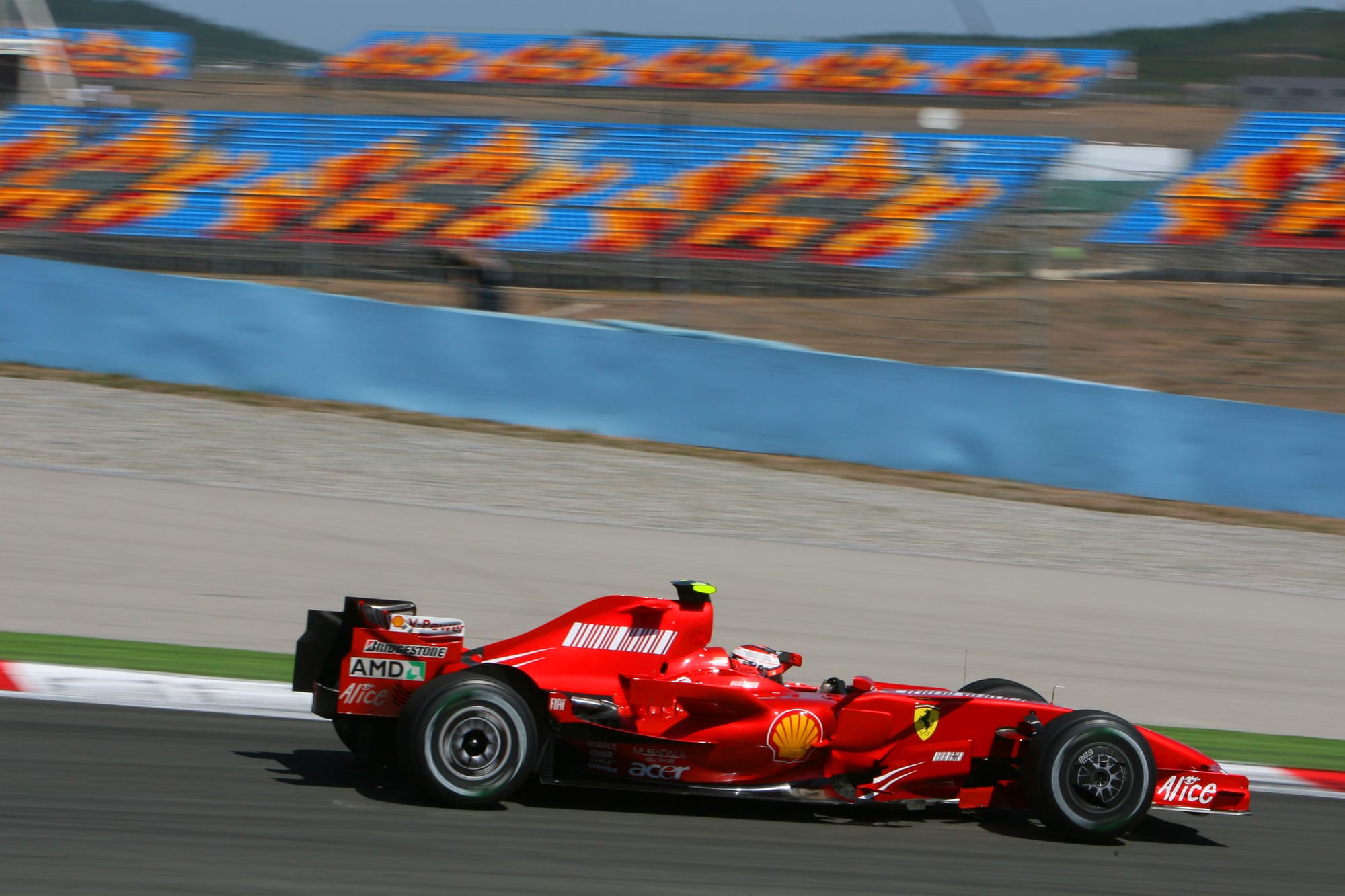
Though it was his move to Ferrari for 2007 that yielded Raikkonen's sole F1 title, it was in this phase of his career - just as F1 moved away from a tyre war, as Bridgestone became the sole supplier - that there were hints that adaptability perhaps wasn't a strength.
As Straw puts it, "it's actually a relatively narrow window when he's at that absolute brilliant best".
Hughes explains: "As we went into standard, control tyres, he seemed reluctant to accommodate that change in his driving style: he still was trying to get the car not to require much steering, and these tyres just wouldn't let you drive in that way to get as spectacular a result as he was able to get before in terms of laptime.
"And that never quite went away. You'd see it when the tyre was working well and could be pushed and the track surface allowed you to do that - you'd see vintage Kimi again - but you wouldn't see it every race at Ferrari, even in his championship year.
Watch the full episode in The Race Members' Club!
"And quite often, Felipe Massa was better at dealing with the slightly understeery traits that those tyres gave the Ferrari. [Massa] certainly could maintain better momentum with understeer than Kimi could. Kimi just did not like a car that required him to put more lock on; it just seemed absolutely anathema to him.
"And so, he was still operating at an extremely high level, but I would say the truly great Kimi was the McLaren Kimi."
That's not to say the pure performance had disappeared, though.
"I remember in 2008 doing quite a deep-dive article on him and his driving during that season," says Straw. "And it was really interesting because the Bridgestone tyres that year, they were quite an understeer kind of balance which he didn't like, but it was really strange: you'd see this quite consistent pattern of he wouldn't qualify stunningly well and then the race wouldn't start stunningly, but later in stints when the tyres had just started to change a little bit, the balance obviously shifts, and he'd sort of switch on at times.
"You'd see him in '08 switching on and off as a driver almost as that balance came and went, which was an extraordinary indicator of the sensitivity and of course, when we talk about sensitivity generally with Kimi Raikkonen, it's that front end feel, isn't it?
"McLaren spent who knows how many millions making suspension parts for him just to really try to fine-tune that steering feel and the mechanical feel that he was getting to give him the precise sensitivity he needs.
"And probably, you would say, the fact that we were still in a full-on testing era then also played a part in him perhaps being at his best in pure driving terms at that point because you could tailor it into that window where he was given exactly what he wanted."
But regardless of how F1 evolved and the varying degrees of adaptability Raikkonen showed, some traits stayed with him for the duration (for better and worse).
"Yeah, very, very particular in what he needed from a car. He also had beautiful finesse, even in his latter years, in the high-speed corners," says Hughes. "When you looked at the inputs, the steering inputs, when the car was absolutely on the edge through some of the fast sections - Maggotts-Becketts, for example - and you compared it to Massa's traces, Massa was having to do a lot more input just to keep the car on the track.
"Kimi obviously can feel with more fidelity exactly how to sit on that edge.
"But it was in the slow- and medium-speed corners where the car required a bit of bullying and a bit of manipulating, it's almost like it offended him that he needed to do that! And it's almost diametrically opposed to Fernando Alonso, who would just bully the car and do whatever was necessary to get a tune out of it.
"Kimi would be more of the attitude of, 'Well, the car's not right, and I can't do my stuff 'till the car's right'. So he was not tolerant, and I think that was just Kimi; that was part of his nature, and it's just part of how he was wired up.
"But watching a full-on qualifying lap during the tyre-war era, Kimi Raikkonen was one of the most spectacular things you're ever likely to see. He was just a wonderful driver."
Raikkonen the technician
Any of that perceived reluctance to change shouldn't be confused for a lack of technical capacity - another area where Raikkonen's reputation doesn't match the reality.
"He's very specific on what he wants," says Hughes. "He might not always have the engineering accuracy, in terms of what he's talking about, but once the engineers understand what he means by things, he's very articulate and can describe things in a lot of detail.
"I think he's just one of those guys that has a lot of spare capacity and so it gets logged, what the car is doing, and he's able to recall it in quite a high-detailed way.
Check out the full Driving Style Secrets back catalogue!
"When Fernando Alonso went to McLaren and Kimi had left and gone to Ferrari, the initial feedback from each of those teams was that Fernando was impressing them [McLaren], but they weren't getting quite as much detail back from him as they were used to getting from Kimi.
"And at Ferrari, they were amazed at how adept he was at adapting to all the new systems, and they were thinking that Michael Schumacher was fantastically adept at all these systems and it was going to take a good season to get Kimi up to that level. And he was there before the season even started.
"So very, very smart and switched on inside the car."
The difference, instead, was in how it was communicated - in frequency, more specifically.
"Perhaps where it stems from, the idea he wasn't such a good technical driver, is less that side of things, and maybe more the way he interacted with the team; he wasn't someone who would relentlessly push the team," says Straw.
"There's plenty of stories of he'll sort of raise something once - and actually, it is said about Alonso sometimes as well, that he'll raise it once and expect it to be done - but Kimi would kind of say, 'Right, this needs to be done'.
"It wouldn't be Schumacher-like: it's like every day, 'Right, we need this, we need this, I need this, I need this'. And that wasn't Kimi's way."
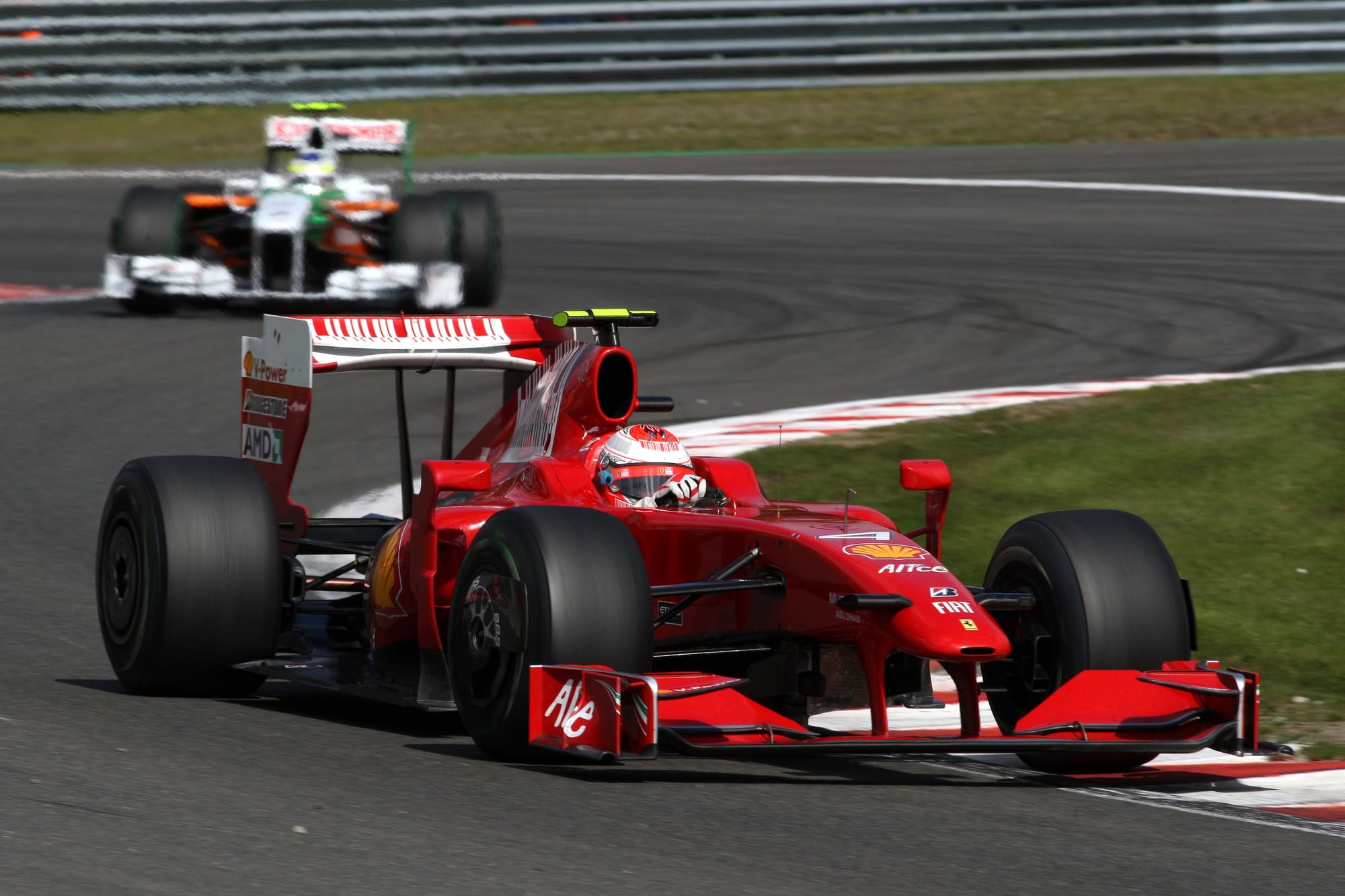
That was arguably no more apparent than in 2009, with a recalcitrant Ferrari that Raikkonen didn't get along with until he assumed team leader status following Felipe Massa's injury in qualifying at the Hungarian Grand Prix.
"That particular car just really did not suit him," Hughes says of Raikkonen's experience at the start of that season. "He did not like it. He did not like the development direction they'd gone with it either, and Massa was generally outperforming him.
"And then Massa had his accident and Kimi de facto became the focus of the team, and he took them in a different direction and suddenly he had a very, very strong end of 2009. And one of the engineers at one point said, 'Why didn't you tell us that that's what you needed?' He said, 'I did'. He [the engineer] said, 'Yeah, but only once!'
"And literally he had told them once, and therefore he didn't feel he needed to do it again.
"You could say that's a weakness, you could say it's a trait. I don't know, but certainly, in terms of his career numbers, it had an impact, but you can only be who you are in something as intense as this, especially. And that's who he was.
"How you judge drivers, do you judge them on their peak, how high they flew - which is what I tend to look for - or do you look at their average, which is equally valid? If you're looking at just how high they flew, he's absolutely one of the greats."
Raikkonen is the second driver to be focused on in this season of Driving Style Secrets, featuring F1's 21st Century Greats. You can watch episode one, on Fernando Alonso, below for free!