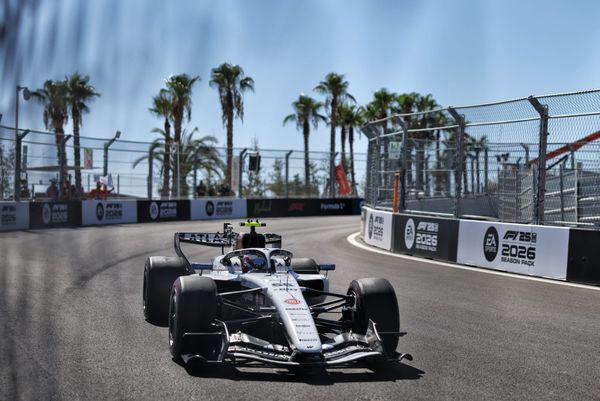
Everything that made Lewis Hamilton's first Ferrari F1 win possible
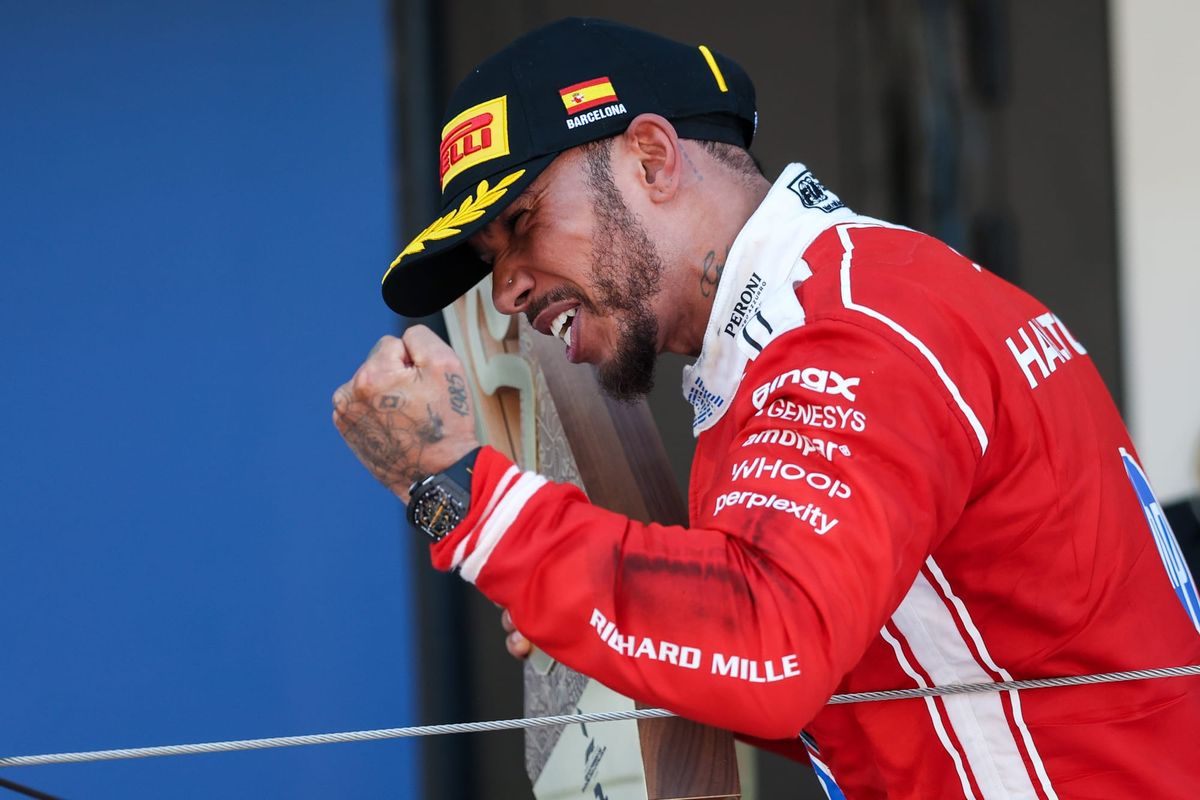
That Lewis Hamilton was made to wonder "maybe it is true that when you get to a certain point, you lose it" during his first year with Ferrari says a lot about the 18-month effort that has finally yielded his first Formula 1 grand prix victory with the team.
Hamilton admitted his "dream" of winning for Ferrari in F1 seemed impossible during 2025 but a wide range of factors - from internal changes, to F1's massive overhaul, right down to the specifics of the Barcelona weekend - have combined to make it a reality in 2026.
A fresh start
The magnitude of Hamilton's first grand prix win for Ferrari, and first since July 2024, can only be properly understood by appreciating the recovery arc.
It completes an impressive turnaround from his first year with the team, which turned out to be one of Hamilton's most disappointing seasons in F1.
He failed to score a grand prix podium for the first time in his career, as the promise of an early sprint race pole and win in China turned out to be a false dawn.
After that point in 2025, this union never looked like it was on a trajectory leading to success, which led to a lot of scrutiny over Hamilton's position.
"I'm only human," he said. "There's moments where I see the stuff and for sure there's moments where I allowed it to get to me and penetrate deeply."
As world champion Lando Norris observed after the Barcelona race, Hamilton's taken "a lot of crap" and "it's nice he can stick the middle finger up to all of them".
The biggest thing that's changed to facilitate that is F1 as a whole.
The prospect of brand new rules freeing him from limitations specific to the ground-effect era was a hypothesis rooted in hope rather than expectation - something else Hamilton admitted.
But these cars definitely suit him better. The way they move around and what they can cope with under braking are a better match for how Hamilton wants to attack corner entries.
It's fair to conclude these cars allow him to perform more consistently at his best and, though it has to be considered a blot on his copybook for not adapting better to the previous rules, it should also be recognised that Hamilton's peak is still clearly very high.
"After a year like last year, there was definitely moments that I was like, 'Sheesh, maybe it is true that, when you get to a certain point, you lose it'," he said.
"But I've proven that you don't."
Ferrari's development
It's somewhat ironic that having been tipped to win on the tight, twisty streets of Monaco, and been battered by Mercedes there, the 'proper' test of Barcelona went much better for Ferrari.
But this win would almost certainly not have been possible without Ferrari's second significant upgrade package of the season.
There were eight specific areas that Ferrari targeted at Barcelona from a revised front wing to a wholly updated floor and bodywork evolutions.
"They did bring a big upgrade here and I think the development slope is so steep at the moment for all of the teams, whoever is going to be bringing those upgrades earliest is going to be taking a step forward," reckoned long-time Sunday race leader George Russell.
It means Ferrari is potentially vulnerable to further updates from others shifting the pecking order again, but that doesn't matter; here, it clearly elevated the car significantly.
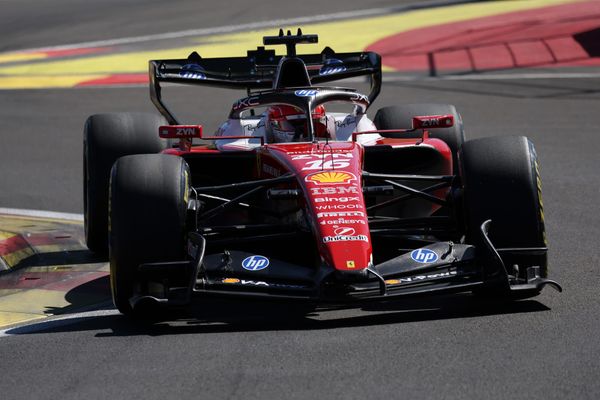
Norris called Ferrari "incredible" and "class leaders in cornering speeds" after qualifying, and it looked good on its tyres in the race even in extremely hot conditions. Norris then went even further after the grand prix, saying "we're lucky Ferrari don't have a better engine" and if they did "they'd be dominating".
A problem is still the time loss on the straights, which is a mix of a power deficit and a draggier car.
But Barcelona suggested this might not just be mitigated by sheer cornering performance, it could be offset by it entirely.
Sharp strategy
Ferrari so often comes in for stick for bad strategic decisions and in-race blunders, but it absolutely nailed this one.
Hamilton switched to 'Plan C' fairly early in the grand prix, which might not seem like a good sign, and his first stint on softs was unremarkable in second place.
And yet he steadily built a serious challenge for the win on an alternative three-stop strategy.
Hamilton basically cut the Mercedes' advantage to nothing in the second stint and was setting himself up for a grand charge in the final part of the grand prix when the virtual safety car was required for Fernando Alonso's stricken Aston Martin.
This lasted long enough for Ferrari to change plans, bring Hamilton in earlier, and get track position - with a five-lap tyre advantage too.
It was the right move, and undeniably helpful, but it might not have changed the outcome entirely: only made it simpler to achieve.
Russell reckoned Hamilton "would have come through regardless", as we'll get into more, because the three-stop Ferrari had committed to was looking so powerful.
The rest of the lead group was trying to make a conventional two-stop work so Ferrari deserves credit for spotting the opportunity in doing something different as early as it did, as well as adjusting that plan when the circumstances demanded it.
'Insane' pace
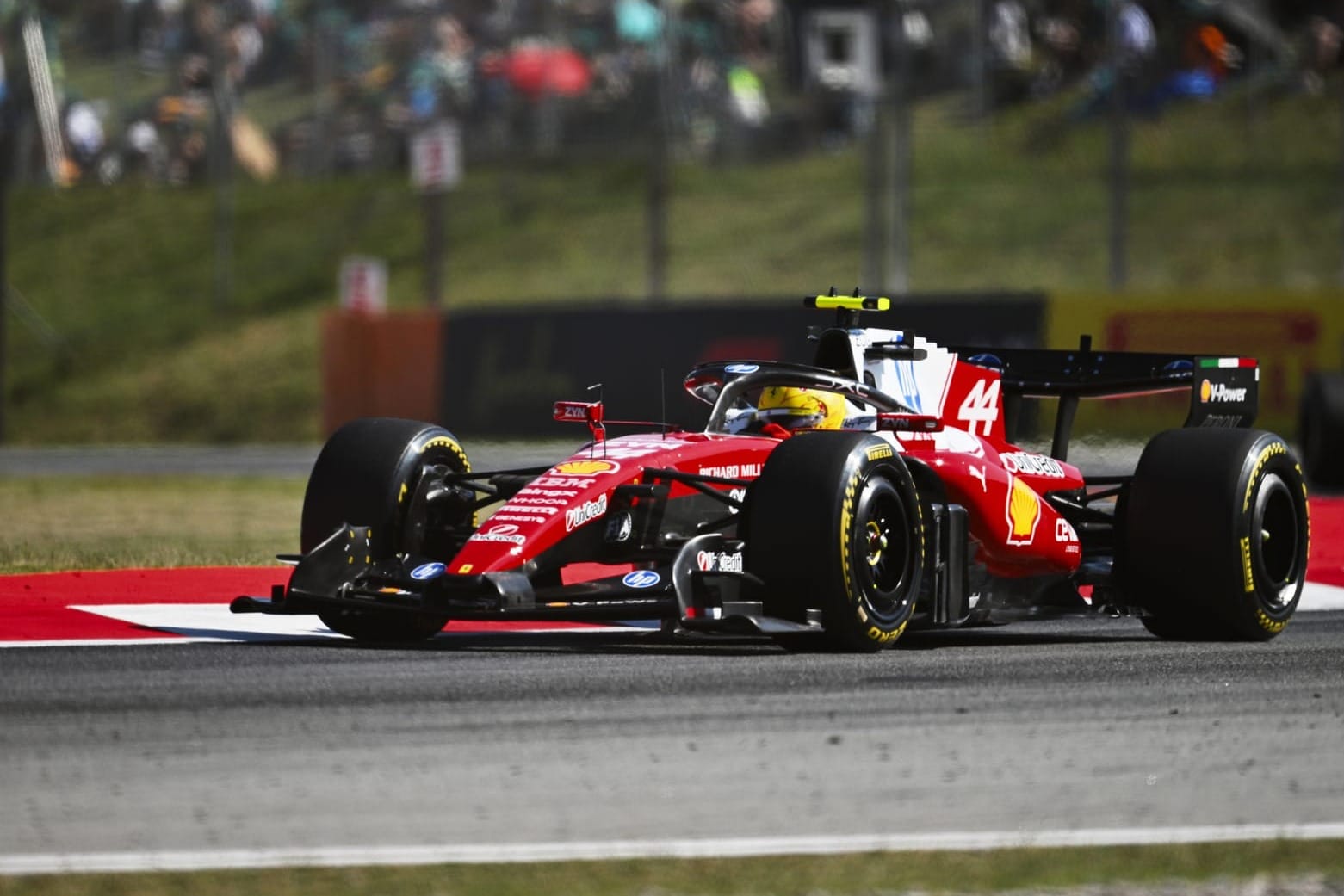
It's worth emphasising that Hamilton was the fastest driver when it counted most.
Even though there was the VSC assistance, and Russell's struggle, this was not a win handed to Hamilton in the slightest.
Russell described Hamilton's pace as "insane", which might be valid for the second stint that eroded Russell's gap in the first instance, but is best applied to the final stint after the race resumed following the first VSC.
Once he had track position, Hamilton was unstoppable. Yes there was a five-lap tyre offset to Russell, but Hamilton absolutely obliterated him to win by almost 20 seconds and set the fastest lap of the race.
It was reminiscent of Hamilton's pulverising 2020 win at the same circuit - the kind of stint that was completely dialled in with Hamilton at his very best.
Critical Ferrari switch
Hamilton credits team principal Fred Vasseur for backing him while he was being "very, very vocal" and "relentless" trying to push through certain changes at Ferrari in the background.
That has extended to a specific Ferrari change that has helped: pushing through a braking configuration change with a move half-away from Ferrari's long-time partner Brembo.
Hamilton switched to Carbon Industrie discs from this year's Japanese GP, the supplier he used at Mercedes and McLaren before that, having never felt completely comfortable with the feel of the Brembos last year.
The different characteristics are significant because the CI discs give stronger initial bite, which suits Hamilton better.
And while the notion of pedal 'feel' is quite abstract, it is absolutely critical to driver performance - not just in simply braking and stopping the car, but loading it just right at corner entry and setting up everything that follows.
Don't underestimate how long in the making this change would have been, given Brembo's significance to Ferrari. So, Vasseur has fought hard for Hamilton, which you'd expect to an extent given he was Vasseur's big recruit - but Hamilton said he's been essential, describing him as a "good friend, team-mate and ally".
"Last year was really, really tough for him to deal with," said Hamilton.
"Me coming was a big shock to the system. If I see something that I don't think is right, or I push very, very hard, that's at the core of who I am.
"It's not easy to be on the receiving end of that when you're also juggling a whole organisation, and a culture that is set in a certain way.
"I had to really ask for some of the changes. And he enabled them to happen, which I'm forever grateful for, because this wouldn't have happened without those changes."
A better set-up around him
Ferrari's support extended to rejigging the engineering set-up Hamilton has around him, including a high-profile change of race engineer.
Moving away from Mercedes and his long-time engineer Peter Bonnington inevitably meant Hamilton's new relationships at Ferrari would be critical to how he settled in, and then how every single race weekend played out.
There were early hints of tension with 2025 engineer Ricardo Adami and while Ferrari and Hamilton always played this down, the moments of frostiness and apparent doubt never went away.
So when Ferrari changed things up for 2026, it was no surprise. What has been unexpected is that the supposed temporary solution of Carlos Santi has quickly turned into an effective working relationship that's continuing indefinitely for now.
Hamilton called Santi his 'Italian Bono', and said the engineer set-up is "a million times better than it was last year" - so whether it's communication in the car or how they work out of it, the working relationship is evidently more effective.
"Him kind of substituting this year, jumping in and diving in deep with me...we didn't know each other," said Hamilton. "We'd never spoken and I didn't know anything about him.
"And we met and I think got on straight away."
Hamilton said "the changes that I've asked for and pushed for all last year have been made, and I now have the right team around me", and he is clearly very grateful for this backing.
It leaves him happy and in a good place, which extends to his physical condition too having revealed he carried an unspecified injury for a while after last year's race in Spain.
Execution and a little luck
Returning to Barcelona specifically, Hamilton being so fast on the day is also linked to something slightly different: the quality of his execution both this weekend and this season.
Even before this result, Hamilton was deep into his most convincing Ferrari run of races so far.
He has looked increasingly robust and qualifying on the front row at a traditional track like this rather than the recent outliers was actually a better indicator that Hamilton was high on confidence than his previous couple of podiums.
There will be weekends where he is slower than, and beaten by, Charles Leclerc - and this could have been one of them. That actually goes in Hamilton's favour.
Hamilton was struggling in practice after sitting out the first session, whereas Leclerc had looked rapid here having moved to Hamilton's brake configuration - probably not a coincidence.
And yet it was Hamilton who started from the front and led the chase of Russell while Leclerc worked his way up from 10th after a needless qualifying crash.
So, Hamilton's a much more dependable figure for Ferrari this year than last on two fronts, because he's more competitive and he's putting the performances in when the car allows it.
It's also worth mentioning that there's always a little bit of luck involved, too - after all, it could have been Hamilton's Ferrari that failed in the final laps of the grand prix, rather than Leclerc's.
Mercedes opened the door
Mercedes' first grand prix defeat of the season can't be fully explained without acknowledging its own performance level, too.
It all looked so good early on as long-time race leader Russell controlled the opening stint, but the unexpected gradual implosion of his pace thereafter opened the door to Hamilton.
Mercedes team principal Toto Wolff also suggested in both TV interviews and his written media session after the race that his cars could have been closer to Hamilton at the crucial VSC point had they not lost time racing each other around half-distance when Antonelli caught then-leader Russell.
The bigger unknown, though, is whether Hamilton would have been derailed in pursuit of the two Mercedes had the race played out normally. There's also what Antonelli might have been capable of versus Hamilton if he had been in front from the second stint onwards.
In the end, Hamilton was so far ahead that Antonelli's eventual retirement was irrelevant. And Mercedes basically held its hands up and said the faster car and driver combination won on the day.
Some ongoing Mercedes fragility, Russell's struggle, Hamilton's revival and the Ferrari potency inevitably raises the prospect of this not being the Hamilton-Ferrari peak, and it being the start of something bigger.
Hamilton had already jumped Russell for second in the championship in Monaco, and is now 41 points behind Antonelli.
He and Ferrari want to take things race by race, and know that one single win doesn't mean matching early benchmark Mercedes is going to happen every weekend.
But Hamilton says "it's not over". So given he's turned his Ferrari story around this much, can he really be ruled out?