Ferrari's begun trial of Mercedes F1 qualifying trick
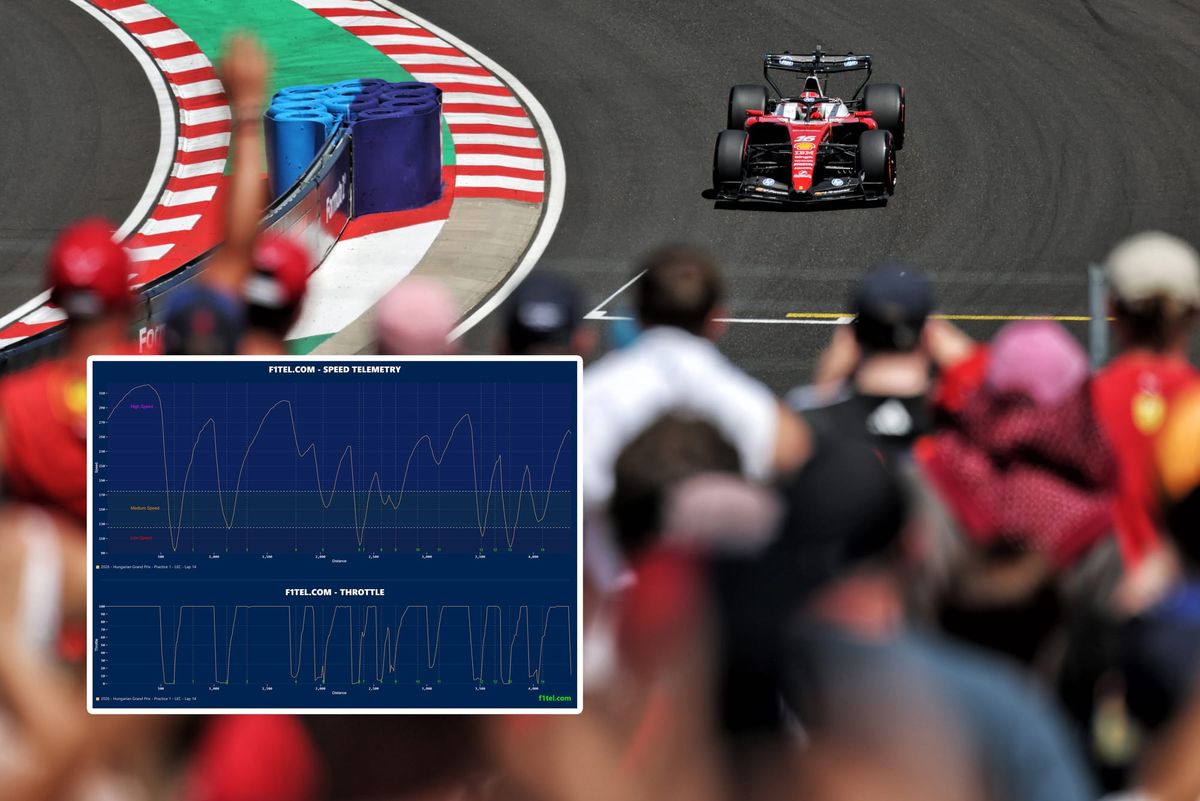
Ferrari has begun testing Mercedes' Formula 1 qualifying lift-off trick in a bid to help boost its challenge for pole positions.
As first revealed by The Race, Mercedes has found a clever way to get around F1's ramp down rates to unleash maximum energy deployment across the timing line on qualifying laps.
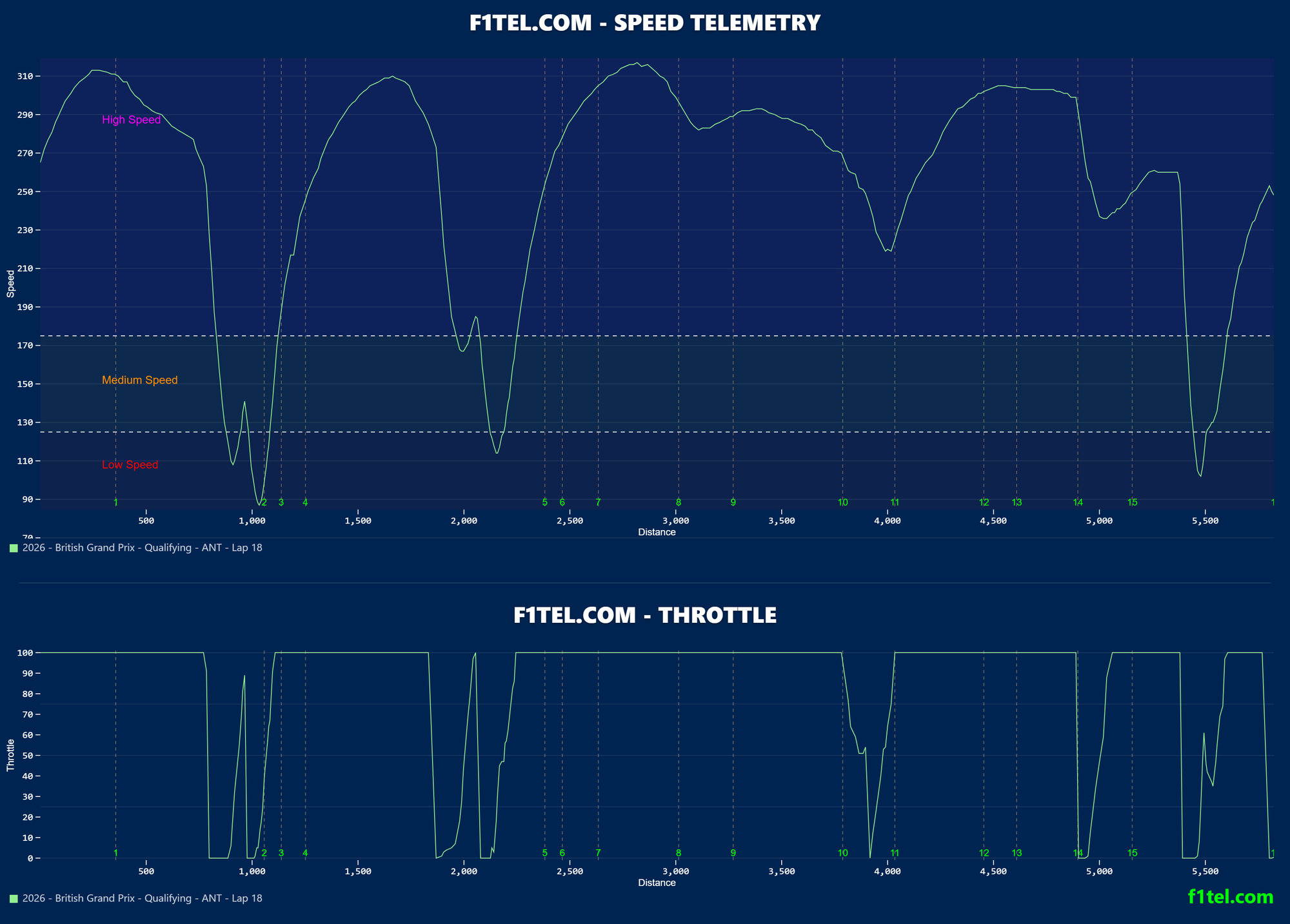
This means its drivers can enjoy a brief top speed boost at the end of a lap because they are able to run at maximum 350kW battery power while rivals must start reducing deployment in a cascade of steps of at least 50kW per second.
An alternative way of using this trick earlier in the season, through an emergency shutdown of the MGU-K, was banned by the FIA after the Japanese Grand Prix, but Mercedes found a way to resurrect it from the British GP.
That has been done through an allowance in the rules that says drivers do not have to comply with the ramp down rate if they lift off the throttle before the battery hits 0%.
After a lot of fine-tuning and practice in the Mercedes simulator, Mercedes perfected a system whereby Kimi Antonelli and George Russell are given a warning tone through their earpieces about when they need to lift off the throttle.
Antonelli used the trick as he secured pole position at the British and Belgian GPs.
The tactic can be clearly seen in use from the telemetry traces of his pole position lap from the British GP below.
Ferrari follows suit
With rivals alerted to what Mercedes was doing, and the FIA happy that the tactics complied with the rules and did not pose any safety risks, it was inevitable that other teams would look to copy it.
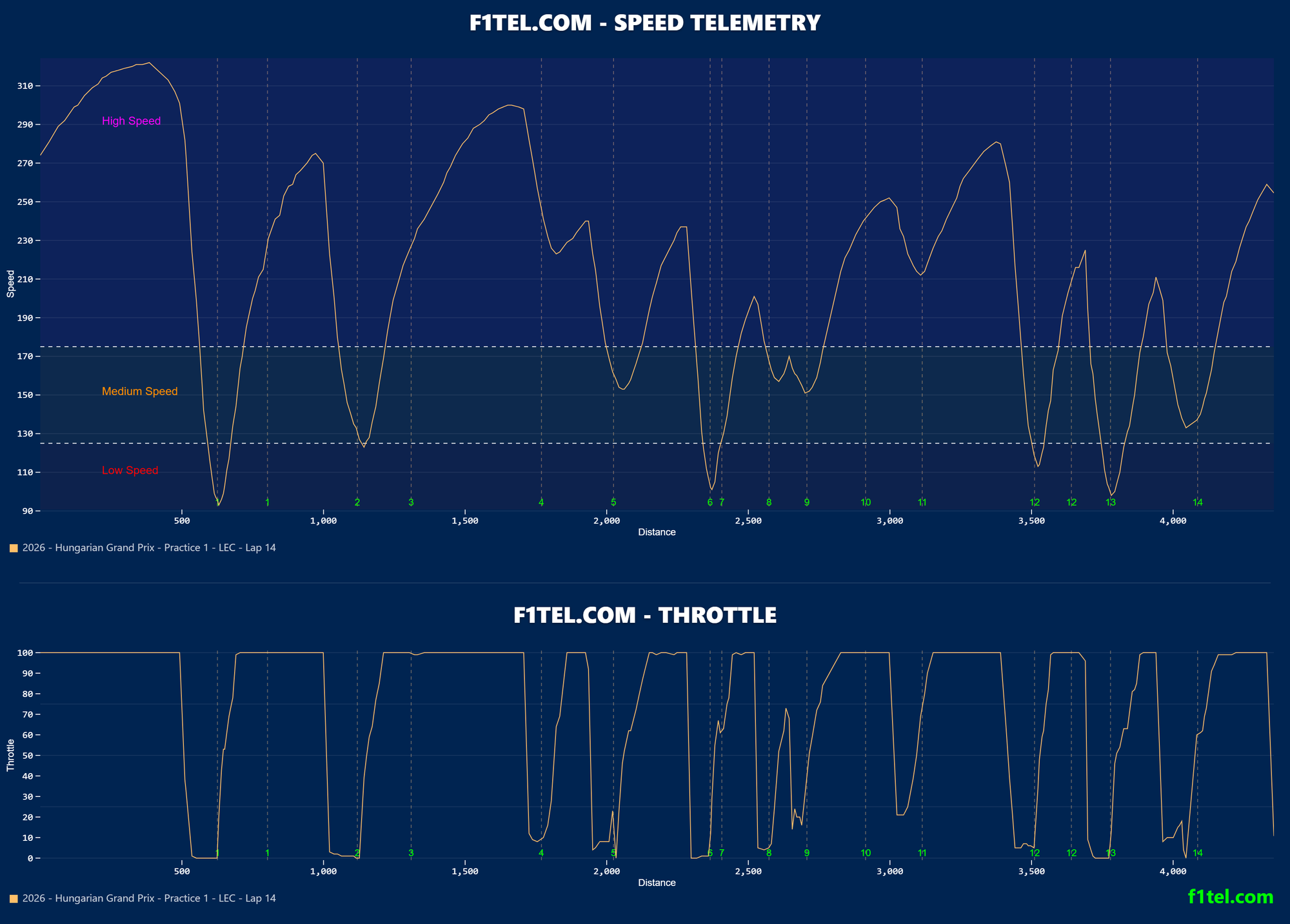
And, as telemetry traces from the Hungarian GP show above, Ferrari trialled it out during practice last weekend with both Charles Leclerc and Lewis Hamilton.
Leclerc can be seen lifting off the throttle as he approaches the timing line on Friday, with his speed rolling over.
On Friday, both drivers employed the tactic as part of an evaluation of the potential benefits it can bring.
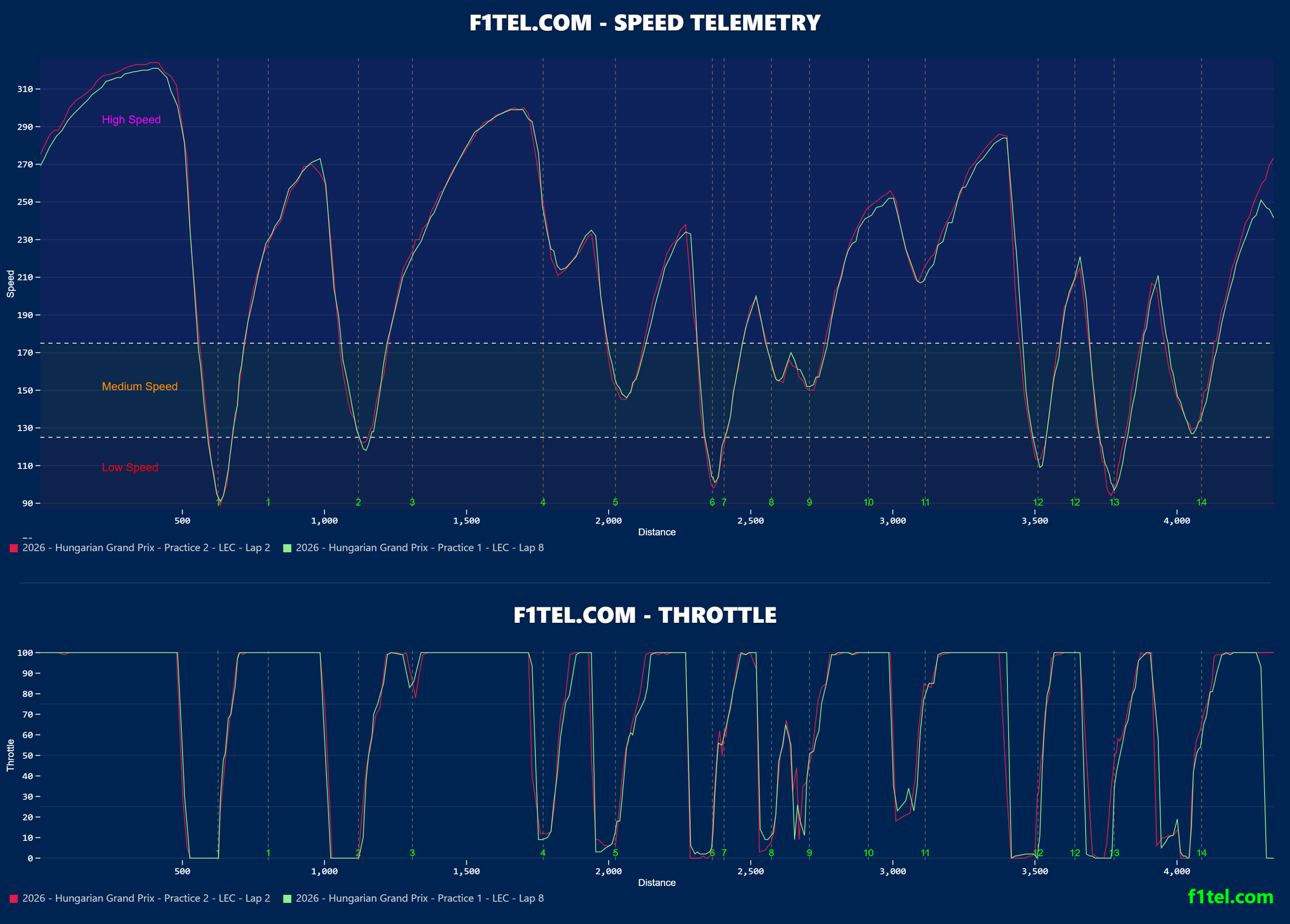
However, with Ferrari concluding that the energy-rich Hungaroring layout did not bring sufficient gains to risk bringing the technique into play for qualifying, it elected not to carry its use into the fight for pole position.
The differences in approach between practice on Friday and Saturday can be seen in the way the speeds contrast on the run to the line in the below trace. Ferrari did not appear to lose any time by staying flat to the line.
Small gain, big risk
The lift-off trick does not work everywhere, and very much depends on the track layout and how much energy there is available to deploy across the timing line.
At venues such as Hungary, that are energy-rich and have quite a long run to the line, the benefits are not as great as they are at energy-starved tracks with a short distance between the final corner and the line - such as Melbourne, Silverstone and Spa.
Its benefit also depends on whether the ramp down rate is set by the FIA at 100kW per second or 50kW per second. The decision to use the trick is very much taken on a race-by-race basis; Mercedes also did not use it in Hungary.
While the gain from employing the extra deployment across the line is said to be only worth around 0.050 seconds, it was not lost on Ferrari's engineers that grid slots can be decided by less than that.
At the Hungarian GP, for example, prior to his three-place grid drop for impeding Oscar Piastri, Hamilton had missed out on pole position to Lando Norris by just 0.012 seconds.
The increasingly tight fight at the front between the top four teams, especially with the world championship still up for grabs, makes it likely that Ferrari's tests in Hungary are a precursor to it attempting to use it in qualifying at future events.
One of the key considerations in giving its use a green light is that it comes with a major risk if it goes wrong.
If a driver fails to lift off the throttle before their battery is empty, then that will be a breach of F1's ramp down regulations and that would result in disqualification.
So teams need to evaluate whether the upside of a laptime boost outweighs any jeopardy from not executing it properly.