F1's huge dilemma over VSC lottery rule
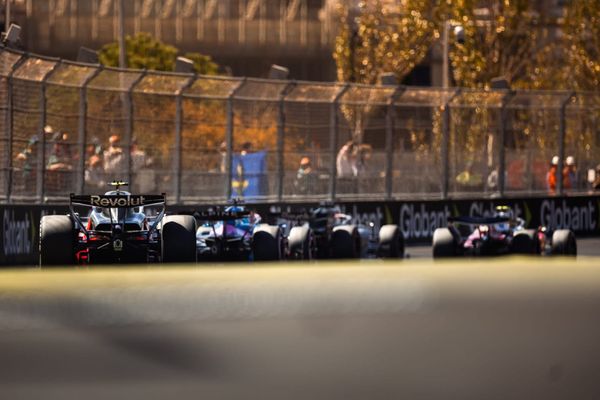
Formula 1's virtual safety car rules are set to be put up for team discussion in the wake of what happened to Lando Norris at the Spanish Grand Prix.
Sources have suggested that debate over the VSC rules triggered by events at the Madring mean that the topic will almost certainly be added to the agenda of the next meeting of F1's Sporting Advisory Committee (SAC).
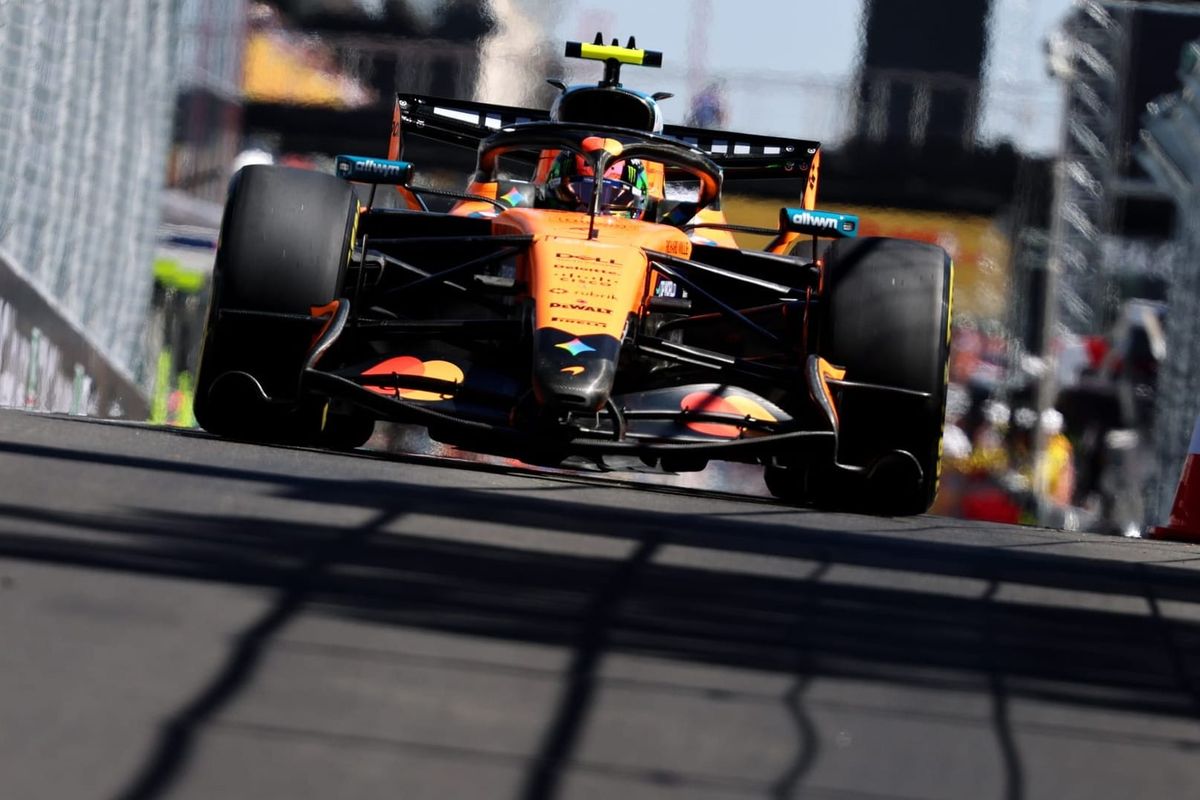
Norris looked on course to romp to a straightforward win in Spain before what he referred to as the "insanely unlucky" timing of a VSC period - for debris on track as well as the stopped Aston Martin of Lance Stroll - cost him.
Race control called a VSC just five seconds after Norris had passed the pitlane entry, gifting all his pursing rivals an opportunity for a cheap pitstop.
Then, to make matters worse, the VSC ended just seconds before Norris himself had got back around to the pits, meaning that he endured the full 25-second pitlane time loss for a tyre change.
Norris dropped down the order, with his subsequent slow pitstop not impacting his position. Although he finished third, there was little doubt that he would have won had positions been maintained through the stops.
Speaking after the race about how unfair he felt the situation had been, Norris backed the idea of his experience being a catalyst for potential VSC regulation change.
"It's a rule that shouldn't define a race," he told Sky Sports F1. "A race should be won by the guy who can put in the best performance, who maybe takes a risk by going long in a stint, and maybe you get a safety car later on and things can help."
McLaren team principal Andrea Stella supported his driver's view that perhaps the events of Spain - which were unprecedented in exposing a race leader as being the only car unable to pit under VSC conditions - should serve as a prompt to evaluate whether the regulations need to change.
"Perhaps there's a wider reflection that the F1 community should apply as to whether to keep things like they are or [to] introduce ways of maintaining more fairness," he said.
However, despite the apparent injustice of such a situation, a consensus to change the rules appears unlikely because alternative solutions to even things out have all been ruled out in the past.
No easy solution
Reflection on the VSC looks set to take place in F1's SAC, which is the body composed of FIA representatives and sporting managers from each of F1's 11 teams.
It is used as a forum to discuss issues with sporting regulations, decide on improvements if they are needed, and work through with the FIA the framing of regulation changes if they are supported by enough teams.
Once a proposal has been passed by the SAC it then goes to the F1 Commission for approval, before the final stage of getting ratified by the FIA's World Motor Sport Council.
It is normal for the SAC to review potentially contentious issues to see if there is desire for change, and any debate over the VSC will fall under this remit.
However, any movement to go for a rule change would likely need agreement from every representative that what happened to Norris was unfair, which is an element where opinion may be divided.
While McLaren and Norris will certainly feel that way as the only ones who had no chance to pit under the VSC, in reality these things happen according to mapped out procedures that are implemented based on events that occur randomly.
No one could have predicted Stroll was going to head down the escape road at Turn 20. No one could have predicted he was going to get stuck in that escape road. And no one could have predicted the Turn 5 collision between Fernando Alonso and Carlos Sainz that put debris on the circuit that race control felt needed sweeping up.
That those things happened when they did, and that the VSC procedure followed those events, is at best unlucky for Norris - but it's not unfair.
Stella said there was no suggestion that race control had acted in any way it should not have in judging the timing of the VSC entirely on what was required for the safe operation of the race.
And he suggested what happened was more an element of misfortune.
"I think at times that being unlucky is used for too many applications, but in this case it's almost a mathematical definition of being unlucky," he said.
The potential changes
If, however, it is decided that a rules tweak should be pursued, there are several ways of altering the VSC rules.
Norris said that drivers had regularly discussed alternative solutions when the topic of VSC had come up in drivers' briefings.
"We have spoken about it in the past, several times, about how it can be at least covered for one lap or everyone has the opportunity to do the pitstops," he said.
"Or you just block the pit entry, and no one can box apart from if you have a puncture or something. I think there's a few things you could do to make it more simple and more fair for everyone, but that’s a bigger discussion."
While Stella supported the idea of teams discussing alternative VSC options, he was not certain about how best to improve things.
He said he was "puzzled" about what to do, before presenting a binary choice between extending every VSC period so all cars have equal opportunity to pit, or just leaving it, in his words, "in the hands of the gods and sometimes you're lucky, sometimes you are not".
As Edd Straw suggested in our race review episode of The Race F1 Podcast, if you decide to extend VSC periods so everyone gets a chance to pit, you will end up in a situation where race control is focused more on how the race is playing out at that moment, than simply doing its primary job of keeping the circuit in a safe condition.
It's also nonsensical to prioritise yellow flag running over green flag racing.
Another option would be to follow what Formula 2 does and allow mandatory pitstops under a full safety car but not the VSC, so this kind of 'free pitstop' doesn't count towards your mandated tyre compound switch.
That obviously disincentivises pitting under VSC, but it doesn't necessarily eliminate the pitstop lottery, especially if a race requires multiple stops or it means drivers could gain an advantage by using the pitstop time gained under the VSC to switch to a multi-stop strategy.
Such a change would likely shift the problem to a different area rather than cure it entirely.
Perhaps the best solution would be to simply close the pits whenever a VSC is deployed.
The VSC is already designed to effectively freeze the time gaps between cars while safety matters on track are dealt with. If F1 and the FIA banned any and all pitstops under these conditions, then no one is ever able to gain an advantage under VSC.
The downside with this one is what to do with cars that are already in the pits when the VSC is thrown; do they get to retain the benefit of their good fortune and anticipation, or should they be stuck in the pits until the VSC ends?
A warning from IndyCar
A perfect solution to VSC rules is a very difficult problem that may not have a solution.
And there's also a cautionary tale F1 should take note of from another high-level single-seater racing category that tried to tackle this kind of problem and failed.
IndyCar decided to change the way it managed yellow flag periods to avoid ruining leaders' races - and had to undo the rules afterwards.
While it's not quite the same, as that series doesn't have a VSC option, IndyCar made a change to how it dealt with safety car periods - known as cautions or full course cautions - in certain race scenarios, hoping to avoid the exact problem Norris suffered in Madrid: a leader being disadvantaged by the timing of a safety car period and losing crucial track position.
IndyCar altered its strategy to keep incidents under local yellow flags if a stranded car was considered to be in a safe position.
Race control would wait and provide time for all cars to pit, before then calling a full course caution - effectively just delaying a safety car period until everyone had the chance to pit.
But that policy came under the microscope earlier this year at the Indianapolis road course race, when Alexander Rossi reacted unhappily after he stopped on the main straight and a caution wasn't called for more than a lap. He felt he was in an unsafe position and the caution should have been called immediately.
IndyCar reacted to the criticism by changing how it responds, and has effectively reverted to how things were before. It no longer takes the pit window into consideration when deciding whether to call a safety car.
IndyCar was rightfully praised when it originally made the change to try to avoid ruining its leaders' races, pressured for a long time by drivers to make a tweak to its race management.
But like we're seeing with F1, there are always pros and cons to difficult decisions and ultimately safety has to be the priority - even if the consequences feel unfair sometimes.