Inside Herta's Cadillac F1 audition - and how he compared to Perez


Colton Herta might still somehow be one superlicence point short of a Formula 1 superlicence after a bizarre error, but his latest Cadillac F1 outing was an important audition to replace Valtteri Bottas next year.
An incorrect calculation of his superlicence points (verified at the time by the FIA) means Herta erroneously thought completing 30 laps in his fifth FP1 outing of the season in Mexico would be enough to take him to the 40-point threshold required to finally earn him the superlicence he’s been chasing for years.
“I was literally walking to go do the media stuff [after FP2], that was like the first time I had heard about it,” Herta said on Friday evening.
“Obviously, we were still doing our meetings and whatnot, so I haven't talked to anybody about it. As far as I was concerned, going into the weekend, if I did 100km here, I would have 40 [points].
“So, I'm not sure what's changed, or why stuff has changed, or if it even has. I have to wait and see. I think a lot of the people that I want to talk to about this are still in the meeting. Maybe I'll have a little bit more clarity this evening.”
Cadillac has gone beyond the mandated four rookie practice outings and given Herta a fifth session in Mexico to get him an extra point. Cadillac will run him again to get the final point, and had planned to anyway before the bizarre calculation error emerged.
But his Mexico outing wasn’t a case of Herta simply cruising around to get the mandated 100km of running to get the point. He was given an extensive programme that wasn’t too dissimilar from Perez's, his 2027 team-mate, should he secure Bottas’s race seat.
How he compared to Perez
Herta’s FP1 starts with an 11-lap stint on the hard tyres with a best lap of 1m22.452s, 1.067s slower than Perez’s on the same tyres.
Herta tells his engineer he’s “leaving a lot on the table” in sector one, but he’s told that’s where he’s actually faster than Perez; instead, he’s leaking time in sectors two and three.
This continues when he switches to the medium tyres, completing back-to-back stints on them with only a brief pitstop to go half a turn down on the front wing - a microadjustment to reduce the angle.
It’s on that second run when Herta completes his personal best lap, a 1m21.365s, on what are seven-lap-old tyres.
Perez, in contrast, is able to complete his fastest lap on three-lap-old tyres during his first medium tyre stint.
The actual gap between them is 0.970s. Perez put together his best three sectors; if you combine Herta’s, he closes slightly to 0.817s.
The esses, in particular the Turn 10/11 right-left, are particularly challenging for Herta as he has to abandon one lap on the hard tyres when he cuts that corner, while another is wrecked by a wide moment there.
He complained of “big understeer everywhere in the low-speed” corners. He struggled with his approach into the Turn 12 right-hander that leads into the stadium section; Herta’s minimum speed drops to 13km/h below Perez’s, so here alone he ships around four tenths to Perez on their fastest short runs.
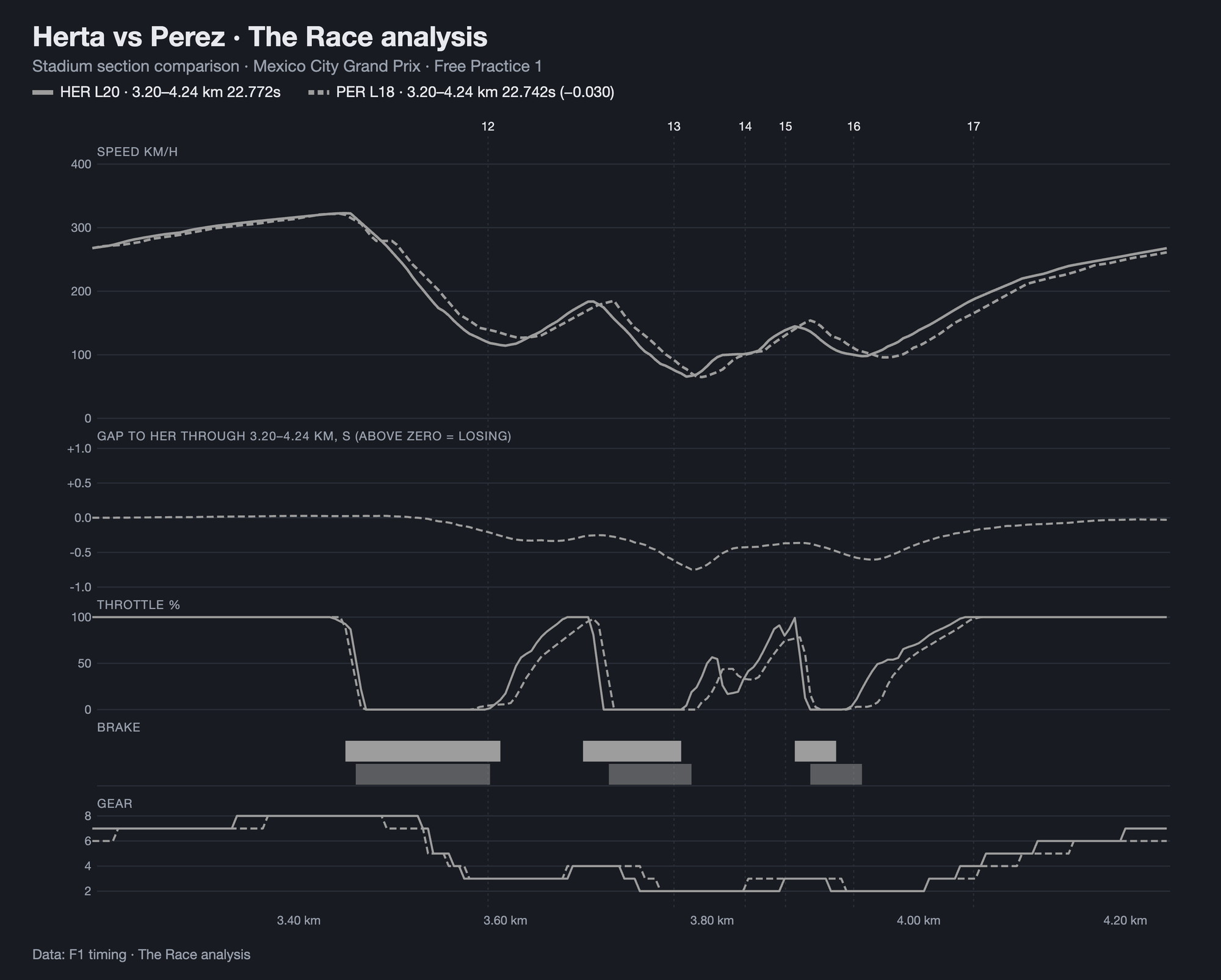
“For me the biggest thing was figuring out the timing for Turn 12,” he said when The Race asked Herta what his biggest limitation was.
“The stadium section I think was alright. More so Turn 12. And then kind of sorted it out for the long run.
“It's hard for the performance runs. You only do so many laps to sort it out in time. So unfortunately I didn't do that well. But for the long run it was better.”
Herta’s claim stacks up as he generally halves that time loss in Turn 12 during his longer run at the end of the session.
This is on average around eight tenths slower than Perez’s, although it’s hard to know the exact fuel loads of both cars.
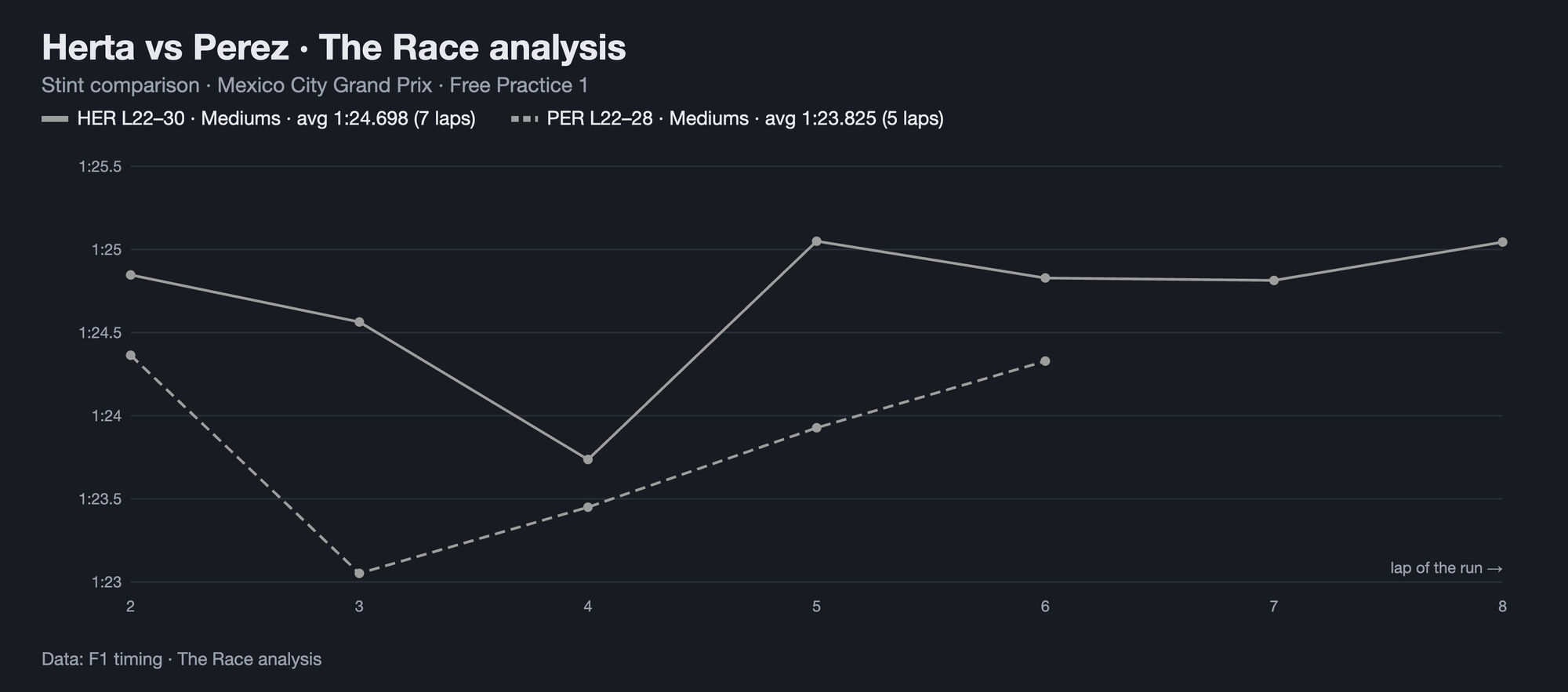
Herta called it the “most consistent part of my running”, and the data backs that up with only a half-second variation in his laptimes over a seven-lap stint. A decent effort for a driver inexperienced in F1 machinery.
Watching his FP1 onboard versus Perez, it was clear Herta needed more steering input around the lap and he was advised to better manage his throttle usage out of Turn 11 - corner exits being key to getting the most out of the 2026 power units.
He’s still adapting from his usual aggressive style that worked so well for him in IndyCar - “where without power steering you can be more aggressive”.
“You can have two or three or four inputs into the corner [in IndyCar], whereas in the Formula 1 car it's kind of useless effort.
“You have to be smooth and really precise with the line. Whereas in IndyCar you can maybe get away with a little bit more of a raggedy style.
“Really, that's just down to the lack of power steering in the F1 car.”
F1 superlicence will be ‘monkey off my back’
Asked if he sees himself as a realistic contender for the 2027 Cadillac seat, Herta said: “I hope so. I don't know why I'd be doing this [otherwise].
“I think Cadillac has shown a lot of faith in me in doing all these FP1s. They put a lot of resources behind me to get me ready to be in the F1 seat.
“I hope that's all reciprocated, and I can make it.”
He added: “As far as 'now or never' - I don't think I can go back to IndyCar and have another chance in Formula 1. Whether that means next year or the following year. I really don't know what the plan is at the moment.
“We'll have to wait and see. I think some decisions hopefully will be made within the next month.
“For me, I think it would be great the sooner the better to know going into November. You want to know what you're doing next year. For me, that's the main thing is to know what I'm doing next year.”
Herta thinks “social media blows things up a lot more than in reality” so he’s remaining calm amid rumours of him graduating to F1.
But he did admit it will be a relief when he finally gets to the 40 superlicence points.
“Just maximising. Doing everything better. There's always time to find,” Herta said when asked what he wants from his next FP1 outing.
“Just being able to maximise the short run and being able to maximise the long run. Probably a bit more in the short run than the long run.
“But I think every time I get in the car I feel more comfortable and I'm able to push a bit more.
“So I think once I kind of get that superlicence and that monkey off my back, then you can really kind of push everything as hard as you want to.”
The Race understands Cadillac was impressed with the job Herta did in Mexico, even if Herta’s ultimate pace was adrift of Perez.
The team sees Perez as a high benchmark given how impressed it’s been with him throughout this year and the three-year extension he’s earned.
It sees solid progression along Herta’s F1 outings, and he remains a strong contender for a 2027 seat. At the same time, so do incumbent Bottas and the likes of Yuki Tsunoda and Mercedes reserve driver Frederik Vesti.
Vesti was particularly brash after FP1, where he was only 0.111s adrift of championship leader Kimi Antonelli in the sister Mercedes.
“I’ve got my eyes on that [Cadillac] seat,” he admitted. “I believe I would be very, very good in that car, and to be in F1 has been my goal ever since I started driving.
“I’m more motivated than ever; I’m extremely hungry to be on the grid.”
George Russell, who Vesti replaced for FP1, even said he told Mercedes: “I want to ensure that he [Vesti] gets an opportunity to show what he can do; that's the least that we could do.”
It was probably as strong an audition as Vesti could have hoped to make for the seat.
And he wasn’t the only rookie to set some eye-catching pace in FP1…
Tsolov’s impressive outing
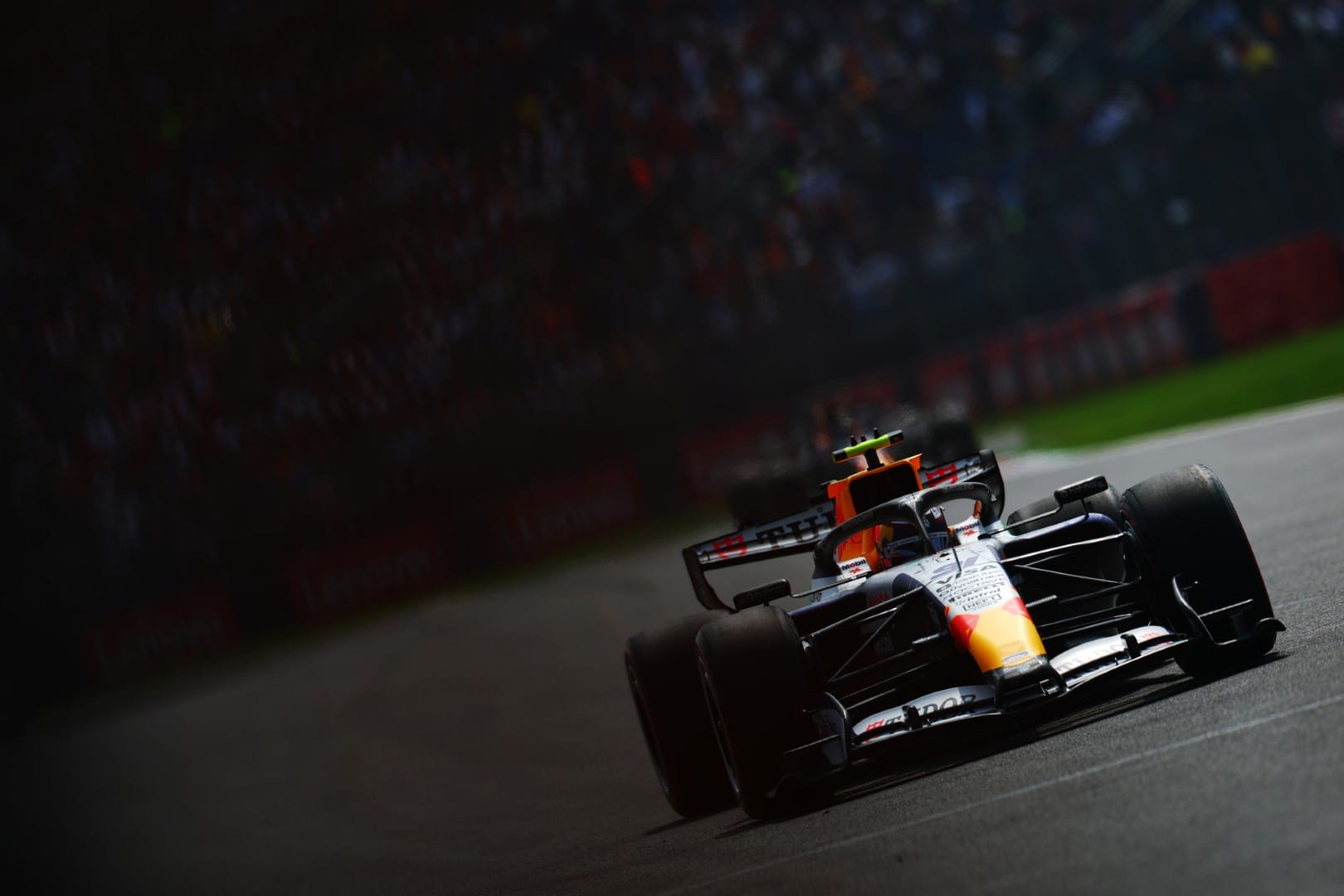
Nikola Tsolov made the most of his F1 weekend debut to make his case for promotion to a race seat next year, lapping just 0.13s off Arvid Lindblad based on their headline laptimes on softs, and lapping two tenths quicker on mediums.
To that we must add the caveat that there was evidence of differing energy strategies, with Lindblad often faster on the back straight and Tsolov stronger on the main straight - with Lindblad suffering one of the most extreme drop-offs in speed prior to braking for Turn 1 in the field.
Although Tsolov had a couple of laps deleted for track limits violations, he was a little quicker than Lindblad in sector three, although he consistently lost time through and out of Turn 3. He was also perhaps a little conservative on the brakes into Turn 1 at the start of his best lap, perhaps not helped by the distraction of Isack Hadjar’s Red Bull cruising off line approaching the corner. This was on the third push lap of his performance run on softs.
Tsolov also had a problem with the seat impeding the bloodflow to his right leg. After setting his fastest lap, he reported that “I’m running out of blood in my right leg, I cannot feel my leg”, and then suggesting that “the seat is compressing my leg and my blood stopped”. He returned to the garage and was able to return to the cockpit for another run after briefly getting out of the car.
“I've actually had that a few times before driving in F2,” said Tsolov. “It's just the seat, I think, being a bit tighter than what we would like in my right leg. So my blood closed off. When you press the full throttle, you move up into the seats, so you kind of compress your legs. That was the thing, I couldn't feel it. It was a dead leg, pretty much. You know, you get the tingly feeling. And then it just came back, obviously. I had to shake it out and after two, three minutes, it came back.”
Slater’s ‘difficult’ F1 debut
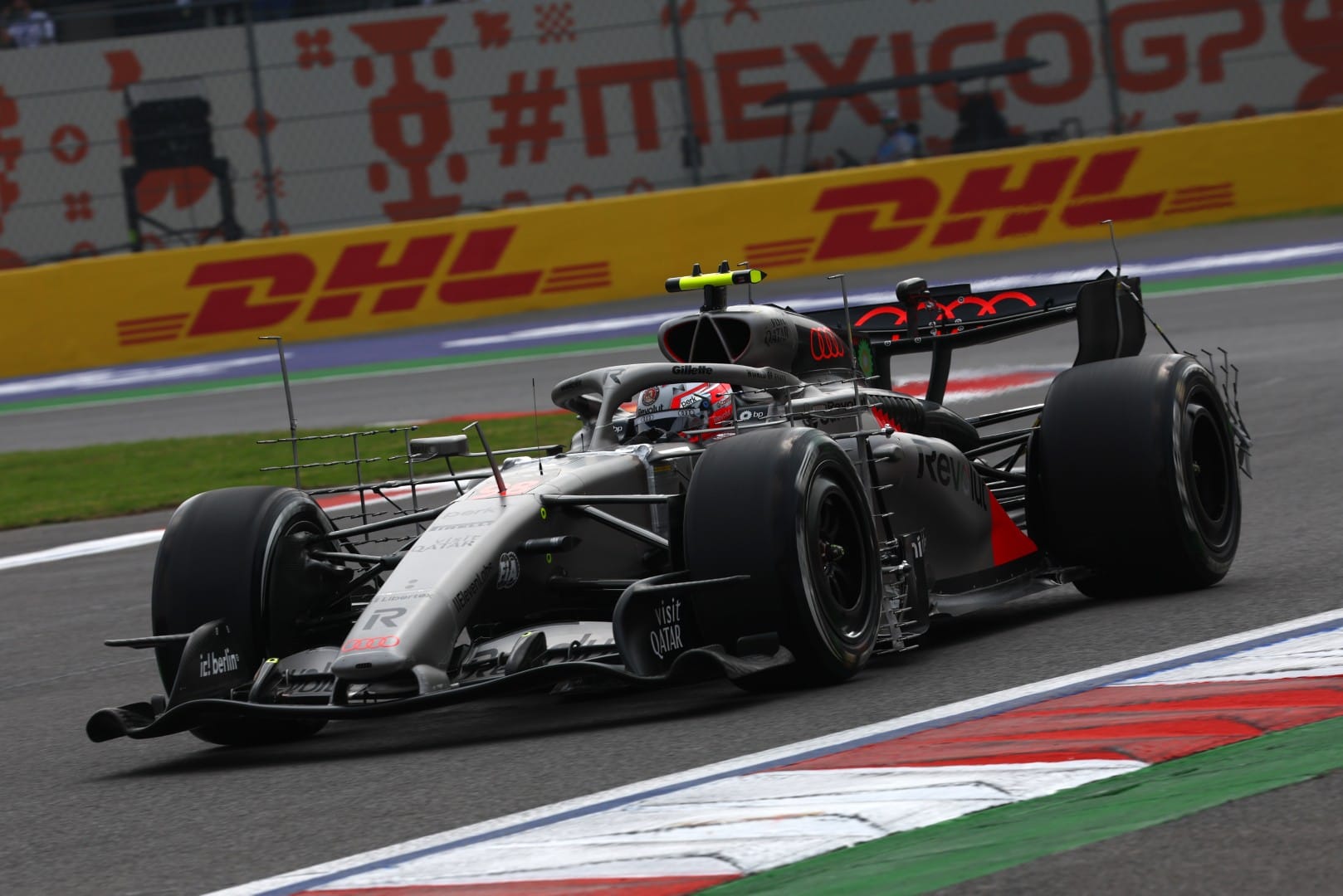
Formula 3 runner-up Freddie Slater’s F1 session debut was best summed up by the radio message he received, in which it was described as “a very difficult session from a technical point of view”. That was an understatement, as he took the chequered flag after completing only 13 laps spread across six runs. Not that this was through any fault of the 18-year-old.
He started out with three single-lap runs. The first two of those focused on gathering aerodynamic data, with aero rakes mounted behind the front wheel and a nose change in between.
He then should have been able to settle into a longer run on the hard Pirellis starting on his fifth lap, only to be told “we have to box this lap, we have an issue”, entering Turn 7. This was because a fan had been left in the right-side sidepod cooling inlet - meaning Audi was fined €7,500 for releasing the car in an unsafe condition. The team then sent Slater back out, but he was immediately called back in for a lengthy stay in the garage.
He was able to return to the track with 11 minutes remaining, on a set of mediums. On his first push lap of the session, he posted a 1m22.451s, running deep in Turn 6 and compromising Turn 7. Then, on the second attempt, he locked up the front-left into Turn 1 and had to cut across the grass.
The resulting flatspot meant he had to pit to switch back to hards, on which he had one push lap that stood at his fastest of the session - elevating him to 21st ahead of Herta. That put him 1.337s behind team-mate Nico Hulkenberg, which in the circumstances of his disrupted session and posting his best time on hards on only his second full flying lap was very respectable.
“At the end of the day, it’s motorsport and that’s how things go,” said Slater of his frustrating day. “Of course, it was a bit frustrating obviously not to get many-many laps, but overall that one lap that I did do was actually pretty good compared to relevant data. And a really historic day for Audi to have their first junior driver in the car. It's a very special day, so we look at the positives and then we focus on the results.”