Why F1's 2026 cars are unusually quick in Mexico
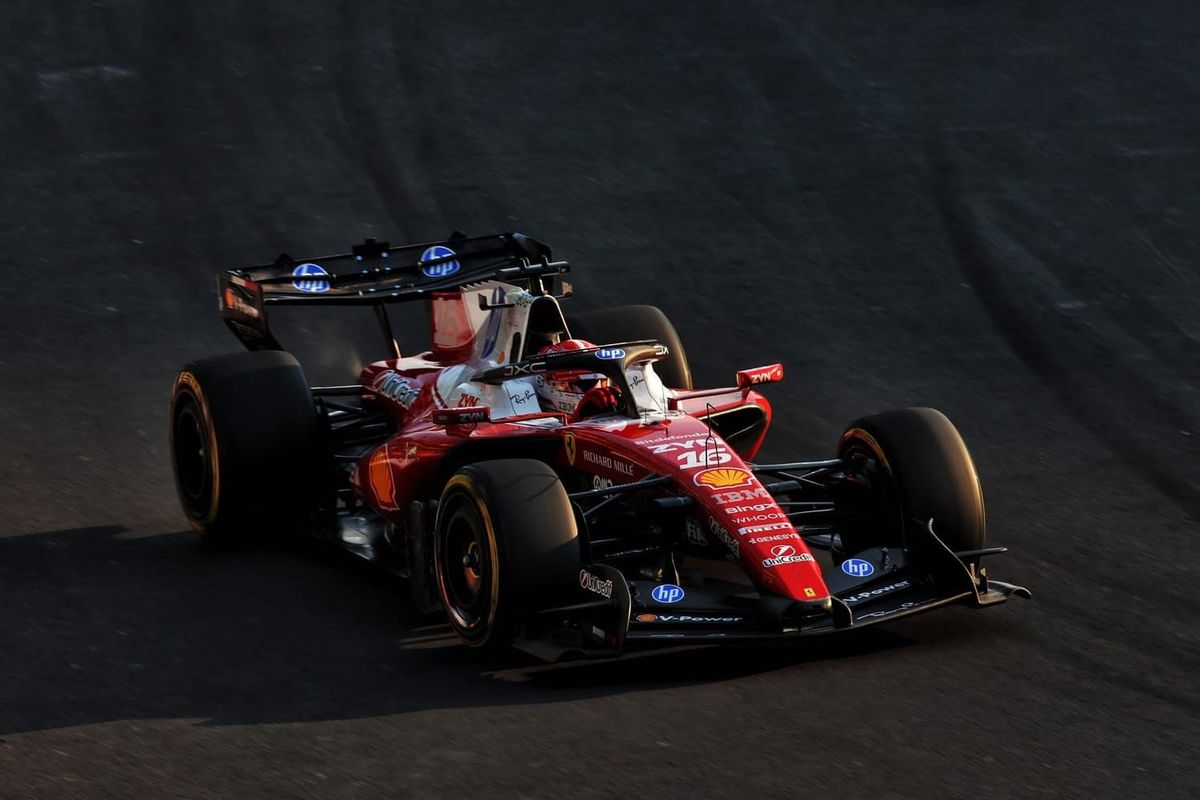

A combination of factors means Formula 1's 2026 cars have been unusually close to the performance of their ground-effect predecessors in Mexico.
Charles Leclerc's FP1-topping time, a 1m18.128s, was 0.252s quicker than the lap he set to lead first practice in Mexico last year. That's the first time the 2026 cars have outpaced the 2025 cars in an FP1 session, having usually been two or three seconds slower.
Leclerc lowered the bar by three tenths to a 1m17.827s in FP2, though that was 0.435s slower than Max Verstappen's FP2 benchmark from last year.
Pirelli's pre-weekend simulations had predicted a 1m17.0s would be pole position, but after Friday's running it's now predicted to be well below that.
Pole position last year - a 1m15.586s - ended up being 1.8s faster than the pace in FP2, so you'd expect the 2026 pole position to be in the low-1m16s.
That should mean the smallest 2025 versus 2026 dry-weather qualifying difference of the season, with the previous closest being 1.409s in Baku.
So why are the 2026 cars so competitive at the Mexican Grand Prix relative to their ground-effect-era predecessors?
A resurfaced, busier track
The track underwent a partial resurfacing ahead of the 2026 race, with resurfacing work taking place from Turn 10 to Turn 1.
"This could also be an effect," Pirelli's chief engineer Simone Berra said.
"Obviously it was partially resurfaced, so sector one and half of sector two didn't have this kind of new Tarmac, so that could be a contribution also, but it's not the only explanation about why we were so fast, or faster than we expected."
Another explanation Pirelli offered is the track being in better condition because there's more support series laying down rubber this year.
However, there has only been a 10-minute increase in the on-track action prior to FP1 versus last year, with the one-make GTM Super Copa series, Masters Historic and Formula 4 NACAM championship on the support bill this year.
"I think part of these results are due to the track in better conditions compared to last year, we have several supporting series that are helping," Berra said.
"All the supporting series run before FP1 and between FP1 and FP2, so the track was evolving quite a lot during the day."
Less of a penalty at altitude
The most important factor is Mexico's high altitude is also less detrimental to the performance of the 2026 cars and power units than the 2025 packages. There's less total downforce to lose in the first place and the ground-effect cars were more downforce-dependent.
"The conditions, the altitude here, it's in favour of these cars compared to the old one," Berra said.
"The old cars were losing more downforce, compared to what this car generation are losing.
"Also, the other point is that the engine can push more compared to a normal situation or sea level conditions.
"So that's the main point, the drivers can push and so the difference with laptimes from last year are reduced."
Altitude, of course, does not effect the electrical power, which is far more influential on performance with the 2026 power units.
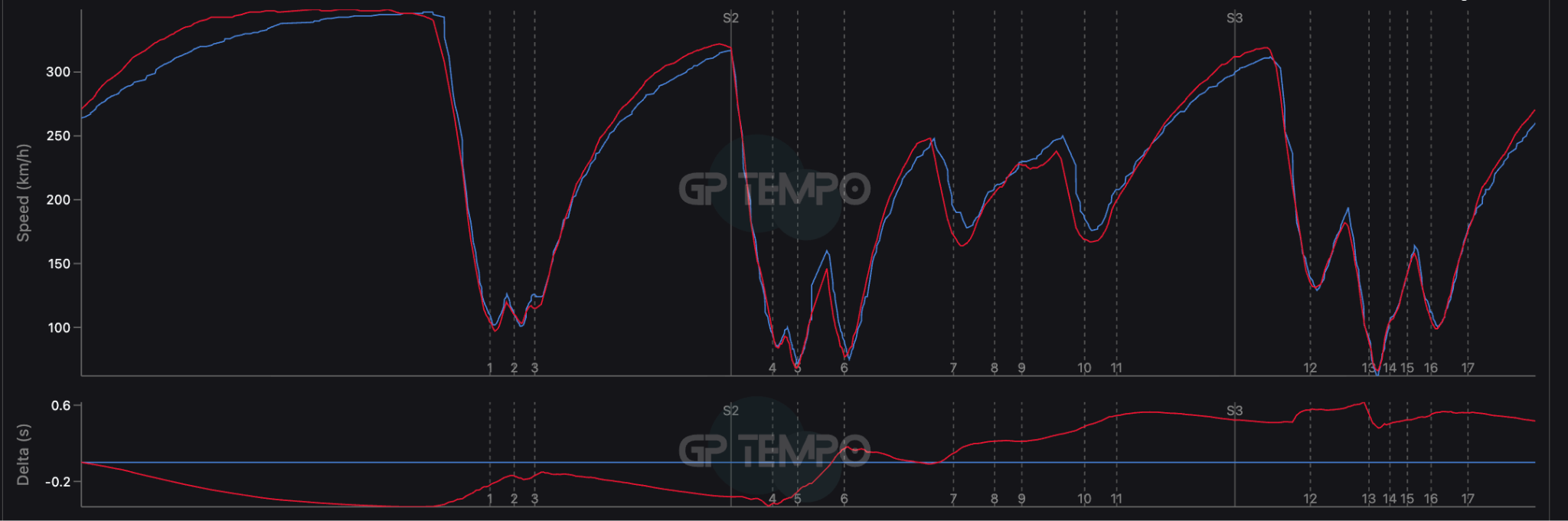
The 2026 cars (Leclerc's lap in red) are quicker on the straights than the 2025 cars (Verstappen's lap in blue), with the 2026 machines over four tenths up on the run to the Turn 4 left-hander. And it should be noted that Leclerc's Ferrari is one of the weakest in this section among the top-four teams because of its power unit deficit. So the gap is even larger if you compare to Verstappen's 2026 car.
The 2026 cars quickly lose that built-up advantage in the low-speed corners that follow and never recover it, but the drop-off is far less stark than at other circuits such as Spa (3.799s between 2025 and 2026 poles) and Monza (2.994s between them).
The cars actually end up relatively energy-rich in Mexico, so it's one of the better tracks for showcasing the performance of these cars.