What we've learned as Porsche reveals its Gen4 Formula E car
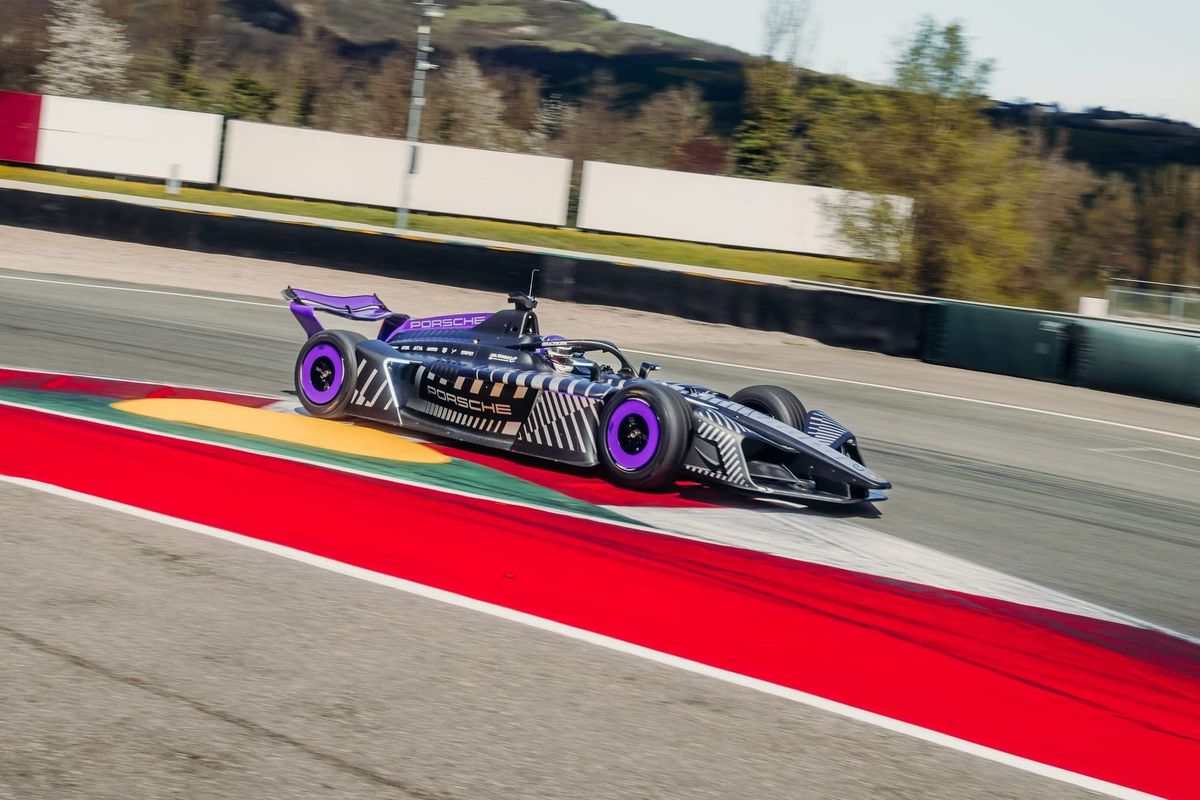
Porsche has unveiled its new Formula E car, six of which will race in the first season of the electric championship's Gen4 era.
The 975 RSE - which is named in deference to the 75th anniversary of Porsche Motorsport in 2026 - first ran at Porsche's Weissach facility in November 2025 and has since completed 1860km of testing at Monteblanco, Almeira and Varano.
GEN4 is coming at us FAST 🛸🚀
— Nico Mueller (@nico_mueller) April 19, 2026
testing of the new Formula E beast continues - with more to be revealed very soon 🔥#nm51 #porsche #formulae #gen4 #raceborn pic.twitter.com/RY5p7dO6oE
Pascal Wehrlein and Nico Mueller have shared the majority of that testing so far but The Race also understands that Porsche's reigning DTM champion Ayhancan Guven has also sampled the car recently as well.
Guven is hotly tipped to be one of the drivers in the second factory team, which is being formed to run alongside the regular factory outfit from next season onwards.
That new model will also involve a customer team, believed - although not yet confirmed - to be existing partner Cupra Kiro. Porsche's customer throughout the Gen3 era, Andretti, is believed to have an agreement with Nissan.
The Gen4 era is set to include the biggest performance leap in electric motorsport to date, with the car pushing out 600kW of power, utilising an active front differential, and enjoying significantly increased downforce as part of a two-tiered aerodynamic initiative to be used in race weekends.
Olivier Champenois, Porsche Motorsport's technical project leader in Formula E, said of that shift: "Within roughly a decade, Formula E has become so fast that aerodynamic downforce is now a necessity. However, downforce always comes with drag and increases energy consumption.
"To maintain a strong focus on efficiency, we use two different aero packages with distinct bodywork components: a low‑downforce package with reduced drag for the races, and a high‑downforce package for qualifying, where energy consumption isn't relevant.
"We are talking about up to 150% more downforce compared to the Gen3 Evo."
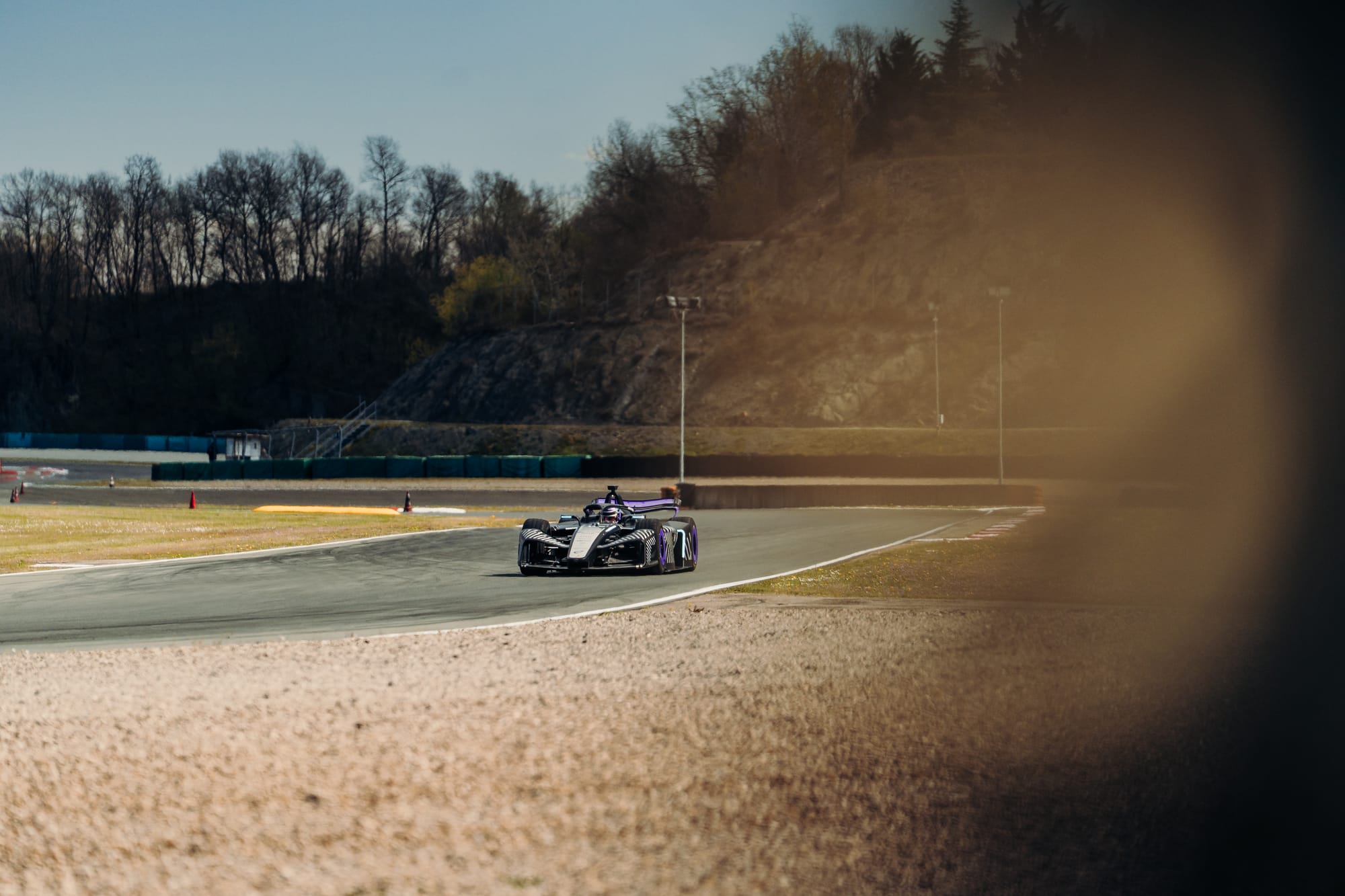
Champenois also detailed some of the advanced efficiencies of the Gen4 car, stating that the Porsche 975 RSE will produce "71% more peak power" that its 99X Electric Gen3 predecessor.
"At the same time, we were able to reduce the weight of many parts. Although we are developing more components in-house for Gen4 than for Gen3, the total weight of our parts package was only allowed to increase by 5kg."
Like the five other currently registered manufacturers - Jaguar, Nissan, Mahindra, Stellantis and Lola - Porsche will also enjoy further openness in its so-called manufacturer perimeter of freedom in sourcing, building, and engineering aspects of the Gen4 car.
The steering wheel, wiring looms, DCDC power converter, hydraulic and brake-by-wire system are some of the areas in which it will be free to develop its own solutions under the Gen4 regulations.
"The concept remains the same in that the regulations force us to maximise the efficiency of our cars in every respect because that makes us relevant for the road," added Florian Modlinger, Porsche's director of factory motorsport for Formula E.
"The races should become even more attractive, as the new cars are considerably faster. The acceleration is impressive, and we expect top speeds of up to 335km/h or 208mph. I'm very curious to see how the fans will react."
Wehrlein and Mueller are highly likely to continue with the present factory team as team-mates into the Gen4 era.
Wehrlein, the 2024 champion, has a long-term contract with Porsche, which is believed to take him up to at least 2028. Mueller meanwhile has enjoyed a strong start to his stint at the main team, taking pole in Miami and scoring five points finishes from the first six races, contributing significantly to Porsche's place at the top of both the teams' and manufacturers' standings.
New upgrades system
The FIA and Formula E are set to allow manufacturers to make hardware upgrades to Gen4 cars through a new token-based system, which will supersede the current mid-cycle update process.
The FIA will prescribe a fixed number of tokens to specific components. Manufacturers will have one token for the MGU, one for the gearbox and one token for the MCU (motor control unit) to use over the four-year cycle.
In addition, two tokens can be used for hydraulic or electrical components each, meaning two developments are possible during the four years.
"Hydraulic development is a new one, so we expect that they [the teams] will have to improve there," said the FIA's Formula E technical manager, Vincent Gaillardot.
"We don't want to limit so much, but we still want to control cost, avoiding a full development every year. This is how it will be managed for the manufacturer's perspective."
Gaillardot added that he "did not see any evolution of the bodywork" during the Gen4 cycle, as has happened in each era to date.
"It's done," he said.