What we learned from day one of F1's Canadian GP
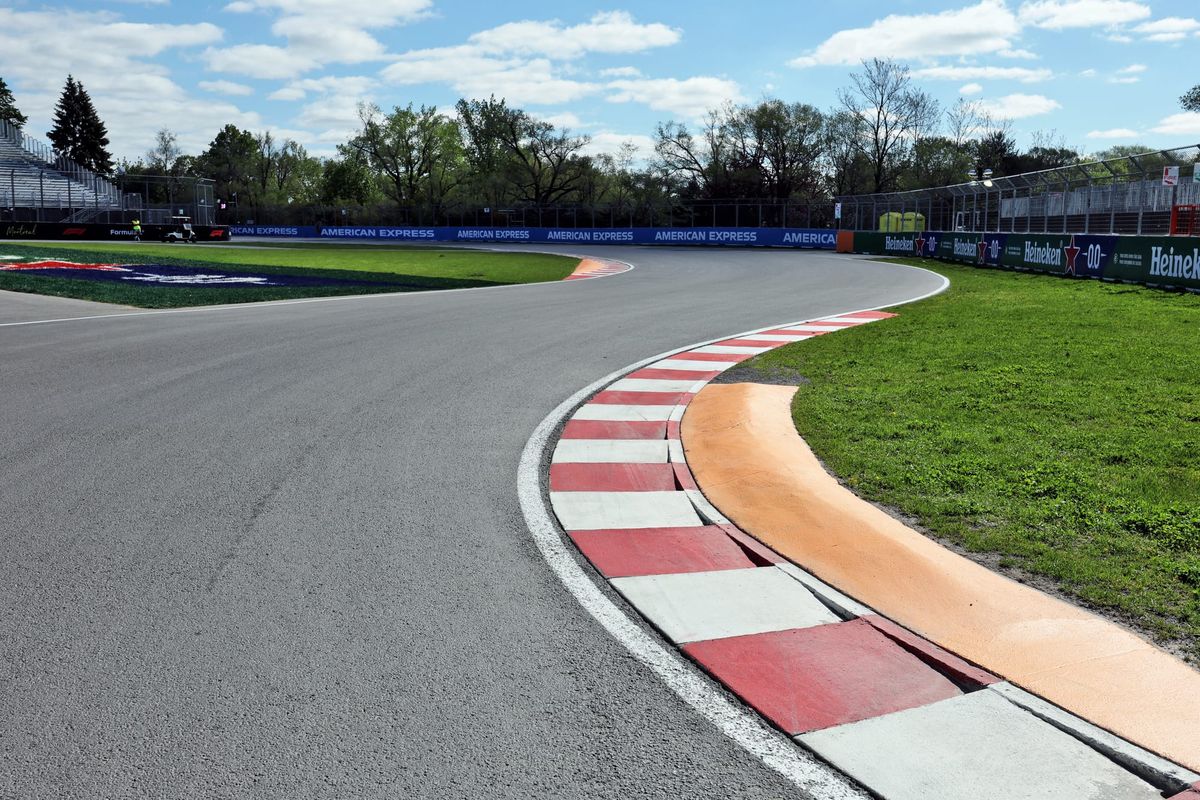

After a three-week gap post Miami, there was plenty for the Formula 1 paddock to reveal on the first day of the Canadian Grand Prix weekend.
Here's everything we learned from Thursday in Montreal...
How Williams is addressing a massive weak point
Williams started the Canada weekend announcing the signing of several new recruits from teams across the grid - including someone you might not be super familiar with, but who has cropped up in The Race’s McLaren coverage from time to time. With good reason.
As chief operating officer, Piers Thynne was a serious leader at McLaren. He was promoted into the COO role with expanded responsibilities as part of the early Andrea Stella technical reshuffle that ousted James Key in early 2023, and has spent years running the production side (among doing other things) at McLaren.
This has obviously been a massive, glaring weakness for Williams, given its ratio of bungled car builds - including a painful one this year.
It is hard to speak for how well things actually worked in practice behind the scenes at McLaren, but the build process Thynne seemed to oversee at McLaren for the 2022 and 2026 new rules cycles was essentially the competent version of where Williams accidentally ended up.
Where Williams was late on production and light on spares because it wasn't capable of actually doing better, McLaren was able to push deadlines further and leave maximum time and cost for early season development.
On top of that, Thynne was credited by Zak Brown as being part of the cultural shift among the senior leadership team during the early 2020s turnaround.
So, this does seem like a very good signing from Williams to address a major area of weakness - something its current driver (and former McLaren man) Carlos Sainz supports.
“After the struggles we had in the winter, I think it was quite clear we're still not at the level that we should be in multiple areas and I think the team took very quick action into addressing it and hiring some key people,” said Sainz.
“Piers is someone that I know pretty well from my time in McLaren which I think will be a massive help on the production line and operation side.
“So, happy to see that we were able to react, realise quickly that we were not at the level that we thought or we could potentially think we were, and that there's a plan to revert that situation and make ourselves stronger.”
Cadillac’s got a ride problem that Montreal will expose
Sergio Perez is generally positive about the progress being made with the Cadillac MAC-26, but believes the characteristics of the Montreal track will be a big test of one of its main weaknesses beyond the need to add downforce.
“We were struggling quite a bit in Miami with the ride, so that’s something we put a lot of emphasis [on] in this small break to try to come up with better solutions and make sure that we are on top of it,” said Perez when asked about this problem by The Race. “And it’s probably the biggest test in terms of [kerb] riding, this circuit.”
We asked him to elaborate on the problem, and he pointed to “how much it unsettles the whole car, how we are absorbing the kerbs”. That indicates the car reacting too much to hitting the kerbs, then struggling to settle, which can have a detrimental impact on grip and traction. Perez is right to say a track like Montreal, with several chicanes and plenty of low-speed corners in between the long straights, will be “the best test” of this aspect of the car.
First hints (however vague!) of Honda performance priority
It has been a pretty brutal start to the season for Honda, which has been battling vibration problems, reliability headaches and a lack of power.
But with the vibration issues pretty much gone and both cars now appearing able to get to the chequered flag, there also appear to be the first glimmers of hope on performance too.
Ahead of the Canadian GP that will mark the end of the first review period of F1’s upgrade catch-up mechanism, Honda has hinted about having found a clear direction for development on the dyno.
Shintaro Orihara, Honda’s trackside general manager, pointed to two clear areas where it now thinks decent steps can be made.
“We found something where we can improve what we need to improve,” he said.
“Combustion side we need to improve. And also we need to focus to reduce friction.
“We see some positive things on dyno. So it's difficult to say the number. But we know what we are doing there.”
There is no doubt there is still a long way to go before Honda can get anywhere near where it wants to be, but at least it now has sights set on moving forward rather than simply firefighting.
Canada racing 'is going to be chaotic'
While the last race in Miami was more subdued, the Circuit Gilles Villeneuve is a very different proposition.
The combination of long straights and limited opportunities to harvest under braking meaning a 6MJ recharge limit, lower only than Monza, is expected to create plenty of yo-yo racing.
As part of the new rules to restrict energy deployment and help with charging demands, Turns 1-6 will have the lower MGU-K power limit of 200kW. And to keep extreme speed differentials to a minimum, there will be very little ‘zero kilowatt’ usage from full 350kW deployment to nothing as only around 300 metres of the circuit has been earmarked for that.
But all of that will only help so much because the circuit layout means there will simply not be enough energy to go around and drivers will be making big trade-offs by deploying or not deploying when in battle.
“It’s going to be chaotic, like every time we have lots of straights in a row,” said Audi’s Gabriel Bortoleto. “The strategy with energy management can have a big effect, so there will be a lot of ‘you overtake one guy here, in the next straight you’re going to get overtaken back’. It’s going to be a bit of a game of who is able to overtake in the best spot, or save more energy for the next straight”.
Isack Hadjar predicts "it should be overtaking all over the place" this weekend.
Now, whether that’s actually overtaking that the drivers and those watching will enjoy is another question, given the energy equation means that if you use extra battery to make the pass, you will likely not be able to use it to stay ahead.
There’s no doubt where Fernando Alonso, a vocal critic of what he’s dubbed ‘the battery world championship’ stands when it comes to that - as he revealed when asked where the best place for overtaking is in Montreal.
“On the straights, when you have more battery than the others,’ said Alonso. “So it will be very easy. It will not be overtaking, it's just an avoiding action. When you have more battery than the others, they clip, so they reduce 500 horsepower - and then you have 500 horsepower more than the others. And you take an avoiding action and you overtake a car.”
Whatever happens, it will mean that both the sprint race and the grand prix have the potential to produce plenty of changes of position, however temporary that may be.
Some wild speculation has cut close to the bone
On Thursday in Montreal, Haas boss Ayao Komatsu and his driver Esteban Ocon delivered raw, prolonged and incredulous response to speculation about a supposed bust-up at the previous race in Miami.
Their reactions far exceeded the measured denials that typically characterise F1 personnel brushing off paddock rumours.
Ocon spent the bulk of his pre-weekend media session in Montreal returning repeatedly to the story, half-laughing in disbelief but also clearly rattled, describing the claims as “complete bullshit” and at one point suggesting the treatment amounted to “bullying.”
Komatsu was equally unrestrained, questioning whether the story constituted journalism at all. Both said they had spoken that morning and were laughing about it, but the strength of their language told a different story.
Ocon acknowledged the speculation had affected his family and sponsors, and that serious reputational damage could be inflicted “in two or three days” while those responsible faced no consequences.
Komatsu said it inevitably worried Ocon and those around him, for no reason, and wasted a lot of people’s time. He seemed disappointed and angered in equal measure. As a kid, he revealed, he had wanted to be an investigative journalist. “So when I read things like this,” he said, “are you not embarrassed about what you’re writing?”
Antonelli has a modified clutch paddle
Starts have been a weakness for Kimi Antonelli and Mercedes as a whole in 2026. As well as the wider upgrade package, he revealed today he has a modified clutch paddle to increase his consistency when he drops the clutch.
F1 clutch paddles are limited by the regulations to a maximum 80 millimetres of travel, with a linear correlation between its position and the changing torque demand. Only one plane of movement is permitted, pulling the paddle to open the clutch. It’s also not permitted to have any tactile feedback or resistance to help the driver judge the clutch position. It’s hoped that the change of shape will give Antonelli a little more precision.
“This weekend, we're bringing a lot of new things in the car, and also there's a few bits about the starts,” said Antonelli when asked by The Race about the work being done to improve starts.
“We have a new clutch paddle on my side, just a different shape, just to help me to be a bit more consistent with the drops.
“And of course, the team has been working very hard on the software side as well, and also on the clutch side, just to try and find more performance and also make the system a bit more robust. There's been a lot of work going on because, for example, McLaren has the same PU as us, and they're starting very well so definitely there's something that we're missing.”
This is as much a team challenge as one for Antonelli. George Russell has also had some poor starts, and while Antonelli dropped the clutch too aggressively at the start in Japan, his start in the Miami Grand Prix was down to the team misjudging the grip level at the start.
Hamilton went through with ditching Ferrari sim
Lewis Hamilton’s never been the biggest fan of F1 simulators. Even during his halcyon early years with McLaren, Hamilton never liked spending time driving in the virtual world.
He was one of the few drivers to avoid getting involved in racing, virtually doing the Covid-19 pandemic for good reason - it simply doesn’t interest him.
Despite that, Hamilton spent a lot of time on the simulator during his first year with Ferrari, with weekly sessions.
But he’s come to the firm conclusion that it only made him more lost because he’d settle on what would feel like a great set-up in the virtual world, that would feel completely wrong when he went out on the real-world track on a Friday of a grand prix weekend.
With only one practice session on a sprint weekend, you need to hit the ground running - and Hamilton felt the best way to do that was to shun the simulator when preparing for Montreal.
It’s something he declared in Miami and in Montreal, he confirmed he’d abstained from driving in the real world: "I just decided for this one, I'm just going to sit it out and focus more on the data.”
That data includes working on confidence under braking, which has long been an issue for Hamilton at Ferrari.
He’ll see how this weekend goes - whether he’s on terms with team-mate Charles Leclerc as he was in Australia and China, or cast adrift as he was in Suzuka and Miami - before he decides whether to return to the virtual world ahead of Monaco.
F1 has a clear route to keeping Verstappen
Max Verstappen has strongly hinted he'll stay in F1 beyond 2026 if proposed engine regulation changes go ahead.
He's been openly critical of the current 2026 power units, which split output roughly 50/50 between the combustion engine and electric motor - a balance he says makes the cars unpleasant to drive and forces artificial driving habits to manage battery charging.
After raising doubts about his future constantly, Verstappen has welcomed an FIA-led proposal to shift the power ratio closer to 60/40 in favour of the V6 by increasing fuel flow and reducing MGU-K output in qualifying.
He called it "the minimum I was hoping for" and said it would improve the product enough to make him want to continue.
However, the changes aren't fully agreed. Manufacturers who've invested heavily in the current formula, and may have a competitive interest in keeping it, are expected to resist, and Verstappen acknowledged the politics involved, saying the changes "definitely need to happen" but that he'll believe it when it's confirmed.
Carlos Sainz has echoed support for the proposal but similarly warned that manufacturer self-interest could complicate the process.