

Formula 1’s pre-season is an unusually long and disjointed affair in 2026, punctuated by a private test at Barcelona for all 11 teams.
Brand new cars, and engines, only heighten the usual anticipation of the covers coming off - or, as is more common, digital images being revealed before the real cars actually emerge.
Red Bull kicks off the launch with a livery reveal (we wonder what it could look like) on Thursday night at a Ford event in Detroit that sister team Racing Bulls is a part of.
While this has limited value, and others may well follow a similar lead, there is still plenty to watch out for as the first clues of F1’s new season emerge.
How different to expectations?
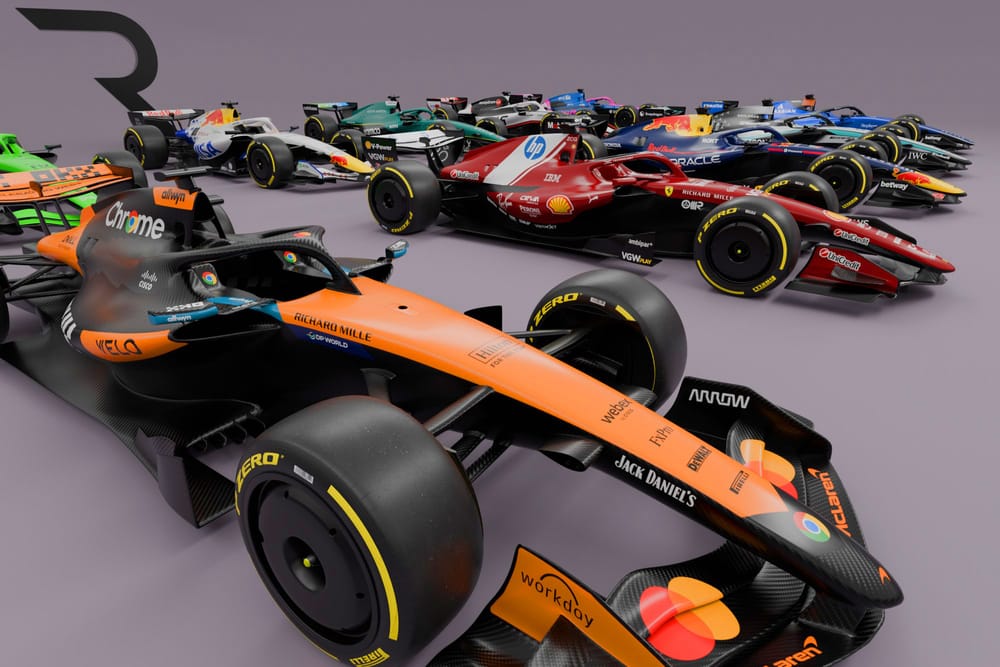
One of the best parts of getting more faithful 2026 car renditions through launch season will be the elimination of the generic renders that have been relied on for months.
And with accurate, team-produced imagery will come a real look at F1’s new era.
Back in 2022, the use of a show car several months in advance meant we all had a reasonable idea of what the new F1 cars could look like. For 2026, fans have largely been starved of even a physical model (Audi’s concept livery last October being an obvious exception).
But that doesn’t matter because the real thing always differs. And while the rules remain quite prescriptive, there are always different interpretations.
However basic early renders turn out to be, they are better than looking at a livery on a show car masquerading as an actual 2026 design. And they will give the first pointers to where teams see the big development opportunities - and, potentially, where the rulemakers misjudged how intricate designs could be.
What do movable wings really look like?
A greater emphasis on active aerodynamics in 2026 means movable front wings, not just a rear wing slot gap as we have been used to for well over a decade.
But differences in designs for both wings, and how they work, are a big initial 2026 curiosity.
Different renders and animations over the last few months - from the FIA, F1 and teams - have hinted at the rear wing adjustment happening via a simple ‘opening’ a la DRS or with the whole of the rear wing backing off.
There are also different options to the teams in terms of how they initiate the active aero - with hydraulic or mechanical systems - and how many movable elements they commit to on the front wing.
Given this will be a big visible aspect of 2026, a first look at how teams are tackling the topic will be interesting.
Key aero trends
With rules increasingly evolving to limit the freedom of designers, teams find themselves having to work within the confines of strict size definitions and legality boxes for almost every aero part.
That is why so much effort goes into exploiting what is on offer - to see if gains can still be extracted.
One such element that has emerged with the 2026 rules is the ability of teams (because of restrictions in terms of how the front section of the car can slope down) to run a raised nose – as long as their cockpit is pulled forward enough to allow it.
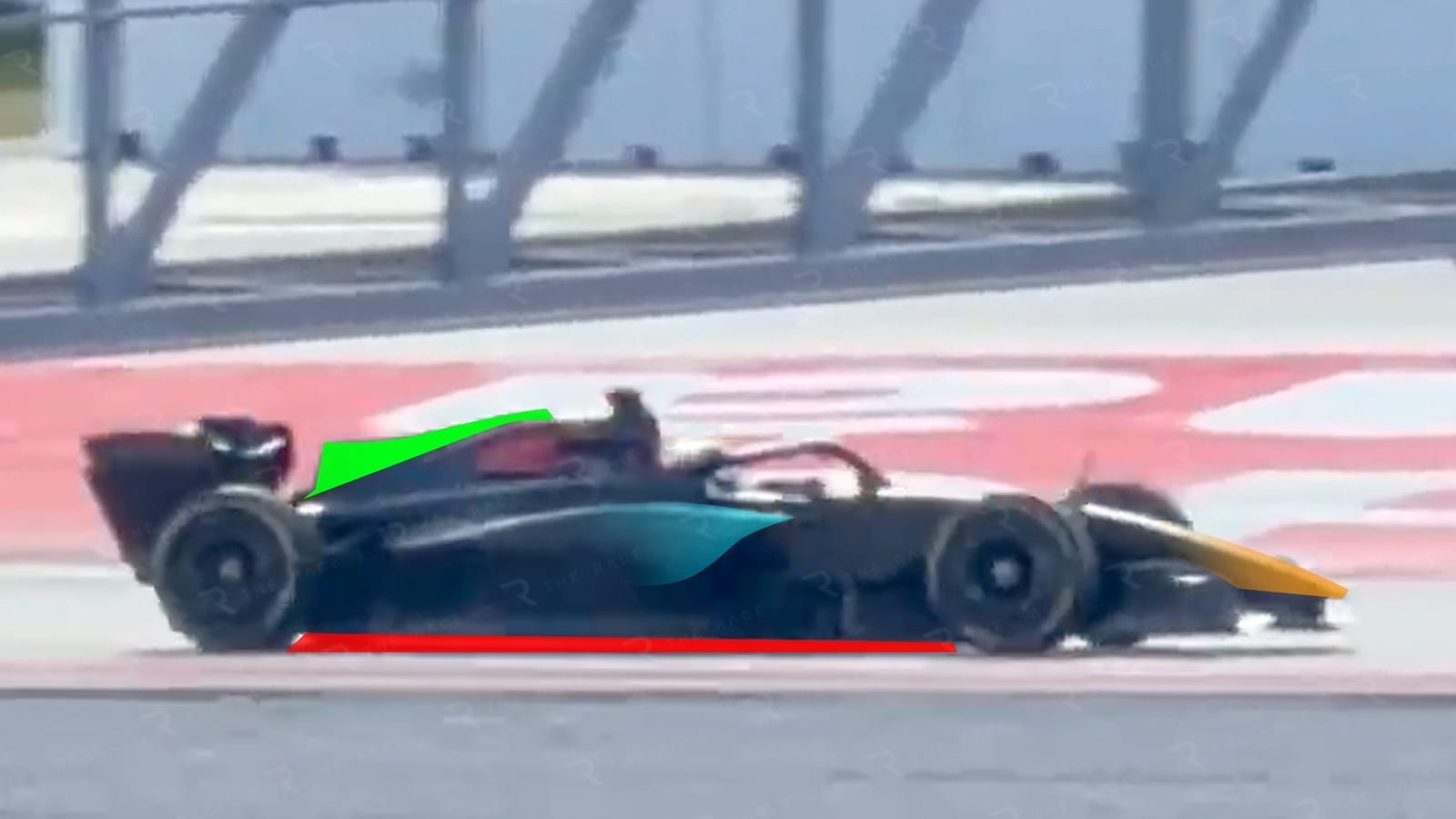
Audi’s shakedown car pointed to it having done exactly this – and others may well follow suit.
Another area where it will be interesting to see what teams have done is the return of shark fins. Previously banned in 2018 because the designs had got out of control, a more refined section on top of the engine cover is now allowed and could well become universal.
Signs of delays or problems
If testing is hard to read, then just looking at a car and hearing people speak about it is even less useful for discerning competitive prospects.
That said, launches are useful for picking up on signs of delays or problems. Sometimes - as was the case with McLaren in 2023 - there are outright admissions of teams starting with a car that is not what it hoped to have ready.
So be prepared for suggestions of teams needing to shed weight, or make rapid progress with early upgrades.
There are likely to be immature designs and anyone who has had a particularly difficult winter with engine dyno reliability might also be playing down expectations too.
Real vs fake
There are three types of fraud to be wary of in this launch season.
The first two are fairly typical and relate to what the teams do or say.
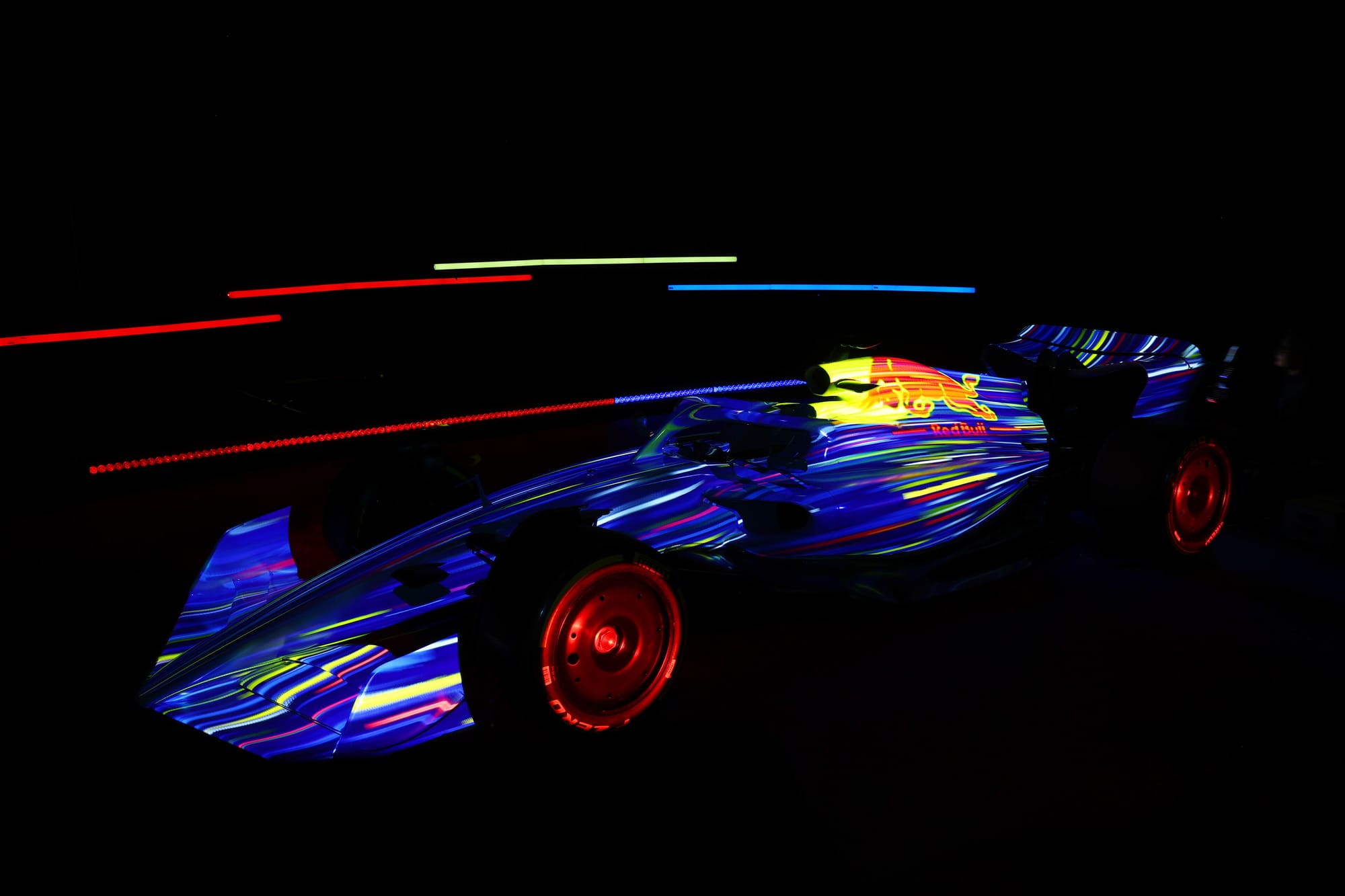
In the past there have been disappointing examples of teams pretending that a show car is the real thing - notably Red Bull in 2022. But hopefully this is replaced by a full admission that a livery reveal is exactly that and no more.
Another slightly more common occurrence is when teams deliberately obfuscate. This can be by Photoshopping images of their launch material, releasing images with parts of the car obscured, or sometimes putting out renders of an early/different version of the car to what then runs on track soon after.
What is likely to be new this year is people trying to take advantage of the lack of access and information from the private first test in Spain and using artificial intelligence to generate false images.
This already happened with Audi’s shakedown at Barcelona and it would be a surprise if it’s not repeated.
Quirky wheels
F1’s previous rules set featured a lot of detailed concepts aimed at helping minimise dirty air to improve the racing.
One of these was wheel covers for the standard rims – which acted as a barrier in keeping outside air channelled nicely alongside the car rather than being sucked in. It also stopped teams having the ability to pull air out the rim.
As part of a shift to allow teams to pick their own rims for this year, the wheel covers have gone. It was not that they did not work, it is that they added a bit too much to the weight – and the FIA has been eager to make cars lighter.
Now teams have freedom to do what they want with their rims, and it will be fascinating to see how aggressive some squads get with the designs they deploy.
New manufacturer looks
While liveries seem to change less and less as corporate identities and familiar branding take a stronger hold of modern F1, there are going to be some significant evolutions in 2026.
We are not holding our breath for the Red Bull launch revealing much but how Ford is incorporated is at least slightly interesting, especially as it continues to be caught up in arguments over whether it is just a commercial deal or an actual technical partnership.
Seeing the Ford logo - and colours? - back on F1 cars will be a nice development, it’s just a case of how much.
On a grander scale, the first liveries for the Audi works team and new entrant Cadillac are out-and-out new looks that fans are likely to care about most.
Manufacturers do draw interest like nothing else. And with established teams unlikely to surprise, those who do enjoy livery reveals will have something more tangible this year.
Differences with the same engine
Three of the five power unit manufacturers have multiple teams in 2026 - Mercedes, Red Bull Ford and Ferrari. The regulations dictate the specifications and functionalities must be the same across the works and customer teams, meaning they are identical packages. But that doesn’t necessarily mean identical packaging.
As the new cars emerge, comparing cars in the same power unit ‘family’ could be instructive. The cooling configuration of cars, both in terms of the shape and placement of the various radiators and the bodywork geometry channelling the airflow outside and inside the car, will vary.
This can give hints about who has been more conservative with their cooling capacity, and what the designers believe is the optimum design compromise in terms of extracting aerodynamic performance.
The return of rake
The 2026 cars are a case of back to the future. After four seasons when running low and stiff was the key to maximising performance, the expectation is that rake returns this year.
Rake refers to the difference between the front and rear ride height, effectively creating a ‘tilt’ whereby the nose of the car points towards the ground. It’s all about maximising the underfloor ground-effect downforce, allowing for a larger expansion volume at the rear of the floor to help accelerate that airflow.
The downside is that it can be difficult to keep the floor ‘sealed’ aerodynamically in slower corners in particular, which is necessary to prevent the high pressure outside of this area from leaking in.
The expectation is that rear ride height will be roughly midway between last year’s levels and where it was for a car like the Red Bull at the end of 2021. However, not only is there likely to be some variation between teams, and we’re talking measures in millimetres here, but teams should also become better at keeping the underfloor sealed and allow the rake to be increased gradually as these new cars mature.
Of course, that’s just one direction and it’s possible different philosophies could emerge to recreate something akin to the high-rake Red Bull versus low-rake Mercedes dichotomy that existed pre-2022.
