F1 grid in trepidation over wet Miami GP chance

While the main intrigue about the storms expected to hit the Miami Grand Prix on Sunday has been on the consequence of lightning strikes, there is a potentially more significant unknown that could play out.
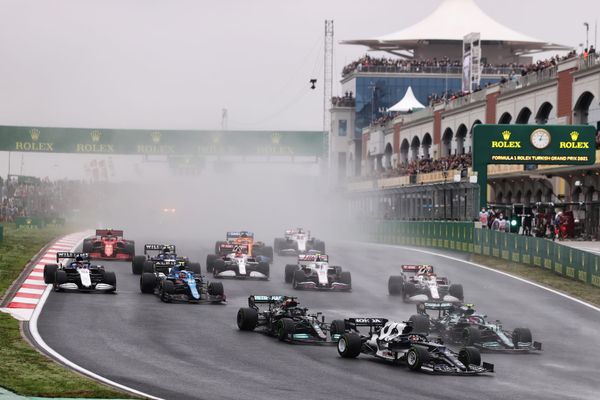
It is that should the rain arrive for race day, then many F1 drivers will find themselves having to learn all about the quirks and limits of driving 2026 cars in the wet for the very first time while fighting for positions.
The peaky torque characteristics of the current cars are already a handful in the dry, and those that have experienced them in the wet are well aware of how much more difficult they are when the rain comes.
Alpine’s Pierre Gasly, who conducted a wet shakedown at Silverstone in January, said: “It was 30 degrees tyre temperature, wheelspinning in sixth gear after Maggotts/Becketts. Underwear change every lap! It was the most extreme I’ve ever done in my life.
“I know I’m pretty good in these conditions, so personally I wouldn’t mind it. But it will be a pretty special race - and especially here in the wet I think it’s quite tricky in terms of grip conditions, aquaplaning, the bridges. You have a couple of traps that you need to stay away from.”
World championship leader Kimi Antonelli said he had no clue what to expect as, despite a similar wet try-out in a shakedown, there had been no proper competitive experience with these 2026 cars so far.
“Definitely it’s going to be very interesting because there’s so much unknown in the wet at the moment,” he said. “No one really used the inter tyres, so we don’t know how it’s going to feel, how much grip there will be, especially with the new regulation.
“I think also one thing with this year’s cars is it’s a bit harder to build temperature with the tyres, so in the wet they might be tricky.”
In a timely fashion, one of the core elements of the package of rule changes agreed for Miami involved some tweaks aimed at reducing the dangers in the wet.
This included reducing maximum deployment of the MGU-K to 250kW, banning the use of boost mode, introducing clearer rear warning light systems and the mandated use of partial aero mode.
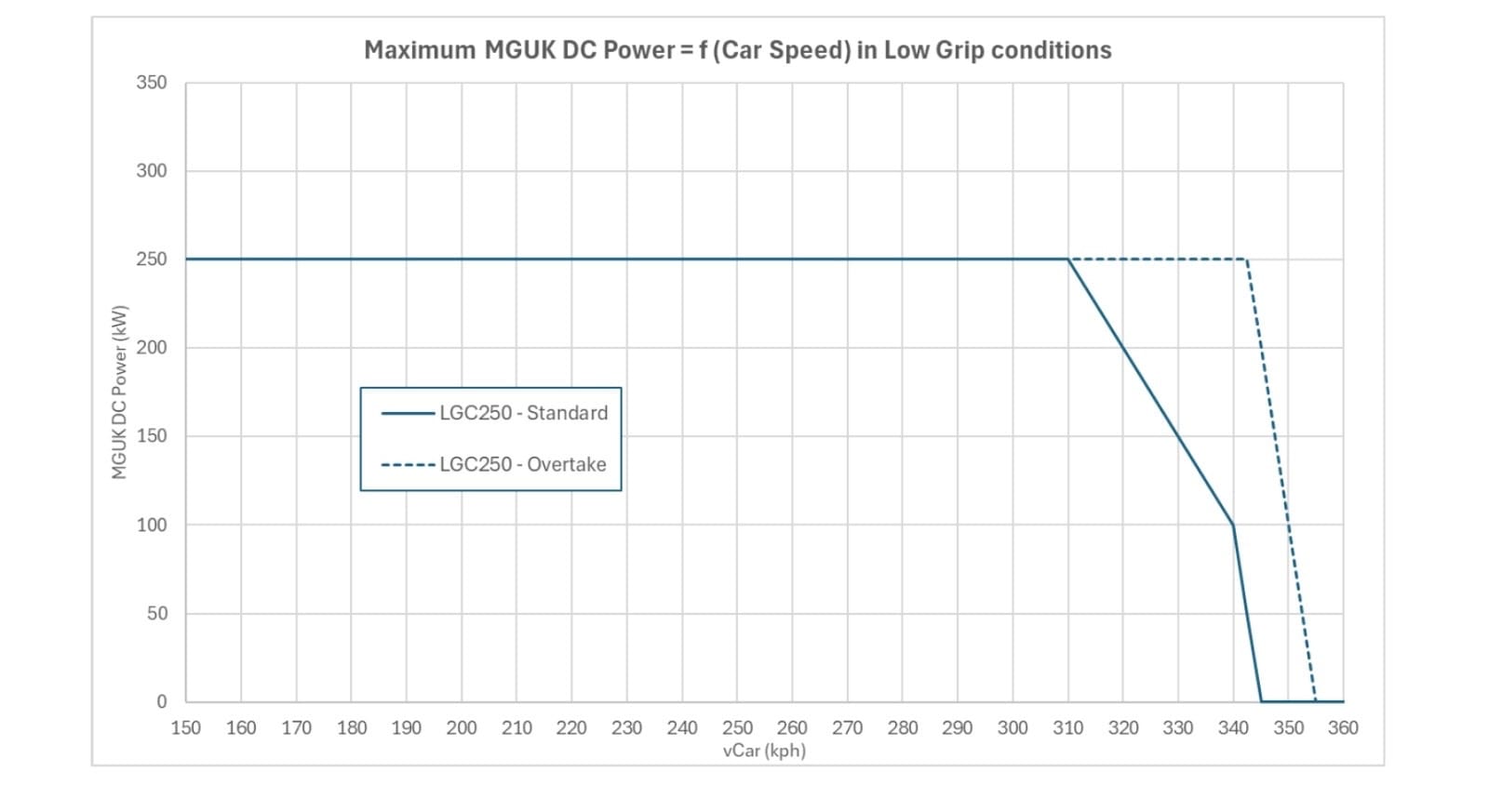
On top of this are smoother mandated engine maps – as can be seen in our exclusive graphic above
Furthermore, the blanket temperatures for intermediate tyres have been increased by 10°C from this weekend’s Miami Grand Prix – bringing them up to the same 70°C that slicks are heated to for two hours prior to running.
But even with the efforts made to improve things, drivers are still mindful of the difficulties that lay ahead – especially on a track like Miami where there is not much room for error.
Carlos Sainz said: “I think at the back of everyone’s heads is, what’s going to happen when it’s wet?
“I’ve always been a bit of an advocate for the 350 kilowatts not being needed and I hoped that we could find a way to maybe reduce it down to 250 or 300 for the race.
“As we saw last year, on the straights, a lot of standing water here. It’s a super-flat track. The water stays on the surface and whether that’s going to be safe enough or not, with the walls close to you and the visibility that we have with these cars, it is certainly going to be a concern.”
Sainz said that the topic of the wet would likely become a talking point in the drivers’ briefing, especially as he was not happy with all the elements that had been introduced.
“There are a few things, like the SLM [straight line mode] in the wet only at the front, that I really don’t understand, why we have that if it doesn’t reduce the drag much.
“So yeah, a few things to analyse, to put together, if Sunday is going to be wet. And maybe to discuss in the drivers’ briefing so we can have it all clear in our heads what we should expect and what we should go racing with.”
Aston Martin’s Lance Stroll, who has often excelled in tricky wet conditions, felt that shining in the rain now depended very much on the drivability of the power units on tap.
“I think for some cars it will be much easier than for others,” he said. “Other cars that struggle with driveability and have a lot less downforce are going to have a much more difficult time than cars that have much more downforce and grip, and better driveability.”
Some drivers are a bit more prepared, though. During January’s first pre-season test at Barcelona, Ferrari and Red Bull elected to run on the wet second day so their pairings have a bit more know-how.
For Lewis Hamilton, that eye-opening experience has been followed with a wet-weather test at Fiorano.
“I’ve definitely done more wet testing than probably ever before,” he said. “I had a whole day in Barcelona - which was not fun - and then I had two days of wet testing [at Fiorano] two weeks ago.
“But it was good to be able to work with Pirelli and have conversations with them on how we can improve the tyre because in general drivers do complain a lot about the tyres and the grip that we have.”
Despite the concerns of many about a step into the unknown though, George Russell said that F1 drivers just had to accept what was thrown at them.
With the chief concerns about closing speeds having hopefully been closed down by energy deployment tweaks – and especially the 250kW limit – any worries about cars being too challenging should not come into the equation.
“This is F1,” he said. “Somebody asked me before, is there going to be too much power? At the end of the day, we are racing Formula 1 and not Formula 4. It has to be the fastest cars in the world.”