McLaren's driver management lessons for Ferrari
As an increasingly exacerbated Ferrari Formula 1 team principal Fred Vasseur plots how best to sort things out between his troublesome drivers, he could do a lot worse than take a leaf out of the tough love book used by McLaren.
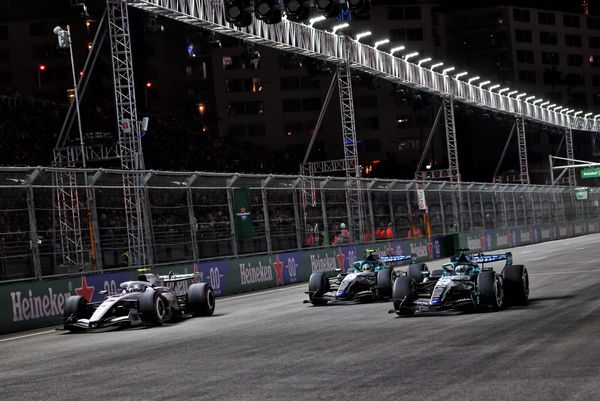
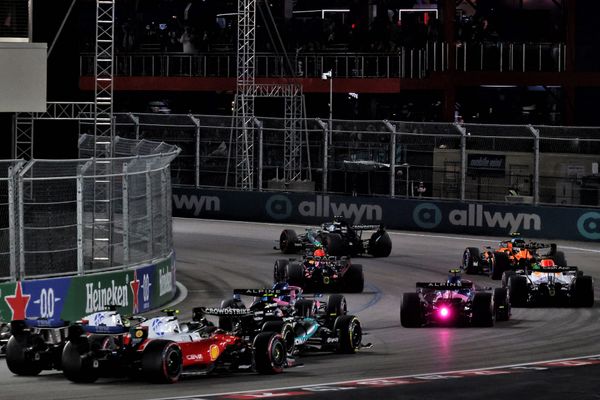
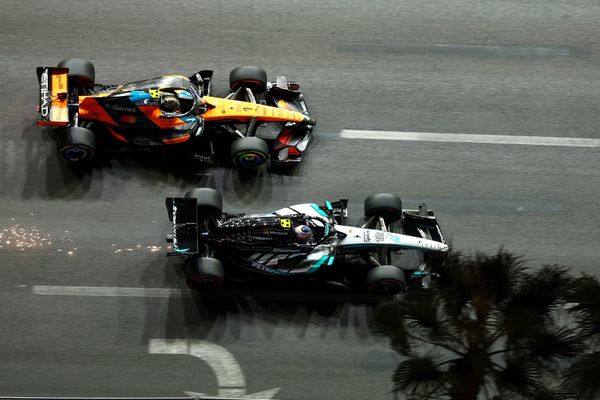
The Las Vegas Grand Prix collision between Charles Leclerc and Lewis Hamilton - hot off the tail of their first chicane brush in Italy and the Mexico clash that cost the team a win - seems proof that his softly-softly approach used up until now has not worked.
Because for all the effort Vasseur made to get Hamilton and Leclerc into the same room in Brazil to try to clear the air after Mexico, the latest needless collision shows it has been for nothing.
Something now has to change, and it could be that it is time for Vasseur to be a bit more robust.
A key observation from how Ferrari has handled things so far with Hamilton and Leclerc is that it seems to have preferred giving its drivers the benefit of the doubt over sorting things out for themselves.
So, while Hamilton as far back as Monza nearly three months ago said he would have preferred the kind of racing guidelines that Toto Wolff implemented between him and Nico Rosberg at Mercedes, Vasseur has felt that they are not needed.
Vasseur's argument has long been that creating robust racing rules is too difficult - as it's impossible to cater for every circumstance in a way that will avoid potential flashpoints.
For him, the preference is a simple rule: that the drivers respect the team and never put themselves in front of it.
It was a line he repeated after the Las Vegas race when asked by The Race if it was finally time to impose some strict guidelines.
"It's not a matter of rules," he said: "It's not what you can do differently, except that you have to respect your team-mate.
"In this kind of race, you have to overtake the car in front of you. You can't stay behind; it's completely unmanageable, but you just have to do it with respect when it's your team-mate, to take less risks, perhaps to come side by side and to come back behind.
"You can't put it on the paper. I think the race of today, nobody will write a scenario like this. Nobody can imagine a race like this. They just have to act in a professional way."
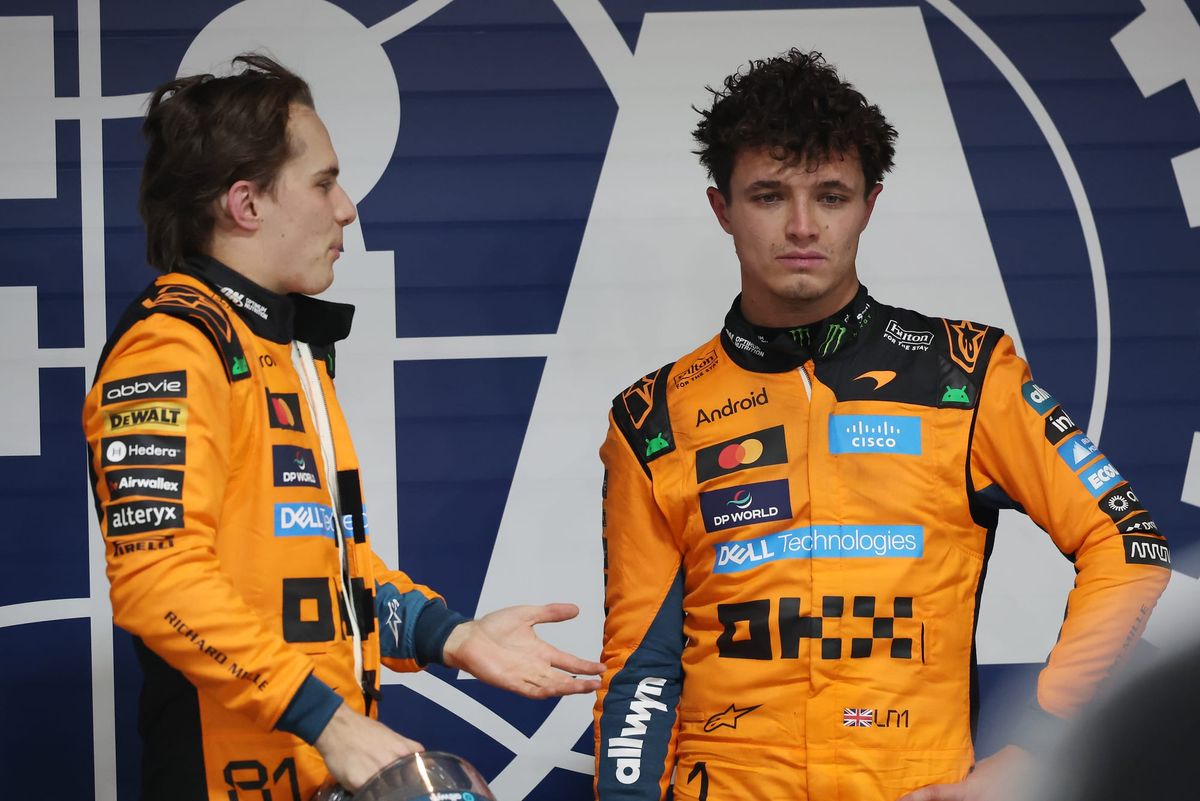
McLaren well knows that the implementation of guidelines between drivers is no guarantee of a trouble-free life. Its famous 'Papaya Rules' triggered plenty of headaches when Lando Norris and Oscar Piastri were battling hard against each other.
But for all the difficult moments that McLaren and its driver pairing faced off the back of collisions - and they clashed as recently as the Singapore sprint last month - the relationship between Norris and Piastri seems to be in a much better place than the one between the Ferrari duo.
When things have gone awry, it has been either when situations have emerged that have challenged the rules - or one of them has stepped out of line.
And when the latter has happened, McLaren has never been afraid to act - having famously imposed consequences on Norris in the United States Grand Prix last year after his collision with Piastri in Singapore, only for them to be rescinded after the Australian's blunder on lap one of the Austin sprint.
But perhaps the most interesting divergence of approach between Ferrari and McLaren is the manner in which the pitwall deals with drivers during races.
From Ferrari's perspective, there has always appeared to be a reluctance to interfere and throw orders around that are in the interests of the team.
Just look at the Dutch Grand Prix when Hamilton had steamed up on the back of Leclerc on a different strategy - and getting Leclerc to move over would have been a logical thing to do.
But Ferrari seemed reluctant to intervene and, in the end, only avoided the need to make the call by pitting Leclerc. The delay frustrated Hamilton and then served to annoy Leclerc, as it was not ideal from a strategy perspective. In trying to stay out of it, Ferrari ended up annoying both its drivers.
In Las Vegas, as Hamilton and Leclerc voiced their displeasure over team radio early on about how aggressive the other was being, the interference from the pitwall was once again absent.
And just before their collision, after Leclerc had come on the team radio around lap 37 with an "err, yeah" in response to a chop from Hamilton at the final corner, again there was no proactiveness from the pitwall to get in front of any potential problems.
This is in contrast to how McLaren played things, with it facing questions after the race about some pushback it received over subtle instructions given to Piastri.
As Norris and Piastri found themselves fighting next to each other on track, and with McLaren having seen what happened at Ferrari, there were several repeated messages to the drivers about how they should deal with things.
The Piastri request about "let's be careful around our team-mate" triggered what seemed to be a tense response from the Australian: "Stop telling me to f***ing be careful."
That had come in response to Norris having been told to start being a bit more aggressive in defending, as the urgency to shuffle to the front of the pack increased
"Right, Lando, keep looking forward," Norris had been told shortly before. "Remember, let's attack and let's cover off when people try and overtake us. Let's cover them. Don't just let them pass."
Later on, as drivers began that final push forward in the closing laps, Norris was given an emphatic: "And a message from pitwall, just be careful with your team-mate."
This was not broadcast on the international television feed, but it showed that McLaren's handling of drivers was equal on both sides of the garage - and that it was not afraid to make things clear.
Reflecting on the need to keep reminding its drivers to take care over the radio, Stella said that it was not a sign of weakness or that the pair were not trusted.
In fact, he said it was the opposite: that McLaren totally understood how mindsets change when in the heat of battle and that the requests for boundary reminders were something that had come from the drivers themselves.
Stella said what is seen on go-kart tracks around the world - when calm humans in normal life turn into beasts when behind the wheel - was just as true for F1 drivers.
"If we go and we do a leisure go-karting together, our personalities will change slightly from the personality we have right now when we are enjoying sitting down," said Stella.
"We will dig out the racing spirit. We will dig out something that is the reason why these guys do what they do, and all the sacrifices that they have gone through to be where they are. And that's where you have to come and help them, come and help them modulate, adapt."
Stella said that the sharp response from Oscar was the kind of "racer spirit" that he welcomed.
And one of the responses from Singapore this year, where Norris took responsibility for the late clash in the sprint with Piastri, is that boundaries agreed in the calmness of a meeting room are not as clear when battling at 200mph. So reminders are actually a good thing.
"He [Norris] said, 'Like guys, just don't assume that we do all the processing because we are so busy just racing, keeping the car on track, and this year's car absorbs our bandwidth," explained Stella.
"So just help us: take it to the point where we can tell you, 'OK, that's enough. I got it.' And that's exactly the point where we want to take it."
That is why Norris and Piastri were both, at the right moments of the race, given the same message: be careful with your team-mate. McLaren is not afraid to keep saying it, even if it triggers uncomfortable responses.
Annoying drivers over team radio is a much better outcome than having them crash into each other.
It's an approach that Ferrari would be wise to consider.