F1's just had a warning about a push-to-pass future
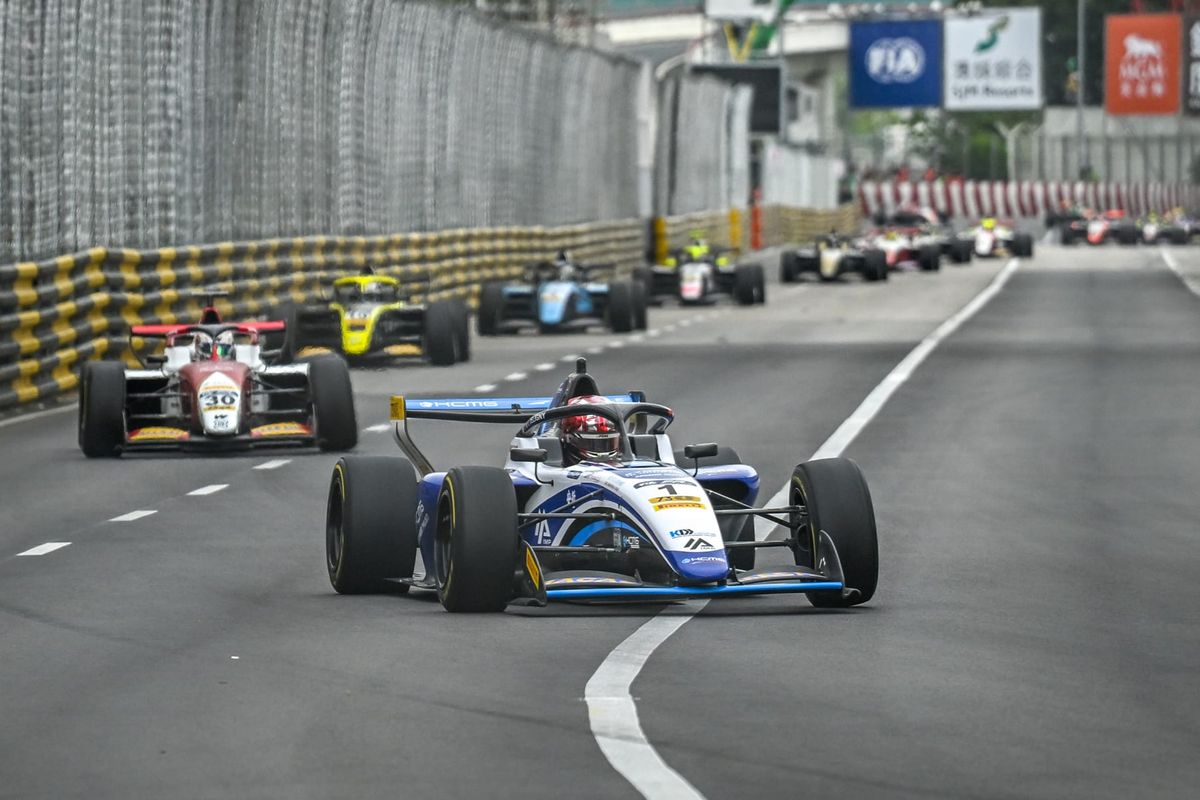
The Macau Grand Prix has always been an event that Formula 1 pays close attention to - and it regularly bubbles up in conversations in grand prix paddocks.
It is a place where the stars of the future cut their teeth, it offers a challenge that current F1 drivers forever rave over, and a track layout that is a blueprint for what is needed for good racing.
For example, amid the post-Madring reflections on what made the Spanish Grand Prix an incredible challenge but offered no overtaking opportunities, time and again drivers referenced that it lacked the simple magic ingredient that makes Macau work.
It is that you can have the craziest, narrowest and most exciting sections of track that you want - Macau's sublime mountain section is like nothing else - but it is non-negotiable that there must be one corner that is a nailed-on cert for passing.
For Macau's Guia circuit, the super long flat-out blast from R Bend, the final corner, all the way down to the wide-entry but tight Lisboa right-hander offers that perfect chance to slipstream and set up an overtake, and then a challenging braking area to make the move in at the end of it.
F1's potential learnings from Macau have an added dimension this year because, as grand prix bosses ponder what overtaking tools are needed for the new V8-era coming from 2030, there are some interesting takeaways about how new push-to-pass rules influenced the racing.
The debate taking place now in F1 right now is about whether to stick with the current overtake mode, reintroduce DRS, or do something different and create a push-to-pass system with the new battery hybrid element.
Push-to-pass certainly sounds exciting, but the Macau GP weekend highlighted that, while when it works it is great, it is not an automatic eureka solution.
There are critical choices - relating to both technical and sporting matters - which mean that if it is not applied in the right way then it can actually serve to neuter the racing, rather than improve it.
That much was proven in the Macau GP qualification race when 'push-to-pass' effectively became a 'push-to-defend' tool - as the relatively few overtaking moves in the race proved unusual.
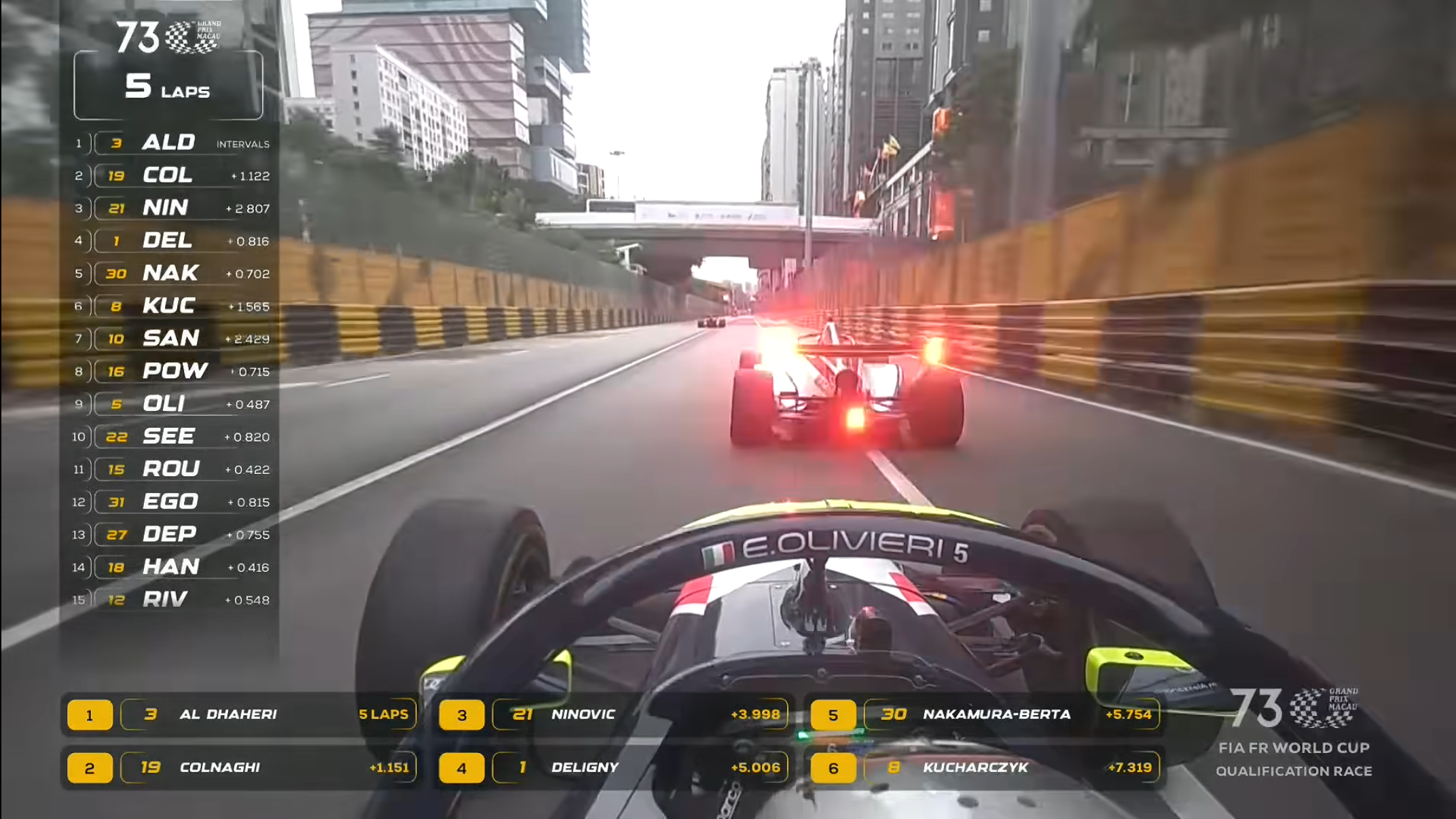
Time and again onboards would show a rival rapidly gaining in a slipstream to tee up a move into Lisboa, only to see the car ahead activate push-to-pass (shown above by the flashing lights) and keep the position.
This mattered because the reliance on push-to-pass this year has been important, as the new for 2026 Formula Regional car has proved to be slightly less friendly for racing than the previous model.
One leading team figure told The Race that the Tatuus T-326 is more aero efficient (so does not offer as big a slipstream on the Macau straights to the pursuing car) and has a more sensitive front wing that meant following was a bit harder than in the past.
This meant drivers have had to rely on push-to-pass to make moves, which had an unintended consequence of becoming as much a tool for defending as attacking.
In the qualification race, several drivers used it to repeatedly stave off fast-approaching rivals from behind, which made it super-difficult for anyone out of position on the grid hoping to make progress through the field.
However, in the main Macau GP race, it was some tactical brilliance from race-winner Kean Nakamura-Berta in choosing how and when to unleash push-to-pass that set up the critical move that proved key to his triumph.
And this shows why there is a fine-line between an overtaking aid being successful and it falling flat - and why ensuring that how the rules work around its operation are as important as what it is technically.
The new race mode
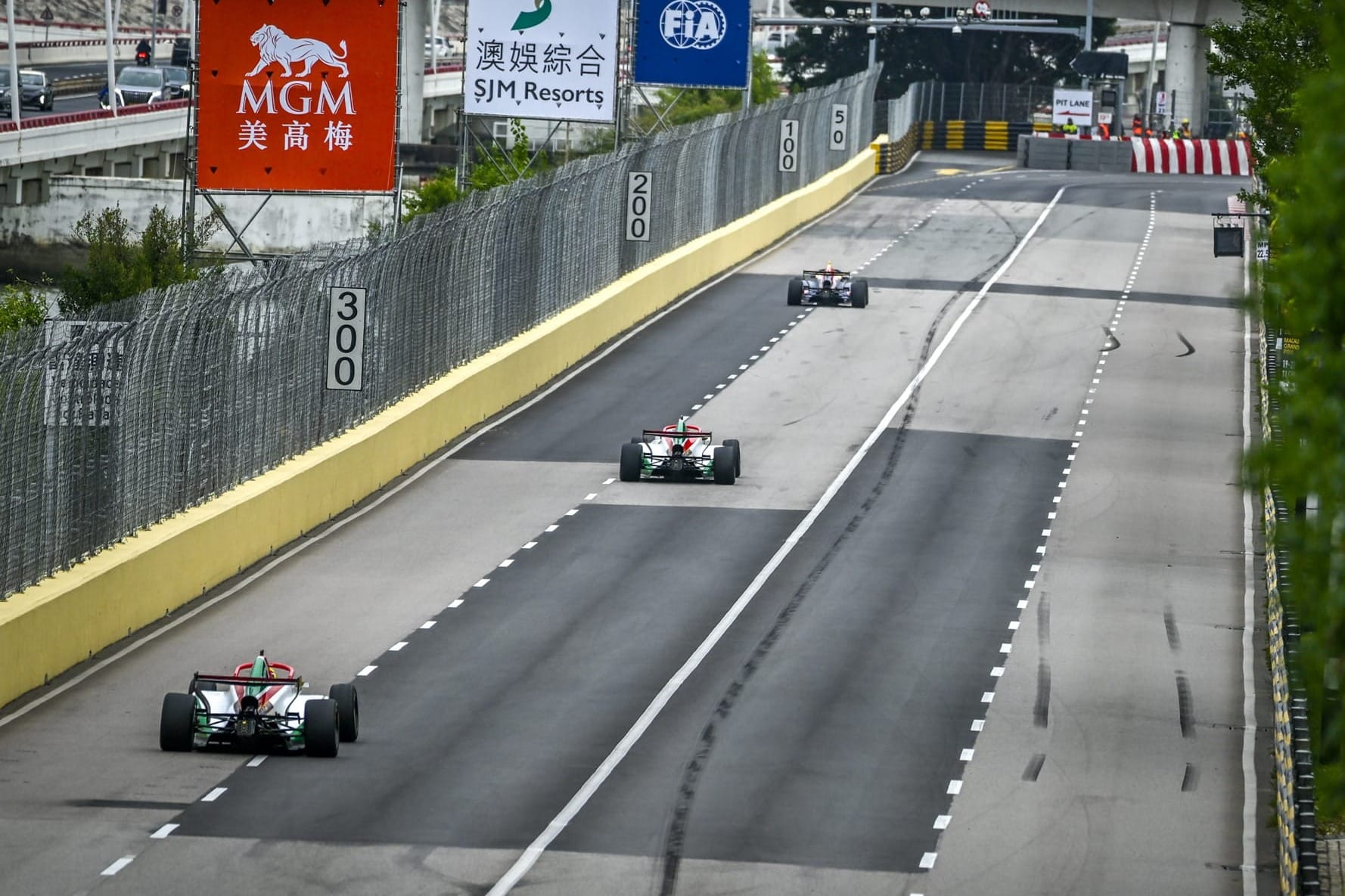
This year's new Formula Regional cars, the category that contests the Macau GP, arrived with the introduction of an IndyCar-style push-to-pass system known as 'race mode'. This unlocks a 25bhp boost that drivers can have on tap for 100 seconds of a regular race in the European championship.
In Macau, this was limited to 75 seconds for the qualification race and 115 seconds for the main grand prix, and can be deployed after the first lap or from the first lap after a safety car restart.
This allowance proved to be quite generous as, with the qualification race just 10 laps and the main grand prix 15 laps, there was more than enough available for drivers to keep it in reserve for defending on the only area of the track (the main straight) where they were vulnerable.
At 7.5 seconds every lap if you wanted it, it is very generous compared to IndyCar. There, the allowance for a typical street or road course is between 150 and 200 seconds for a full race distance - which works out somewhere between 1.7s-2.3s per lap averaged out.
So, it was little wonder that race mode neutralised things at times - especially in the qualification race that was just 10 laps long.
Big lessons about deployment tactics were learned from that rather static affair, though, and the main grand prix proved to play out in a different way.
There was more divergence in approach - as some chose to burn their energy early on to try to make a break for it, while others kept some allowance in their pockets for a late charge.
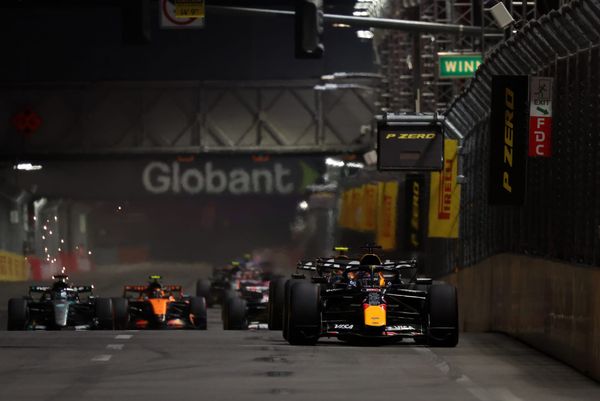
The latter approach of waiting to pounce was exactly what Nakamura-Berta did. He shadowed early race leader Enzo Deligny through the early laps and seemed to be biding his time as Deligny (pictured below, leading) burned through a little more deployment to try to get clear.
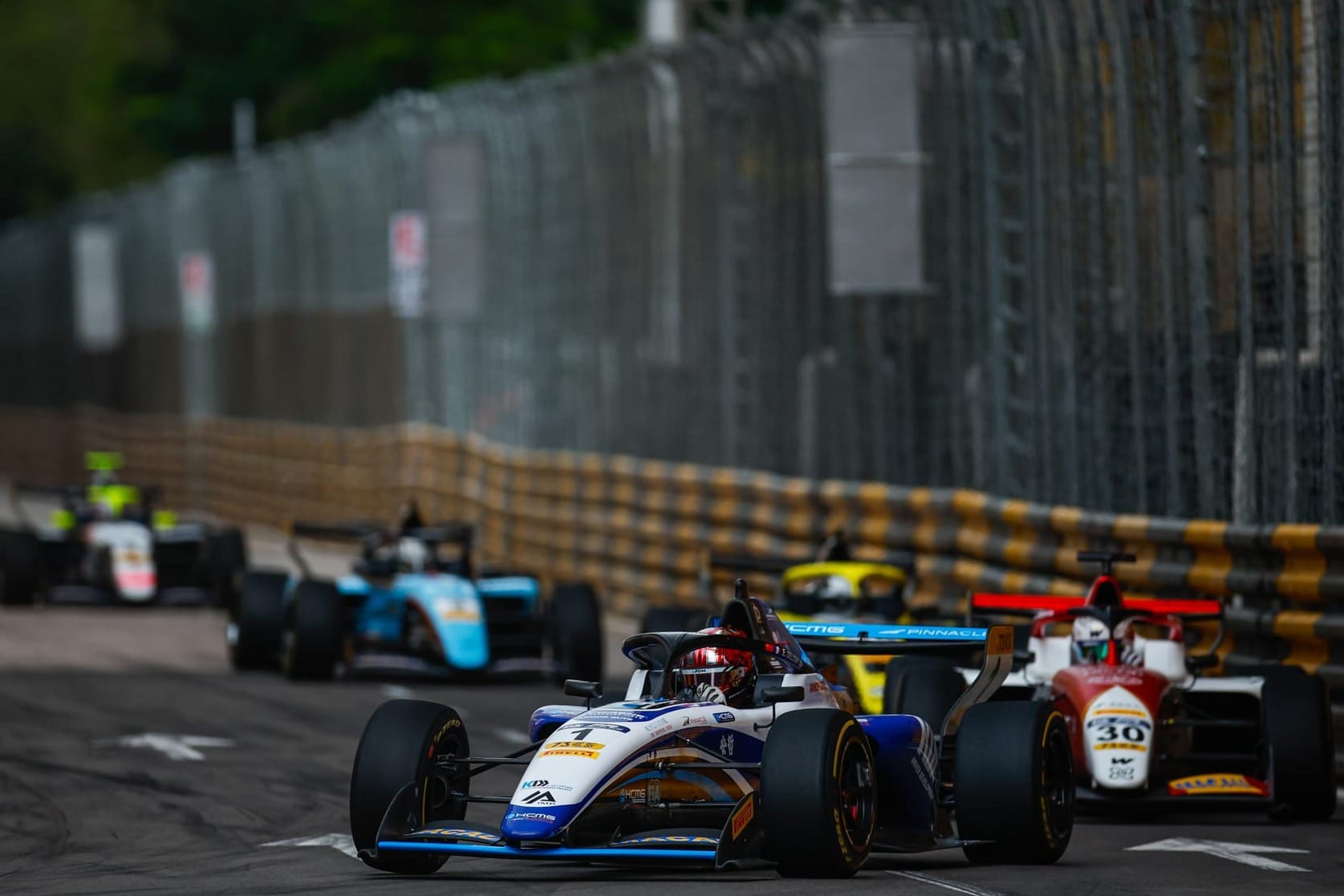
Sensing that he had got a sniff closer to Deligny, Nakamura-Berta went all-in on lap 10 and burned as much race mode as he could on the blast to Lisboa.
It got him alongside his rival under braking and, as the early leader was crowded onto the dirty and bumpy inside line on the entry to Lisboa, he misjudged his braking point and slid off into the barriers on the outside.
As Nakamura-Berta related: "I think we had a lot of yo-yoing with the push-to-pass system.
"Seeing how the qualifying race was, I had to try to manipulate that tool in the best-possible fashion.
"That lap it seemed I was the closest out of all the laps we had, and just decided to go for it one push all the way to Lisboa.
"I had good confidence on the brakes, and just managed to force the leader onto the dirty side of the track and completed the move."
With push-to-pass having influenced the fight at the front, it also opened up strategic opportunities further back too - as drivers who had saved their deployment early in the race reaped rewards late on as they could attack rivals who had nothing left.
That is what helped Alex Ninovic secure a recovery from sixth on the opening lap to finish second, having grabbed that runner-up spot from polesitter Rashid Al Dhaheri on the final lap after Al Dhaheri had to use a lot of energy battling early in the race with Yuki Sano, who he had finally got past late on.
Al Dhaheri said: "I could see the car ahead was using it to defend. Then, at some point, he finished it - and couldn’t do anything anymore. But it was the same for me. I had had to battle the whole race and use it more, so with Alex I could not do much."
Fine margins
What seemed critical between push-to-pass working in spicing things up in the main race, and it neutering the spectacle in the qualification race, seemed to be that fine line between the usage allowance being generous and it being more restricted.
When everybody did not have the luxury of being able to burn it at the perfect location every lap, a divergence opened up in deployment.
As pointed out by Rene Rosin, team principal at Lando Norris's LN4 Fusion squad that ran Theodore Racing in Macau, the spectacle evolved from a procession in the qualification race to excitement on Sunday because variety came into the mix.
"I think everybody played differently with the push-to-pass," he told The Race. "Some played quite a lot on defence at the beginning, but then once it was finished, they could not do that anymore.
"And that played very well into the hands of Kean - who played it very smart honestly."
How to strike the balance
For F1, if it goes down the push-to-pass route, this year's Macau GP has shown that the key to success is not just having a boost element in place to allow overtakes.
It is having sporting regulations fit for purpose, with allowances that don't make it easy to use, that do open up different choices of when and how to deploy, plus help the drivers who use it most wisely to come out on top.
For Nakamura-Berta, the new push-to-pass rules certainly changed the nature of racing in Macau but are something that perhaps were needed with the Formula Regional cars.
"It came in to try to make the racing more interesting, and I think it has in a way," he said.
"If you've watched the European championship all season, you would never know who would win the race, and it made some tracks that were previously quite difficult to overtake on a bit more chaotic at times.
"It's a tool that allows the driver behind to utilise and to play around a bit. Even for F1, it's ever-changing with the battery, so having something new means we can learn new techniques as well.
“Yes, it's made the racing this year in Macau different to how it has been prior, but we still saw many overtakes. I don't think it damaged the racing."
That will be F1's hope too.