F1's 'cultural relevance' beats its US motorsport competition
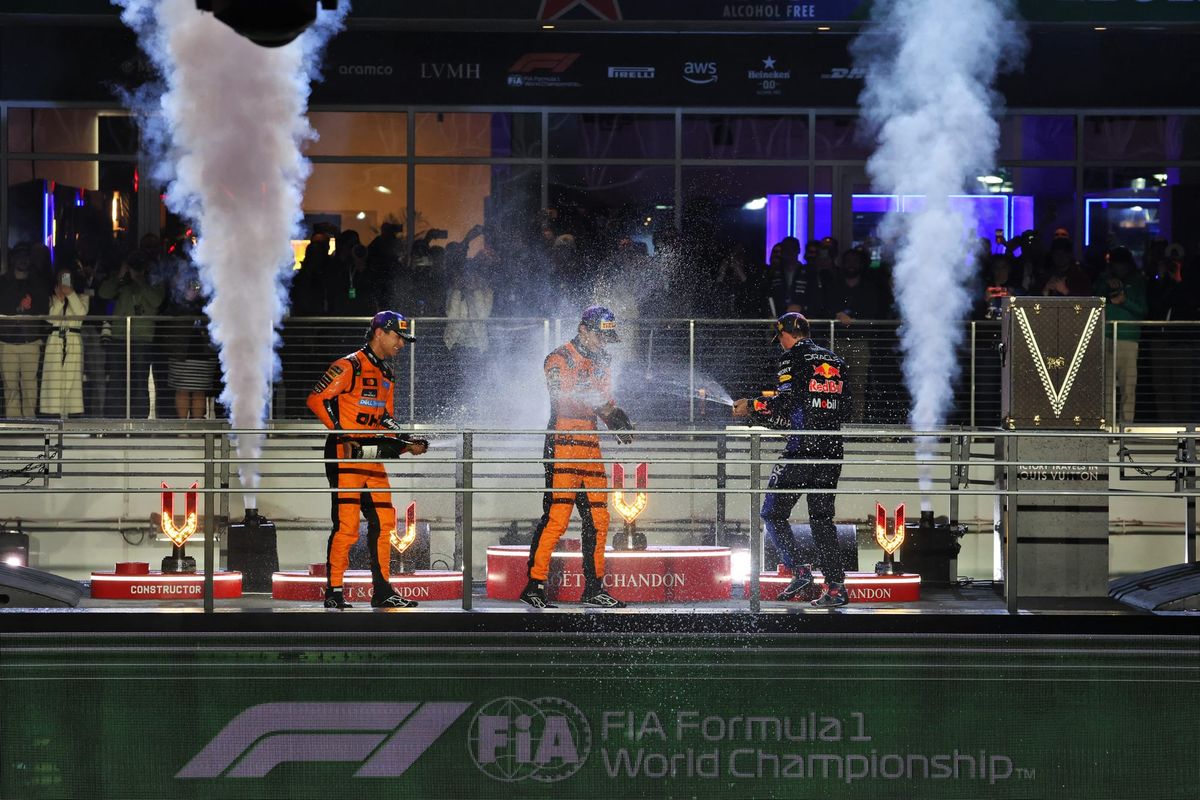
Even though Formula 1 is less popular in the United States than NASCAR and IndyCar, its "cultural relevance" gives it a unique spot in the country's sports landscape, according to broadcaster Will Buxton.
Buxton presented on the in-house F1TV channel from 2018-24 before joining Fox Sports as lead IndyCar commentator in 2025.
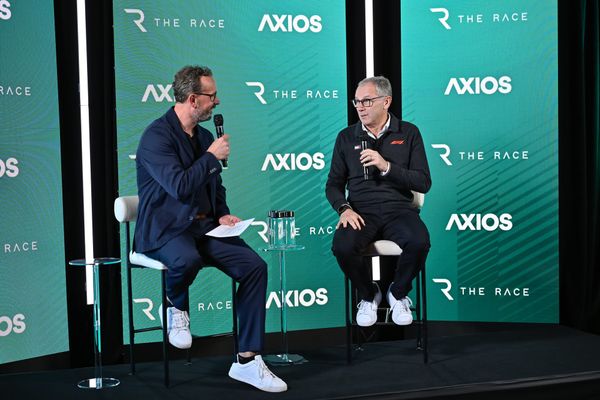
During The Race x Axios's Beyond the Race: Investments in Innovation and Leadership event in Las Vegas, Buxton was asked if F1's move to Apple TV in the US was the correct one.
He replied to Axios Correspondent Sara Fischer that F1 is "not the most popular form of motorsport in America" as it sits behind NASCAR and IndyCar.
But he added: "What Formula 1 has is something that neither of those has, which is cultural relevance and cultural cachet."
In 2025, before Apple TV broadcasted F1 in the US, ESPN recorded an all-time-high of 1.3m viewers per F1 grand prix - on par with IndyCar - while NASCAR averaged 2.45m viewers per race on TV.
Buxton reflected on F1's presence on advertising screens in New York City's Times Square in 2026.
"NASCAR doesn't have that. You go into a 7-Eleven, or you go into any convenience store...to buy a can of Red Bull. Is Connor Zilisch on it? Is Shane van Gisbergen on it? No, it's Max Verstappen. Because Formula 1 is cool.
"Formula 1 has cultural relevance. It’s a bit like Keeping Up with the Kardashians, right?
"So, Keeping Up with the Kardashians does not have the audience that it once did. And yet, who did Victoria's Secret pick to wear the $50million bra? It was Kylie [Jenner]. Because she and her family are culturally vital and still are in the American population's mindset.
"And I think that's what Formula 1 has done that will be studied."
Buxton added that viewership is not the only return on investment that Apple TV and F1 will be targeting in the US, reflecting a previous sentiment of Liberty Media CEO Derek Chang.
"It's bigger than that now. It's not just about sport. It's not just about people tuning in on a Sunday afternoon to the race.
"It's about recognition and visibility and that cultural cachet. That is what Formula 1 has done, particularly here in America. That is so incredible."
'Bernie was only interested in taking content down'
Buxton has witnessed F1's evolution from the pre-2017 Bernie Ecclestone era to the following Liberty Media one, having commentated for the GP2 Series, Fox Sports, and NBC Sports over that change.
As an annual fixture of Netflix's Drive to Survive, he said that the oft-cited TV show is not the only reason for F1's momentous growth.
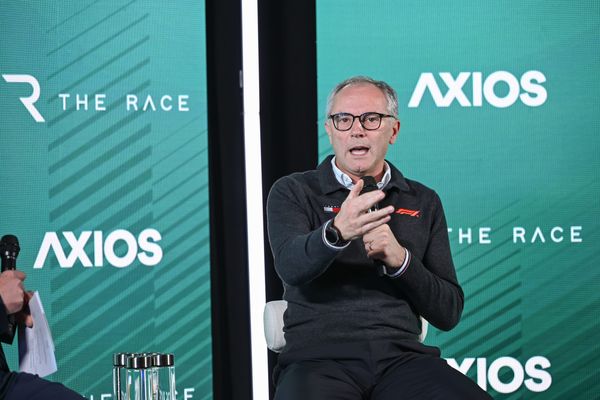
"It's not that simple because as Stefano [Domenicali, F1 CEO] intimated, the success of Drive to Survive had as much to do with the circumstances around when it launched as it did the programme itself.
"But it's also not as simple as to say Drive to Survive was everything because Liberty had made a massive push into the digital domain.
"They created a YouTube channel where one never existed and a Facebook page and a Twitter account where those things never existed."
Buxton noted a stark contrast between F1's new approach to digital media and that of ex-F1 supremo Ecclestone.
"The only interest that Formula 1 under Bernie Ecclestone had with online content was taking it down, not putting it up," he said. "That's true.
"There was a whole department in Formula 1 whose sole job it was to find videos and content that people had put online."
He added: "But Drive to Survive I think was really important because we stopped telling the story of Formula 1 from a technical perspective and started telling it from a personal, emotional perspective.
"And that shift in storytelling I think has laid at the heart of why the sport speaks to new fans and a new generation in a way that it perhaps didn't do 10 years ago.
"I think what Formula 1 has done since Liberty Media took over, I think it will be studied for generations to come as to how you evolve a sport and turn it from being simply a sporting property into being a cultural phenomenon."