An alternative framework for F1's V8 future
I have just finished reading this article written by Jon Noble and Scott Mitchell-Malm, which is taken from an interview with Formula 1 CEO Stefano Domenicali at an event in Las Vegas, and I didn't know whether to laugh or cry.
Speaking to The Race co-founder Darren Cox at the Axios x The Race Beyond the Race: Investments in Innovation and Leadership event in Las Vegas on Friday, Domenicali offered insight into why new engines make sense.
Domenicali explained why a return to V8s has been fast-tracked, with the fight to "survive" that influenced the 2026 rules no longer needed.
The current 50/50 turbo hybrid power units have yet to complete their first season of racing, but F1 and the FIA announced on Friday that there was unanimous agreement for new V8 regulations to come into play for 2030.
The dramatic change of direction comes despite Domenicali's robust defence of the current regulations, which have divided opinion among fans because of the way they have left cars so energy-starved.
This is basically the guy who makes the big decisions for F1. When I was involved in F1, he held various positions in the Ferrari hierarchy and always talked sense. Now he seems to be sorting out his CV for a position in politics. To hide behind the financial impact of Covid as the reason for these 2026 power units regulations is just not facing up to reality.
Many of the teams were telling both the FIA and F1 that these new-for-2026 power unit regulations were flawed, but it all fell on deaf ears. Even Toto Wolff said Mercedes wasn't sure, but that we should give them a chance and then react as required.
I'm pretty sure that, as we saw at the beginning of this season, he knew Mercedes had got its head around them better than most of the others. Now the others have caught up, he will be happy to throw the baby out with the bathwater and try again.
First of all, dumping the MGU-H (the turbo electric motor) at the request of Audi was the first very silly mistake. It was one of the very positive things that comes with having a turbo and being able to generate energy by controlling the turbo speed, not to mention being able to use it to speed up the turbo to reduce turbo lag.
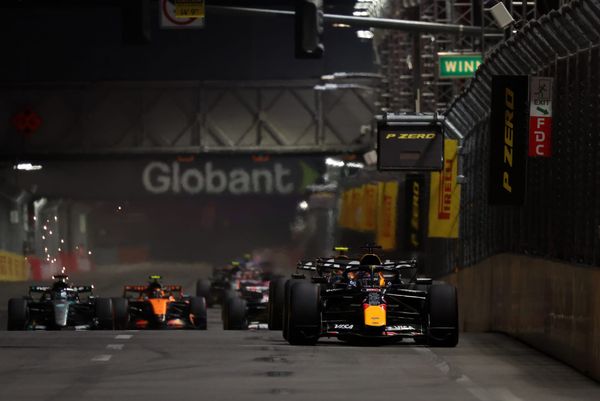
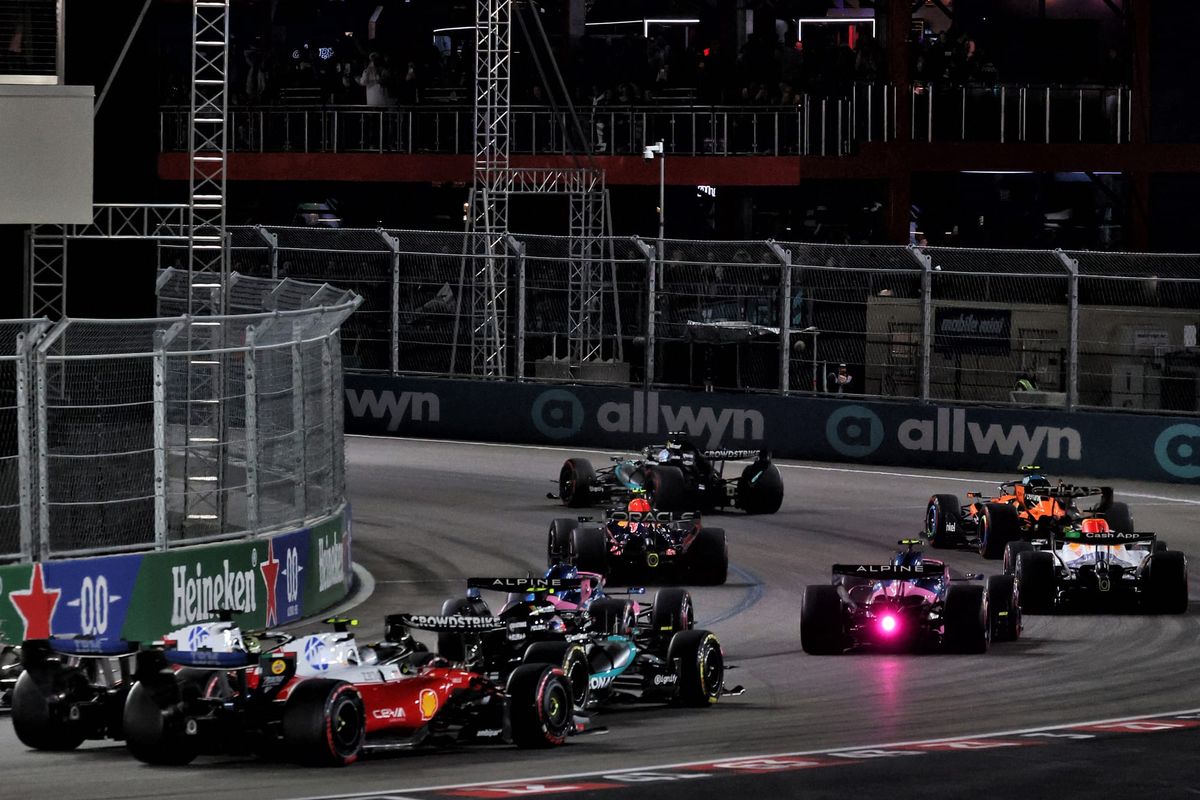
That decision has led to numerous problems, right through from when the cars arrive on the start line to when the chequered flag drops. Yes, we had a very entertaining race in Las Vegas, but was it really racing? In reality it was entertaining because of some of those self-inflicted problems. Variations in harvesting and deployment on an energy-critical circuit was what created that entertainment - but then I suppose it was in Las Vegas, the entertainment Capital of the world.
Entertaining or not, let's not make those stupid mistakes again.
For 2030, the FIA and F1 have the chance to prove that they have heard what the teams, drivers, viewers, spectators and enthusiasts have said and reacted in the best way possible.
So what does everyone want? It's always difficult to compile that list, but as usual I'll have a go at putting together what I would like to see by then. I started in F1 in 1973, when I was 21, and by 2030 I will be 79, so I have seen most things. Before my lights go out, I would like to see what I would call the pinnacle of motorsport once again.
So my list, in no particular order.
- Driver control: this means drivers having full control of their car. Forget all these algorithms controlling harvesting and deployment; they have two pedals - one to make you go faster, the other slower. Let them dictate which they want to use and when.
- Noise: we need the cars to sound like racing cars, mean and angry.
- Weight and size: light and nimble. This will lead to better racing.
- Racing entertainment: overtaking that can be attributed to the driver's talent.
So how do we achieve these three objectives? It's not only the power unit that needs attention, so my suggestions are for both the chassis and power unit. The numbers are fairly random and simply to create a discussion point, but I don't think they are far away.
The chassis
The chassis minimum weight including driver should be, at most, 700kg. To achieve this I would make the following size reductions:
Overall maximum width: reduce by 10cm. Any more reduction would need a reduction in tyre width, and we don't want to see the narrow-track, spindly cars from the late '90s. This change will, in effect, make the tracks wider.
Maximum wheelbase: reduced by 15cm. This keeps the aspect ratio between width and length similar to current cars.
Front overhang: on the car centreline, reduce this by 10cm. And at 85cm from the car centreline, reduce by 5cm. Keep the current gap between the front tyre and the endplate.
Front wing width dimensions: reduce by 5cm the width to the inside of the front wing endplate, keeping it in line with the inside of the front tyre. Reduce the overall front wing assembly width by 10cm. This reduces that silly endplate footplate and fin width, which in turn reduces the potential damage from car-to-car contact.
Active aero: leave this as it is. It works but, again, put the use of it more in the hands of the drivers, allowing them to decide when and if they want to use it. After all, in the past if you wanted to run Monza wing levels at Monaco or vice versa, there was nothing stopping you.
Power unit and gearbox
Actually, this is the easy part to spec up.
Engine: a 2.4-litre normally-aspirated V8, hard-limited to 16,000rpm. Using these revs and removing the turbo will improve the noise level. The 2.4-litre engine, as opposed to the 2.1-litre F1 says it has agreed already, will also produce reasonable torque. More details on the rev limit below.
I don't believe there would be a massive difference in fuel consumption, so I don't believe there would be a need for larger fuel tanks. The current internal combustion is a 1.6-litre turbocharged unit with something like 3.5bar absolute boost pressure (atmospheric pressure plus 2.5bar) - so if that is so then a 1.6-litre turbo with that boost pressure will require fuelling equivalent to a 4.0-litre normally aspirated engine. The fuel-flow meter will monitor that fuel consumption so a few clever people will need to get out an abacus and do a few calculations - but anyway, what's wrong with the F1 engineers being set the challenge of coming up with more efficient combustion?
F1 also uses advanced sustainable fuels - perhaps it's time for those fuels to be more advanced.
MGU-K: either the current unit (350kW) if necessary for the harvesting level required, or use a smaller one (last year's 120kW) if possible. This would be used to charge the battery under braking, with energy harvesting ramping in at a rate relative to the throttle position and brake pressure applied by the driver.
Rev limiting: introduce a linear MGU-K harvesting ramp between 15,000rpm and 16,000rpm. At 15,000rpm the soft limiting begins, then at 16,000rpm there's a hard rev limit. This will mean the teams and drivers will use the shortest gears to achieve the highest rpm for any given circuit, keeping the engine noise level at its maximum.
Battery: a smaller, lighter battery pack. The capacity would be determined by the energy requirements for delivering on the following proposals.
Electrical power deployment: this should be up to 50kW to fill the torque deficit. Up to 9000rpm, zero electrical power; from 9000rpm to 12,000rpm, ramp up to 50kW; then from 12,000rpm to 15,000rpm, ramp back down to zero. This is to fill in any torque deficit from the normally aspirated engine.
Standing starts: from a standing start, either on the grid or leaving the pits, provide a flat 50kW of electrical power until the car reaches 100km/h. This is to reduce the risk of stalling, then the rpm electrical power distribution takes over.
Overtake mode: 50kW for 10 seconds, plus an increased rev limit. The system would work as follows:
- Activation: if you are within one second of the car in front when crossing the start-finish line, overtake mode becomes available for that lap.
- Extra power: you have 10 seconds of 50kW electrical power to use during the lap.
- Extra revs: when the overtake button is pressed, the hard rev limiter is disabled and the hard limiter increases from 16,000rpm to 16,500rpm.
- Reset: if you don't overtake and are still within one second of the car in front at the next start-finish line, the system resets and off you go again.
Controlling electrical energy: All of these ramps for electrical energy harvesting and deployment would be hard-coded into the standard ECU that all the teams use. They would be controlled by either power unit rpm or car speed, with car speed calculated as follows:
- Normal running: use the average speed of the two front wheels.
- One front wheel locked: if there is more than a 5% difference between the front wheel speeds, use the fastest front wheel speed to allow for sensor problems or a front wheel lock-up.
- Both front wheels locked: you are normally either going off or, at a minimum, slowing more than normal. So that extra 50kW to get up and running or to achieve a spin turn might just be useful.
These are numbers for debate but this creates the best framework for the 2030 power units. Over the next three years, the teams and power unit manufacturers can achieve anything and I'm pretty sure that, after some simulation and discussion, a set of numbers could be finalised that would achieve the objectives.
What we also need to remember is that Mercedes, Audi, Ferrari and Cadillac all produce road cars with decent-sized normally aspirated engines, and the Mercedes safety and medical cars are big-volume gas guzzlers; if high levels of hybrid are critical to what F1 is all about then these don't set a very good example.
Yes, some of those road cars have a level of hybrid electrical assistance, as would my proposal, and Honda probably does as well. But if not, I'm sure it would very happily sign up to anything that gets it out of the nightmares it is currently suffering.