Gary Anderson on failure that ended Stroll's practice day early
While there has been no formal conclusion yet on the nature of the mechanical failure that Lance Stroll experienced in his upgraded Aston Martin Formula 1 car in first practice at the Hungarian Grand Prix, the overwhelming suggestion is it was a suspension failure - with the team expressing such a suspicion.
What we do know for certain is it was enough to keep Stroll out of FP2, as Aston Martin stated before the session: "There has not been enough time to repair the damage from FP1."
Here's Gary Anderson's verdict from what we've been able to see:
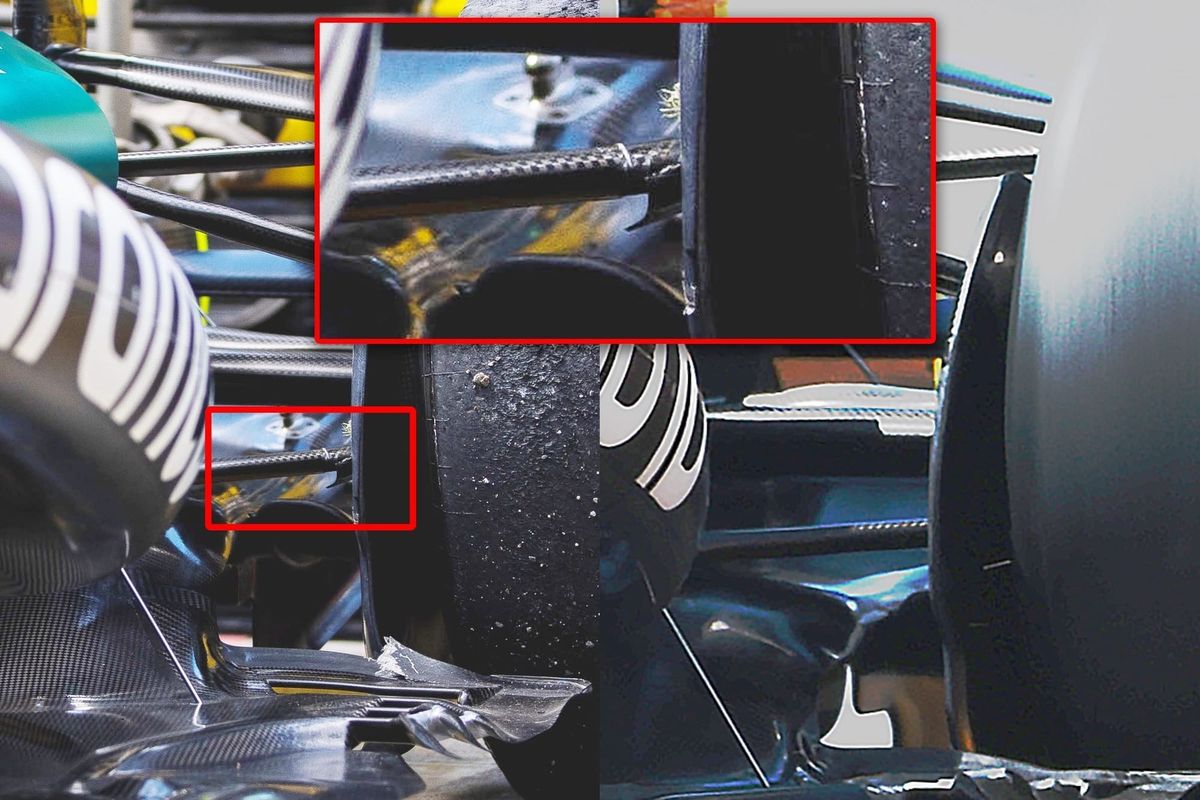
It's not certain, because we're judging it from photos rather than a proper inspection of the part, but it looks like this shows the area of the rear suspension that failed on Lance Stroll's car during FP1.
As far as I am aware, it's not a new or repositioned component, but in reality going faster and using more of the kerbs will increase the loading on some of these components.
The forward leg of the rear suspension is the component that takes the load under braking. If the anti-lift has increased, it means the objective would be to keep the rear of the car lower under braking and potentially increase that load. It is in tension and combined with the pushrod loads, which also puts a tension load on that component, so makes for a highly loaded component.
As with most of these failures, it never happens immediately so the damage could easily be done going over the kerbs somewhere else on the track.
Normally, these components are made up of pieces: the aerofoil section and the end machinings are then bonded together. It looks like a bonding delamination caused the failure to me.