How F1's most chaotic team escaped the nonsense
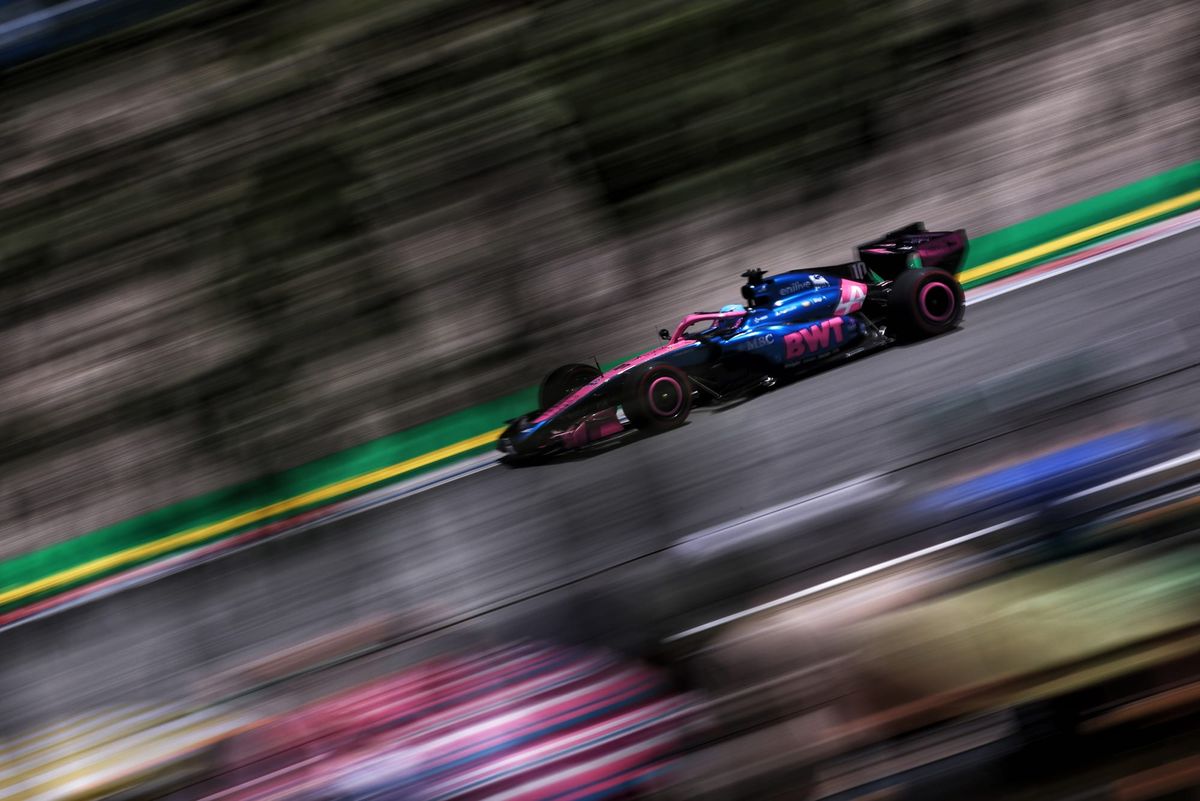

Renault's works Formula 1 team has become the most convincing version of itself we've seen for quite some time. And that has a lot to do with the much-needed addition of some "common sense".
Following the Alpine rebrand in 2021, the Enstone-based outfit became defined by chaos and disorder, with a revolving door of drivers, senior leadership and key technical personnel.
While it started F1's ground effect era in 2022 with a car capable of leading the midfield, it only went backwards, even slumping to being F1's clear last-placed team at the end of the rules cycle in 2025.
Flash forward to mid-2026, and Alpine is leading F1's midfield again with the most stability it's had in the 10 years since Renault bought back the team.
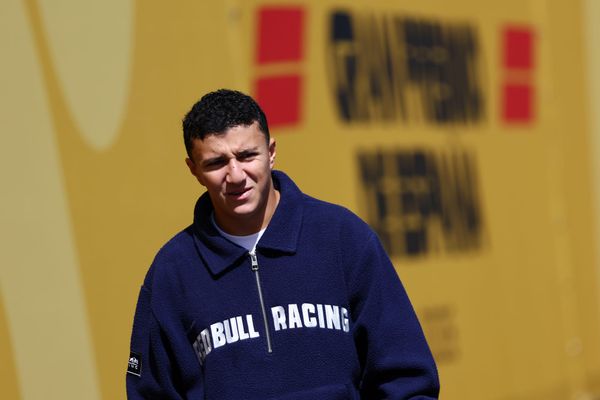
The Race spoke to Alpine's managing director, the man in charge of the day-to-day running of the team, Steve Nielsen, to find out how it's finally moved away from the chaos.
Nielsen, sporting director during Renault's last F1 title success in 2005-06 before leaving for stints at rival teams, Formula One Management and the FIA, has had a steadying influence on the team
"95% of what was at Enstone when I got there is fine. It didn't need some huge revolution; it just needed a little bit of tinkering here and there," Nielsen, who joined Alpine on September 1 last year, told The Race.
"I don't want to claim a disproportionate amount of credit for this at all. My part in this has been quite small. But if I've done anything, I've just brought a little bit of common sense here and there.
"Engineering, they've designed and produced a better car.
"There hasn't been some huge kind of 'burn the house' down revolution at Enstone. Most of what was there was fine.
"We've lost some big names in the past, like [long-time sporting director at Enstone turned Racing Bulls team boss] Alan Permane, that was a shame. And a few others I could name.
"But we've got good strength and depth at Enstone. We've evolved and duties have been reallocated and we're going forward."
Permane was released in mid-2023 at the height of Alpine's instability. He exited alongside shortlived team boss Otmar Szafnauer, whose successor, former Renault engine chief Bruno Famin, barely lasted a year.
They were only two names on a long list of Team Enstone exits in the early 2020s, including (but not limited to): Cyril Abiteboul, Marcin Budkowski, Alain Prost, Pat Fry, Davide Brivio, Matt Harman, Bob Bell and another shortlived team boss, Oliver Oakes.
The team's cause wasn't helped by a disconnect between Alpine's senior management and the race team, partly caused by the high turnover of staff on both sides. So objectives - think ex-Alpine CEO Laurent Rossi's infamous '100 race plan' - were constantly dropped or changed.
"I don't want to speak badly about any of my predecessors," Nielsen said. "But there's been too much change on the technical and on the management side for the last three or four or five years.
"That breeds a bit of uncertainty amongst the staff. What we need is stability. I've said it from the moment I arrived back. It needs stability. It needs common sense. It needs sensible management.
"I try to bring that every day, because I do believe that it just needs to flourish, and it will flourish given the right environment at the top. I think we're trying to bring that. We're seeing some of the results of that now."
Nielsen added: "The people that have come before me have probably all had perfectly good plans, but they were never given the chance to bring them to fruition because 18 months later it was a different five-year plan and then a different five-year plan.
"So you could never actually bring it to what it should be. So I hope that we get the chance to do that, and it helps that the early signs are good."
'Genius and crazy' Briatore's impact
Alpine's current leadership structure is essentially split between three people. Nielsen handles the day-to-day running of the team, while ex-Ferrari man David Sanchez leads the technical development of the car.
Brought back to the Enstone fold in June 2024, Flavio Briatore is the 'shield' between senior Renault management and the racing team. He was pivotal in convincing Renault to shut down its underperforming engine programme.
The task of convincing Renault to do so can't be underestimated, given how long and proud its F1 history is and how many people it employed. That was always going to require a shrewd operator like Briatore.
And it's a decision that has clearly paid off, in the short term at least, with Mercedes producing a strong power unit and it helping Alpine score nearly three times as many points as it did in 2025 in just seven weekends in 2026.
"The [Mercedes] hardware is on a much higher standard than our own was. It's not nice to say that, but it's the truth and everybody knows it," said Nielsen.
Added to that, Briatore has secured a bumper title sponsorship deal with Gucci from 2027, which is a significant financial upgrade on its current BWT deal.
"Somebody asked me a few days ago what it's like working for Flav, and what sort of person Flav is," Nielsen added.
"And I said he's a combination of genius and crazy, all in one person. You never really know which one you're going to get.
"But Flav is able to do things that no one else can do. And that's where he's…genius is the right word."
'We can't feel too smug'
Ultimately, Alpine's 2026 season is a lot better than its disastrous 2025, but there's a clear message from Nielsen - there's no reason why it wouldn't be, and the current gap to the top still isn't good enough.
"Clearly, we're better than we were last year, but last year we set the bar very low for ourselves," Nielsen said.
"So there'd be something wrong if we weren't substantially better than last year, which we are. But at the same time, we can't feel too smug about it, because Mercedes and McLaren have the same PU as us. And they're a second a lap ahead.
"So there's satisfaction in as much as we've made a better product, but a little bit of… I don't know if dismay is the right word, but a little bit of sort of uncomfortableness about just how far we are from those two cars that have the same PU as us.
"Happy we've made progress, but not happy with the gap to the people in front."
The Race's supertimes - calculated by taking each team's fastest lap of the weekend and expressing it as a percentage - have Alpine 1.693% off the Mercedes benchmark, as F1's sixth fastest car, a smidgen behind Racing Bulls, which has proved to be a stronger car on Saturdays than Sundays.
In the constructors' championship, Alpine is fifth with the most points (57) it has had after seven rounds of a season since its last year as Renault in 2020.
Put broadly, Nielsen identified "tyre management" and "aerodynamics" as two areas Alpine is lacking versus its rivals - but can it realistically cut down that deficit to Mercedes and McLaren this season?
"Most of the time you make the biggest gains when you make a new car," Nielsen said.
"Obviously, we're not going to make a new car in the middle of the season. A, we don't have the resource, and B, we don't have the budget cap [leeway to spend more]. But you make the bigger gains when you make the new cars.
"So, while we will chip away at it in terms of the development war that we're all going through at the moment, it would be unrealistic to say we're going to find a second.
"We'll try and find as much as we can, but a gap like that, you will close that with the evolution and production of a new car."
Where it's 'waking up a bit'
F1 teams are now such huge beasts that there are areas of improvement that can be made away from the track that have a tangible impact on performance.
One of those areas is how Alpine fully exploits F1's budget cap (set at $215million for 2026).
"This is no disrespect to our finance department because they work very hard, but we're a bit under-resourced in that area," Nielsen said.
"We're doing something about that at the moment because there are all sorts of, I don't want to say loopholes, but there are all sorts of areas of the budget cap which we haven't really explored properly. We're doing that now.
"We're getting a lot better at that because if you leave stuff on the table in the budget cap, that's basically stuff that could have paid for a new front wing or a new floor or a new rear wing, so it's as direct as that, and I think those are the sort of areas where we need to wake up a bit."
Even through all the turmoil of the last few years, Nielsen believes the team "remembers how to be flexible and reactionary, and it remembers how to be a racing team, and I think they're the strengths of the place".
It now finds itself working up towards a familiar midfield-leading ceiling, one it hasn't smashed through since the Lotus-Renault days of 2012-2013.
Alpine will hope the "common sense" of Nielsen, added to Sanchez's technical nous, mixed with the "genius/crazy" that Briatore brings, is the right formula to finally lift it out of its midfield yo-yoing in the years to come.