Read our full exclusive interview with Flavio Briatore
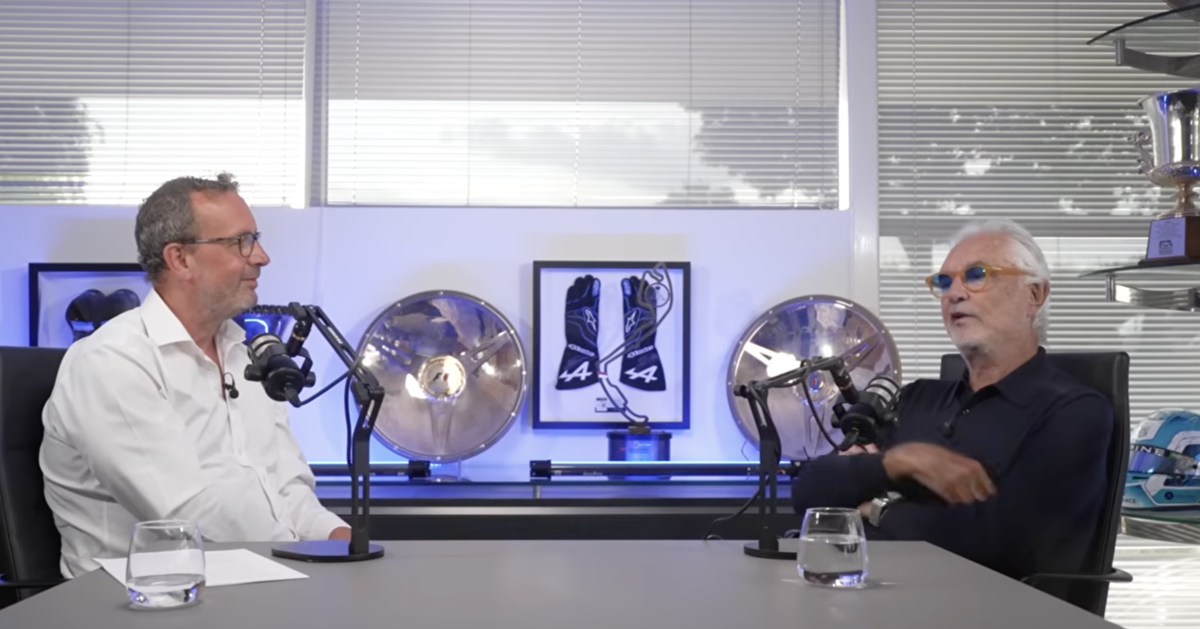
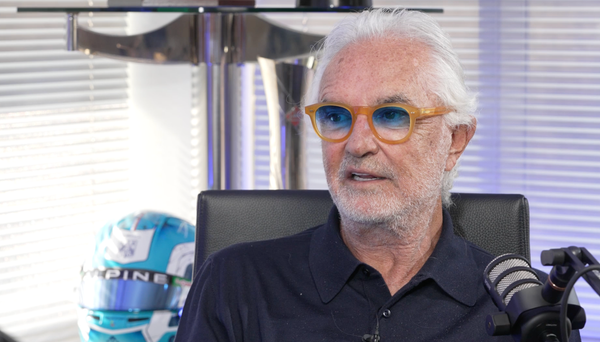
Alpine Formula 1 team boss Flavio Briatore’s recent exclusive interview with The Race Business covered everything from enormous F1 team valuations to trying to set up new American grands prix with Donald Trump in the 2000s to the early years of the original Benetton team.
Here’s the full transcript of a conversation that Briatore kept running well beyond its planned slot:
Darren Cox: Flavio, thank you very much for taking the time in your busy schedule to talk to us here at The Race. The Enstone team has another name change for next year, it becomes the Gucci Racing Alpine Formula 1 team. That is a massive deal for Formula 1 and for Alpine, isn't it?
Flavio Briatore: Yeah, for Alpine especially, you know, we are upgrading the brand Alpine as well. And the idea to have Gucci really happened one day because we have a Louis Vuitton in Formula 1 to sponsor the events, but we never have a luxury brand on the car. So I had this idea, I started talking with Luca De Meo, you know Luca was in Enstone before, was in charge of Renault, was the chairman of Renault and Luca in the beginning believed it was a very bad idea.
DC: And this was while he had moved to Gucci already or was this before he'd moved?
FB: No, no, no, he had moved already to Gucci and we were talking, Luca is a very good friend of mine, we were talking all the time about all the brands. And I said, Luca, it would be fantastic if you have Eni, one of the big Italian companies, we have MSC, number one in the world. So why don't we put Gucci as well in the group? And the number one in the world, the name, you know, you're talking about a company doing six billion turnover. In the beginning he told me it was a very bad idea. OK, I never give up, I push him, push him, push him.
At one point he called me and told me maybe it's a good idea, but we need to convince Mr Pinault. And we had a few meetings with Mr [Francois-Henri] Pinault [chairman of the board of directors of Gucci’s parent company] and in the beginning it was difficult because Mr Pinault never followed Formula 1, had no idea what was going on, etc, etc. After that, he was convinced to do something with Alpine, we had a race in Monaco for him, it was the first race.
He was incredibly enthusiastic, you know, seeing all this, plus Monaco, it's an event, it's a big event. So all this together, Gucci decided to enjoy Alpine team like a major sponsor, a title sponsor brand. And I was very happy, happy for the team, but happy for Gucci as well because everybody in Gucci is very, very enthusiastic, very, very enthusiastic.
Two months ago when we formalised the contract, it was unbelievable in the way the Gucci people take this challenge to be in Formula 1 for the first time, a luxury brand, and in the end it's good for Formula 1 because you have the two best luxury brands in the world. You have Louis Vuitton on one side, you have Gucci on the other side, and the two groups managed both by the Italian people because Pietro [Beccari, Louis Vuitton CEO] is Italian and Luca is Italian, and the two big French luxury brands worldwide. So I believe it was a good deal for everybody and now we need to see, we need to see next year everything is Gucci, everybody is excited and we need to make sure the car is exciting as well.
DC: I've heard a lot already being said about how seriously Gucci are taking this and that they're going to revolutionise the way that F1 is marketed as a, as you say, first luxury brand on a car. Can you give us any insight into what sort of things you might be doing?
FB: Sure, now we work in the delivery of the car, we work on the delivery of the driver, the merchandising for Alpine is the biggest sponsor. I'm sure it'll be in every shop, Gucci, be one corner of the F1 merchandising and it's super. Plus the commitment of Gucci is 100%.
From the chairman to anybody working in the shop, you know. I was shopping in the shop in Milano in Gucci and everybody was so excited to have the news about Gucci Formula 1. It's a moment exciting all group, exciting as well our team, our Alpine team, because we need to give stability to the team.
It's always a little bit shaking in Renault before, Alpine now and finally we look like we give a little bit of stability, a new sponsor. We reconfirm the sponsor, MSC stay with us another 1-3 years and Eni another 1-3 years, so we create a good base to develop the car in the right way as well.
DC: And do you think that Gucci will bring in other brands? They've got this halo effect over the whole company.
FB: 100% because we negotiated with three or four different brands in this moment to be associated. You know it's important when you're talking about the sponsor, it's always business to business. And it's important in our car, the association between Gucci, Eni, MSC is an incredible group of companies.
And all these companies, if you want, are Italian because with MSC, Mr [Gianluigi] Aponte is from Salerno and he lives in Geneva but MSC is Italian. Eni is one of the big European oil companies, the chairman is Italian and the other one is Gucci. So I believe we have an incredible quality of the brand in the car.
DC: I can not only see Gucci raising the profile of the sport but also Alpine as well. As you say with LVMH coming in, that has changed Formula 1 in terms of the respect of the group of sponsors that they've got around them.
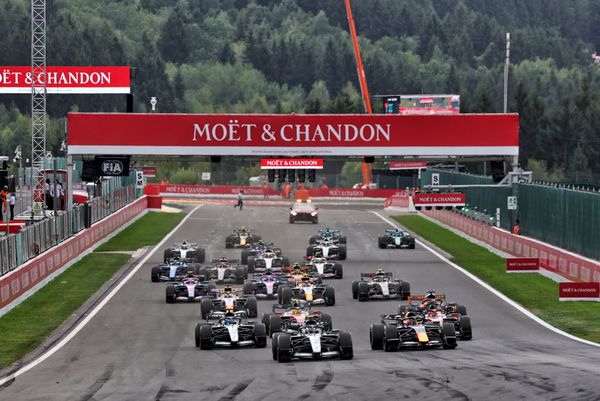
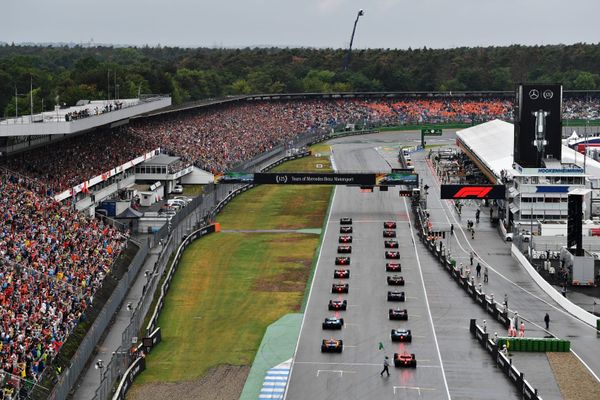
FB: I don't think we've changed Formula 1, I think we're increasing the perception of Formula 1 as the place to be. Because now from the evaluation of the team and the sport, every race we go in this moment is sold out. In Silverstone it was 560,000 people, it was the record. In Spa it was 200,000 people. And the average of the support of Formula 1 has dropped dramatically, now you talk about 28, 30 [years old]. And what is incredible about 60% women and 40% men.
We never had this before, before it was really a man’s sport. So it's good for Stefano [Domenicali], it's good for Formula 1, it's good for us, it's good to be in competition as well with Luca and the chairman at Louis Vuitton, so it'll be great.
DC: As you say, things have grown in Formula 1, but some things stay the same. You came into the sport with a clothing brand, a high street clothing brand, not a luxury clothing brand, with Benetton. So it's sort of, the loop has turned round again.
FB: At the time Benetton was kind of a luxury brand as well, because at the time we had 7000 shops of Benetton. And it was the first real fashion brand in Formula 1. In the beginning we had the car with the Benetton colour and everything, after that it was too expensive for Benetton only, when you put some yellow, some other one colour, some blue or whatever.
But Benetton was the first example. I remember at one point we were much more known about the racing team and not the shop. It was incredible.
To win the championship with the T-shirt maker was incredible. Nobody gave us one penny when we started in 1989-1990. In 1995 we were ready to be world champions and it was really, really super.
Red Bull tried to do the same, with different finance, a completely different system. At the time our budget was very tight with respect to everybody. We did it.
Thank you to Michael Schumacher, he was a big asset of the team.
DC: You have been credited with revolutionising marketing for the teams via what you did with Benetton. You were the new guys on the block, you did things very differently from the boring, staid teams that were there that had been around for many, many years. How did that feel, coming in as an outsider and being, I think someone described you as a T-shirt manufacturer, and taking on these guys that thought they knew everything about Formula 1?
FB: We are the T-shirt manufacturer, really.
In the end you are managing people. After you have the final product, the car, the idea of Benetton to be in Formula 1 was always because it was a worldwide sport. Luciano [Benetton] liked Formula 1 a lot, one brother liked rugby, another brother liked volleyball, etc.
But the idea was in the beginning, really we tried to put Benetton to a different level with respect to the other teams. The other teams were very technical, talking about McLaren, Ferrari, Williams, Tyrrell, Brabham, etc. And with Patrizia we decided to have, instead of having Autosport, Autosprint, Auto-these, Auto-these, to have fashion, to have Vogue, to have a completely different approach.
We started with a model, we started with a picture, and everybody else. We were not competitive at the time with the car, but from a press point of view, image point of view, we were always the best. Everybody was looking for the Benetton team.
We were in the back of the grid, like we started last year with Alpine. Always we turned it around, always we started from the bottom. And at the time Benetton was really an incredible success because nobody believed a T-shirt maker or a sweater maker arriving in one business was so competitive, so technical.
So I mean, at the time, we understood as well it was not so difficult. Everybody put it very difficult, you know, but the more difficult was the people to be lucky to be in the right place at the right time. And Formula 1 already was a mirror for a lot of people.
But honestly, we saw the possibility to at least compete. After we found the possibility, not only to compete, but try to have some podiums. And after we see, OK, now we compete.
And our budget was always 30-40% less than the top team budget. I believe in 1995 we won the first championship with 50% of the budget of a Ferrari at the time, or McLaren, or this and that. And we make it because the strategy was good.
We pick up the incredible driver. We have a super group of engineers. Now all the engineers becoming a star, you know, from Ross Brawn to Pat Symonds, etc, etc.
So we discovered, I think so now in Formula 1, the team principal of us was with us. Pat was with us, the team principal of Racing Bulls [Alan Permane], Jonathan [Wheatley] was with us. So the school of Benetton. Sure, we are a fashion business, but we are very strong to create the right people in the technical side as well. You combine the spirit of the fashion, the spirit of the technology. So I put this together and it was super successful.
DC: I love the fact you say that Formula 1 is really simple. Actually, it's about people and it's about getting the right people around.
FB: It's like any other business. I think so. Is a business more difficult than Formula 1?
It's a business much easier than Formula 1 when you compete with the best people in the world, but it's not impossible to succeed.
DC: On the marketing side, you came up with things early on. In 1997, you had your own TV show. Now, of course, we have Drive to Survive. You were the first to do a paddock newsletter, which then Red Bull took over. So was it really useful being an outsider looking in and seeing that people had done the same thing on the engineering side, but also on the marketing side, the same way for so many years?
Could you just see that there was this massive opportunity there?
FB: Because I had no idea about Formula 1. I arrived in Formula 1 by chance, by the decision of Luciano Benetton. Normally, it would be just for a few months to organise the commercial side.
I never believed I would stay so long in Formula 1. And like you said, you could see Formula 1 for the eyes outside. Yeah, it's complicated.
Like any business, it's complicated, but it's possible to do a lot. At the time, we were using Formula 1 for Benetton. Completely, we were not Benetton using Formula 1.
And Luciano was quite happy to have all this coverage. It was an incredible success, the company. And Formula 1, we decided to be our ambassador. The Benetton ambassador was Formula 1.
And plus, when you are competitive, it's double, three times, four times. But when you see a new business, you see with different eyes. You're not every day.
A lot of people are doing stuff every day the same, because this is the way we're doing. But it's possible to do it a different way as well. And the fact that I was not involved with the motor race, really, sure I care about the race.
It's our team. But if I don't have the team, I don't know if I watch Formula 1, honestly.
DC: Did you still watch Formula 1 when you had your times out?
FB: No, sometimes, but never. For me, our car is our product. We need the quick car, it's possible.
Put together the package, it's possible. If you want, it's a business. Whatever business you do, you need to put the people together.
You need managing people. I know something, football, I like more football, if you want. And we had experience as well in England with QPR, with Bernie [Ecclestone].
We bought the football club and in the end, we finished in Premier League and we sold it.
DC: Did you enjoy the football side and the sport, owning a football club, more than you did running a F1 team?
FB: No, I couldn't, because sometimes, we played football, at the same time was the racing. So, I had to be, I have the Formula 1 and the racing, and the football. We watched a little bit one, a little bit the other one.
No, but this is just for telling you, when you come into the business, you used to have to be from engineering in Formula 1 to have success. It's possible the people from outside as well, arriving in the new business, have very good success.
DC: So, in my mind, you helped revolutionise marketing in Formula 1. Who's doing a good job today in Formula 1? Who's taken some of your ideas, the other teams that are doing a good job?
FB: The team was Red Bull. Red Bull, when Red Bull started, was a little Benetton, if you want. Sure, Red Bull had incredible finance. We didn't have it, because we just had the finance in the sponsor, we found it, because Benetton never put a penny in the team. So, basically, we did a team, completely independent. And, again, there, you found a sponsor.
It was not easy, because you're not competitive. The name Benetton was not really the name to be associating with motorsport, etc, etc. But, after every sponsor arrived in Benetton, everybody was happy, because we were doing completely different marketing.
Everything was open. We have a driver talking all the time. We have a fashion shoot.
We have, basically, people watching us. At one point, we have a sponsor calling us, wanting to be associated with Benetton. Because we have a completely different marketing, commercial, we have a completely different approach.
Now, everybody's moving in this direction. You see a team of 40, 50 people in marketing, commercial. We have half of that.
But, now, everybody's moving in the direction, moving in the direction of the lifestyle, luxury brand, etc, etc, because Formula 1’s had a big step.
DC: I think you're right. You've lived in both eras, in a team environment of the Bernie Ecclestone era, and now the Liberty era. The sport is marketed completely differently now.
What's the biggest change you've seen between those two eras, in terms of the commercial side and the marketing side?
FB: So, Liberty is an American company. It brings in Formula 1, the American feel. And, Drive to Survive was the key.
You know, because before Drive to Survive, we survived. And, after Drive to Survive, we survived much better. And, Liberty has done an incredible job.
After that, Stefano was arriving six, seven years ago. Again, he’s done an incredible job. We have 24 races.
I don't know if you remember, but for us, it was impossible to race in America. Bernie tried. We had one stupid race in Phoenix, with zero spectators.
We had another one in Indianapolis, with a lot of trouble, you remember. We never raced, because it was between Bridgestone and Michelin, etc, etc. So, I tried, as well, with Donald Trump, to have the race in Jersey.
And, we didn't succeed, because the guy who wanted to build the track went into bankruptcy. So, it was impossible. Now, you go to America, you go to Miami, 500,000 people.
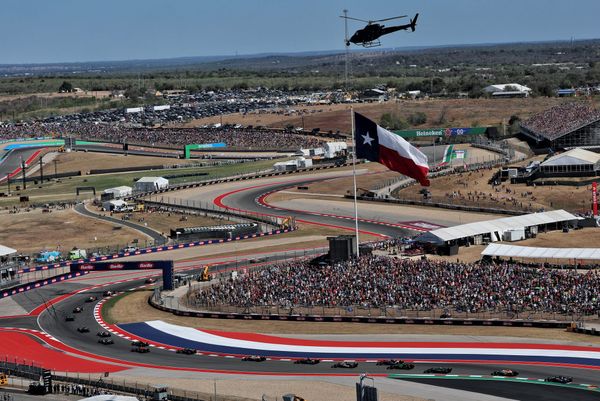
You go to Austin, full, you go to Vegas. You see, Formula 1 is changing dramatically. You see, every race is sold out, sold out, raining, not raining.
And, what has changed is really the commercial side. Liberty is much more open. Bernie was very strong, very restrictive in the business.
And, Liberty opened the commercial side, opened completely. Marketing opened completely. And, Liberty is working with the team in very good partnership, if you want.
And, this is for the benefit of everybody. Now, we have 24 races, and it's a lot. But, it's nice, as well, because every race you go, you see overbooking, you see it full, you see the enthusiasm of the people.
And, this is the new Formula 1. I believe the position of Formula 1, in this moment, is very high, very high.
DC: You were friends with Bernie, you are friends with Bernie. You're a great marketing guy. If he'd have listened to you more, do you think that the value of the sport could have gone up, if you would have been more involved in helping him doing the marketing?
FB: It's not my job. My job is more managing the team. In one way or another, one way, I was in Formula 1 for many years.
After I stopped, after the trouble we have in Singapore, I stopped. Then, I stopped for one year, two years, after I decided to do different business. It's nice if you're doing different business, because you see the value of the money.
Because Formula 1, you come back in Formula 1, everything's a million. In our business, it was a dollar. We need to take care of the dollar.
You need to take care. But, it's good if you have the skill to do different investment, different business. We created a brand seven years ago. We created [Crazy Pizza].
Now, it's working a lot of money. So, it's the same. For me, creating [Crazy Pizza] or managing the team is the same.
I don't see any difference. OK, here you're dealing with the engineers, there you're dealing with the people who make the pizza. But, before you make the pizza, you need to find the right flavour, the right tomato, the right this, the right this.
And, always, it's the concept. This is the concept, it's racing. When you do another business, the concept is doing, creating something new.
The pizza, [Crazy Pizza] is great, because it's not a [Crazy Pizza]. It's not a pizza. It's something different.
It's experience. And, all the [Crazy Pizza] we have is doing fantastic, and this is very nice as well. Because it's the concept.
I changed the concept. In the beginning, I was criticised by all the stupid pizzaioli, normal, you know, and the people were criticised because my pizza was very expensive. Everything was very expensive.
But, the people don't understand. For me, the pizza was the excuse to go to [Crazy Pizza]. The pizza was the DJ, the rumour, the spinning pizza, and it's experience.
I don't care about the pizza, if it's good or bad. Sure, it's good, because it was the first pizza we know this, we started one year.
At the moment, you have the concept, creating the concept. Whatever product, final product is a pizza, is a car, it will be the same.
DC: So, it's all about the experience. I hear that one of your facilities in Monaco, people are turning up already, knowing about the Gucci deal, and starting to use that as a backdrop for…
FB: We're creating, we're creating. I have a place in the beach in Monaco, a few beaches in Monaco, and we've done the joint venture with Gucci this year. You know, Gucci has about 60 million followers.
You see the people arriving in front of the [La Rose des Vents] Powered by Gucci. It's sensational. The women arrive in Gucci dresses, because it's a Gucci place.
We created one movement, fantastic for us, for Gucci, for everybody. The shop in Monaco is doing 40% more respect last year. Because after, you need to go check in the bottom what you have.
DC: So, next time, when we come here to do this follow-up interview next year, I'm going to have to wear Gucci. I can't let the comment go, because I've not heard you talk about it before. You tried to put a New Jersey Grand Prix together with Donald Trump?
FB: Yeah, because it was done in The Apprentice with Donald Trump. I was The Apprentice from Italy. And we see all the time together, because it was the same time.
Sure, Donald had no idea as well about Formula 1. But he's a great promoter. At the time, he promoted boxing, he promoted everything in Vegas, et cetera, et cetera.
And I made Donald to talk with Bernie. I was in the office of Donald. We put in video with Bernie to found what was the best place in New York to do the race.
And Donald tells us New York is very difficult for a million reasons, but Jersey was the place. So Bernie started negotiating Jersey with two or three different people. But we never succeeded, because Formula 1 was not...
In America, before Liberty arrived, Formula 1 really was not considered something special. You talk about the NASCAR, you talk about Indy, completely different business. And Formula 1 was not [discussed] at all.
So when Liberty arrived, everything was changed.
DC: I mean, Donald Trump now has got his dream. He's having an IndyCar race in Washington, DC, as part of the 250-year celebration.
FB: So Donald Trump now is looking for football, much more in television for football and not for president.
DC: And having a UFC event on his lawn as well, which is interesting. During my research, I did see that you were the boss of the Italian Apprentice. So you're used to nearly reality TV.
So the success of Drive to Survive maybe wasn't a surprise for you, because you saw how impactful the Apprentice was around the world, especially in Italy.
FB: Oh, yes. You know, one of the guys, the second Apprentice, is called Francesco [Menegazzo]. Still with us, he's basically outside of Formula 1.
He's the number one. He's the guy who takes care of all of our outside business around Formula 1. So I mean, The Apprentice was something very serious.
And the quality of the competitor we have in The Apprentice was very high. Sometimes it was very difficult to decide to fire or not, et cetera, et cetera. But it was great.
After that, after two years, it was too much time, you know, because we use a lot of time. Basically, we had the boardroom. We had the meeting.
It was very demanding. But for me, it was a great experience. And we had a great experience in America as well. a lot of places, and it was a super success.
DC: And as we talked about, Drive to Survive has been a massive success. But that's not been the only thing, is it, that Liberty have done that have made Formula 1 so big? What are the other things you've seen that Liberty have done that Bernie didn't that have made Formula 1 so successful?
FB: You know, I think Bernie, was different timing. The world is moving very quickly now. A lot of the new sponsors as well enjoy Formula 1, the big sponsors to support the event, et cetera, et cetera.
And after, for one reason, I don't know if it's Drive to Survive, if it’s the way it was organised, the commercial side, the marketing side of Formula 1. At one point, for everybody, it's the place to be. You know, when it's the place to be, everybody wants to go there.
And when you see the value of the team, you know, I sold my share in Benetton, and the value of the team was $80million. OK, now you're talking about $3.5, $4 billion. And everybody predicting, you're talking with these finance people, talking about, OK, Formula 1 in three, four years, the team is worth $10billion.
Well, I don't know. But if you see what is going on up and now.
DC: What's your view? What do you think? Are the valuations topped out, or are they?
FB: If the team was mine, I'd have sold already!
DC: Well, a lot of people that are watching this, because we have got a lot of new fans, won't know that at some point you've owned parts of three teams. So do you wish you still have one of those, or would the price be too high for you to hold?
FB: No question, too high. It depends if you buy something today, it will happen tomorrow, after tomorrow. The prediction of the people is the price of the team is still not expensive, but normal.
And the prediction of the people is that in three, four years, the team is worth much more. This is the reason why the people want to invest, especially the, you know, we have American, we have Chinese, we have any kind of people want to invest in Formula 1.
DC: I used to work for Renault a long time ago. I look at the market capitalisation of Renault, it's 8.5 billion. Forbes have said that the Alpine team here is worth 2 billion.
FB: No, no, we are more, because we have an offer, we have an offering for the 24% of Otro, the valuation 3.2. So we have 40% of the valuation of Renault. All Renault is worth 8.3. And we're working at this 3.5. So we're representing 40% or 50%.
DC: You've read my questions. I mean, that is a crazy number, isn't it? Renault makes 2 million cars across all these different brands, you make two cars effectively, and it's worth 40%.
FB: Exactly, with a few people, because with respect to the employees of Renault, we have very few people. Because Renault, you talk about Renault, Dacia, you talk about Alpine, you talk about everything. It's completely crazy.
DC: Completely crazy. Your investors, Otro Capital, you mentioned have got 24%. The rumour is that they're allowed to sell it to anybody after September.
Who would be a good investor? Who would be someone that comes in and you go, that's great, that's great to have that part of the business?
FB: Not really my problem, this is more the issue of Renault. Sure, to have a partner, 24%, we're looking for somebody. I expect somebody to give not only the finance, give some help in technology or whatever, or whatever in finance.
But in September, I don’t think nothing [will] happen dramatically, because I see it was very difficult for somebody to buy 24% of one company, with no agreement with the majority. I never see somebody buy, spend 600 million to buy a minority, to be signed as partner, if you don't agree with the majority. See what happens.
Renault is negotiating. For the team point of view, for me, it makes no difference. We have Otro, now tomorrow we have somebody else.
But sure, we prepare somebody, bring something to the team. Renault know that.
DC: You've worked with Renault. I've been in the Renault machine at a much lower level than you're at. Big car companies traditionally haven't been very good at managing Formula 1 teams.
We've seen what Toyota did, the Jaguar story, everything else. Toto [Wolff] keeps Mercedes one arm away from that. Is that your approach to how you manage Renault, not letting the big corporate beast overtake this small, agile racing team?
FB: It's always the same story. I'm used to, because I've worked for Renault for many, many years. I used to, when we have the team Renault, to be completely independent.
But we are completely independent. A little bit, it takes a little bit of time, the moment you have the confidence with the group, you have a lot of compliance. Renault is in the stock market as well, and a lot of compliance.
In the beginning, we need to fill up a page, a page, a page every day. Now this is much better. I agree with you.
Formula 1, the big manufacturers, it's difficult to understand Formula 1. Toto is very successful, because Toto has his partner, and Mercedes at 30%, and Toto is doing super. The moment you do super, nobody talks with you, and nobody complains about you.
And for us, honestly, it's a question of the people in charge of Renault at this moment. I worked with [Louis] Schweitzer, I worked with Carlos Ghosn, I worked with Luca de Meo, and now I'm working with Francois [Provost]. I think our relationship is very good, because in the end, the relationship is made by the two people who want to make success.
And I have pretty much a lot of freedom. Sure, I have a lot, I inform Renault what's going on, et cetera, et cetera. But really, you know something, two weeks, three weeks, we're talking with the assemblies.
In this moment, the team, we have a lot of freedom from Renault Group. Francois started to understand Formula 1, it was important for him to see the factory, and we're working much better together. I'm quite happy, I don't have any aggravation.
We have already a lot of aggravation, I don't have this one.
DC: That's good to hear, because as I said, history suggests that when car manufacturers get involved in Formula 1, they...
FB: We see, we see the factory, with Niki [Lauda], with Jaguar, with this and that.
DC: You've had a description of your time having Michael Schumacher, Fernando Alonso, as the same movie with two different leading actors.
FB: Two different actors.
DC: So for your third act, if you will, to take this Enstone team back to the top, do you need another Schumacher or Alonso to build the team around?
FB: I wish! In this moment, the driver is really not our priority. You need to fit the driver in the team the moment you believe the driver gives this two, three, ten, make a big difference. In this moment, we need to build the team.
We need to build the confidence between engineering, we need to build complicity between everybody. Today, my priority is to build a racing team. This is the priority.
OK, if you talk about the six top drivers, I believe Pierre [Gasly] is inside the six top drivers. I think so. We need just a better car, better confidence in people here in the factory.
And this is what we need to do now. Sure, the moment you need to do the big… The two tenths [of a star driver] make the big difference.
Why not Pierre? Why not the driver we have? Because at one point, as well for Franco [Colapinto], he's very young.
He's the first year in Formula 1, and from last year to this year, he's improving 100%. You don't know a young driver, the development of a young driver. Let's see.
Let's see the future. But it's not my priority at the moment. Really, the driver is not my priority.
DC: In the past, you've been great at talent spotting, so I was going to ask you if there's anyone on the junior ladder that excites you that could be the next Schumacher or Alonso. Unless you have someone's name, I won't ask you that question. You say it's not a priority.
The people here, have you got the right people now, Alpine? Are you ready on the engineering side to make that step that you've just described?
FB: No, you're never happy about that because including Toto, I think, so he's looking always to something better and better and better. Yeah, from zero to 10, we are about six and a half. Now, the more you go, the more it's difficult.
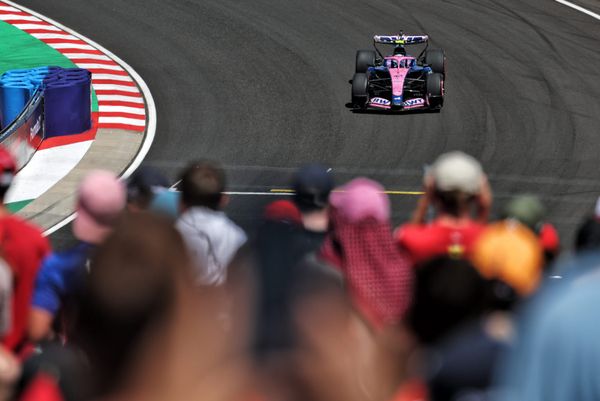
But we have a super relationship with Mercedes. We have the power unit from Mercedes, changing completely the feeling for everybody here. At least, we know one part of the team, we have the best.
We have a gearbox from Mercedes and now our people are working from the top of the nose to the driver because this is the problem we have. At the back, we are OK with the Mercedes engine, with the gearbox, we are OK. We lost a lot of good people in the factory because at one point it was not clear, a clear way to go.
It was not a strong management, people don't have confidence in Renault. Because Renault is something very strange, you know. Whatever you are doing with Renault, the press is always thinking about Renault as not serious in Formula 1.
I remember when we won the championship with Fernando, we had a conference with Carlos Ghosn and one journalist asked me, but do you think about your finances? I told him, I am the world champion. You know, we are the world champion, people put doubt in Renault.
You know, if you are pregnant for six months or you are pregnant for nine months. I told him, we are pregnant for nine months, you know, and we are the world champion. But it was always the rumour, not about, oh, Renault, you never know, you never put the money, this and that, you know.
I was talking about, all the money I asked from Renault Group, plus, you know, you need financing yourself with a sponsor as well. This was the difficult part. And afterwards, a lot of changes, you know. Lotus, at one point, people want to manage Renault from Paris. Somebody intelligent stopped all this. And now, you know, my wish is, in a few years, to have a podium.
I have to see what happens. I don't know how long I stay in Renault or in Alpine, but two, three years after that, somebody else is coming to my place.
DC: You say that people have got a strange opinion of Renault and they are always asking that question. At one point, you had this, people had an opinion about being a playboy. I've read that you used to sleep in the office, that you were here.
FB: Well, it was in this one, this was my room. This was my bedroom, sitting room, the union suite. I keep everybody honest, because when I was with him, everybody at nine o'clock still here, and in the morning at seven o'clock, everybody was here, you know.
We changed, we changed the spirit, you know. At the time, it was Ross Brawn, it was just the beginning. When we built this facility, I tell the architect, you do whatever you want with the engineering, because he did engineering design, not the architect.
Tell me, what I want from you is one bedroom in the facility. It was great. I was sleeping here, and there was a gym, in the middle of the country, it was not bad.
DC: I've heard you say that when you first got the job, Mr Benetton would say, you're going to move to London. You said, this is nowhere near London.
FB: I'd never been to London before. I spent a lot of time in America. I was in charge of the commercial side of the Caribbean and I was the assistant to Luciano Benetton, but I'd never been in the UK. For me, it was a shock to be in the UK.
DC: The weather and the food, right?
You talk about culture. I spoke to your receptionist here, as I was coming into the facility. She's been here many, many years.
She's been here through all of….
FB: Longer than me.
DC: Longer than you. We just happened to have a chat, and I said I used to work for Renault, and she, without me asking, said, it's great to have Flavio back because he brings a different culture. What is that culture that you bring?
Why do people keep coming back? Steve Nielsen's come back for a second time here. You've got the son of the guy that took over from you in 1997, Harry Richards.
FB: We have a lot of people.
At least we still have 80, 90 people from the old time, 100 people maybe. We have 40 Italians now, 40, 45 Italians now. And the culture is winning.
There's no f***ing tourist thing around the world, you know? When I started with Benetton, Benetton was kind of the group that was managing Benetton. Benetton, I talk about the beginning, beginning, beginning.
These people had no idea about winning. The idea was to be in Formula 1, to go around the world, have fun at the barbecue. And I don't like barbecue and I don't like going around the world.
I want to win. The culture is to be competitive, to win. Doing anything is possible for me.
Moving people, try to have the best people around me for winning. This is the culture, to be first.
DC: So you've already said you might not be here in five years' time. Do you think that this team can win in the next five years?
FB: We have everything to win. Because, you know, the agreement we've done with Mercedes is a super agreement, because we picked up the right partner. And we're investing in CapEx a lot of money in the factory.
We have everything. We need to put the pieces together. To put the pieces together, you need to be a little bit more creative than what we are now, take more risk than what we take now.
But I'm sure this team, I don't know why we're not winning. I don't know why we don't beat McLaren. I don't know why we don't beat Ferrari.
We've done it before. It's only a question to believe what you're doing, you know? It's a question to compete with these people.
And surely, you need the first year. This is the first year we have a little bit of the pieces together. Last year, I promised to Renault, next year we are in the first six.
If we make it, maybe we are in the first five. But surely, the first six from P10 to P6 is already there. It is what I promised.
My bonus is in the first six. Anyway, at least I take the bonus. But it's…
DC: What's your bonus based on next year?
FB: No, no, this year. This year, next year, plenty of bonus.
I don’t see why not. I don't see what the other people have. Sure, maybe somebody has a better facility. But we see as well the example of Aston Martin, with the best facility in the world, and the best engineer in the world.
It's not so competitive, you know? It's only a question of the people need to believe it's possible to win. Put all the effort.
And maybe we have very good engineering here, but it's still in the bench. I think so. Our technical director needs to be really, really looking.
Now, we've done the first car all together. Now, all the technical part, we didn't understand who's good, who's bad, who's doing very good, very bad. But now we have a picture.
Before, there was no picture, because there were so many changes. Now we have stability. And we have people calling us to join the team, to join helping.
Before, everybody was taking opportunities, Cadillac, Aston Martin, et cetera, et cetera. Now, a lot of people want to come back.
For the moment, no. I don't want anybody, the people left, to say a word. I don't care.
DC: That's part of that culture thing that you talked about.
FB: We don't like the minestrone riscaldato. You know, the soup, that one.
DC: Reheated soup. We won't be getting that at Crazy Pizza, will we? The reheated minestrone.
I'm being told that we're out of time, but I wanted to ask you just two more questions. Where do you see the growth in Formula 1 coming from? Where do you see it's grown massively?
As you say, it's grown in America. Do you see more growth in America? Do you see growth elsewhere in the world?
FB: It's people. It's the people managing. Stefano has done a good job. We have a country like Rwanda. Not only America, it's Africa want to have the race. And from Singapore, Bangkok want to have the race. It's incredibly demanding.
We have Rwanda, I believe, and one day we have the race in Africa. And America's pushing very hard, you know, especially now with AI, artificial intelligence. Everybody wants to be in the team to do experiments, to do this and that and that and that.
We have, I know I'm going back, but we have 10, 15 calls every 10 days to the people who want to invest, want to propose technology. The world is changing completely. Formula 1 is not only a race. It's a big event. After, if you see the race, it's something. If you don't see the race, I don't care.
But the people need to be there because it's Formula 1. It's like football, no? You see the World Cup, all the stadium was full.
And if you see the last people in the grandstand, I'm sure you see the player like this [tiny]. But it must be there because, OK, I was in the event. I was in Mexico to see the World Cup or whatever.
Formula 1 is the event. Everybody wants to be part of the event. And Liberty and Stefano are managing very well this demand of the, you know, how many, six, seven big groups want to buy a team? Want to buy us, want to buy whatever. Renault is not for sale. And the other one team, I know for Racing Bulls, there was a big offer. Racing Bulls, they know we want to stay. It's continuing like this. It's growing, Formula 1.
I don't know if you tell me how big it's growing from now to the future. We need to change a bit the race as well. I believe we need to do the sprint race.
If I was me, I'd do it every race. Because we need to give something more to the spectator. Because we do nothing for the spectator.
Because Friday morning is only technical. You go two laps, you come back, and the people, OK. After Saturday in the morning, after you have the qualifying, and that's the finito, you have the race.
With the sprint race, at least you have two races, two starts, and the driver is driving for something. He's not driving only for the engineering. And for me, we need to have the sprint race. For me, 24 races, 24 sprint races.
DC: That was one of the reasons why Silverstone had such a record crowd. It was because there were people there on the Friday and Saturday because of something competitive going on.
FB: Yeah, because you go to Thursday already. I arrived in Silverstone Thursday. Looked like what the Sunday was seven years ago.
DC: I said the same thing in one of our newsletters. Friday felt like Sunday.
FB: Because you never see so many people on Thursday. It's crazy. Thursday.
I remember in Silverstone, 10 years ago, there was nobody on Thursday. And a few people on Friday, full Saturday, Sunday. But now, Thursday was a lot of people, 20,000 or 30,000 people on Thursday.
DC: And a lot of people don't like the Americanisation of the sport. You and I have been around a little while. We can see the benefit of it.
And these changes that Stefano has made, and Liberty have made, have made that happen. Those numbers go up. The valuations of the team go up.
The amount of fans we've got goes up, which is incredible. And the fact that you've got Gucci coming. If I'd have said that to you in 2019, that you were going to have Gucci signing on to a Formula 1 team, you wouldn't have believed me.
FB: Impossible. Because one, I think so as well, to Gucci to decide to join the team as well, you have a Louis Vuitton group. You know, the two big luxury brands in the world. And if you're there, it's because your marketing people are thinking about three other times, and want to be there as well.
So we never had such a big brand sponsor Formula 1. Not only the team, but sponsor the event, and sponsor the team. You see every car have a very well known brand.
Before there were some brands, Japanese sushi, you don't know where it's coming from, et cetera, et cetera. Now you see a big bank is there. Everybody.
Everybody is part of the whole sponsor. All the computer companies, this and this, and that, and that. It's unbelievable.
And you ask me if it's still growing. Surely it's still growing, because the movement is very strong in this moment. I don't see nothing to stop it.
We need to give more to the spectator, because the spectators are... Sometimes when you see the spectator, like that year in Spa, it was raining three days. Wet.
Not fair. The tent. The air of these people is fantastic, you know?
And we didn't race in the end, because it was too wet, it was foggy, what is, and that, and that. And nobody was complaining. I mean, our support, the press, our support, and you see the supporter of Alpine, next to the supporter of Ferrari, next to the supporter of whatever.
Every supporter is united. Football, if you go with the t-shirts of Real Madrid or Barcelona, people shoot you. This is where you want to go.
So the people love the sport. This is the competition, but all the fans are very friendly.
DC: For those fans, what can they look forward to with the Gucci racing brand next year? What's the big things you guys are going to do?
FB: I think we should impress everybody, because the programme we have in merchandising for Gucci will be amazing. So I think Gucci will be the place. Gucci, I believe in this moment, with all the excitement Gucci has, in the way they design the merchandise and stuff like that, Gucci will be the sponsor.
And I'm sure when we present the overalls of the driver, and the car of Gucci will be the number one photographed car in the world, because now it's very curious to the people. We've done very well, because we don't tell anybody about the livery of the car, about the livery of the driver.
DC: Thank you very much for giving us such insight. It's been great to talk to you about things that normally we don't hear you talking about. And I think everyone that's watched this is now going to be really keen on looking at how next year is developed with Gucci Racing.
FB: Thank you very much. Thank you. Thank you.