Gary Anderson's verdict on every F1 team's 2025 performance
When it comes to reviewing a long, hard Formula 1 season fairly, you must avoid falling into the trap of the final part of the year being so fresh in your memory.
It’s the points scored over all 24 events, sprint races and all, that matter, so to avoid that recency bias, it’s important to remember that the numbers don’t lie and allow you to see the real shape of the season for the 10 teams.
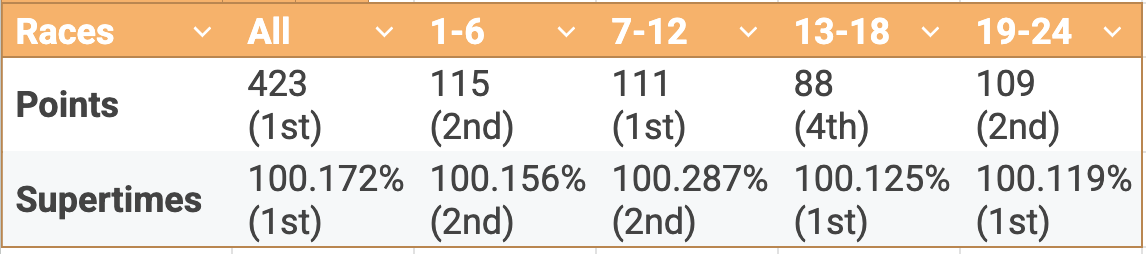
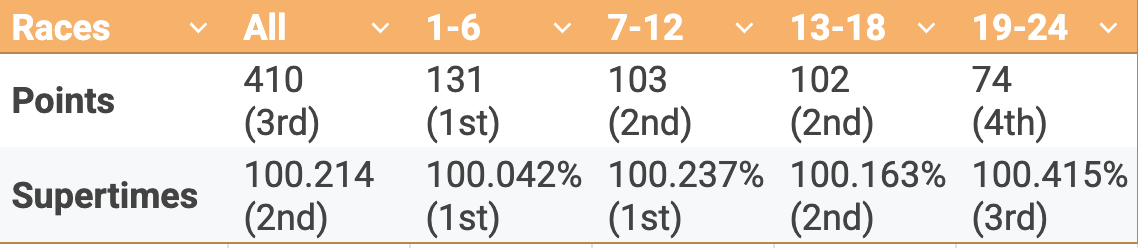
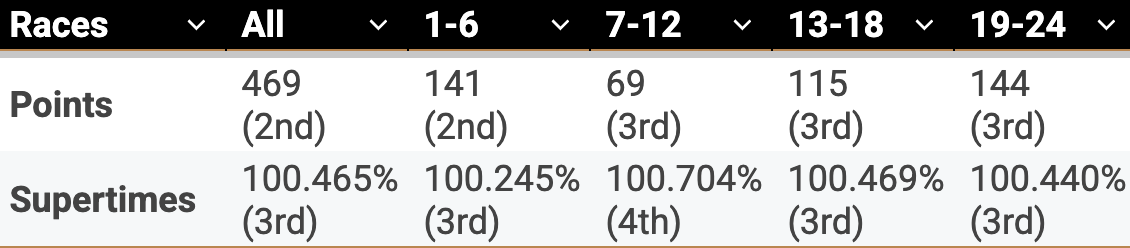
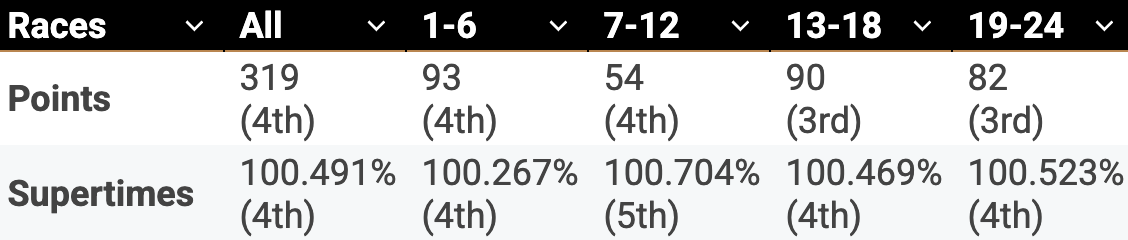
To put some structure into the season, I’ve looked at each team in constructors’ championship order in terms of their performance across four six-race blocks.
This makes it possible to see how development progressed independent of the swings caused by track characteristics.
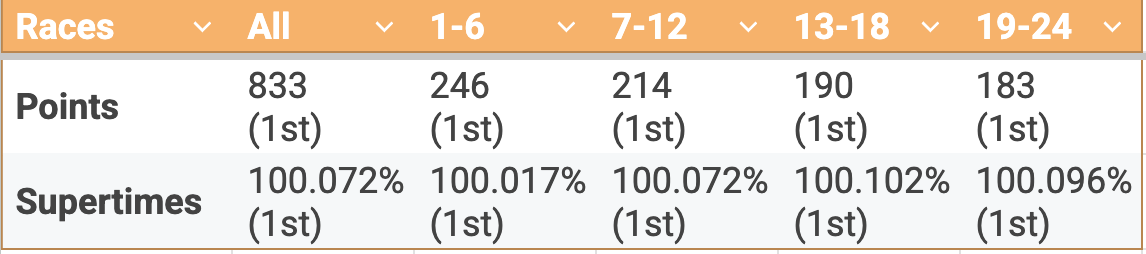
This includes driver points and team and driver supertimes - the fastest lap set on a weekend expressed as a percentage of the fastest time overall, so the closer a driver or team is to 100%, the quicker they are.
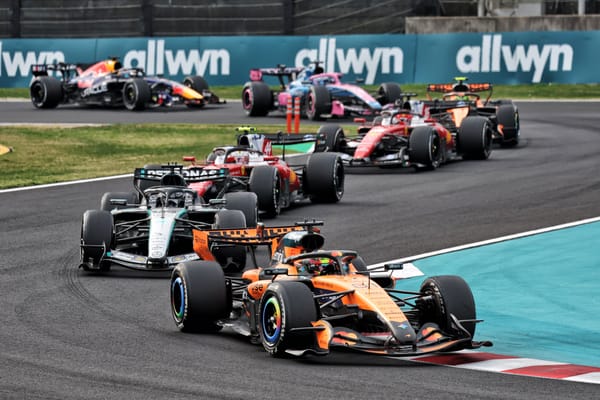
1st - McLaren
When these ground effect regulations were introduced in 2022, McLaren could barely do a lap trouble-free in testing in Bahrain and went on to finish fifth in the championship with just 159 points.
What followed was a remarkable turnaround; fourth in 2023 with 302 points, first with 666 points in 2024 and this year first again, this time with 833 points.
This shows what’s possible if you take the time to understand what the car needs within a set of regulations to be consistently fast.
Yes, the McLaren MCL39 was slightly better at some circuits than others, but its definition of ‘bad’ was far beyond what most teams could dream of at their best. The car was particularly good at keeping rear tyre temperatures under control, although overtaking was always difficult, given it had plenty of downforce and therefore was one of the cars carrying more drag.
Lando Norris made an interesting comment when asked why he didn’t back off more near the end of the race after taking a safe third-place finish in Abu Dhabi, saying the car becomes harder to drive if you back off too much.
This comes from the level of anti-dive, anti-lift and pro-squat McLaren uses. If you don’t load the car up correctly on the brakes and throttle, it is easier to lock a wheel or make a mistake.
If McLaren can build on this success during this next regulation cycle, then it really could be back to the heyday of Alain Prost and Ayrton Senna doing battle.
With Norris and Oscar Piastri, McLaren continues with its philosophy of not having a number one and number two driver, which is great to see.
Lando Norris
Oscar Piastri
The McLaren drivers are both exceptional, despite not having perfect seasons. Early on, Piastri was the laidback one with Norris a bit more on edge and more easily pressured into mistakes. The other drivers around him knew that and played on it.
By the final third of the season, that had switched and Piastri was the one making a few errors. But by the final couple of races, both were showing the maturity and confidence needed to win races and, in turn, the championship.
If McLaren gets it right with its 2026 car, it will be another ding-dong battle between these two, who will both be even better thanks to the experience of this year.
2nd - Mercedes
Mercedes must have felt a little deflated at the start of the year after the departure of Lewis Hamilton, who the team was built around. But with George Russell stepping up to the mark, it was soon business as usual.
The ground effect regulations have exposed the weaknesses of this once-dominant team in terms of both its aerodynamic and mechanical understanding. Its simulation tools don’t seem to be leading it to the necessary answers needed to get back on top. Team principal Toto Wolff has described it as a process of peeling back the layers as it works through problems, but Mercedes simply has not done this fast enough for a team with its resources and know-how.
This is where Mercedes must focus. If the tools you use don’t give the correct answers, you need to look more deeply at the reasons why. These tools are essential to focus your car’s development direction and without them, you are blindly going from one (hopefully) miracle cure to another.
We saw that problem on track this year with the rear suspension upgrade introduced at Imola. This was then taken off for two races, then put back on, then eventually abandoned for good, making the car more difficult to drive is ok as long as there is a reward in lap otherwise it just leads to more mistakes.
In Las Vegas last year, and in Montreal and Singapore this year, Mercedes was dominant, but at other circuits it was fighting for best of the rest. I’m not convinced to this day that those in the team really understand what the difference was.
George Russell
Kimi Antonelli
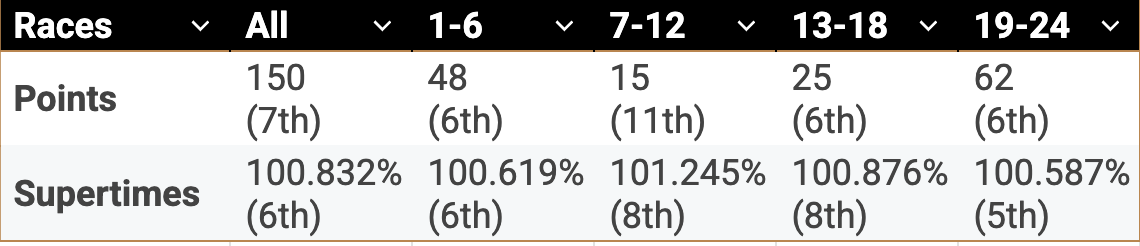
Russell’s season was outstanding and I’m baffled by how long it took him to get his contract situation sorted. That sort of thing can easily be a distraction, but fortunately for Mercedes, he came through that uncertainty and has just got on with the job and taken over from Hamilton as team leader with maturity and conviction.
Team-mate Kimi Antonelli was a rookie thrown in at the deep end for a team expecting to win, so that means lots of pressure. He had a mediocre start to the season, a stumble in the middle when Mercedes introduced that rear suspension upgrade that it later abandoned, then proved to be a far more confident and accomplished driver in the closing stages of 2025.
That will give him the motivation and confidence going into the winter to ensure he’s ready to push Russell that little bit more next season.
3rd - Red Bull
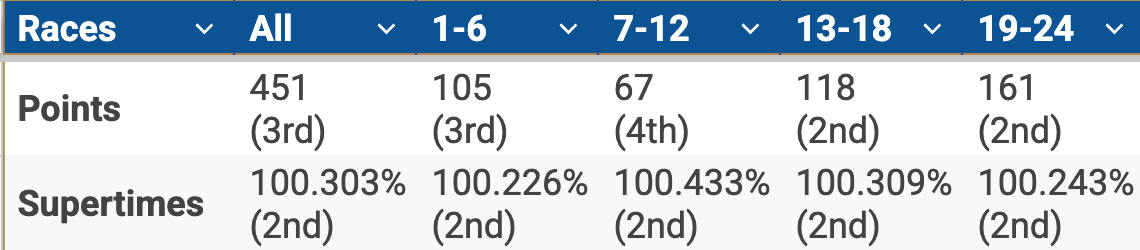
Red Bull was a one-car team this year, just as it was for most of last year. That stopped it from finishing second, or even pushing McLaren for the constructors’ title.
The first quarter of the season wasn’t bad, with Verstappen scoring 99 points to Piastri’s 131. Then came developments that took it in the wrong direction, with complaints about disconnected balance a regular occurrence. Changes post-Silverstone and a more engineering-led development path brought it back into contention.
In the final quarter of the season, Verstappen managed 148 points to Norris’s 109. But for the question marks about the power unit, you’d say Red Bull would go into 2026 full of confidence after that recovery, even though the problems with what it called “disconnected balance” were never completely eliminated.
It’s never as simple as pointing to the change in team principal from Christian Horner to Laurent Mekies, but there was unquestionably a refocusing of efforts that finally unlocked car performance and got the best out of the technical team.
Some will say Red Bull was the only top team to keep developing until late in the season and that is true. However, when you are having problems plotting your development path you need to look closely at why. If you can identify that, it puts you in a better position with more confidence in what you are doing for the changes coming for ‘26.
With Helmut Marko now gone, the whole leadership has changed. I just hope the powers that be leave the people who know how to get on with it without too much interference. Only time will tell.
The second driver problem is a persistent one. The hope is that Isack Hadjar can smooth off his rough edges and be a little more laid back to fill the required role of what might be called a number 1.5 driver next year. Red Bull needs someone who can back up Verstappen properly and pick up serious points if he has a bad day.
Max Verstappen
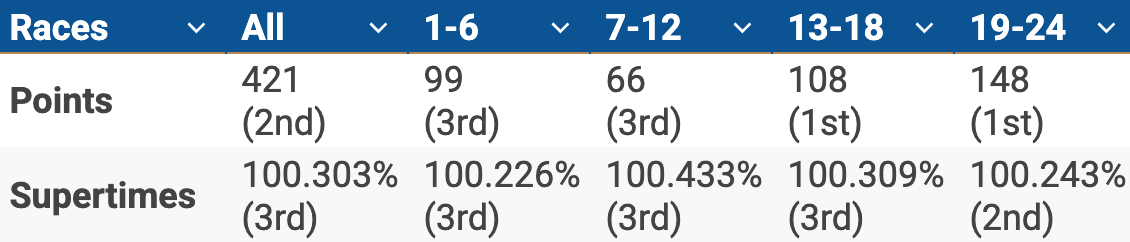
Yuki Tsunoda
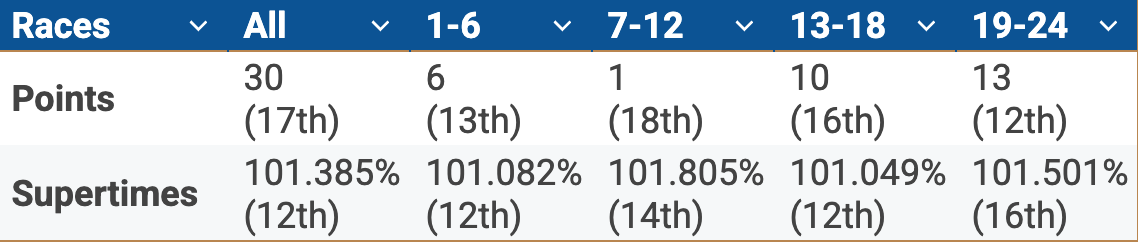
Liam Lawson
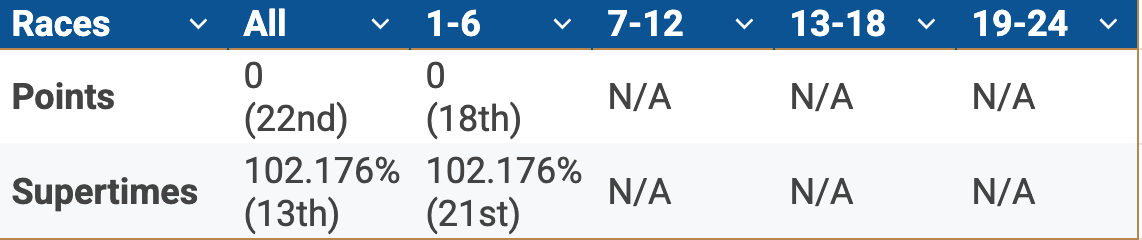
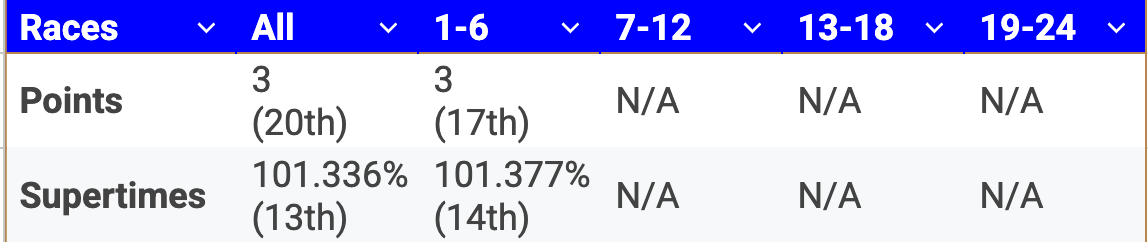
It was only two races for Liam Lawson, and he should have had more time. However, with Yuki Tsunoda qualifying fifth at the season opener in Australia in the Racing Bulls, which was actually his best qualifying of the season, Red Bull hoped he could be the one to back up Verstappen. No wonder Tsunoda admitted he regrets missing out on driving the Racing Bulls car for most of the season.
Verstappen is an all-time great and his performances were outstanding in 2025. It’s hard to imagine many other drivers being able to match his numbers in that car.
4th Ferrari
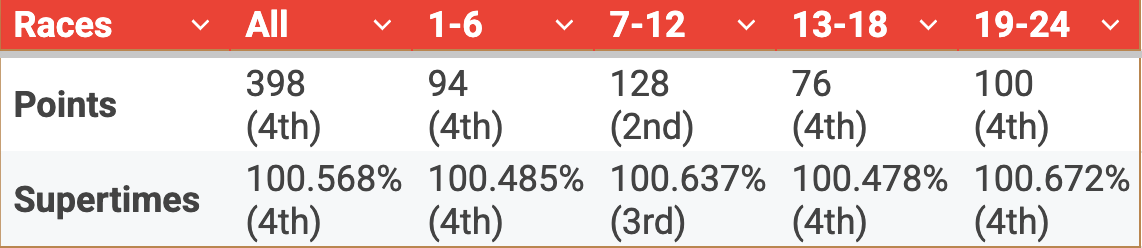
Ferrari endured a season of turmoil. The rumours in the Italian media about Fred Vasseur being sacked and big boss John Elkann firing a warning shot at the drivers and their lack of performance mean it’s difficult for those in Ferrari not to keep looking over their shoulders to see how far away the knife is.
This was about as demotivating as it could be and it really disrupted the direction of travel. Yes, Ferrari stopped development early to focus on 2026, but sometimes you need to prove to yourself that you understand why you are struggling. If you can do that, you move forward with more confidence as opposed to just making the same mistakes again.
The car was very difficult to drive and had to run low to produce the downforce. This led to Ferrari having to lift and coast at the end of straights to reduce the downforce and prevent the car being pushed lower, generating greater plank wear. That’s no way to go racing.
Ferrari wasn’t able to rectify this problem despite introducing a modified rear suspension package for the Belgian Grand Prix in the middle of the season. When you have these problems, you need to rectify them to show you’ve really understood the problem. Ferrari didn’t do that, which is a concern.
Charles Leclerc
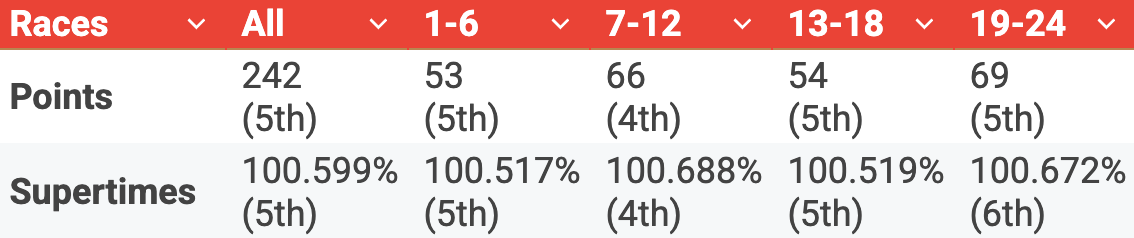
Lewis Hamilton
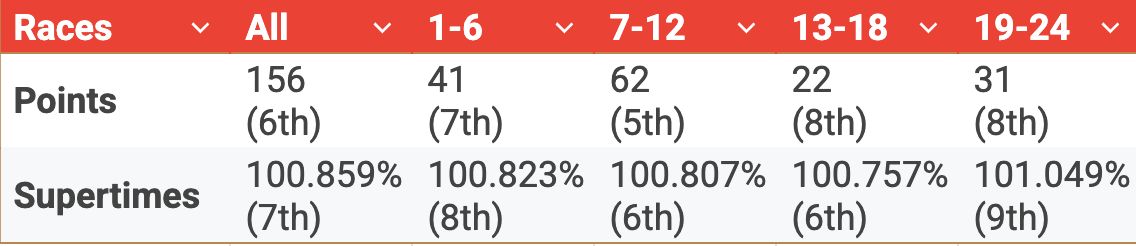
Ferrari's main strength was Charles Leclerc, one of the fastest drivers all year. But the car didn’t allow him to show how good a race driver he is. He’s capable of being a championship contender, but Ferrari needs to give him the tools. I’d love to see him matched up against Verstappen, as I’m sure they would both be very content with a similar car.
As for Hamilton, I can’t blame him for signing for Ferrari and I’m sure his accountant is delighted, but this season has tainted his reputation. He regularly complained to the media and hinted the team wasn’t listening to him, talking about how he’d written long lists about what needed to change. But things seemed to get worse, not better.
Next year is going to be a big year for Hamilton, and I can see a scenario where he doesn’t see it out. If it starts like ‘25 ended, I can see him heading off into the sunset. And it’s going to be a huge year for Ferrari as well because heads will roll if it starts badly.
5th - Williams
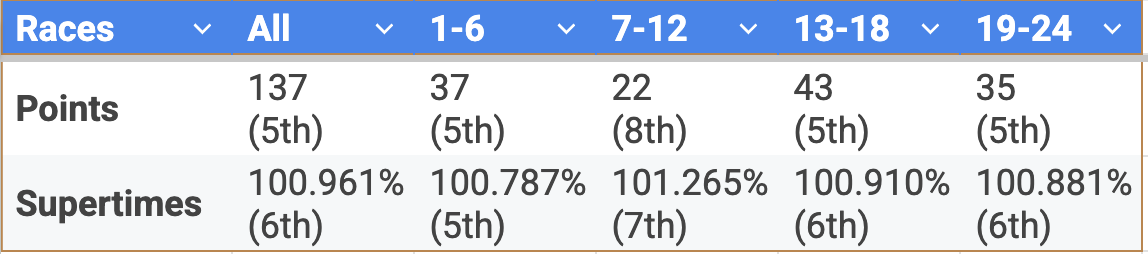
We finally started to see the fruits of the rebuilding process that team principal James Vowles has been talking about for the past three years. Williams has been transformed from a team that not so long ago couldn’t get a car ready for the start of pre-season testing into one that finished fifth in the championship with two podiums. That’s real progress, but the next step is the big one.
With teams now having in the region of a thousand people to keep pointing in the same direction, the systems you have in place need to work efficiently. At the touch of a button, you need to be able to trace a part and where it stands in design, manufacturing or in the active parts pool. You need to take a similar approach with your staff, and this is an area Williams has clearly improved significantly.
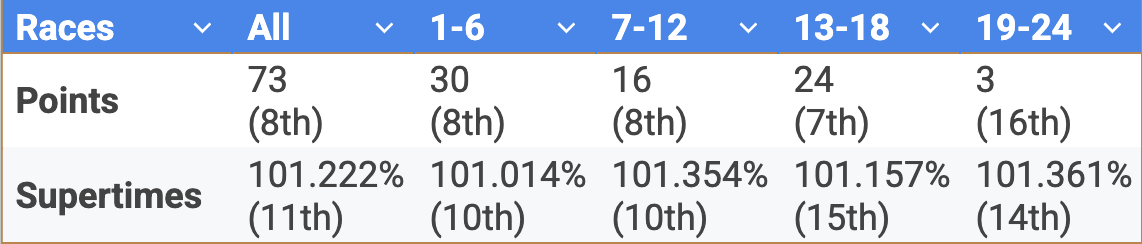
The season hasn’t been an easy one. Williams had its ups and downs but so did all the others, although Williams swung between being up there snapping at the heels of the frontrunners to struggling outside the points. For quite a few years, it seemed to have a very efficient car on fast circuits but now a better all-rounder.
That is what you need for the selection of circuits that currently make up the season, rather than being too dependent on the circuit configuration - and there’s still more progress to be made on this score for Williams. Right through to the end of the season, corners with combination braking/turning entries proved difficult.
Finishing fifth in the constructors’ championship is a decent payday, but mixing it with the big four is a whole new dimension. Williams stopped development of the 2025 car early to concentrate on 2026, so with the new regulations coming into play next year, it will be a good test of where Williams really stands in its process of recovery.
Alex Albon
Carlos Sainz
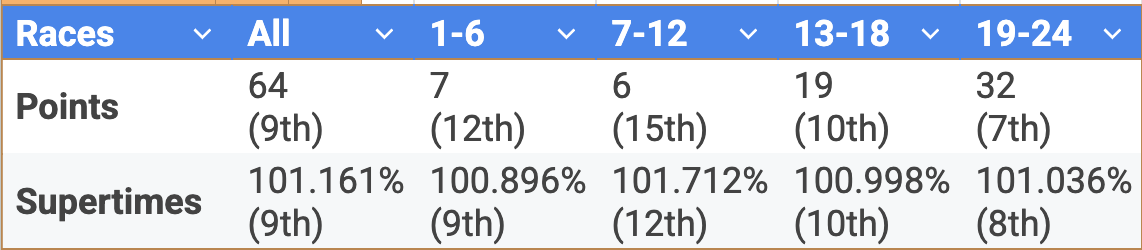
Coming in from a big-team environment at Ferrari, Carlos Sainz brought Williams new focus. That know-how, added to what Vowles brought from Mercedes, has helped to improve the way Williams operates. But it was a new challenge for Sainz, who was determined to make it work and by the second half of the season had blended in well and started getting consistent results.
The combination of Sainz and Alex Albon worked well, and early in the season, it was the latter who did the heavy lifting in terms of scoring. I’m not sure exactly what went wrong for Albon late in the year, but it was clear that as Sainz hit his stride, he went backwards.
6th - Racing Bulls
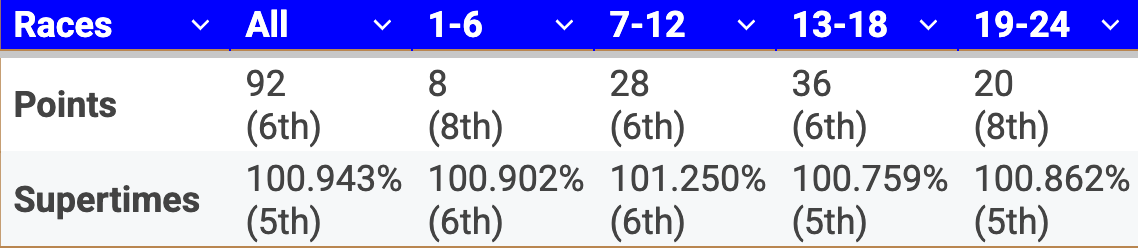
Racing Bulls became more of a Red Bull B-team in 2025. It uses as much of Red Bull’s mechanical components as possible, including the 2024-specification suspension and gearbox, which reduces the headcount required to design and manufacture everything that makes up an F1 car.
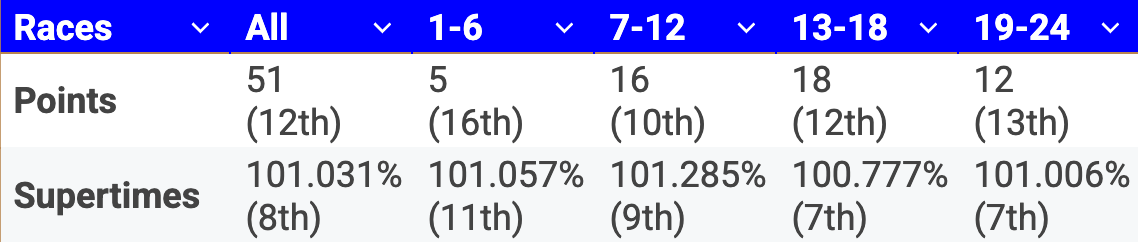
It still must create its own aerodynamic concept and the Racing Bulls package seems to have a wider working window than sister team Red Bull. It doesn’t have the ultimate downforce, but as a team that was initially set up to bring on rookies, that is exactly what you need. The VCARB 02 was a consistently good car in the midfield, easy to set up and giving the drivers confidence, with Hadjar in particular rising to the occasion, having been given his chance.
Isack Hadjar
Liam Lawson
Yuki Tsunoda
Hadjar blotted his copybook badly by crashing on the formation lap in Australia, but despite being distraught, he recovered quickly. That shows his strong mentality because you can’t turn back the clock and undo mistakes, only learn from them. He took a podium finish at Zandvoort and showed he has the speed and commitment to score regularly, but that doesn’t mean he’s ready for the pressure of driving for a top team yet.
If his move to Red Bull will work, he will need to eliminate the mistakes. Hopefully, with the new management structure at Red Bull, he will get more time than Lawson did to settle in. It’s up to him to make the most of the opportunity.
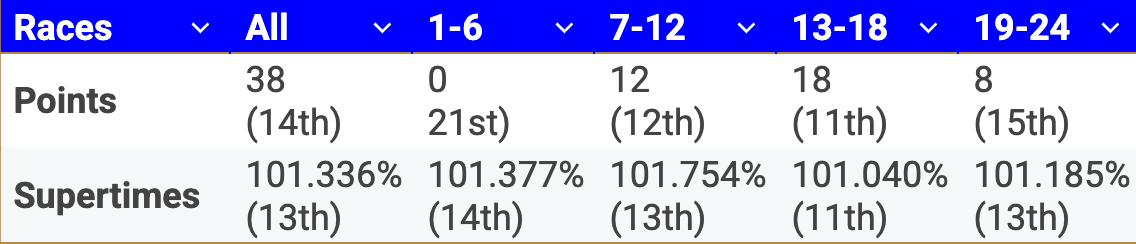
Lawson was promoted to Red Bull far too early and wasn’t given the chance to get his feet under the table in a car Verstappen showed was far from perfect. It took him a few races to shake the demotion back to the second team.
Lawson improved when front suspension geometry tweaks were made mid-season to give him better feel and we will see a better version of him in 2026. He needs the winter break to get his head straight, and has the chance to lead the team next year.
7th - Aston Martin
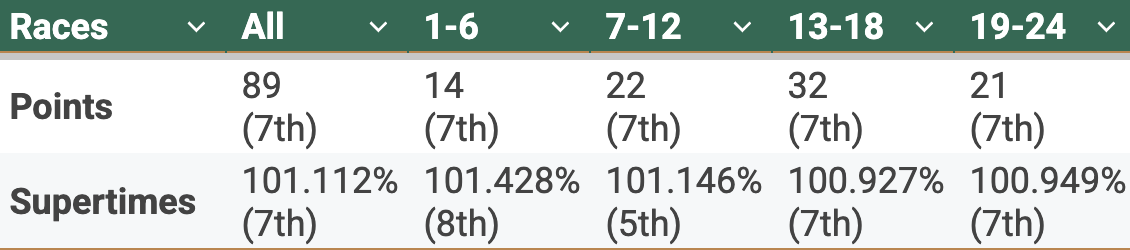
It may still be early days, but finishing seventh in the constructors’ championship was a disappointment for a team of Aston Martin’s ambition. Yes, it’s all about the future and Rome wasn’t built in a day, but Lawrence Stroll won’t be happy with 2025.
Like many teams, it never seemed to find that sweet spot in the performance of the car. It was either up or down and it never stabilised in its performance, struggling on tracks where aerodynamic efficiency and straightline speed are key. In situations like that, it’s difficult to know what direction to take with development. It also points to questionable simulation tools, which doesn’t inspire confidence for next year.
Aston Martin has been on a slippery slope over the past couple of seasons, this is shown by the constant leadership changes. Adrian Newey is now head honcho and also takes over as team principal next year, but his focus must be entirely on engineering and car performance.
He has made changes and redirected the team’s focus onto what he believes matters and made personnel changes on the design and development side. He has control so has to prove that he can add to the combined total of 26 world championships won by his cars. I just hope he hasn’t spread himself too thinly by taking over as team principal too.
Fernando Alonso
Lance Stroll
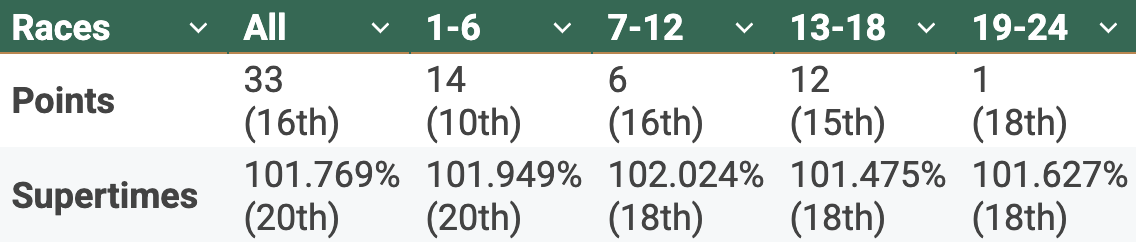
Fernando Alonso might be a bit long in the tooth at 44, but he still has the fight in him to go out and get whatever is possible from the car he has. He is a gutsy racer and takes no prisoners. He has definitely got another good year in him, but I’m not sure there are two, so 2026 needs to count.
The difference between him and Hamilton, who isn’t far behind him as far as age is concerned, is that he has been through properly tough seasons. Since his world championships in 2005/06, he has driven a few dogs, so he really appreciates it when he has something a step better. It might not be perfect but he gives it his all.
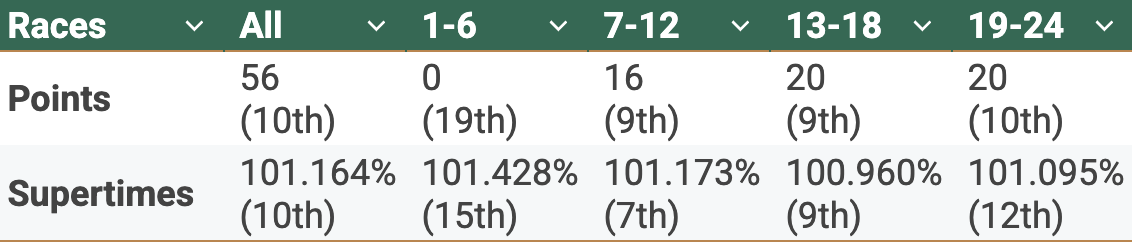
As for Lance Stroll, he needs to up his game if he is to hang onto Alonso’s shirt tails. The season didn't start that badly, but once it dropped away, he never recovered as you can see from his championship positions over the six-race blocks. On his day, he has the speed and can be right there in the wet, but it doesn’t happen often enough.
These cars are a bit easier to drive in wet or slippy conditions. As long as you don’t overdrive, allow the car to do the talking and let it move around controllably, then it is easier to be on the limit in these conditions than it is in the dry. When you are pushing the grip levels in the dry to the maximum, the car just becomes snappy. When reactions to that need to be much faster, he seems to drop away.
The new regulations with less downforce (read grip) may play into his hands, otherwise it might be time for some difficult conversations with his dad.
8th - Haas
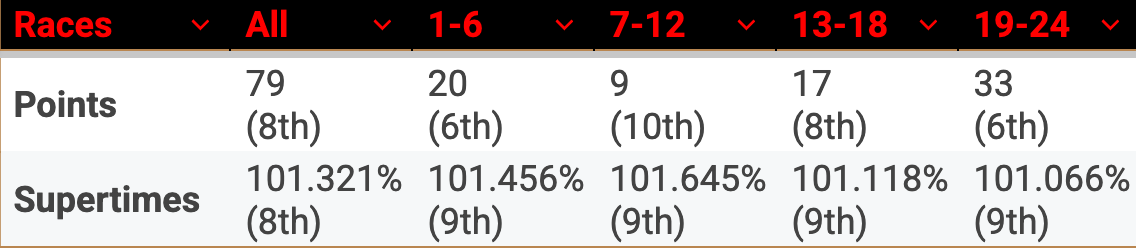
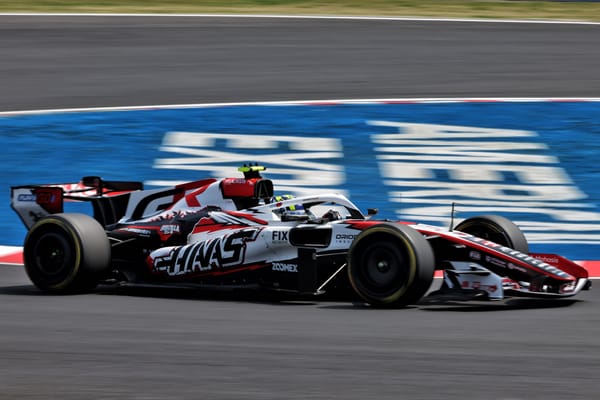
This was a season of highs and lows. Ayao Komatsu’s second year as team principal started badly with bouncing problems in the high-speed corners in Australia, with a hastily-put-together floor upgrade introduced for the third race at Suzuka leading to a big improvement. That shows good understanding of the car, because it was put into production before it had even been tried in the windtunnel, that shows that ‘gut feel’ still has a place in today’s technically-driven F1.
There were further significant upgrades at Silverstone and Austin as Haas pushed development deeper into the season than many of its rivals in the midfield. That meant it was strong in the final part of the season, with Ollie Bearman’s fourth place in Mexico matching the team’s best result.
Ollie Bearman
Esteban Ocon
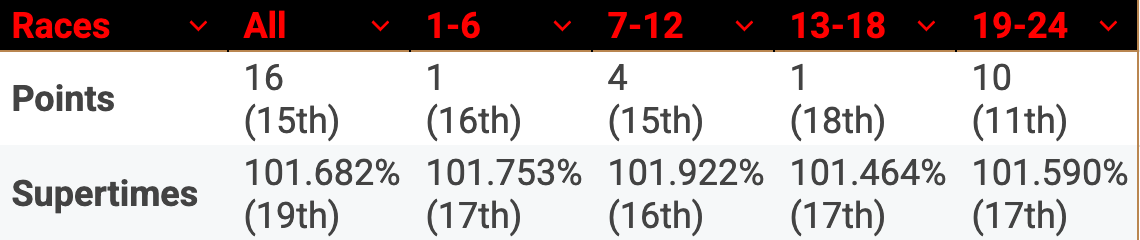
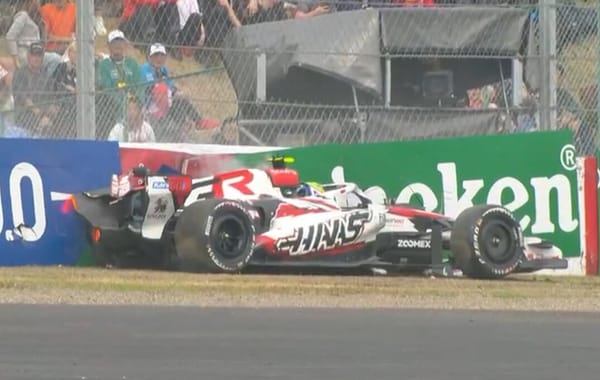
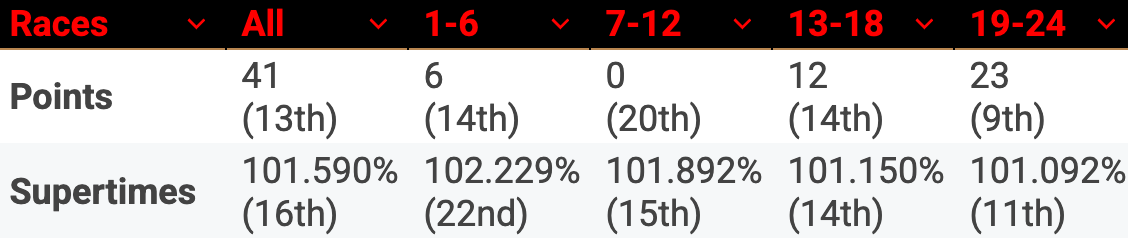
Bearman is, without a doubt, a talent for the future. He came on in leaps and bounds as the season progressed. His slight indiscretion at Silverstone when he crashed on the pit entry under a red flag was, to my mind, actually acceptable. He was trying his best to prepare for the race pitstops, but perhaps doing it under a red flag was not quite so clever.
He was up against a no-holds-barred driver in Esteban Ocon, but he held his head high. You could probably say he was the one leading the team for most of the season, so you can’t ask much more from a rookie.
As for Ocon, I did expect him to perform better. He has the experience now, but to be honest, that never really showed. I’m sure Haas would have expected more from him and hoped that he would be a good mentor for Bearman, but it was really the other way around.
9th - Sauber
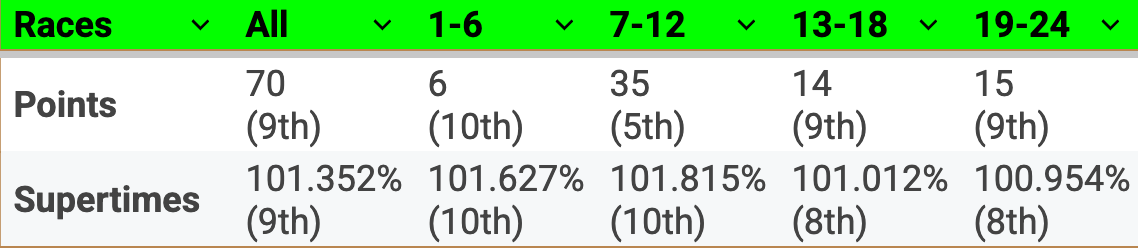
This was the end of the era for Sauber, with the name disappearing from the grid for the first time since the team first appeared in 1993. Nothing really changed for its last season, most of the season was spent in the midfield with Nico Hulkenberg’s third place at Silverstone the moment of glory.
The numbers speak for themselves. Like the majority of teams, Sauber was up and down in terms of performance. I always say it’s better to be stable and recognise where you really stand rather than have the odd good weekend of glory, which can just confuse you. What was encouraging was that after a bad start, a series of floor upgrades introduced from the Spanish Grand Prix onwards made the car more aerodynamically consistent.
Next year, the name above the door is changing. It’s all going to be about Audi and how it blends into F1. In reality, the only difference will be the power unit supplier. Audi has been working on it for a few years and with its experience in other formulas, especially the World Endurance Championship, it might just get it right the first time. As for the chassis side of things, I’m not sure much will change. The drivers are the same, but as a full works team, there’s nowhere to hide.
Nico Hulkenberg
Gabriel Bortoleto
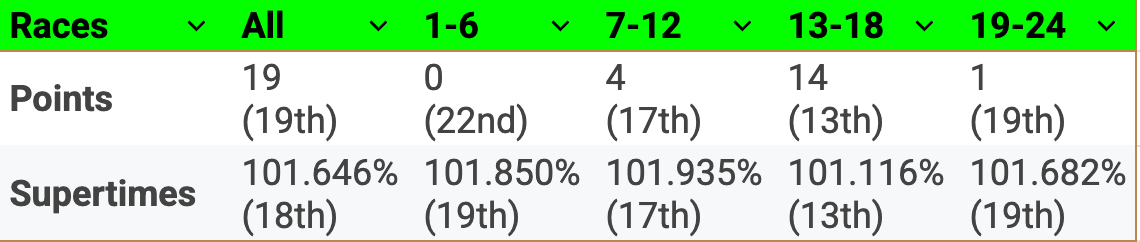
Hulkenberg, like Alonso and Hamilton, is getting a bit long in the tooth, but he still gives it his all. He has been unlucky over the years to never get a chance with a top team, but Audi has faith in him and he is the right fit. In the early stages his experience will pay dividends.
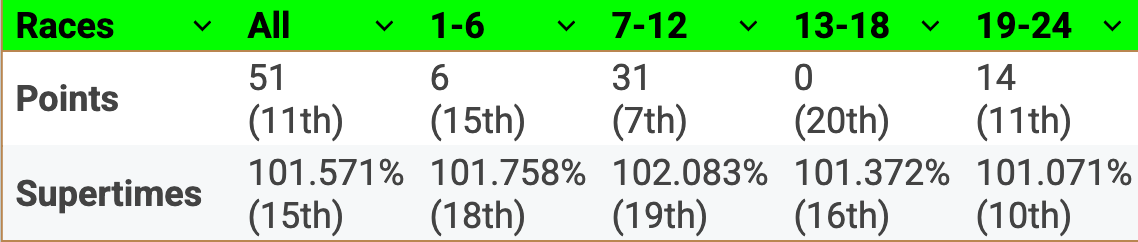
As for Gabriel Bortoleto, he has shown a few turns of speed. He is supported by Alonso, who must believe he has the required talent although that hasn’t always shone through. But when you are in a poor car, what else can you expect? He has a second chance next year, so he will need to up his consistency if he is going to go much further in F1.
10th - Alpine
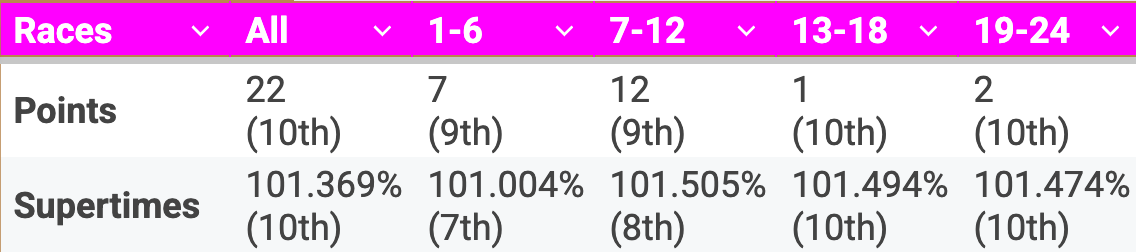
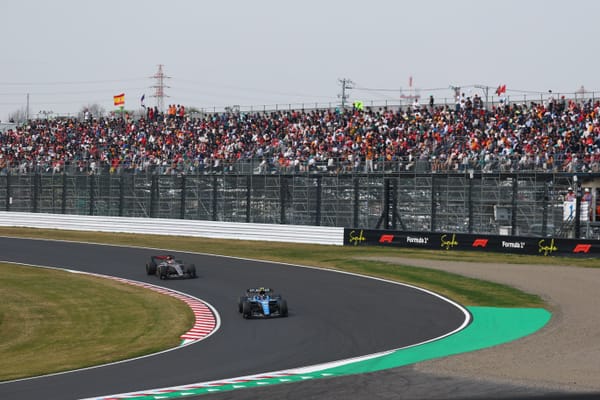
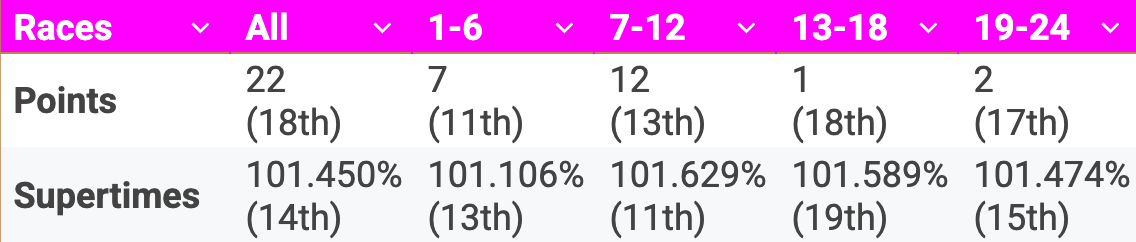
There is not much to say about Alpine. It was consistently bad and the driver change from Jack Doohan to Franco Colapinto didn’t help matters. The team seems lost in the fog and has no idea which way to turn both technically and managerially.
Next year is a big year. Changing from the Renault engine to Mercedes takes another excuse away from the team. The revolving door management doesn’t inspire confidence. The only reason for any optimism is that Alpine made the decision to focus on 2026 development early and devoted as much, if not more, of its aerodynamic testing resources to next year’s car than any other team.
However, it didn’t prove in ‘25 that it understood its problems, so there’s no guarantee that it has the know-how to make the most of that investment.
Pierre Gasly
Franco Colapinto
Jack Doohan
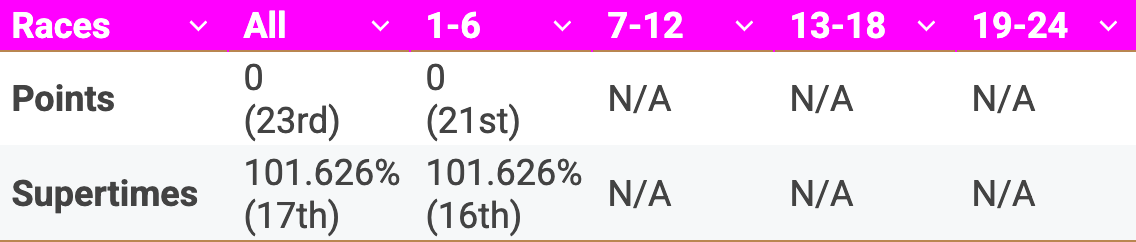
Pierre Gasly keeps his head down and does what he can with what he has. It must destroy your motivation to keep giving it your all for nothing, but with him, Alpine has some stability. I wouldn’t expect him to hang around after next year if there is no improvement, even though he's extended his contract to the end of 2028 earlier this year.
As for Colapinto, he hasn’t shown the speed of his early races at Williams. I don’t know where that’s gone but there isn’t even a glimmer of it. I suppose in a bad car he can’t work miracles, but I expected more from him. He’s there for the money he brings and as long as this keeps coming, his seat is probably secure.
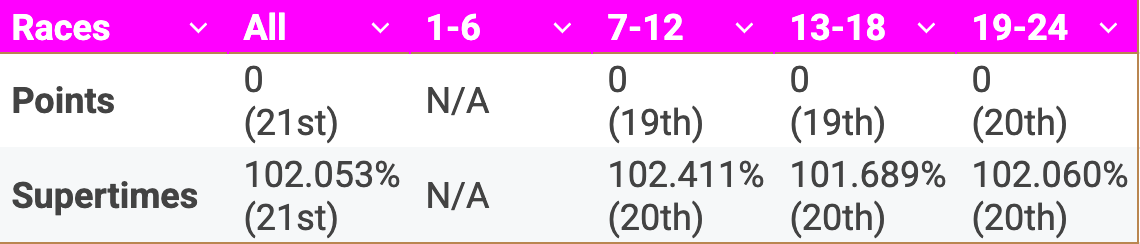
I thought Doohan deserved more time. He wasn’t all that bad and as a rookie in his first races with a name like Doohan probably more was expected of him.
For all 10 teams - and newcomer Cadillac - next year is a whole new opportunity with new chassis and PU regulations. There are so many questions to answer and everyone will be hoping an underdog can bite at one or more of the big teams.
Can Newey turn Aston Martin into a frontrunner? Will Audi’s power unit be the talk of the town? Will Hamilton finally feel at home in Ferrari, or will that team fall apart? Lots of questions and no answers yet, which is what makes F1 so enjoyable.
Have a good Christmas and New Year. By the time you have worked off that Christmas feast, we will be bringing you some answers to those questions. - Gary Anderson