Was F1's ground effect era a failure? Our verdict
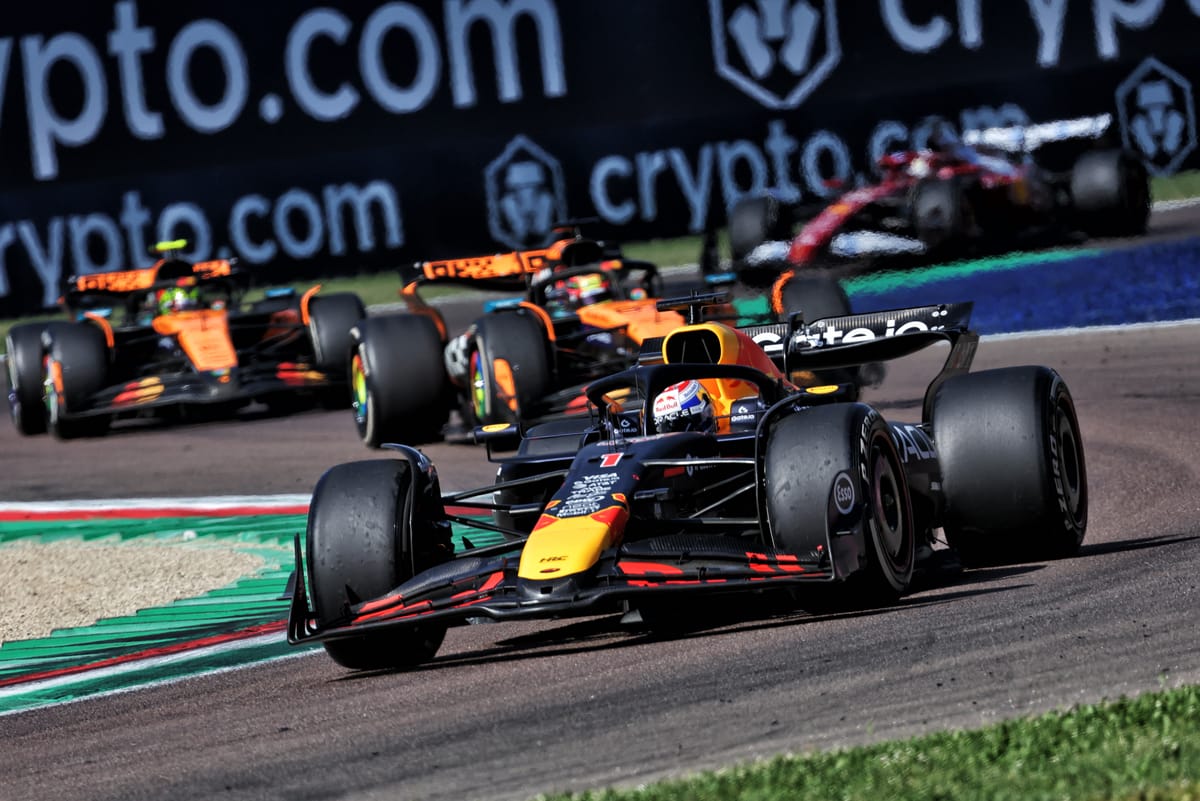
Formula 1's ground effect cars are on their way out just four years after their introduction, as the championship has pivoted with a massive chassis/engine reset.
The final campaign of this abandoned ruleset, 2025, was marked by ever-increased convergence but a continued decline in the cars' raceability.
Like in any rules era, there have been highs and lows - but what is the overall verdict on the 2022-25 generation of cars now consigned to history?
The primary goal wasn't achieved
Glenn Freeman
Ever since F1's first ground effect era was outlawed, we've heard for decades how allowing much more downforce to be generated by the underbody would transform F1's dirty air problem. And the people behind these rule changes talked a good game in the run-up to the new breed of cars hitting the track.
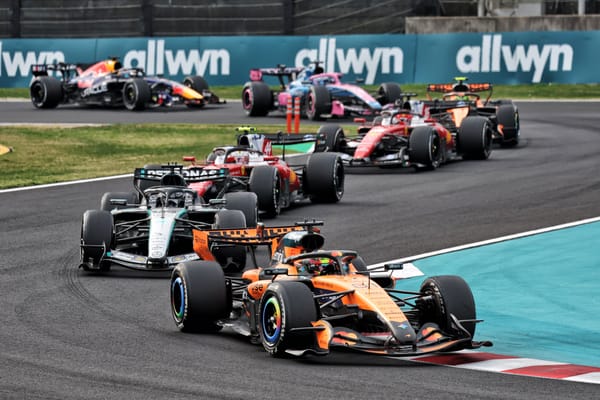
While there was a noticeable improvement in the ability of cars to follow closely in the first part of 2022, that exciting period felt fleeting. The impact of the rule changes would always lessen as the era went on and teams worked out how to claw back lost performance, but the situation we had in 2025 was extreme, and it felt like we were back to square one - with running closely being almost impossible.
I get the argument of 'Yes, but think how bad it would have been if we'd had another four years with the previous cars', but I also don't think that should be a defence for this era. In my view it failed in its primary goal of properly improving the racing.
I know there are other factors that play into this, like how Pirelli's tyres handle running in dirty air and being pushed hard for a prolonged spell, and the teams will always ultimately outfox the rulemakers because they have greater resources so can keep discovering new workarounds. But now this era is over I'm left wondering if the rules were too timid in some areas, making it too easy to recreate things like the dreaded front wing outwash that we know is bad for close racing.
OK, teams were given the holy grail of a load more underbody-generated downforce. But the cars still have big wings, too, and clearly too much performance is still coming from upper surfaces.
I would say that hopefully we'll see lots of lessons from this era applied for the new 2026 cars, but we already know those are a massive compromise primarily aimed at tackling the issues created by F1's new engine formula. Lurching from one priority to another between rulesets doesn't sound like a great recipe for making sure F1 gets it right next time.
Don't ignore a massive success story
Edd Straw
It's often overlooked that the cost cap was an integral part of the 2022-25 regulations. While the chassis rules were deferred by a year because of the COVID-19 pandemic, the financial regulations kicked in for 2021 as planned - albeit with a reduced ceiling thanks to the baseline figure dropping from the planned $175million to $145m for 2022. Successfully containing spending will be the lasting legacy of these regulations.
Back when the rules package was first presented publicly in a press conference at the 2019 United States Grand Prix at Austin, Ross Brawn characterised the cost cap as a means to "save the teams from themselves". While the journey hasn't been smooth, with a few controversies and plenty of arguments along the way, the cost cap has endured and is now a cornerstone of the financial model of F1 teams.
That has two benefits. The first is that it prevents grand prix racing being a spending war. This means that the performance potential of all the teams is now broadly similar - and will become more so as time passes - and it allows for a more competitive championship on track. Secondly, it means that rather than several teams almost permanently seeming to be teetering on the brink of financial oblivion, there's now stability. Not only that but, thanks to cost control and the explosion of interest in F1 over the past years, all F1 teams are now multi-million-dollar (or billion) assets.
Long after the ground-effect cars themselves have faded in everyone's memory, the cost cap will endure.
Three reasons to celebrate these cars
Ben Anderson
I'll remember this era fondly, for several reasons:
1. It was a really difficult engineering challenge for the teams. No one dominated throughout the ruleset because it was so easy to get lost on development, and because of the cost cap you couldn't spend your way out of trouble either. Even then, you could easily fall foul of bouncing/ride height/set-up problems from one race weekend to the next.
2. The cars were properly challenging to drive, rewarding those with technical mindsets and adaptable techniques, and punishing those with too rigid a mindset or muscle memory. They were also brutal and stiff - driving them properly in the wet must have been one of the ultimate challenges in terms of pure feeling.
3. Even though the FIA was disappointed by how difficult it became for cars to race each other properly, as teams developed their way through outwashing rules loopholes, we still saw fantastically close competition in the final two years of the ruleset - and there were some brilliant bits of overtaking, too, particularly by Oscar Piastri (see Monza 2024, Baku 2024, Australia 2025, Miami 2025 and Monza 2025 for examples).
F1's governance prevented necessary fixes
Gary Anderson
The 2022-25 ground effect regulations haven't done what they were expected to do. That's partly because the FIA did not, or was not able to, react quickly enough to fixing what was wrong with the rules.
Making the cars better at following was a difficult target, so in reality there were always going to be issues with the original rules. I understand that - and there was great intention behind them. A lot of research was done by F1 and the FIA, with people like Pat Symonds and Ross Brawn involved, and what came from this was based on immense knowledge.
Introducing ground effect floors was a way to make the cars more aerodynamically robust and the restrictions on parts that would create outwash was a good direction. However, what wasn't foreseen was that the cars would run so low that the floor edges became very critical.
Initially, porpoising was a major concern - even leading drivers to worry about potential spinal damage. That never really went away, but it did get under control when the regulations for the floor edges were changed. This meant the cars still needed to run as low as possible, but instead of just simply running low they now started to generate vortices along the floor sides to help with the sealing process.
Inevitably, teams also found ways to reintroduce outwash. The FIA should have cracked down on designs like the floor side vortex generation and the slots in the front wing endplates, the complicated aero parts inside the wheels around the brake ducts, and all those elements that went against the intention of the rules.
At the start of 2022, the cars could follow and race reasonably well. It was only as teams moved in this direction in pursuit of higher downforce levels that following got so much harder, so that by the end of 2025 we had processional races that were often all about the dreaded DRS train. Although there were changes to the endplate geometry for 2023, teams found another way to achieve the same effect - but despite the FIA having clear ideas of how to tackle this, nothing changed.
The FIA says that F1's governance processes prevented fixes from happening, and that's true. But the point is, if F1 as a whole really wants this to work, then that shouldn't be the case. When it comes to performance, teams will always act in their own best interests and the rulemakers should be allowed to make the rules. If you don't allow that then this is what happens. There were changes that could have been made for 2024 or 2025 - and the way F1 works made it impossible. There's always a battle involved between the regulator and the commercial side and, in reality, this situation reflects the fact that those controlling F1 are more focused on everything else other than the racing.
Following was easier at the end of 2025 than it was in 2021, the last year before the rule change, but it was still bad. So it was not all for nothing - but in reality it was not enough.
The grid did at least become close, which was another aim of the rules. But that's partly because the rules are so tight that it's now getting to be just a few steps away from a one-make formula.
As for the cost cap, it's difficult to fully understand because of how complicated it has become. You have to look at it as an accounting procedure that comes up with a final number of what you've spent, but how you get to that is another matter. It's being modified for next year, but I'd like to see a simpler cost cap that gives you a total amount to spend and doesn't exclude endless things. That's what creates the complexity.
With any regulations, new or old, the FIA needs the opportunity to recognise the potential problems over, say, the first third (race eight) of the season, instigate the required changes for the following year by mid-season (race 12), and the teams just need to get on with it.
A lot has been learned from the past four years, but my concern is that we'll see the same problems repeated with the 2026 regulations. If the teams don't stand back and let the FIA do its job, then it's always going to be impossible to stop teams developing cars in ways that make them faster but make the racing worse.
F1's competitiveness has never been better
Scott Mitchell-Malm
This set of rules knocked one team off its perch then replaced the successor by the end of the era too. That's pretty good going.
OK, Red Bull had hauled itself onto Mercedes' level by the end of the previous ruleset, but that was only with the help of various small but significant rule changes over the final couple of years of those regulations.
The ground effect cars removed Mercedes as a championship threat and quickly installed Red Bull as the team to beat. But as time passed, Red Bull was usurped as well, by McLaren. And though it took a while for convergence to take hold on the grid, by the end of 2025 the field spread was extremely close. In the sense of total grid competitiveness, F1 has never been better than the last couple of years.
We shouldn't pretend that always made for mega racing. The lows were really low from an entertainment sense. And the cars weren't particularly elegant to watch up close - at low speed, they often looked cumbersome. The 'wow' factor was depleted slightly although at high speed it was still impressive.
So perhaps I'll remember it as an era that was wonderful in terms of various nuances but often made you work hard to appreciate it: a technically intriguing, challenging and unwieldy set of cars that took a long time for all the teams to grasp, and were too complex for all but two to ever really get on top of.