What Will Buxton did next
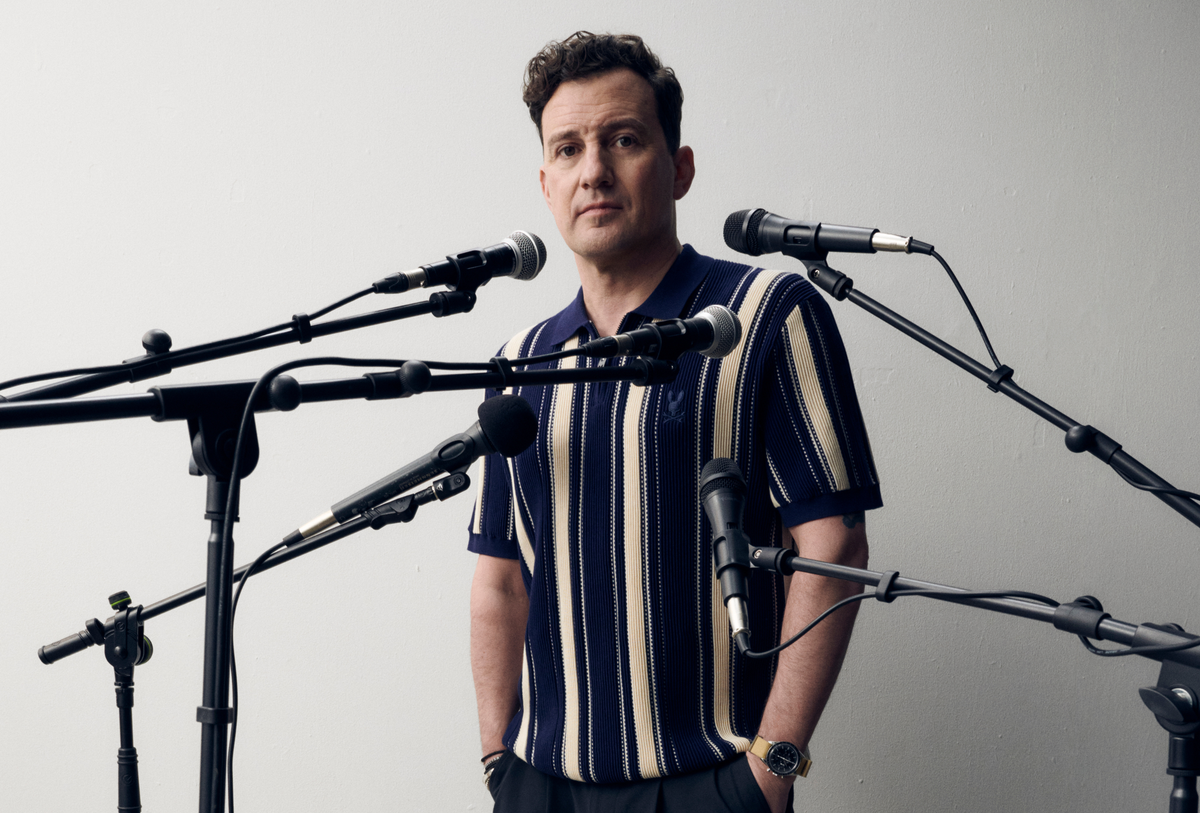
You’d be mistaken for thinking things have slowed down for Will Buxton since leaving Formula 1. With a new role at IndyCar, being a New York Times Bestselling author, having a young family at home and being Psycho Bunny’s international motorsport brand ambassador, he has a bit on his plate.
In saying that, it seems he wouldn’t have it any other way.
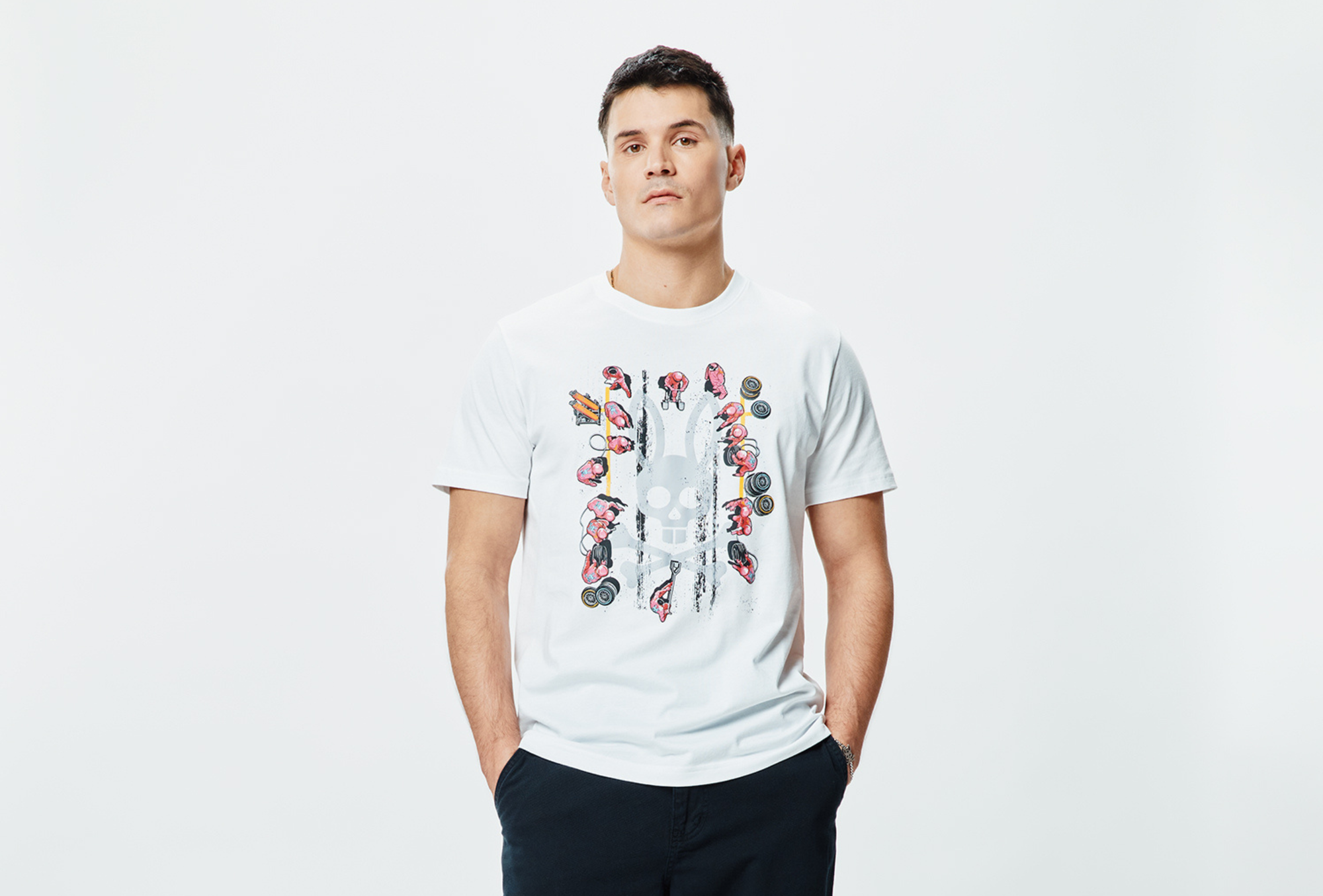
Ahead of the Miami Grand Prix, Psycho Bunny have released a limited-edition T-shirt, designed by Davi Augusto - the illustrator of Buxton's book Grand Prix: An Illustrated History of Formula 1. To celebrate, Buxton took a moment out of his busy schedule to speak to The Race Extra about this special launch, life after F1, eating too many Twizzlers and being Captain Obvious.
Tell us about your partnership with Psycho Bunny? How did it first come about?
I was approached by Psycho Bunny around five years ago now, and honestly at the time I’d never considered what an ambassadorship for a clothing brand would look like, or that the opportunity would present itself. I’m a racing broadcaster, not a model. Those kinds of calls were not on my radar. But then, at the same time, as a broadcaster you have to look your best and the decision of what to wear is a surprisingly tricky one especially when, as was the case at F1TV, we had no wardrobe department. You really had to dial down pretty fast into what you liked and what looked good on air. And I made some massive missteps until I met my wife, who really helped me to find my style and gave me the confidence to believe I even had one.
What has the first two years with Psycho Bunny been like? What initially drew you to the brand?
Everything about Psycho Bunny resonated, from the outset. First of all, the style of clothing. Their whole direction was clothing I would either have naturally picked out for myself, or held a style that I might have, in my more daring moments, considered. Also, and this was key to the consideration, it had to be user-friendly both to the environment I worked in, be able to present a professional image of myself, and then also be something I’d be comfortable in heading straight from the track to an event in. Factor in the quality of the clothing and comfort and it ticked every box. Then in meeting with the gang and really learning about the company’s ethos and goals, the synergy just felt perfect from the outset.
Two of your worlds have collided with this new collaboration: your Grand Prix: An Illustrated History of Formula 1 illustrator, Davi Augusto, and Psycho Bunny, for whom you are an ambassador. What does this crossover mean to you?
Honestly, it’s great. Psycho Bunny has become almost part of me and my personality. I’m rarely seen without their logo adorning at least one piece of the clothing I’m wearing, be that on air or in my everyday life. When the collaboration between PB and Davi was first suggested, it made my heart sing. Davi’s art was at the very root of what allowed Grand Prix to speak to people, the book truly is an illustrated history and it’s his drawings that tell the story of the sport’s history. Knowing that Psycho Bunny understood how central he was to the story we told in the book, and that he was their natural choice for a racing-themed collab, showed again how close our synergy has become.
There’s a growing relationship between motorsport and fashion, from paddock style to brand collaborations - what do you think has caused this?
Lewis [Hamilton]. Credit where it’s due. He has completely changed the game in a way that only he could. He bucked the convention of turning up every day in a team kit, to make his arrival be an event, one covered by every photographer in the paddock. And when you have someone with the unique style, the glamour, and the look to rock a myriad of designers and outfits and make them all feel like an extension of himself and his brand, of course the other drivers are going to try and keep up. Teams are going to embark on braver collabs. But Lewis? Lewis started it all. As so much in the sport, Lewis led, and everyone else is still trying to catch up.
Being on camera, we’d assume there is a pressure to look good but has the influx of fashion brands into motorsport changed how much effort people put in?
What you wear on screen is important. It’s why broadcasters have wardrobe departments. For years I didn’t have that luxury and so I followed three rules: no jeans, no shorts, no sunglasses. The first two, it's just a consideration of looking smart. The third, is a consideration of relatability and engagement. If the folks at home can’t see your eyes, you’ve created a barrier between you and them, and that’s a really poor choice. What you wear really is important, and today increasingly so. Social media portrays versions of people to their followers, and that version is supposed to be authentic. In the world we work in, authenticity is key. So too, relatability. So too, knowledge and authority. If you aren’t wearing what is authentically you, you lose relatability and an element of authority. It’s important to look your best on screen, but today more than ever that comes from a place of connection.
How has the move to IndyCar been?
Better than I ever dreamt. There is an energy to the championship that is infectious, which is precisely why I took the decision to move. I’ve long been a fan but thought that any opportunity I might have had to have reported on the series full-time had passed me by. So when FOX Sports presented me with an opportunity to live out a life’s dream, and to do so from the commentary box and at a point of tremendous potential growth in which my 25 years of experience in F1 could be put to the best use, it was a no-brainer.
How has your day-to-day life changed since moving into your role with IndyCar compared to your time covering Formula 1?
Hugely. So much of what I knew about Formula 1 had worked its way into my head by osmosis. I’d spent a quarter of a century in the paddock. It was ingrained. With IndyCar I’d long been a fan, but the details which had become part of the fabric of my knowledge in F1 simply couldn’t exist in the same way. So the workload to prepare has had to be so much deeper, because it isn’t a case of adding to a solid foundation. It’s building the foundations, while you’re trying to add on top of them. And then there’s returning to the role of play by play announcer, a job I hadn’t done full-time in over a decade. Presenting and commentating are as different as cricket and baseball. It’s a huge challenge, but one I’m loving.
Where in the world are you based now? How do you find it?
I’m based in the UK, and honestly, the commute is pretty easy. IndyCar folks find it bizarre when I say that, but I’ve had 25 years of visiting Australia for four days, then flying home. Japan for a week. Singapore for a long weekend. Heading out to Florida or all the way to California for a weekend, by comparison, is a lot easier.
Are there any parts of home you are missing?
My wife and my three children I miss the most. My Mum, my sister and her family. My friends and banter on the golf course. I love my job and I’m so lucky to do what I do, but the time away from home is extreme.
What’s something about American culture you’ve really embraced this time round that you didn’t expect to?
Last year I embraced American candy a little too wholeheartedly. I had a reputation for guzzling Twinkies and Twizzlers. By the end of the season I looked like a Twinkie - literally. I must have put on an extra 50% of my season-starting body weight. This year I’m trying to be better-behaved. The biggest thing I’ve embraced is American sporting culture. I’ve become a huge NASCAR fan, follow the NBA and MLB way more than I ever have, and as a 40-year Seahawks fan, I learned the hard way that when the execs at FOX offer you a ticket to the Super Bowl your team ends up winning, they weren’t joking and you really should have booked that flight.
IndyCar has a very different rhythm to Formula 1. How has that impacted your lifestyle and work-life balance? Especially with a young family?
IndyCar is intense, possibly even more so than F1, but it exists in the window where America is without the NFL. It starts almost as soon as the Super Bowl is done, and ends just as the new season begins. That’s approximately a six-month window, and so the time off that represents is something new to me. The second half of last year allowed me more time with my family and friends than I’d had since I was at college.
What have you discovered about yourself personally since making this transition to IndyCar?
That I really enjoy not being in the comfy seat. That a little bit of fear is an incredibly strong force for self-improvement. And that I’m massively self-critical.
How have things changed for you since appearing on Drive To Survive? Will we continue to see you in upcoming seasons?
Drive to Survive really changed everything for me and I’m grateful in the extreme to the show’s producers for including me in it for eight seasons. To be part of something so globally popular, and something which acted as a gateway for so many people to fall in love with the sport really is a tremendous honour and something I’ll always be proud of.
Lastly, what do you think about the running gag that you state the obvious on DTS?
The obvious is only obvious if it’s obvious to you, and a lot of people came into the show with no idea about the sport or how it worked. It follows that the more people there are that think I state the obvious, the more there are people who understand the sport. That’s what I’m there for. Being a meme? Honestly I love it. What a silly, fun thing to be. But I guess most importantly, what’s critical, above all else, is starting on the pole. Because then you’ve got everyone else behind you.
The limited-edition t-shirt collaboration between Psycho Bunny and Davi Augusto is now available in-stores and online.