The dilemma surrounding WEC driver crews
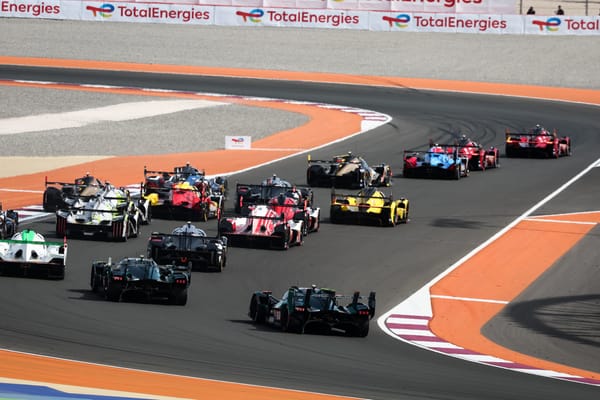
As part of a trend that began in 2024, more and more Hypercar teams have chosen to favour two-driver line-ups over trios for the six-hour World Endurance Championship races. At the Sao Paulo 6 Hours last year, seven of the 18 cars entered in the top class were shared by pairs. Many newcomers are also considering doing the same.
At the end of 2024, organisers the Automobile Club de l'Ouest and the FIA even briefly considered making three-driver crews mandatory, before ultimately backing down.
But does running two drivers actually offer a real advantage? That's what we'll try to assess.
What the regulations say
In LMGT3, a crew of two or three drivers must include at least one Bronze-rated driver, plus either another Bronze or a Silver driver. Bronze and Silver drivers must also respect minimum driving times, set at 1h45m, 2h20m and 2h55m respectively for six-, eight- and 10-hour races.
Our focus here, however, is Hypercar. In that category, line-up composition is free, provided it does not include a Bronze driver. As a result, for WEC races excluding the Le Mans 24 Hours, two-driver line-ups are permitted. That said, nobody dares to contest a race longer than six hours with just two drivers.
It should also be noted that if a driver is entered but does not take part in the race at all, the car will be disqualified, except in cases of force majeure recognised by the stewards. At the Le Mans 24 Hours, drivers must complete at least six hours of driving time, but no more than 14 hours in total, and may not drive for more than four hours in any six-hour period.
Finally, Article 13.2.3 of the WEC sporting regulations states that, for all categories, any driver who has driven less than 45 minutes in total will not score championship points, in addition to any other applicable penalties.
A brief history of two-driver crews in WEC
In the past, top-class WEC cars have occasionally been entrusted to duos. Rarely, however, was this the result of a deliberate choice; more often it stemmed from the absence of one of the usual three drivers, either due to calendar clashes with another championship or because of health issues.
Notable examples include Audi's #2 car in 2012, after Dindo Capello retired from prototype racing following the Le Mans 24 Hours, or Toyota's #7 when Kazuki Nakajima was committed to Super GT or Formula Nippon. In 2014, after Nicolas Lapierre was dropped, Toyota's #8 finished the season with just Sebastien Buemi and Anthony Davidson.
But in the Hypercar era, it was Cadillac Racing that truly set the trend in 2024, running a two-driver line-up for all six-hour races.
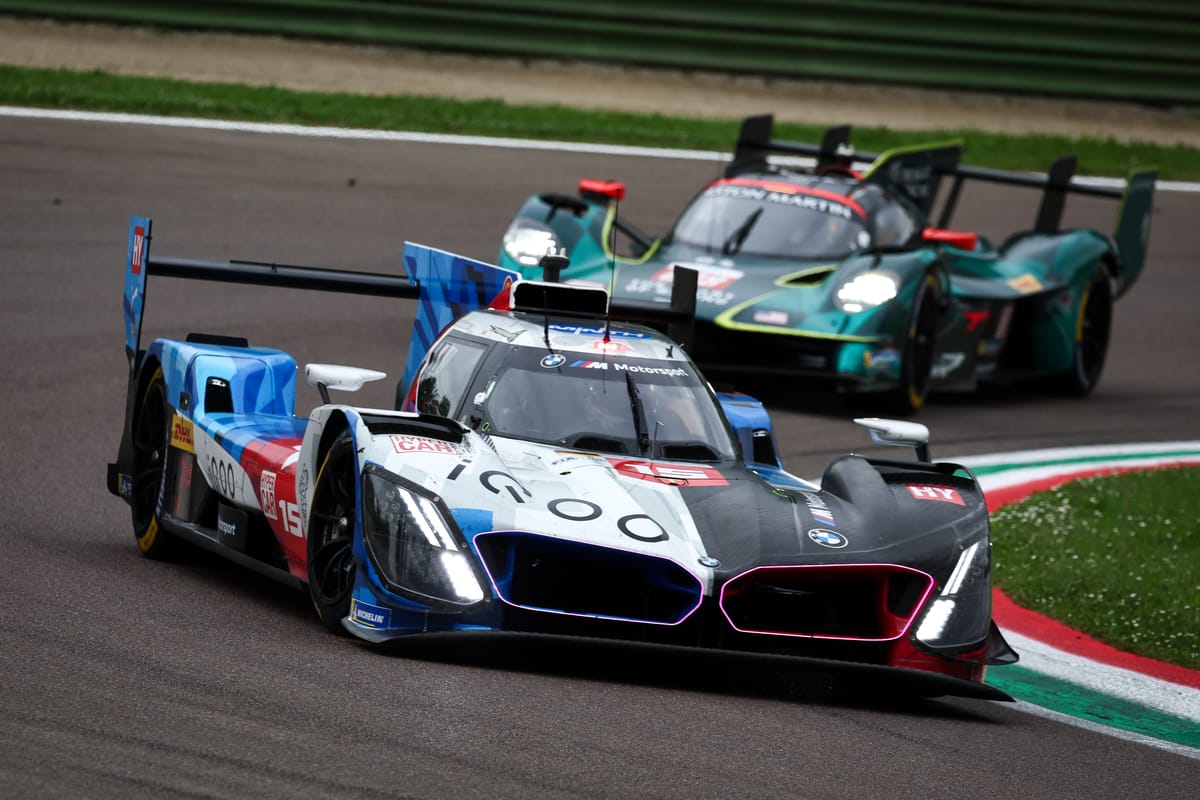
This year, Aston Martin and Porsche Penske Motorsport have followed suit. When BMW M Team WRT, Peugeot Sport or Toyota Gazoo Racing have fielded duos, it has been due to the unavailability of one of their regular drivers.
In total, since the rebirth of the WEC in early 2012, only five races have been won by two-driver line-ups - just 4.9%.
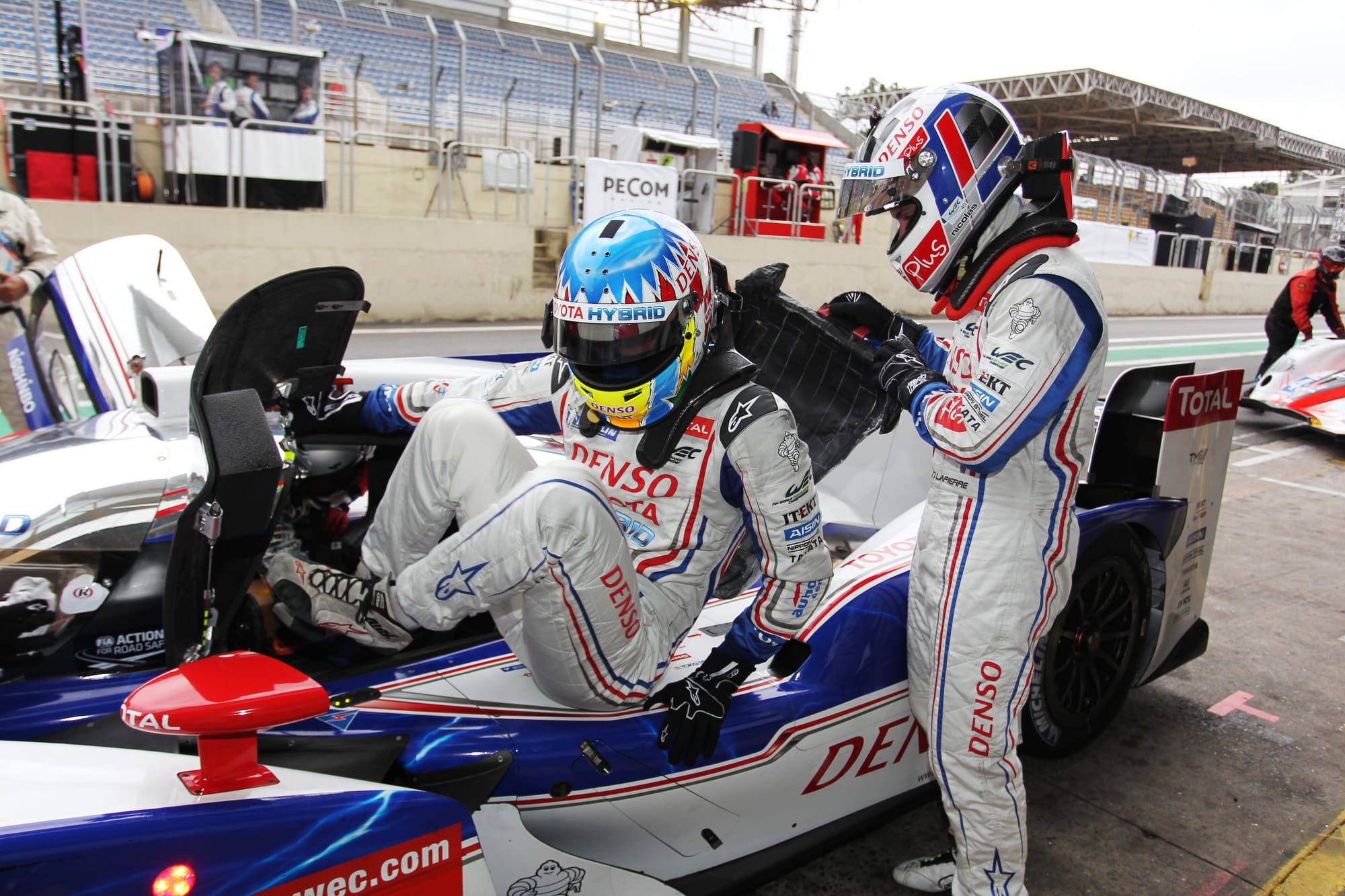
The first dates back to 2012, when Alex Wurz and Lapierre delivered Toyota's maiden WEC victory in Sao Paulo (pictured above). The most recent came at last year's Spa 6 Hours, when Will Stevens and Callum Ilott won in the Jota-run Porsche 963 without Norman Nato, who was tied up in Formula E.
Advantages and drawbacks
Last season, Porsche Penske Motorsport opted for two-driver crews for the majority of six-hour races - a strategy made easier by its parallel IMSA SportsCar Championship programme, allowing it to call upon its IMSA drivers for longer events.
"It was super positive," said Porsche LMDh boss Urs Kuratle. "You have one less opinion when setting up the car, so there's less compromise.
"It's definitely better. And the drivers like it because they get more seat time, particularly in free practice. That means more time to understand the set-up and more one-on-one time with the engineers. But for Austin, which is a physical race, we decided to go with three-driver line-ups."
In a six-hour race weekend, teams have just four hours of free practice, meaning limited running time and even fewer opportunities to work on long stints.
"When conditions are hot, as they can be at Austin, it's better to have three drivers because they're 'fresher' when they get in the car," added BMW M Motorsport boss Andreas Roos. "Everyone has their own opinion, but personally I don’t see a clear advantage or disadvantage to either option."
One major downside, if a team is not also competing in IMSA, is that the third driver arrives at races less prepared than the other two, while being relegated to an unenviable 'stand-in role' that brings added pressure - particularly given the importance of the Le Mans 24 Hours. This is why at the Spa 6 Hours, the last race before the Le Mans 24 Hours and therefore considered a dress rehearsal, teams call on all their drivers.
Another drawback that is not immediately obvious concerns track limits penalties, which are driver-specific rather than car-specific. Whether a car has two or three drivers, each driver receives a drive-through after their fifth track limits offence in a WEC race - or the 12th at Le Mans.
Porsche's #5 car fell foul of this at the Fuji 6 Hours. After Julien Andlauer was handed a drive-through for repeated track limits infringements, Porsche Penske Motorsport decided to leave Mathieu Jaminet in the car for the final four hours to avoid another penalty.
Why not make three-driver line-ups mandatory?
At the end of 2024, in an effort to reduce disparities, the ACO and FIA considered making three-driver crews compulsory. With almost no competitors in favour, however, the idea was quickly abandoned.
"As long as the calendar clashes with IMSA and Formula E, it wouldn't be fair to introduce such a rule," admitted Roos. "It would force teams to hire more drivers, which means extra cost. I think it's up to the competitors to decide."
That view is widely shared. Forcing teams to run trios would require them to bring a reserve driver to every race, something Porsche Penske Motorsport had done in 2025.
"At a standard six-hour event, if something happens to one of your drivers, you can always fall back on a duo," explained Peugeot Sport technical director Olivier Jansonnie. "But if you start with two drivers instead of three, you always need a reserve on site in case one of the regulars has to withdraw."
What are the plans going forward?
The 2026 season should not be the most complex, as there are no clashes between WEC and Formula E, which could otherwise have affected five drivers. There is, however, a conflict between WEC (Imola) and IMSA (Long Beach) on the weekend of April 18-19.
As a result, several cars will be run by duos in Italy, including BMW's M Hybrid V8s, with Dries Vanthoor and Sheldon van der Linde committed in the US. The same applies to #38 Cadillac's V-Series.R with Jack Aitken.
For now, Aston Martin is the only team that has decided to run just two drivers at all six-hour races. Alpine had long considered the option but has since backed away. At category newcomer Genesis Magma Racing, the situation remains unclear.
"We're waiting to see how competitive the car is," said team sporting director Gabriele Tarquini. "We may take decisions on a race-by-race basis.
"The positive of running two drivers is that the more experienced ones get more seat time and can continue developing the car over a race weekend. But you also have to make sure the third driver is properly integrated. Everything is still open."
Ford and McLaren are also believed to be considering two-driver crews for six-hour races in their first Hypercar season in 2027.
"Watching and speaking to the drivers about the majority of the races, which are shorter, we feel a two-driver line-up is the way to go," McLaren Racing CEO Zak Brown said on TV during the Silverstone 4 Hours European Le Mans Series round.
What about Le Mans with two drivers?
As surprising as it may sound, the Le Mans 24 Hours was contested with two-driver crews for a long time. It was not until the 39th edition that, officially, a three-driver line-up appeared: Nicolas Koob, Günther Huber and Erwin Kremer, who finished 10th in 1971 in a Porsche 911 S.
It then took until the 45th running, in 1977, for the first victory by a trio: the #4 Porsche 936 of Jürgen Barth, Hurley Haywood and Jacky Ickx. Even then, Ickx had initially been entered in the #3 car, which retired after just three hours. At the time, drivers were allowed to switch cars during the race - a practice that was later banned.
The first true winning trio was therefore the one that claimed victory in 1983 in the works Porsche 956, driven by Haywood, Al Holbert and Vern Schuppan. The 1984 edition was the last to be won by a two-driver crew: Klaus Ludwig and Henri Pescarolo in the Joest Racing Porsche 956 #7.
The most recent voluntary attempt at Le Mans with a duo dates back to 1997, when Fabien Giroix and Jean-Denis Delétraz failed to qualify their Lotus Elise GT1. More recently, in 2009, Charles Zwolsman and Andre Lotterer were forced to race without Narain Karthikeyan after the Indian driver injured his shoulder climbing over the pitwall just minutes before the start after a last-minute trip to the toilet.
However, if circumstances require it, the stewards may adjust minimum and maximum driving times. They have even accepted a two-driver crew at Le Mans not long ago. In 2014, following a testing accident that forced Bret Curtis to withdraw, Cooper MacNeil and Jeroen Bleekemolen contested the race as a duo. Their Prospeed Competition Porsche 911 RSR #79 was moved from GTE Am to GTE Pro, as the line-up no longer included a Bronze-rated driver.