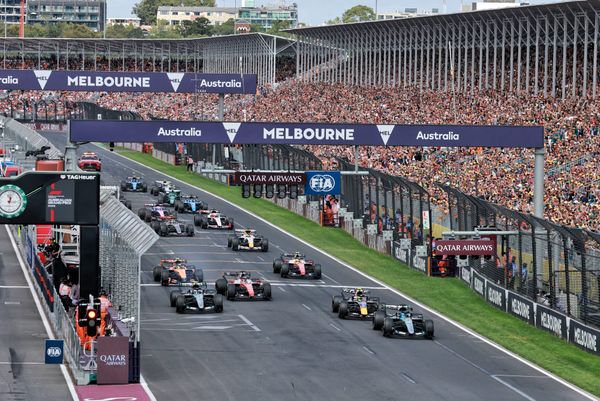
How F1 sponsorship moved on from 'stickers on cars'
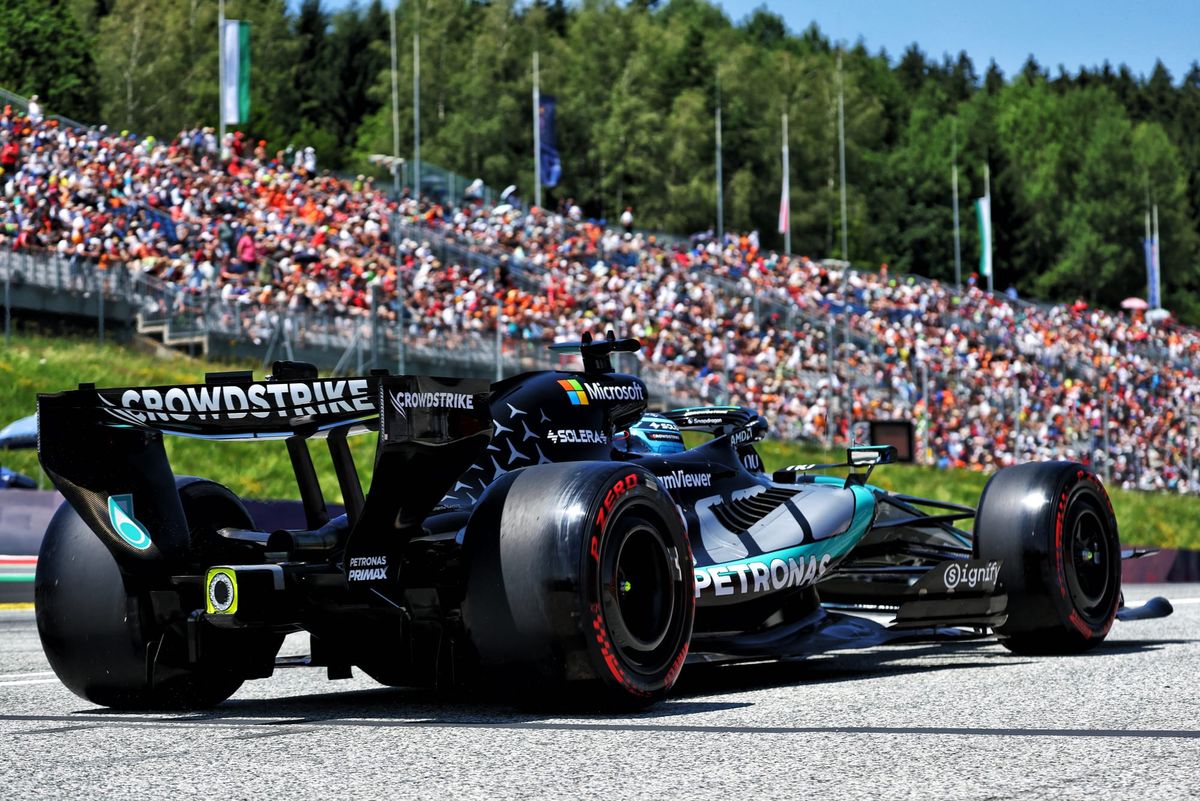
The Race recently predicted that Mercedes was on course to become F1’s first team to achieve $1billion in revenue based on the most recent publicly available accounts.
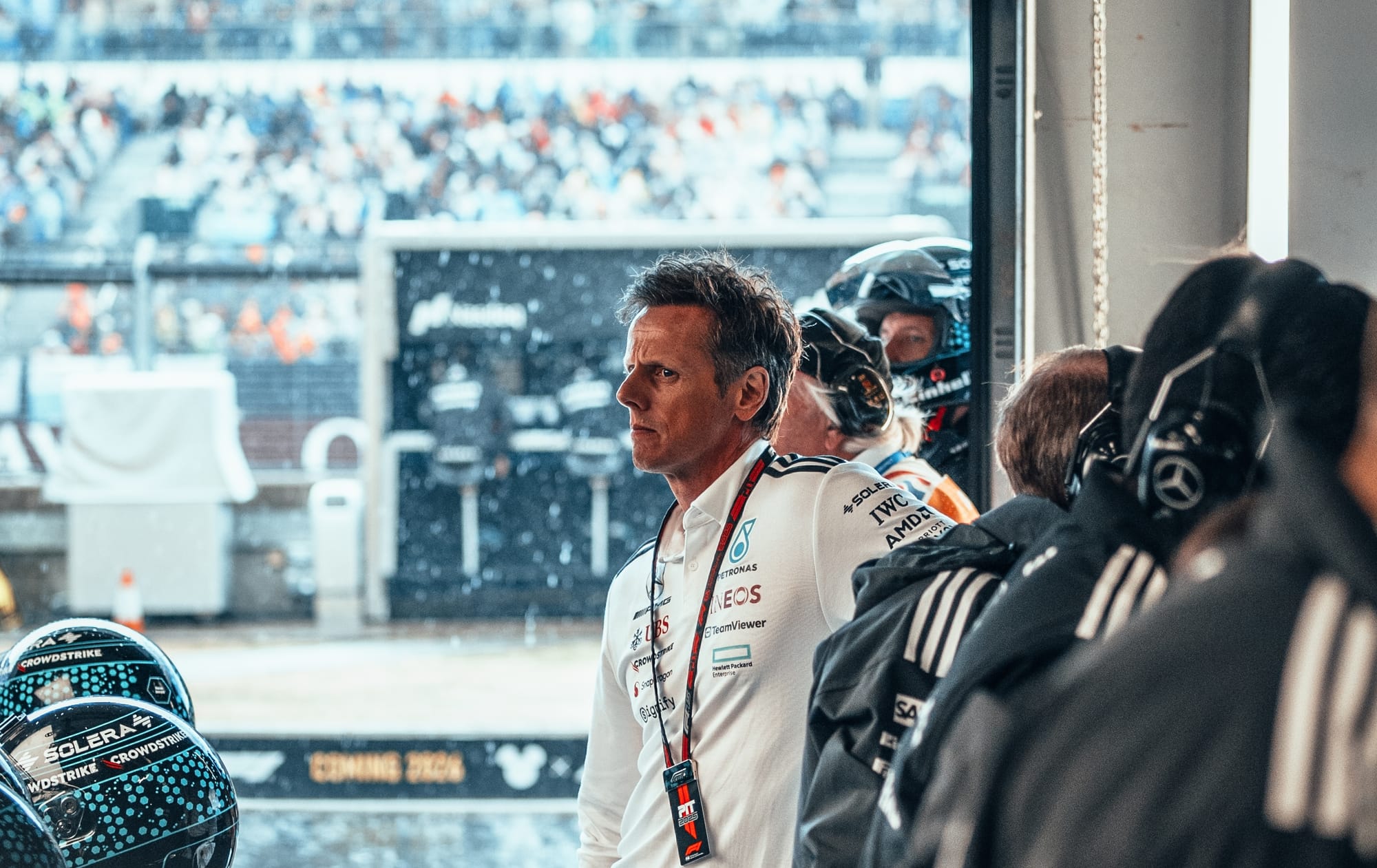
During an exclusive follow up conversation with the main architect of that growth, Mercedes F1 Chief Commercial Officer Richard (Rich) Sanders, it was clear that even he is surprised at the size of the growth Mercedes has seen in recent years.
“I am often in bewildered awe at the numbers we do,” he says. “I've been predicting that we would reach a ceiling consistently every year for the last five years but the sport keeps surprising me”.
Surprising and bewildering perhaps but very quickly he confirms our billion dollar revenue prediction was correct and casually drops in his objectives go even further.
“That's a mad number, isn't it? It's a mad number. That’s in dollars. I'm thinking about how we get to a billion pounds. But yeah, billion dollars, it's on the horizon. It's very close.
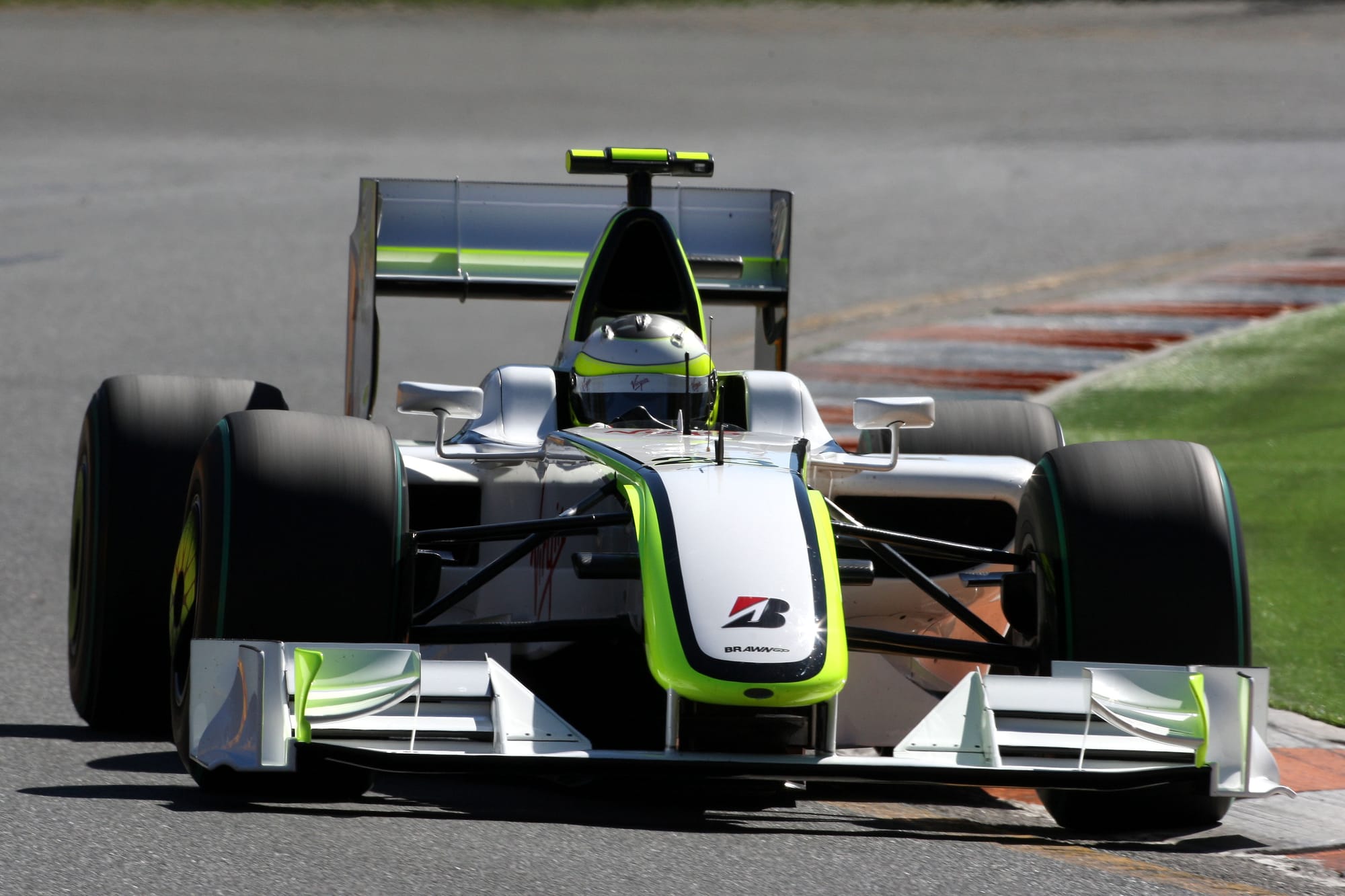
Sanders joined ‘Team Brackley’ in late 2008 just before the Brawn one-off championship year in 2009 and has seen growth of sponsorship and licencing revenue from “literally zero” to “over £500 million next year”.
The headline numbers are newsworthy enough but the complete transformation of the F1 team commercial model is why I sat down on the Mercedes Yacht at the Cannes Lions Festival of Creativity for The Race Business. It’s a story that is only just emerging with the key players up and down the pitlane slowly willing to provide insights into the journey they have been on into the ‘content era’ that the F1 commercial ecosystem has started to embrace.
With this background and as the co-founder of the media company behind The Race, I am perhaps overly intrigued on how F1 teams are building their own content channels. But when I asked Rich if Mercedes were now a media company with a race team attached, he corrected me.
“I would say we're a marketing agency. We are a very good one that's highly specialised. We often say to some of our partners that you've basically got a 150-strong marketing agency that's only focused on trying to make sure you're successful and happy.
“When I joined Brawn, the whole marketing team - and I include everything in that, commercial, partner services, marketing, communications - there were five people. I was one of those five. Today, it's about 150. It's a big machine”.
The revenue and resource ramp up story is the same one at different scales up and down the grid. So is the strong rebuke to the old adage of sponsors just wanting ‘stickers on cars’.
When the subject came up in my conversation with Williams F1 Board Advisor, Peter Kenyon, he was purposefully dismissive as if to highlight how far he has transformed his team away from this focus. Rich echoed Peter’s response and focused on what had replaced said stickers.
"I often view us now like a content-generating machine. And long may that continue because through content you can scale quite impressively. Whereas stickers on a car, or on a driver, it's finite, you can run out of inventory.
"The comms team now have enormous importance to the commercial team. The content that we create, how we show up, the narratives that we weave into the partnerships. Most of them are very authentic. There are some pure badging exercises, but most of the partnerships have genuine authenticity to them”.
With that insight it is clear to see how the team has had to increase from 5 to 150 people and how the self appointed moniker of the team being a marketing agency is difficult to dispute.
It is also clear that managing this level of growth in the sport has its issues as well. One of my six predictions for the year in F1 was that there would be the start of public mutterings from sponsors about the lack of value they had received from their hefty investment in stickers on cars, content, hospitality etc. And Rich hints at the difficulties the sport has keeping its nearly 500 associated brands happy.
“McLaren have around 54, 55 (partners) which is impressive. But I don't understand how it's possible to keep that number of partners truly happy. It's got to be a challenge for them. Because it's even a challenge for us, and we've only got 20 or so."
Even the newest of observers of the sport could spout the next of Rich’s observations: "You can sell Formula One sponsorship to any number of brands, that's for sure."
But the difference to the ‘old days’ seems to be the ability to identify the right partners within the framework that Mercedes has decided to operate within. From the volume of interest in the sport I opined that Mercedes maybe didn’t need the outbound department I saw Rich so carefully building pre COVID.
“Well, you definitely do need an outbound department,” he says. “But the trick is … it's changed slightly. You've got to almost manage the interest to make the right decisions, to choose the right partners and making sure you're providing the right rights and the right amount of value.
“We want to build these deeper relationships that are longer, deeper and have a laser focus on delivering for the partner. Whether they want revenue, whether they want exposure, whether they want best-in-class experiences. Having that laser focus to deliver does lead to the partner wanting to stay with you. And that's been a real benefit for us."
Rich went on to tell me that Mercedes prides itself on long term relationships with partners which prompted me to ask a question that I hadn’t planned perhaps due to my journalistic duties being newly found and part time.
During our Cannes Lions event programme I spoke to Carlos Sainz (see video, above) and asked about the impact of drivers having larger social media followings than the team for which they drive and how that impacted the balance of the relationship. With his answer and the reaction of the team still fresh in my mind I wondered what impact Lewis Hamilton, the most followed F1 driver ever, leaving Mercedes had on the team commercially. Rich’s answer surprised me.
"At the time, I found it very stressful," he says. "It was January, just before the start of a new season. I felt the timing was particularly difficult for us. It just had to happen that way, sadly. However that year we made more money, in terms of an increase in revenue, than we'd ever made before. We surpassed our budget expectations that we set with Lewis the September before."
The loss of the most famous F1 driver, a seven-time world champion having no impact commercially perhaps shows the strength of that machine that has been built from five to 150 people, the stability of long term contracts and deliverables for partners being wider than ever before, but it does raise a question about the impact of drivers on a team’s off track success.
When Hamilton was announced at Ferrari there were clickbait headlines in sections of the F1 press that screamed his move had triggered a $10Bn increase in the Ferrari market cap.
It did not. The announcement was made on the same day as Ferrari’s FY2023 earnings release and 2024 guidance which both gave the market significant positive news. Financial commentators such as Reuters were more realistic and referred to Lewis’s move as separate to the share price move.
But Rich saw that Ferrari did indeed benefit significantly from the Lewis factor, even whilst he and Mercedes saw no downside. Proving again that F1 in the second half of the 2020s is not a zero sum game.
“The big impact was Ferrari. I think Ferrari will probably admit this. Lewis moving to Ferrari enabled Ferrari to sign a lot of very, very big deals. I think that was very helpful to them. I think they realised quite quickly why Lewis can really move the needle. Ferrari probably felt the biggest impact, in a way that maybe they suspected revenue growth, but not at the level that they had."
Mercedes head towards their billion dollar or even (surprisingly) pounds revenue threshold with a driver that was only a year old when Rich joined the team and yet it seems that can only have a positive impact on the seemingly ‘bewildering’ growth.
“We always believed in Kimi. Being truthful, part of the reason Lewis left was because we weren't willing to make a commitment that would make it impossible for us to elevate Kimi at the right time.
“I think history has probably proven that was the correct call, given where we are now with Kimi. Kimi and George are great drivers, great ambassadors. It was the right call. But it was tough at the time."
Another generational talent on track carrying the team to new heights off of it? Perhaps this is the clearest sign of the ‘content era’ spinning up new heroes quicker than ever. And I had to double check Rich’s assertion that Kimi could equal Lewis commercially. And he was double sure.
DC: "Do you think if Kimi wins the championship this year that he's as bankable as Lewis?"
Rich: "Yes."
DC: "Yeah?"
Rich: "I really do. I really do."
Now I’m the one in bewildered awe. I’m sure my suggestion of ‘Kimi - Billion Dollar Baby’ as a headline will be rejected by the adults in The Race’s newsroom but it’s sort of true and might just turn up in someone’s vernacular.