How Brembo tailors brakes for all 11 F1 teams
Presented by Brembo
How has Brembo established itself as Formula 1's go-to brake supplier with relationships with all 11 teams?
The Brembo Group supplies all 11 teams with brake calipers in 2026, while also providing complete braking systems to selected teams.
That's been built up over 50 years in the championship and has included forming close relationships with some of F1's best ever drivers including Ayrton Senna and Michael Schumacher. In fact, a Brembo caliper philosophy favoured by Schumacher has made a comeback in 2026.
So why does Brembo think it's become the go-to supplier?
"I think mainly for the product that we do, because we are in the top-level championships, F1, MotoGP," Brembo's F1 engineer Andrea Dellavedova told The Race.
"The product itself is a very good product. All the calipers, the discs, pads, master cylinder, we are now also doing brake-by-wire. They are very good products, they are reliable and very high performance.
"The second topic is that the kind of assistance that we provide to our customers is very high, because we don't design and make the caliper, for example, sell it and then that's it. We continuously ask for feedback from the customer. We continuously try to develop the product in the way that the customer wants.
“Our job and our work is tailored to each customer. So we are very interested in the customer's opinion and needs.
“So we try to move all our design and work in general to make them happy.”
If you were to line up all the Brembo braking systems it supplies to the 11 teams, there are major differences between them because of the tailoring each team requires.

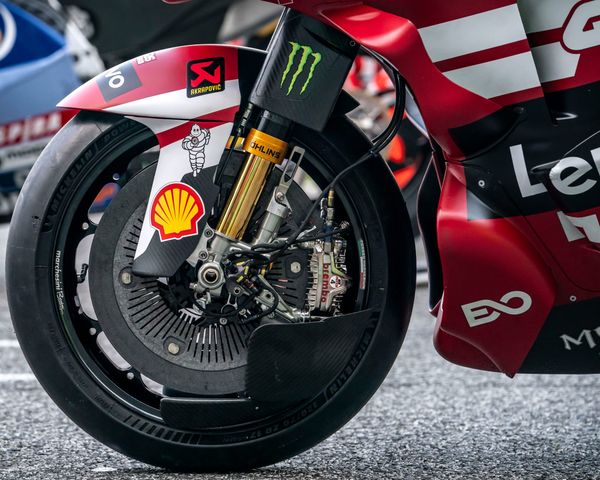
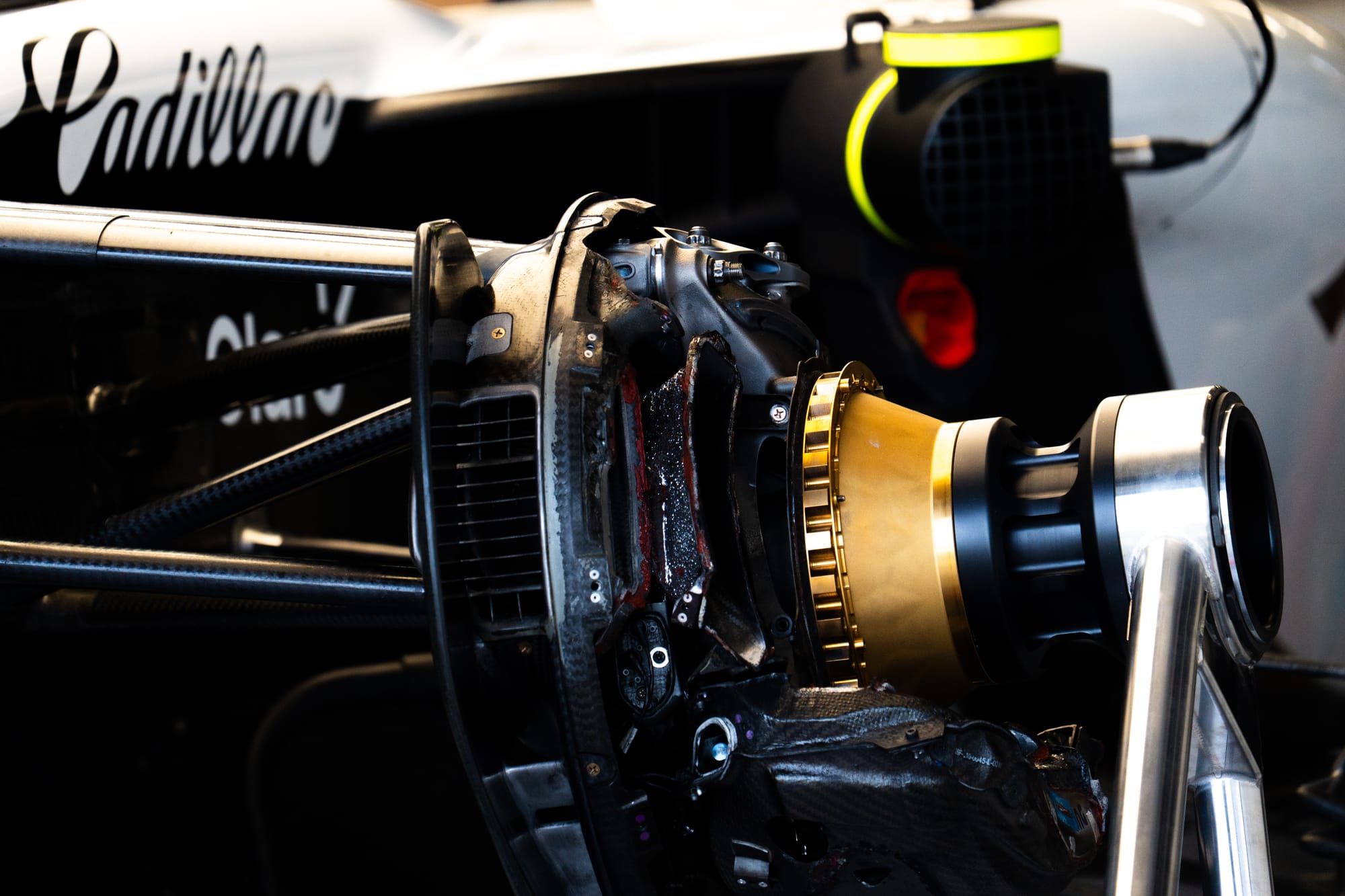
"Yes, because the main difference is on the cooling side, because it's something that must work with the car design and the brake design," Dellavedova (pictured above) added.
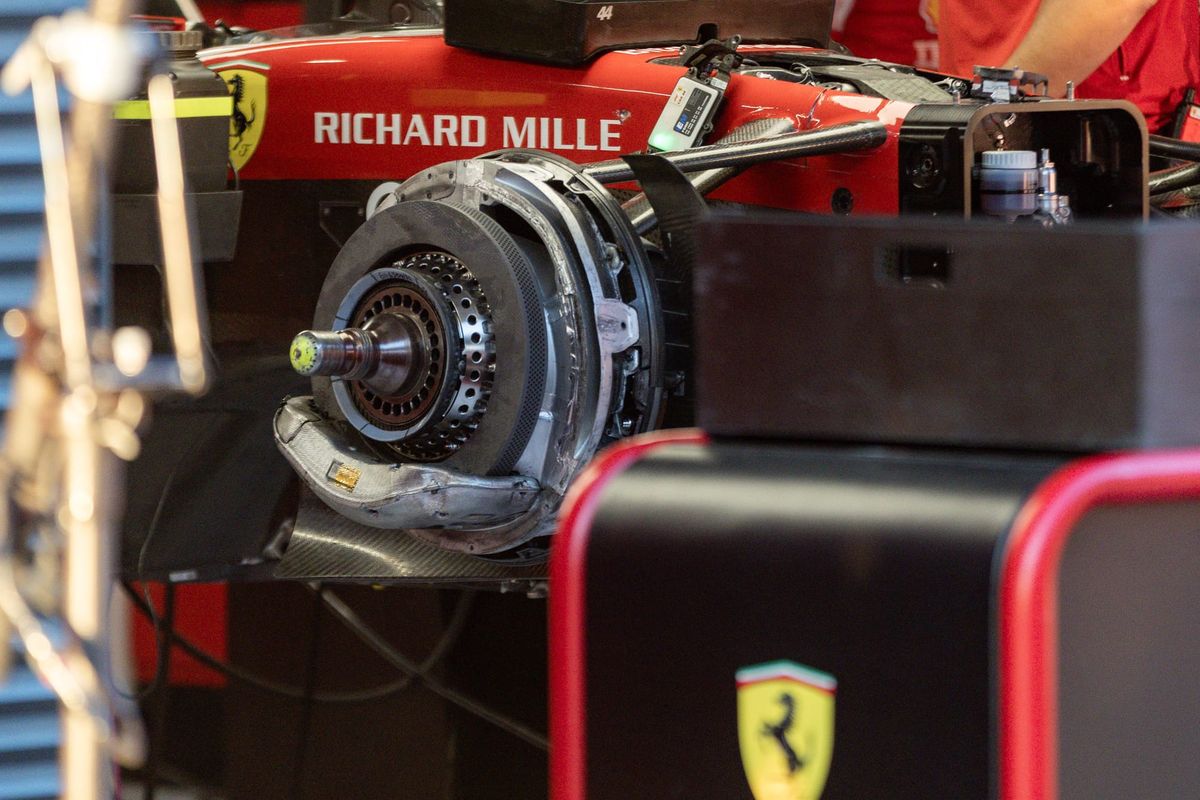
"For example, if you look at the caliper, the Mercedes is completely different from the Red Bull one, which is completely different from the Ferrari one.
"Every team has different needs in the way you have to cool down the caliper and in the way you manage the heat inside the wheel.
"That is a very big topic for performance. We also have a special solution for this year with a caliper.
"So not only the cooling, but the way the caliper works is completely different. If the caliper is different, also the carbon material, so the discs and the pads must be different because they have to work closely with the caliper and match the geometries."
Brembo's embedded in F1 teams
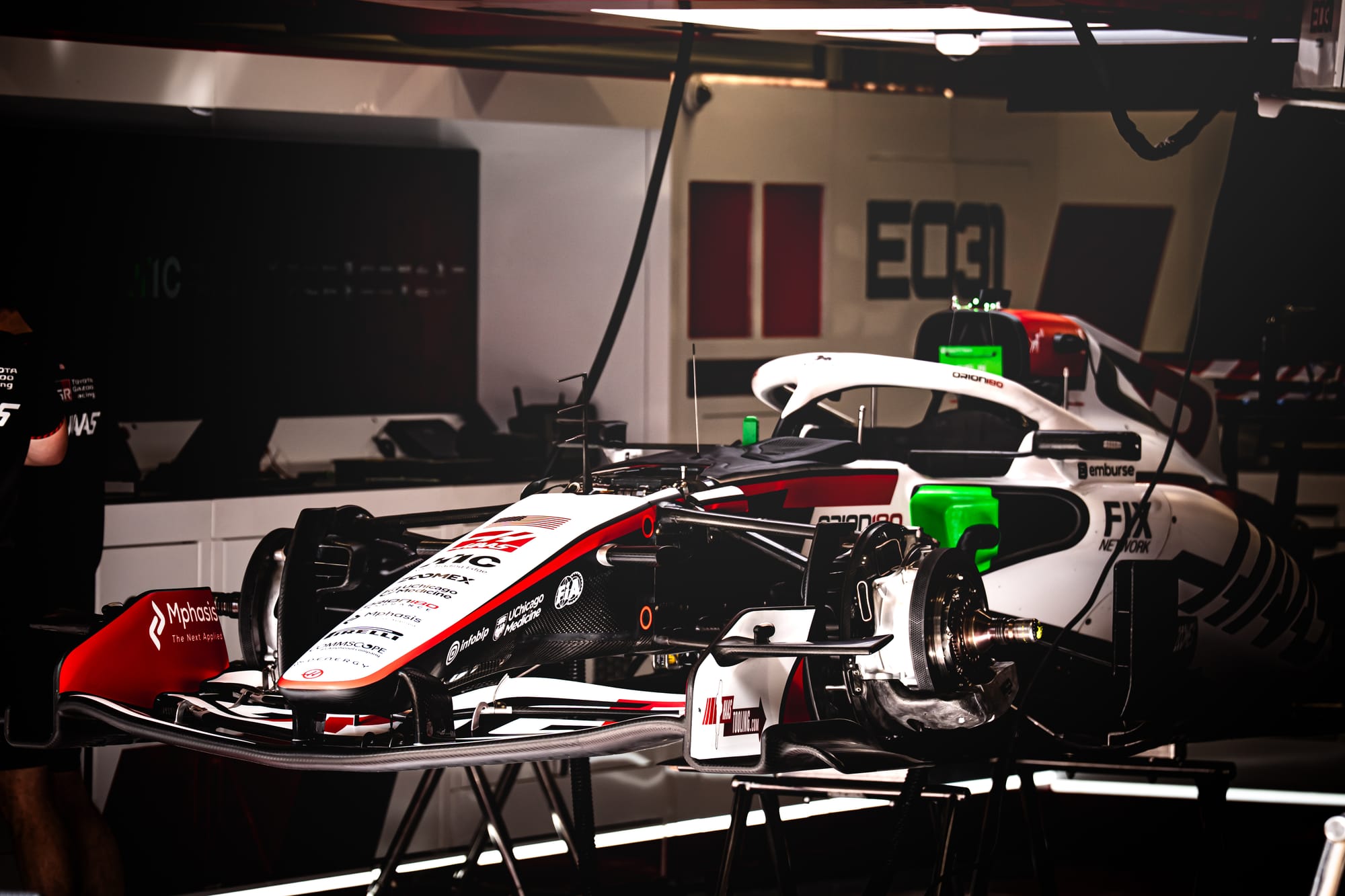
Brembo has two engineers inside each F1 team at every grand prix weekend.
"If the team has some problem or some doubts or some questions, we are always here to answer them and try to help them," Dellavedova said.
"In F1, it's quite difficult to make changes during the weekend; it's more about tuning the environment in which the component works.
"For example, we pay special attention on the energies dissipated by the disc and the temperature at which the disc operates, because the carbon material doesn't perform in the same way, for example, at 50 degrees or 500 degrees.
"We have a special limit for the carbon. So during the weekend, we speak with the team. We ask them how the temperatures and energies are going. if we see something strange or something outside our limit, we say, 'Guys, please focus on this topic', because this can lead to losing a bit of performance.
"It's like the car set-up. You start on Friday morning. You put the car on the track. You see the data. 'OK, we have to tune this parameter. We have to tune that'.
"The same is what we do. We try to help them target the temperatures and energies mainly. Then we are here in case of some issues.
"It's also a matter of safety sometimes, because if you have a leak in the hydraulic system, that can lead to an unstoppable car, and that's quite dangerous.
"It happens sometimes that maybe there is something strange on the braking system, we are here to make sure that the car is also in a safe condition to run. Then if not, to try to solve the issue and make it safe to run."
Equal treatment
Brembo has a long and historic partnership with Ferrari, but it's very keen to ensure there's equal treatment of all the teams.
"With Ferrari, the collaboration started a lot of years ago and of course we develop our product a lot with them, so that means that we spoke a lot with them," Dellavedova added.
"We have monthly meetings with them to move the work in the right direction. But it's something that we do with every team. Also with Audi, Mercedes, everyone.
"We treat everyone the same way."
That includes F1 newcomer Cadillac, which has leaned on Brembo a lot to try to improve in one of F1's hardest areas to master for a brand-new team.
"With Cadillac and new teams, we bring our knowledge, our experience built in a lot of years, to sometimes also guide them in the right direction on the braking system," Dellavedova said.
"With the new rules especially, it's quite difficult to study and develop a braking system that is perfect since the beginning of the year.
"Then also the car develops during the year and these rules will be for different years.
"At the beginning, the performance of the car was lower compared to now. But the braking system was designed at the beginning.
"So if the car performance is increased, they have to dissipate more energy into the braking system. Our braking system must withstand wider operational conditions."
Relationship with the greats
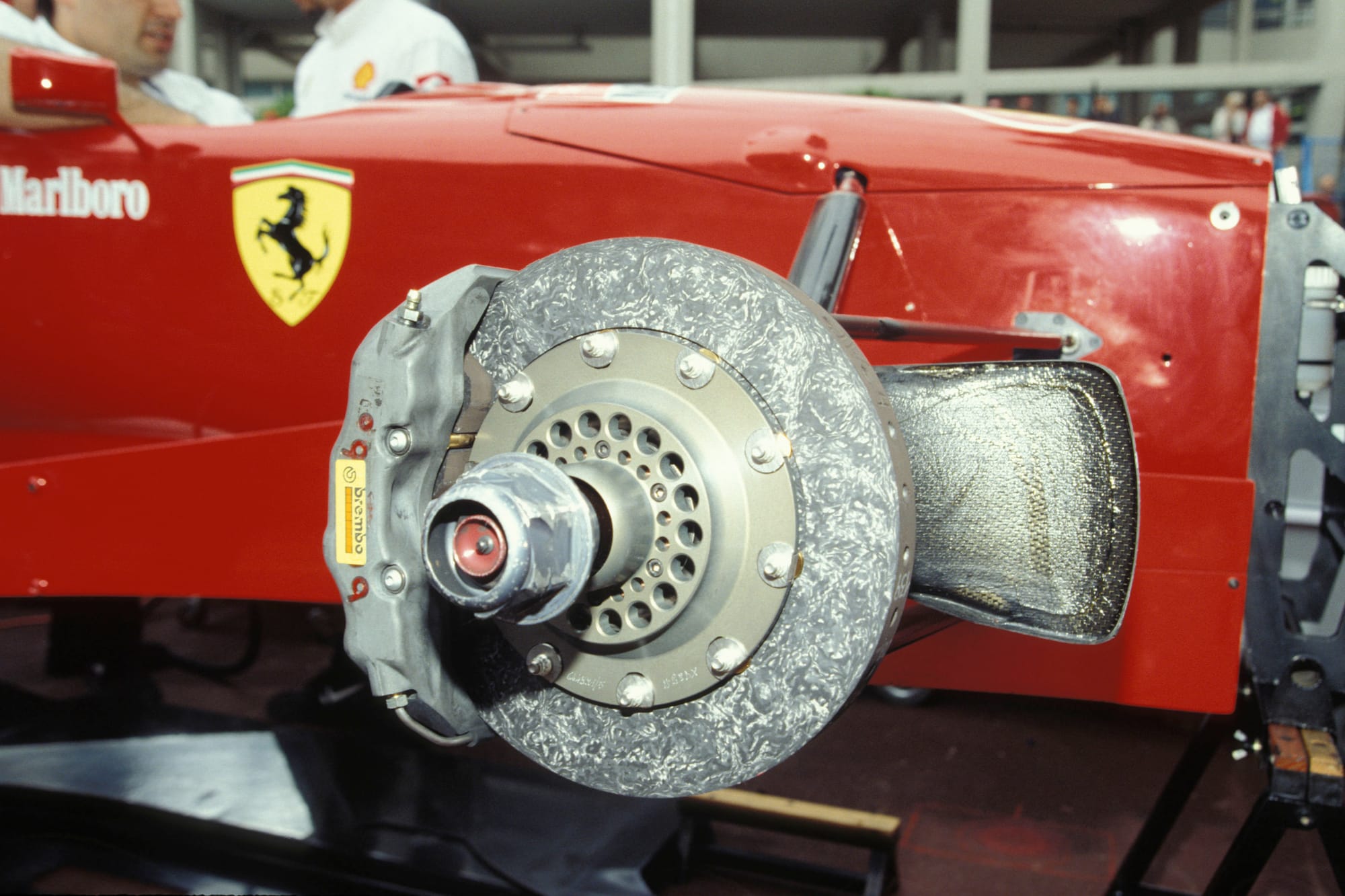
Brembo has built up a strong reputation with some of F1's greatest drivers during its 50 years in F1.
Senna liked Brembo's brakes while at Lotus so much that he ensured McLaren adopted them soon after he moved there in 1988.
And Schumacher prompted Ferrari to adopt a special braking package that he'd used to title-winning success with Benetton in the mid-1990s.
"The collaboration started with Michael Schumacher already in Benetton, when he won his first championship in 1994," Dellavedova explained.
"Benetton used a special Brembo caliper, like the one that we bring back this year with four pads and eight pistons.
"He liked the feeling of the braking with the Brembo material, the Brembo components.
"When he went to Ferrari, he wanted it back. We developed the carbon material. During that period, at the end of the '90s, we brought the carbon discs and the carbon pads to F1, with the help of Michael too."
As Dellavedova said, that caliper layout has returned for Brembo's 2026 range.
"The material, of course, has changed a lot since the end of the '90s. But the concept, let me say, is still the same, because with the carbon material, you have a very lightweight disc. Being a sprung mass, it helps a lot on the car dynamics.
"If you reduce the weight inside the wheel, you will gain a lot of performance and the concept is still the same.
"Of course, the material is completely different, because the production system is also completely different from that one. We moved the production of the carbon discs inside the factory. So now we have control on every step of the production - from the beginning with the single carbonfibre to the end with the machining of the final disc.
"It's like a development that is never stopping through the years. But, of course, that experience helped a lot also, and the benefit of that experience, we have it also now."