Where the next leaps in F1 brake technology will come from
Presented by Brembo
"Probably the only thing that is in common is that it has carbon as a chemical element. The rest is completely different."
That's how Mario Almondo, Chief Officer of Brembo Performance, describes how Formula 1 brakes of 2026 compare to what was used 20 years earlier. And the next 20 years could bring even bigger changes - though not necessarily in materials.
It's in the last 10 years in particular that Almondo feels visitors to Brembo's factory in Curno, Italy, have been overwhelmed by what goes into F1 brake design and creation "in terms of energy, complexity and the variety of processes behind the creation of the material that makes up an F1 brake".
"You have to create the material, it's not like melting a cast iron disc," he adds of carbon.
Over the last two decades, that process has changed radically.
"It is completely different in terms of shapes and quality of the rotors and their lay-up, as well as the design and cooling of the brake pads," says Almondo.
"It is completely different in terms of the cycle of production into the furnaces. The cycle time is even more different. We also had some different chemical and thermodynamics reactions, let's say, compared to even the recent past, we are using improved gas mixtures.
"It is different in terms of the additives and chemical additives that we put onto the discs and pads.
"The process of manufacturing is completely different, because, of course, we started with 50 holes or something like that. Now, we are at more than 1000.
"As I said, the chemical element of carbon is still there, but that's it!"
Brembo is about to introduce carbon-ceramic brakes into superbike racing, a project that’s been in progress for more than five years in terms of what Almondo calls "the cooking recipe" of the creation of the brakes by maximising thermal, mechanical, and friction profile properties.
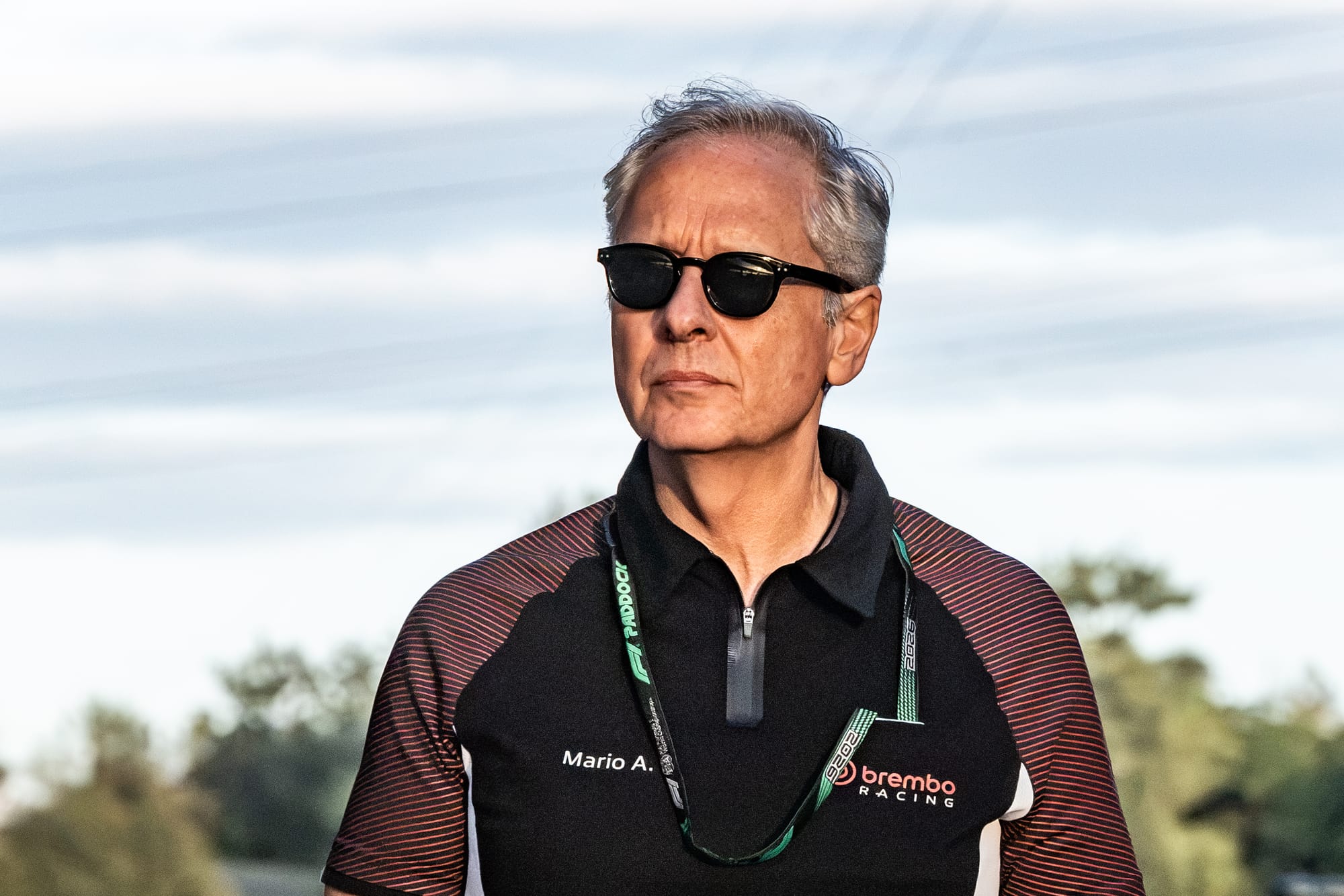
While that is now sufficient to slow a high-performance racing bike, Almondo (above) believes F1-level braking - "the best expression of the technology in terms of pure performance" - will still require all carbon-carbon brakes for "several years still" because the friction level, resistance and thermal properties achievable with carbon-ceramic discs is not at that level required from F1 cars.
So while a major material change might not be on the immediate horizon for F1 brakes, the big leap Almondo foresees is around how "digitally pre-empted" the braking group can be, before it even gets on an F1 car. Simulation tools aren't just helping F1 teams, they're a massive boost for suppliers such as Brembo too - achieving remarkable results in the preparation and anticipation of problems that may arise with any new project, such as the implementation of the new technical regulations at the start of 2026.
"You have to digitalise and simulate everything and you have to foresee what's going to happen. And this is something where we are very, very, very good," says Almondo.
"For example, this year, there are completely new technical rules in Formula 1. It is something that I'm very proud of that if I have to compare what we predicted and what was happening at the first test or the first race this year, we were 99% spot on."
And asked where the next technical advances in F1 braking were most likely to come, it's in this area of simulation that Almondo expects the biggest strides.
"Probably, simulation is the area where we have more room for expansion and the quickest pace of expansion, because the rest is linked to something that is more physical," he explains.
"And of course, physics has to be tested, proved, retested. It is a constant pace, but not with big leaps.
"While on the other side, with simulation, if you have a good idea, you can find something that gives you the possibility and room for big expansion and big low-cost improvement - indeed, digitally validating a new idea drastically shortens development times, even though physical component testing must still be carried out."
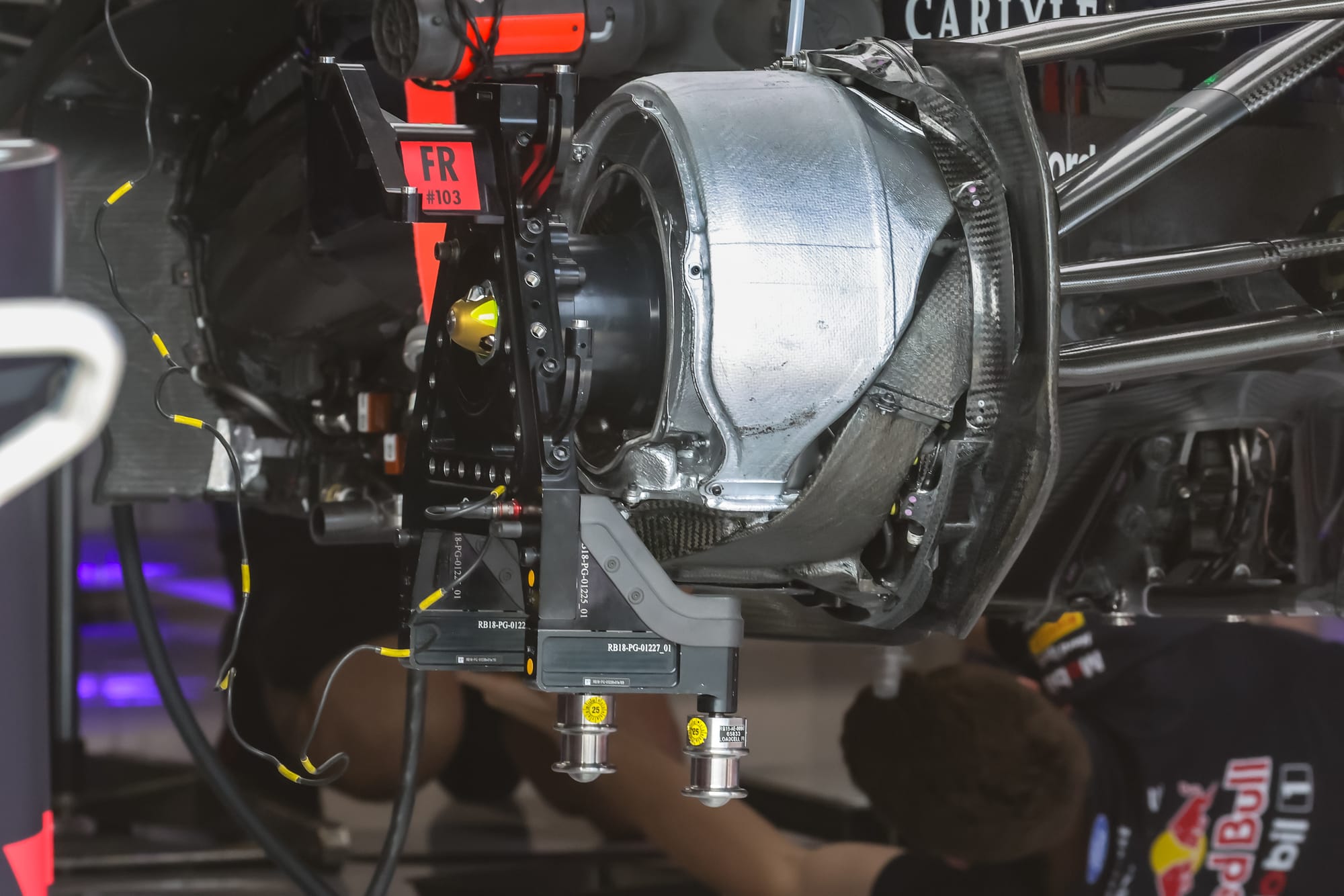
The level of complexity in a 2026 F1 braking system, especially in terms of blending with the regenerative braking component, it remains a highly demanding engineering challenge.
"The reason why I say 'braking technology', because it is not just about calipers and other mechanical components, but it's also about software, it's about simulation, it's about brake-by-wire, it's about the pump and all this kind of stuff. It is very, very complex, the interaction between the vehicle and the braking technology," explains Almondo.
And it's in this area of interaction between the braking system and the wider car performance that Almondo thinks most competitive gains can be made in the coming years.
"The evolution will be towards having a technology of braking that is much more into the dynamic of the car, much more interacting with the dynamic of the car, because of course this is better for the packaging," he says.
"This is what everybody is asking, and this is because it is the natural way to better integrate the dissipative braking with the regenerative braking - through software, through technology, through hydraulics, through electrical.
"It's something that is completely in evolution and we rely on this kind of development, we rely as well on the input of the teams. We are here for this."
The likelihood of the next generation of F1 regulations being simpler - with a smaller electrical energy component potentially teamed with a V8 internal combustion engine - does appeal to Almondo personally, but he warns against regarding it as a simpler challenge for braking technology.
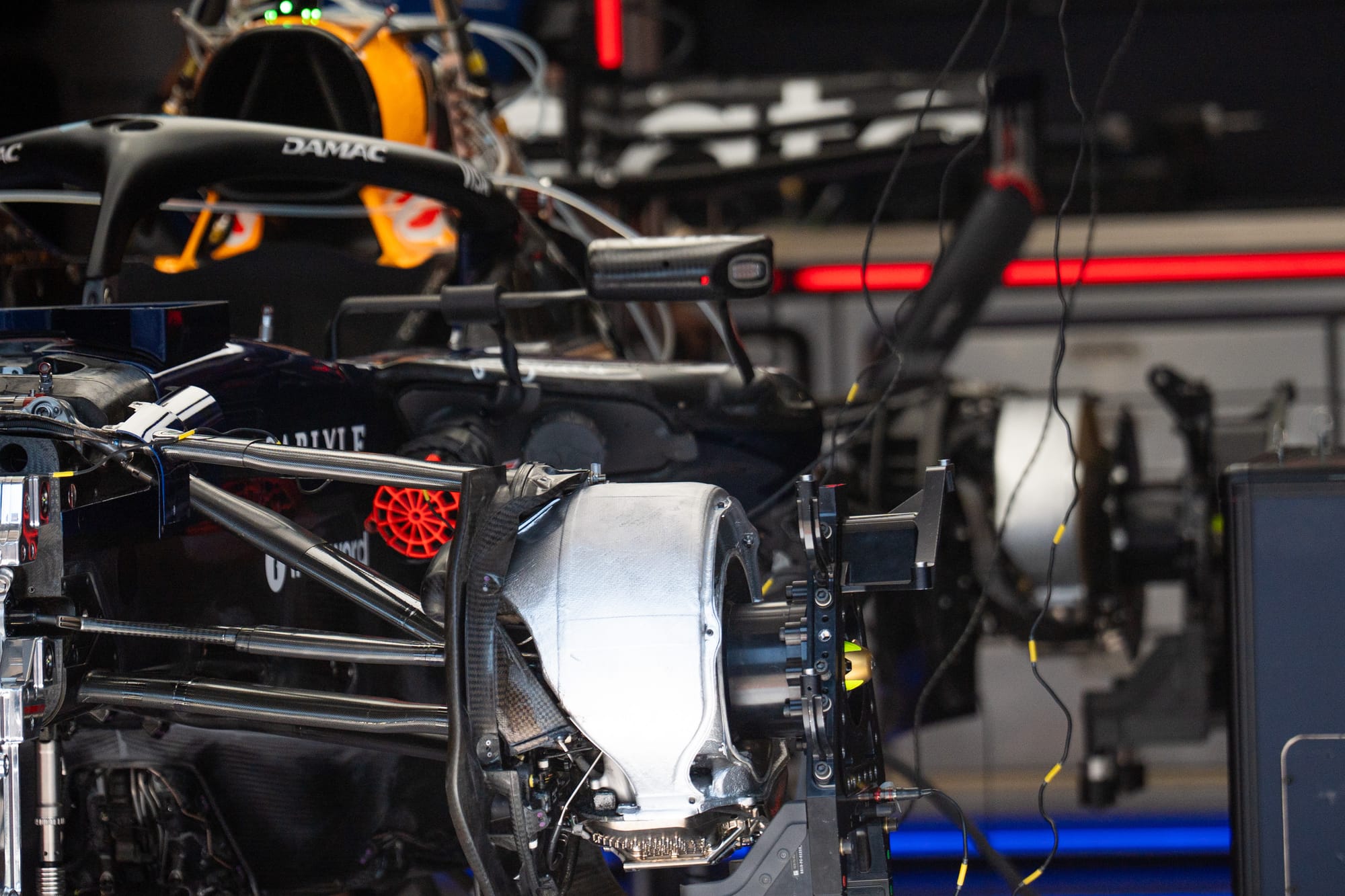
"Of course, braking with an ICE is something that we know very well, but the point is that you have to go to the limit and a little bit above the limit, but keeping performance and, of course, safety at 100%," he says.
"So, if we go in this direction, we are going to play on a pitch that we know very well - and that I like, I have to say also personally, in terms of a motorsport exercise. And in any case, it certainly seems to be the direction that the vast number of F1 fans are asking for."
"But it will always be the same: constant improvement, we will reach the limit, some teams will, as usual, push us to overtake the limit a little bit, because they want more, more, more, and this is why Brembo is what it is."
And wherever F1 car technology goes, braking performance is going to be critical to it.
As Almondo puts it: "If you want to have something rolling, of course, you have to have something to stop it. That’s been true since the invention of the wheel!"