Why a failed MotoGP move can still be saved
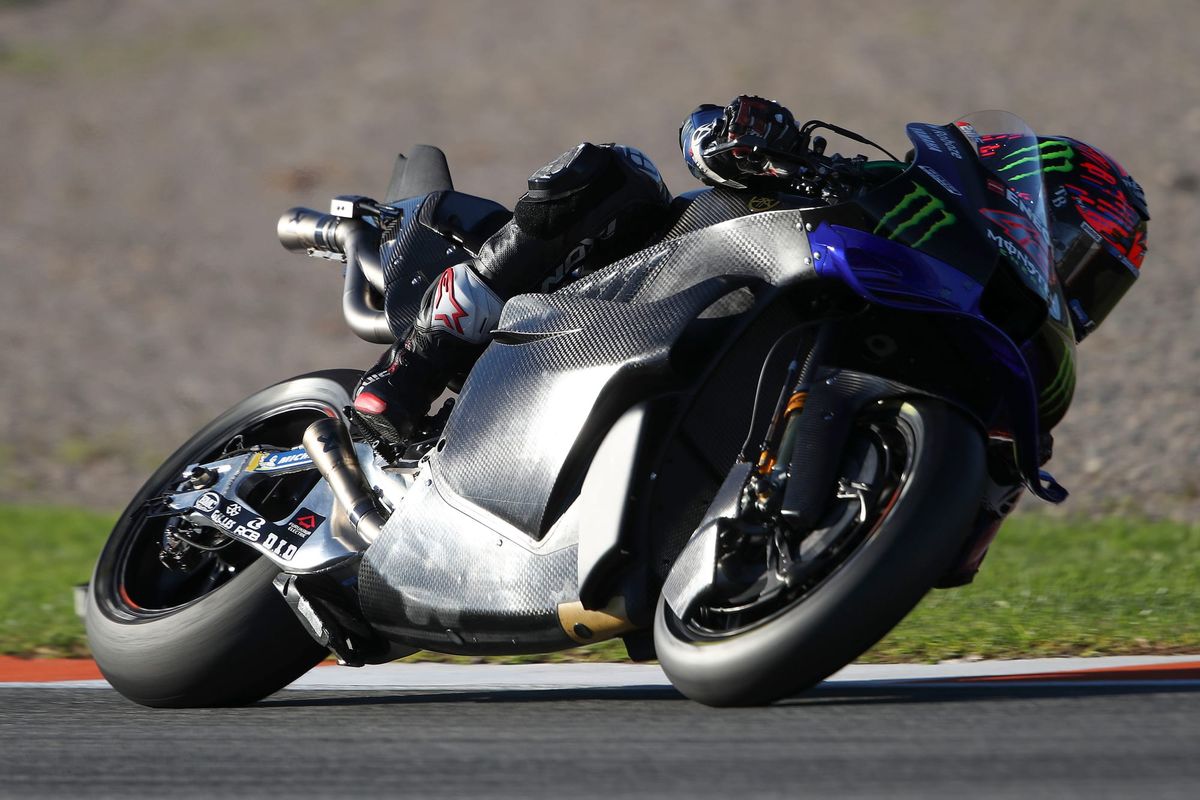
Heading into year three of their MotoGP collaboration, Alex Rins and Yamaha are on course for separation.
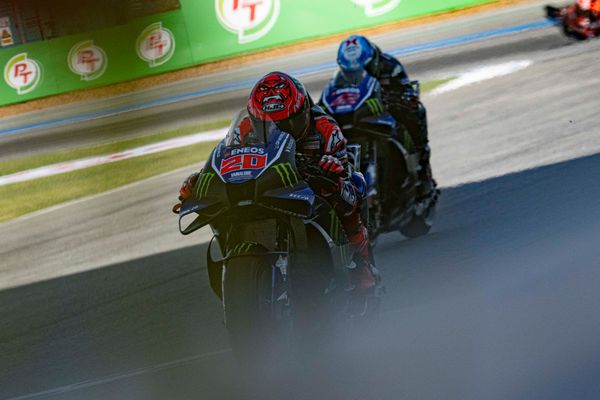
This much hasn't been stated publicly by either party but it is the likeliest outcome. Rins, brought in after a strong stint at Suzuki and a promising but injury-derailed time at LCR Honda, was thoroughly unproductive on the inline-four Yamaha M1 as the counterpart to Fabio Quartararo - in what was supposed to be a dream team.
There is a case to be made - though it is a bit unkind, and divorced from crucial context - that he is the least productive full-time factory Yamaha rider in the team's 'modern history' from 1999 onwards.
Five worst Yamaha 'number two' seasons since 1999
By share of lead rider's points
Maverick Vinales, 2021 - 34.2% (was at 49.4% when he was axed mid-season)
Alex Rins, 2025 - 33.8%
Alex Rins, 2024 - 27.4%
Ben Spies, 2012 - 25.1%
Franco Morbidelli, 2022 - 16.9%
Note two things there: Quartararo on the other side of the garage as a common denominator in four of the five cases; and a changed MotoGP landscape overall that makes points less accessible-by-default in a factory team.
So Rins has not been 'catastrophic' or 'disgraceful' or whatever - but he certainly has not been enough.
Even the team's glass-half-full view of his situation, as expressed by team manager Massimo Meregalli in an end-of-season interview with MotoGP, is unconvincing.
"Alex had the first part of the season that was for sure under expectation," Meregalli said of Rins's 2025. "Then from Motegi [round 17 of 22] we started seeing some improvements - yeah, Alex, luckily, started getting closer. And performing better."
Indonesia was by far Rins's best weekend of the campaign, and there were flashes, but ultimately there isn't really a meaningful positive trend.
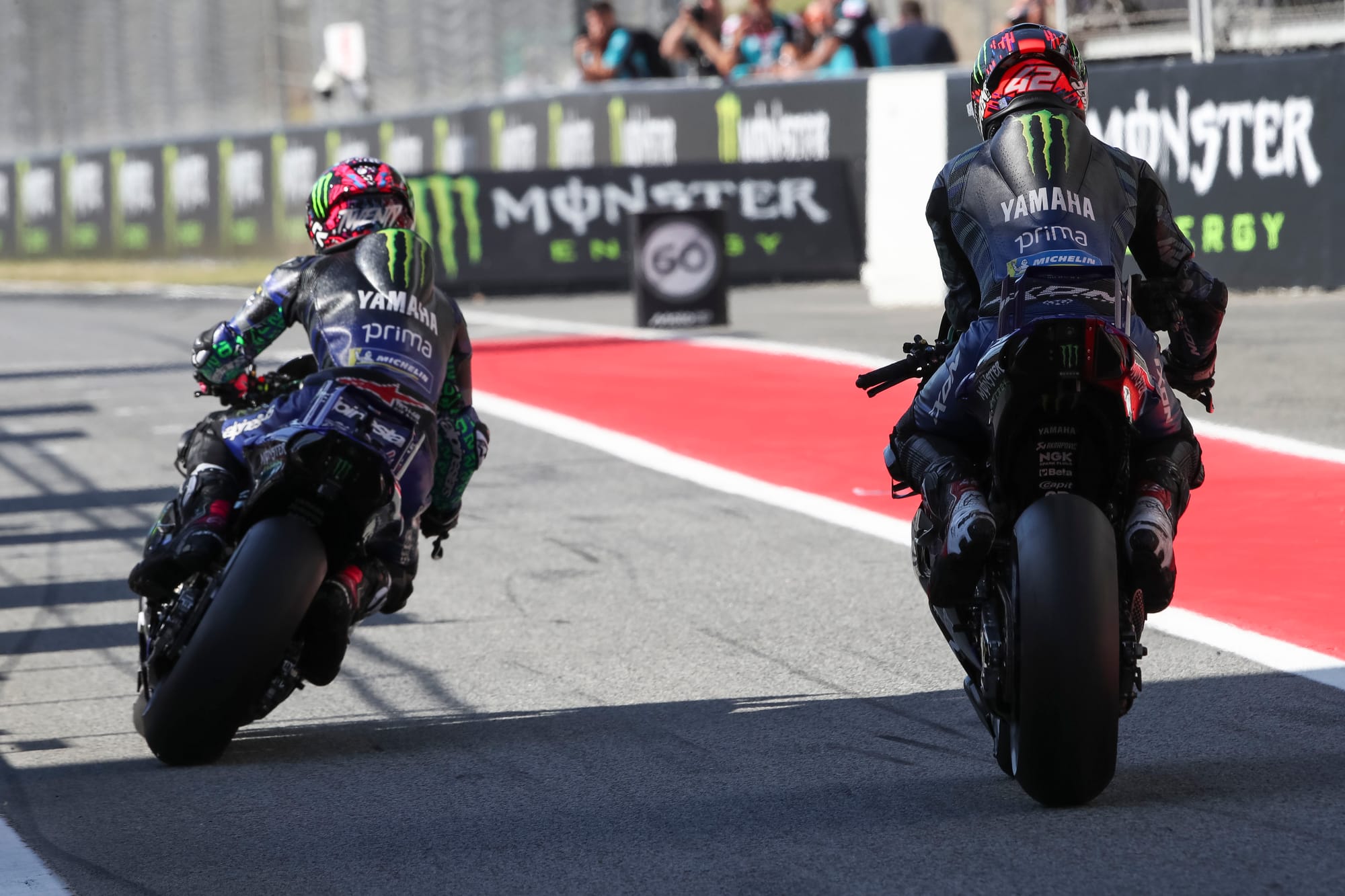
Rins vs Quartararo in 2025
Qualifying gap
Full season: +0.614s
Motegi onwards: +0.513s
Sprint gap
Full season: +8.688s
Motegi onwards: +9.357s
GP gap
Full season: +7.109s
Motegi onwards: +6.910s
Points
Full season: Quartararo 201 - Rins 68
Motegi onwards: Quartararo 64 - Rins 23
Rins's two seasons at Yamaha so far have existed under the asterisk of mid-2023 injury. He himself has long insisted it is no longer a hindrance on the bike, but the on-track results have left people unconvinced.
Whatever the underlying cause, though, at a certain point it won't matter if results don't improve dramatically.
That point surely would have come already if Yamaha was sticking with the inline-four bike - which Rins has repeatedly alluded to being a fundamental mismatch to his preferences as a rider, and nothing like the Suzuki he had exploited to great effect.
Rins had tried to rewire himself to attack corners more like Quartararo, scrubbing off more speed, taking wider lines.
"I tried to change a little bit the riding style, I tried to ride more in the Fabio's riding style. And we got it. We got it a little bit," he insisted.
"I'm proud of this, but yeah, in the end, when we have a good feeling, you can see what I was able to do - what I did in Indonesia, no? But when you struggle, when you can't stop the bike, tracks where you need the [top] speed... we can see the real differences [between Yamaha and other bikes]."
That work to amend the riding style has ultimately not made a clear difference on track. The exceptional Quartararo remained too far ahead.
But the root-and-branch change to the V4 engine for 2026 is a lifeline. Pirelli's arrival in 2027 could be another, but Rins needs an immediate impact - and the V4 engine is an opportunity to provide it.
While he was an unremarkable 19th in the post-season Valencia test, that was without running the softs - and Rins seemed very uplifted, borderline beaming, in his media scrum after that test. Which was not out of line with how jazzed up he genuinely sounded about the V4 through the year.
"In braking, much better than the inline-four. In terms of [top] speed, still it's missing a bit of speed, it's normal," he said.
"The problem with the inline-four was that we were stopping the bike only with the front tyre. With this bike we are able to use both tyres, and as soon as you brake the bike goes a little bit sideways and this is really helpful.
"[For traction] we struggle a little bit. It's true that we can pick up the bike better than the inline-four, because it's moving less, less shaking. But picking up the bike like this we are not able to find the traction."
Asked by The Race whether the change from the Yamaha inline-four characteristics to whatever the V4 M1 is shaping up to be may benefit him more than his peers in terms of natural style, Rins didn't dismiss the suggestion.
"I felt quite good. I didn't compare the data or whatever today still. But yeah, I feel great."
This needs to translate immediately when racing begins this year. Rins does not have a lot of time to change the trajectory, but memories are very short in racing.
There's no guarantee the bike will be competitive. "It will be very easy to make mistakes, so we need to pay a lot of attention, we need to go, all the riders, in one way, to improve, we need to stay more together than ever, to find as fast as possible the correct parts," he said of the bike's development.
He will be judged on that, too. But however competitive the bike is from the outset, for Rins it should be more important right now how competitive he is on it.
With the inline-four, he appeared toast. The V4 is the reset he badly needed.