MotoGP makes ride height device ban immediate after crashes
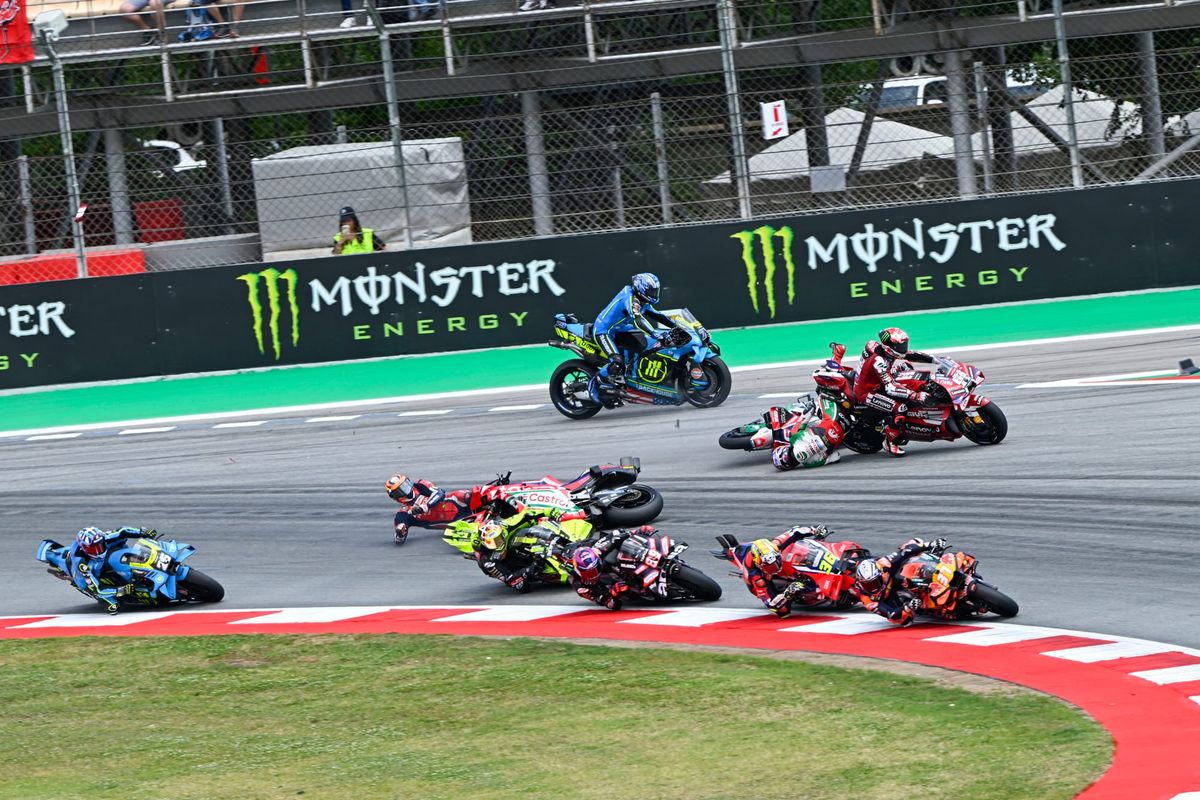
MotoGP's governing body the Grand Prix Commission has moved to ban front ride height devices effective immediately.
That decision is one of a number of changes called for by riders following the Turn 1 crash at Barcelona last month that has effectively ended Johann Zarco's 2026 season.
Originally set to be implemented at the end of the season anyway, alongside the removal of rear ride height devices as well, the ban has been brought forward to this weekend's Dutch TT after extra practice start sessions were added to the schedule in recent rounds to allow riders to assess the change.
Those changes were met with approval by many of the grid following the opportunity to try them out last Friday at Brno, with the final decision then being taken following that evening's safety commission meeting.
"We are already on a good level and I think it's a good step," explained Honda rider Luca Marini.
"I didn't understand why we are not racing here without the device, but for sure maybe in Assen we will have everybody agree to take it out.
"We did many years with the front device also, so one more race is no problem."
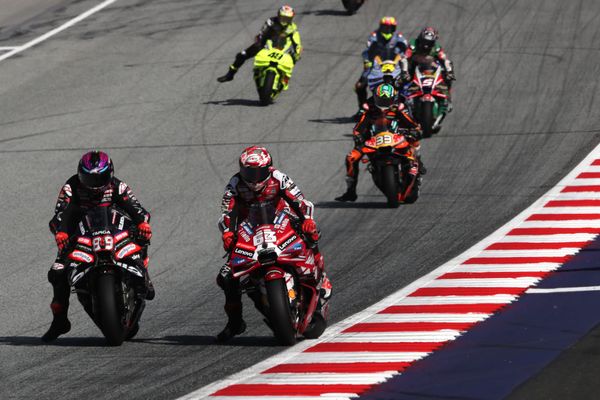
Another change being made following the Catalan GP's first-corner incident is extending the distance between rows on the grid, with the gap between first and fourth moving from nine to 12 metres from the German GP in mid-July.
That is a more controversial step, considering many believed it wouldn't improve safety due to the impact it's going to have on the speed at which riders nearer the back of the grid, with more time to accelerate, will now enter Turn 1, but it is nonetheless a step that has also been fairly well received by racers.
"They will brake a little bit earlier I hope," Marini joked. "No, the speed doesn't make the difference in my opinion.
"Maybe my idea is different compared to somebody else, but it's not the speed that you arrive to the first corner making the difference in terms of safety. It's the layout of the first corner, the first and second corner.
"At the end you can have a crash at 70km/h and it's dangerous in the same way as one of 180km/h. We need to improve and make the life of the riders a little bit easier arriving in Turn 1, and without the devices I think will be something less in your mind that you need to take care and will be a good improvement.
"Now we are approaching the start with many things on the mind - to engage well the front device, to don't push the wrong button, and then when you arrive in the first corner you always need to brake really hard because the front device is going deeper and deeper and deeper, but if you have hard springs in the front, a fork, it's really difficult.”
The final change issued by the commission at Brno is a less time-critical one but one that nonetheless addresses a previous concern of some manufacturers.
From 2028 onwards, each factory will be prevented from providing any more than four bikes to satellite teams, limiting their presence to six machines each and permanently ending the significant advantage Ducati enjoyed in past years with eight machines on the grid.