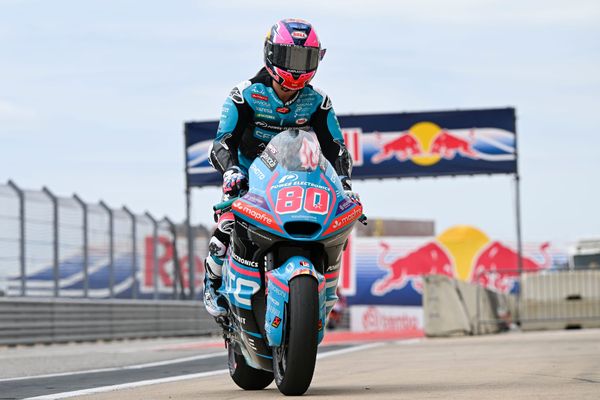
MotoGP's chief talent whisperer's latest success story
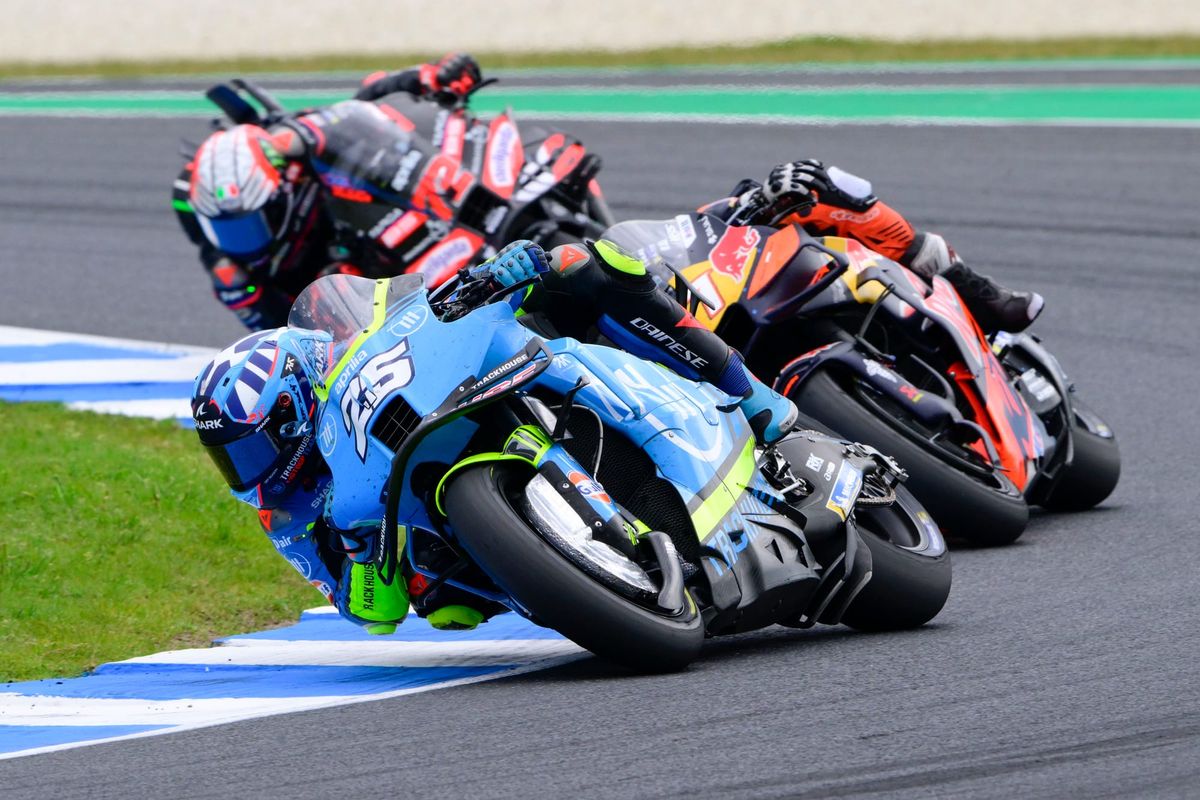
Raul Fernandez enters the 2026 MotoGP season as its fifth-youngest rider, but his time in the premier class so far has already fitted in enough ups and downs for a career two or three times as long.
This is a natural byproduct of the ever-growing calendar - and the physical wear and tear the modern rider is subjected to and is able to withstand thanks to modern medicine - but it is also something inherent to Fernandez.
He was shaky as a sulky Tech3 KTM rookie not particularly able to - and clearly not particularly interested to - assert himself over team-mate Remy Gardner. He never brought Razlan Razali's RNF team the youthful star power it had hoped for in aggressively courting him. And as he floundered in the early races of a two-year Trackhouse contract, things looked untenable.
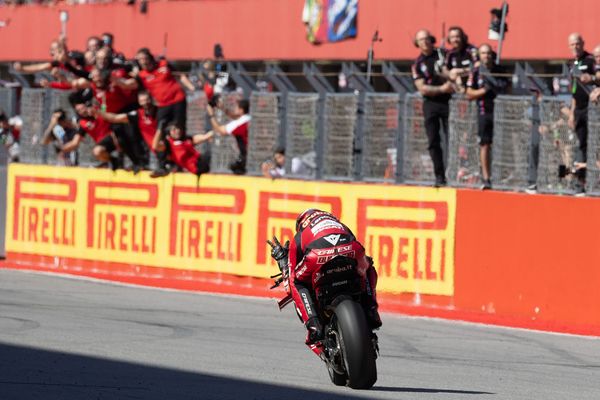
But the thing with being statistically the greatest Moto2 rookie ever by a huge margin is, it doesn't half-buy you a long leash. And Fernandez's has so far culminated in his best stretch of form as a MotoGP rider in the second half of the 2025 season, including the extremely controlled and professional win in the Australian Grand Prix at Phillip Island, coming at attempt number 76.
Longest wait for first 500cc/MotoGP win (number of starts)
1 Aleix Espargaro 200
2 Danilo Petrucci 124
3 Johann Zarco 120
4 Cal Crutchlow 98
5 Jack Findlay 94
6 Alex Marquez 94
7 Raul Fernandez 76
8 Sete Gibernau 72
9 Andrea Iannone 61
=10 Alex Barros 44
=10 Marco Melandri 44
Seventy-six starts is a long wait. The good news is, every rider who's waited longer went on to win multiple races.
And unlike many of those guys, Fernandez's capacity to win a MotoGP race on pure speed was never truly in question, even amid the bad patches. His talent has "never been, I think, in doubt, all the paddock knows how talented he is", according Trackhouse team boss Davide Brivio.
Brivio is a known MotoGP young-rider whisperer. His hat-trick of successes at Suzuki of turning young riders into superstars on a short timeline - Maverick Vinales, Alex Rins, Joan Mir - is something of a calling card. And while Fernandez isn't yet 'mission accomplished' by any stretch of the imagination, it's clear he is tangibly better now, and he himself has made it clear Brivio's influence has been paramount to this process.
Unlocking Fernandez
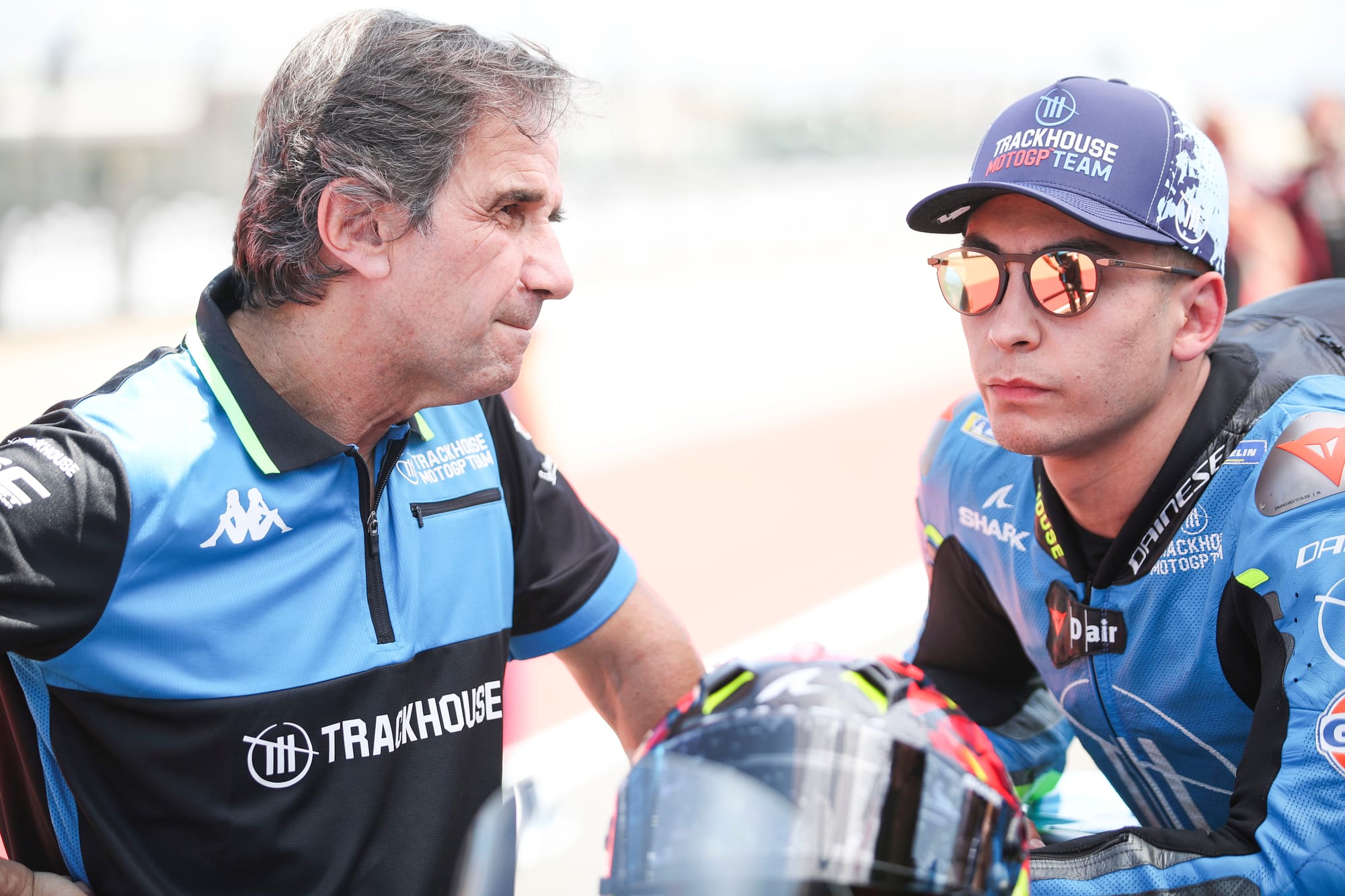
But what has exactly has been done? How did Fernandez go from a near-write-off being dominated by a rookie team-mate, Ai Ogura, at the start of the season - at which point Trackhouse would have had every reason to study every nook and cranny of his two-year contract and try to find a way out for 2026 - to an increasingly capable number two within a formidable manufacturer roster.
"Beginning of the season, let's not forget that also we had a difficult start because of the injury, he completely missed the Sepang test, came back in the Thailand test unfit; not unfit, but not 100%," Brivio said.
"And then the first races were difficult. In the meantime, Ai had a brilliant start, so I think also that maybe didn't help, from the other rider's perspective."
The pre-season injury - metacarpal and toe fractures after just 25 laps of testing - continued a trend of Fernandez getting hurt at particularly inopportune times. He himself then regretted rushing back to the aforementioned Thailand test, which he said only left him and his crew confused and spiralling until in-season testing gave them the opportunity to figure out the bike.
Things were really, really bleak before that: Ogura was hammering him. While it is no scientific metric, before the post-race test at Jerez, Fernandez's average position in our weekend-by-weekend rider rankings was 20.2. For the rest of the season, it was 9.4.
"Starting from Le Mans, he finished P7, starting to be a certain number of races in the row in the top 10, and he built up the confidence," said Brivio.
"So, the speed and the talent have always been there. But it's a matter of having confidence, keep working, being ready on Friday morning to be in Q2. But when the results started coming better, also his confidence improved, until of course the sprint podium in Indonesia and the win in Australia.
"In the meantime, Aprilia has also improved, because it became a better bike in the second half of the season, and this of course helped.
"It's a matter of confidence, also physical preparation I think - he has improved his physical preparation in the winter. But then the injury changed the plan a little bit for the beginning of the season.
"When you know you have a talented rider, you have to try to find out what's wrong, you know? If it's somebody that will never be fast, then it's more complicated!"
The physical preparation side of things was one Brivio brought up multiple times. It was always a jarring part of the Fernandez story - he's one of the few current riders who had been followed around by a subplot of 'is he just not strong enough?'. And this went beyond well-documented arm-pump issues.
"Last year, I think, we found out that probably by the end of the race he could be stronger. Physically," said Brivio.
"There was the surgery he had on the arm, then probably his body was not in a perfect condition. It's kind of, let's say, not a reset but checking the situation and making a physical preparation that works, let's say, appropriately for MotoGP."
If it sounds like low-hanging fruit - yeah, same here. And, in truth, nothing of what Brivio revealed of coaxing out a better Raul Fernandez sounds particularly complicated or revolutionary.
"There's not an exact science. You think that there is a talent, there is potential, there is a fast rider. Then the mindset plays an important role," said Brivio.
"In terms of being confident - I think Raul came from a brilliant Moto2 season, and maybe - but that's my opinion - that was a problem. Because coming from that season, almost winning the championship, eight wins, whatever, then moving to MotoGP, probably you would think, 'OK, now I go to MotoGP and do the same'.
"And when he faced difficulties, for whatever reason - the bike, the fact of being a rookie, many things to understand - whatever the reason is, facing difficulties made him lose confidence, I think, and got him more under pressure to deliver.
"I wasn't there but I can imagine - 'why can't I win, why is it so difficult?' and whatever.
"And I remember also last year at the beginning, when I first joined the team, he was like saying that he needs to win, he's a rider that has to win, he has to be in a top position, why is he struggling, so...then there was a process to slowly, little by little, build up the confidence to make the step.
"If you want to win the race, you have to start by being in the top 10. If you want to score a podium, you have to start by being in the top five. It's progress you have to make - and I think he went through this now."
Of course, part of the puzzle is that, as Brivio mentioned, there is a machinery angle. The Aprilia RS-GP that started the season was all right; the Aprilia RS-GP that ended the season was a world-beater.
It's often easy to see the narrative of personal growth in a rider when that rider has been given a major machinery upgrade (see also, Alex Marquez). And Fernandez's Trackhouse team got good support from Aprilia, according to Brivio.
"Now [the bikes are] very similar. As is normal, maybe it took a little bit of time sometimes to get updated to the same [same spec] - maybe Marco Bezzecchi had everything first. But I would say now by the end of the season they are identical, they are same, except maybe some small details that I don't know.
"But we have no reason to think they are different, at least in the most important parts - the chassis, the aerodynamic, the engine, these important parts are for sure same equipment.
"Let's say, as soon as they had it available, they updated us. Maybe arriving a race later, two races later, three races later, whatever, but they arrived. We're happy with Aprilia."
Fernandez was still not the strongest Aprilia rider by the season's end. But while it's difficult to compartmentalise his own progress and that of the bike, it is undeniable that he asserted himself over Ogura to end the season. And, though it's anecdotal, the feeling is strong that the Raul Fernandez of old would not have seen out the Phillip Island win in the immaculately professional way that he did.
It means he probably shouldn't have to wait another 70 rounds for another win - but you can never guarantee anything. And Fernandez didn't arrive with the expectation of sniping an occasional win.
The next step is beating Bezzecchi, who carried a penalty in that Phillip Island race he likely would have won otherwise, and a fit Jorge Martin on merit over a full weekend. Or stringing together a bunch of consecutive weekends of 'right in the mix' production compared to the works RS-GP riders.
That could be beyond Fernandez, yes. Before Brivio it definitely looked that way. Now, though, the sky is the limit again.