The toll of an improbably good MotoGP debut
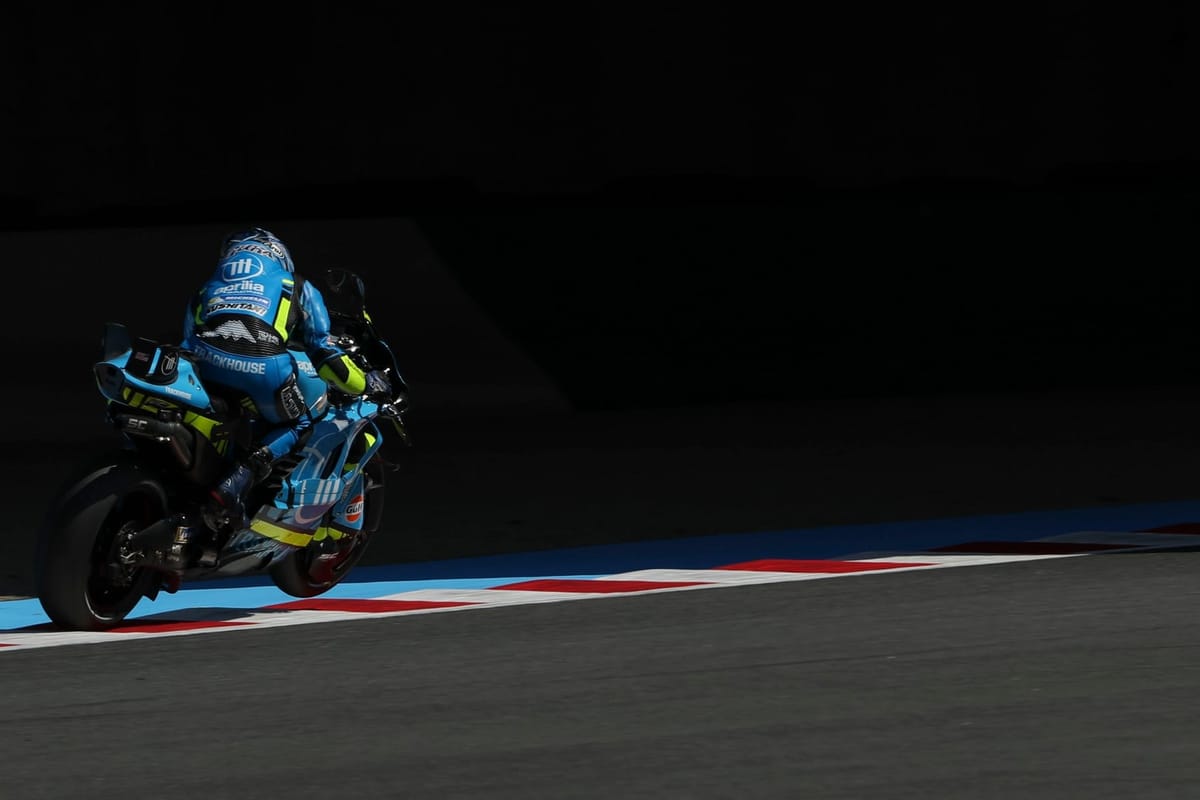
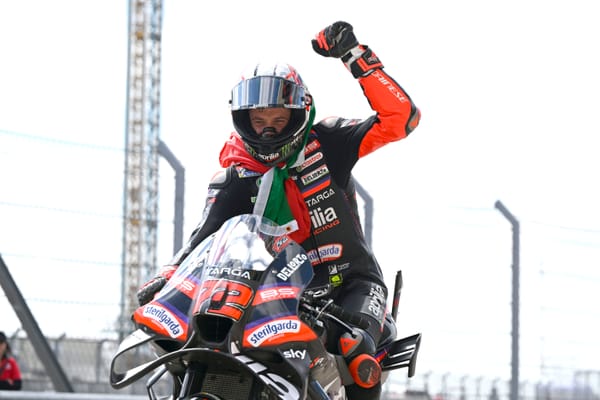
Ai Ogura's first weekends in MotoGP represented one of the best premier-class debuts in the championship's modern era. But his 2025 as a whole wasn't even that year's best rookie season.
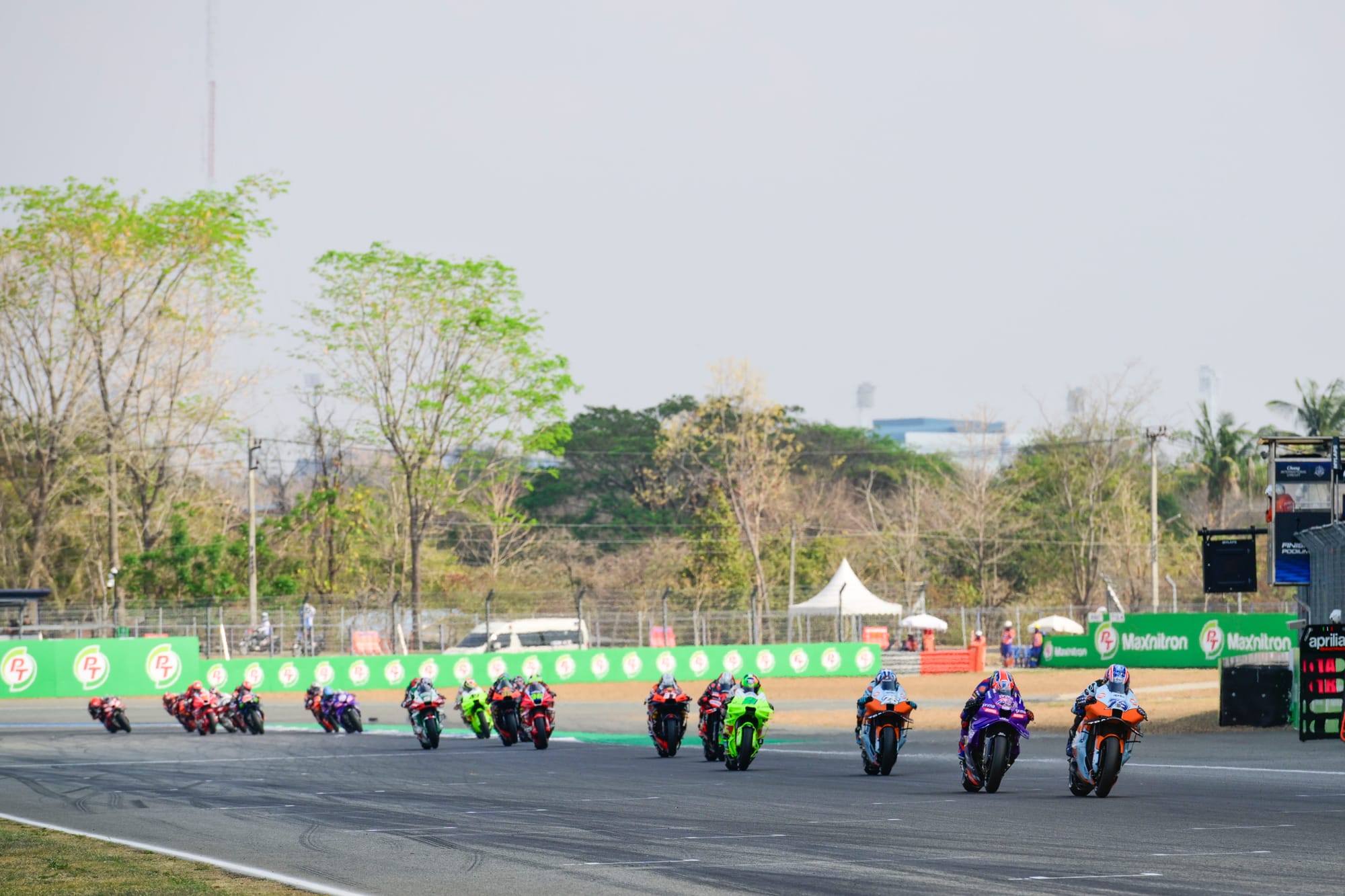
A rookie is best-judged on their peaks, so the immediate impact of Ogura's Thai Grand Prix should have served as a reassurance safety net - yet for Ogura, once the crashes and problems and disappointments came, it was apparently "the opposite".
"No," he insisted late in the season. "That scared me.
"My best result in my first race, I was like, 'Ah, that was something special and the races after is my real potential' and I started to think, like, 'Hmmm'.
"During this season at one point I thought maybe I'm not enough."
Ogura had a readily apparent edge over team-mate Raul Fernandez, coming off a compromised pre-season, in not just Thailand but really the first quarter of a season.
Across the opening five rounds he outpaced the other Trackhouse rider in every qualifying, sprint and grand prix - but by the end of the season Fernandez was ahead in every relevant metric, and well ahead on points.
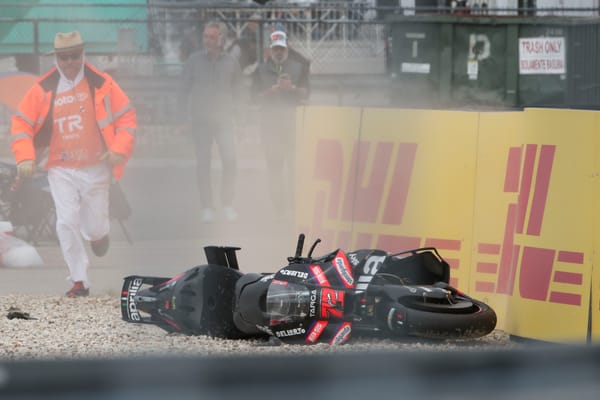
By and large it appeared to be a fitness-and-confidence thing. Ogura had his knocked by a nasty crash, resulting in a tibia fracture, in practice at Silverstone. A hand injury at Misano then ruled him out of another couple of grands prix. In the interim, there were nasty falls at Assen and Brno.
Combined, they seemed to put the fear of MotoGP into him, though Ogura always insisted he had known the premier class would bite sooner than later.
"To be honest, nothing surprised me. I always think about the worst scenario possible! So nothing surprised me."
And the erratic nature of his campaign also did little to shake the faith of team boss Davide Brivio, who from his Suzuki days knows better than anyone to prioritise valuing those rookie-year peaks over worrying about the troughs, and the incredible scope of improvement that can then follow in year two (see also: Vinales, Maverick; Rins, Alex; Mir, Joan).
"Ai, apart from the injury that unfortunately, let's say, disturbed our plans - we are happy about his season," Brivio told The Race.
"Because there were so many things to learn, to understand. Not only technical, not only plenty of buttons and things that there are on a MotoGP bike - you can think about activating the device out of the corner, changing maps, whatever, many things...but also the approach of the MotoGP [rider].
"For instance, you have to be ready from Friday morning, because if you don't go in Q2 already the weekend is in trouble. And also, being very sensitive, being precise on comments, technical meetings where you have to explain what's happening - things that are, I would say, different from his experience in Moto2.
"And everybody has their own time. He went through all this process and I think he learned a lot. And I'm sure that next year, when he will come back for the first race, he will have a different mindset than the beginning of the season. Much more aware of what he can expect, what needs to be done.
"I think it's been a positive - again, apart from the injury, which is not positive - but it has been overall a positive season for him, as a learning season, making experience, whatever. From that point of view, we did what we expected to do."
So where is it that Ogura needs to step up in his year two?
The crashing wasn't necessarily excessive - maybe the 'big-crashing' was. But Ogura wasn't your archetypical unreliable rookie. He could generally be trusted in battle and was not phased by the requirements of the packed weekend, usually saving his best for last, ie Sunday. A 44-race campaign (though he ended up doing fewer) seemed "massive" coming into the year, but proved "OK to manage".
But accessing the pace that's in there as early as MotoGP now requires riders to - ie on Friday or at the very least Saturday morning - proved a challenge throughout. Ogura said in the second-to-last round that he had tried to change method, rushing and being willing to overshoot corners and then dial back instead of building up braking references gradually - but in the finale he started off very strongly without doing that.
What does he himself see as the priority?
"For the riding part, basically everywhere, as you know," he answered in a typically Ogura fashion - though straight-braking is the primary area. "That's the main one, but basically everywhere."
"From the [weekend] management side, I need to be better on the time attack. I will work for that during the winter tests, I think.
"You push on the bike, it doesn't mean you are fast. So I really need to understand this point. Where it's 'over', where to step off. I really need to know how to approach the time attack. That's the thing."
You certainly can't guarantee anything when projecting how a young rider will develop - but Ogura has fronted up to his early MotoGP weaknesses all year, kept a realistic outlook on things, and has a track record of overcoming setbacks. A broken wrist before the start of 2023 threatened his status as a premier-class prospect - and a year later he was a championship favourite with a MotoGP contract.
He remains a very good bet for MotoGP success.