What 'organ crushing' Gen4 Formula E car feels like to drive
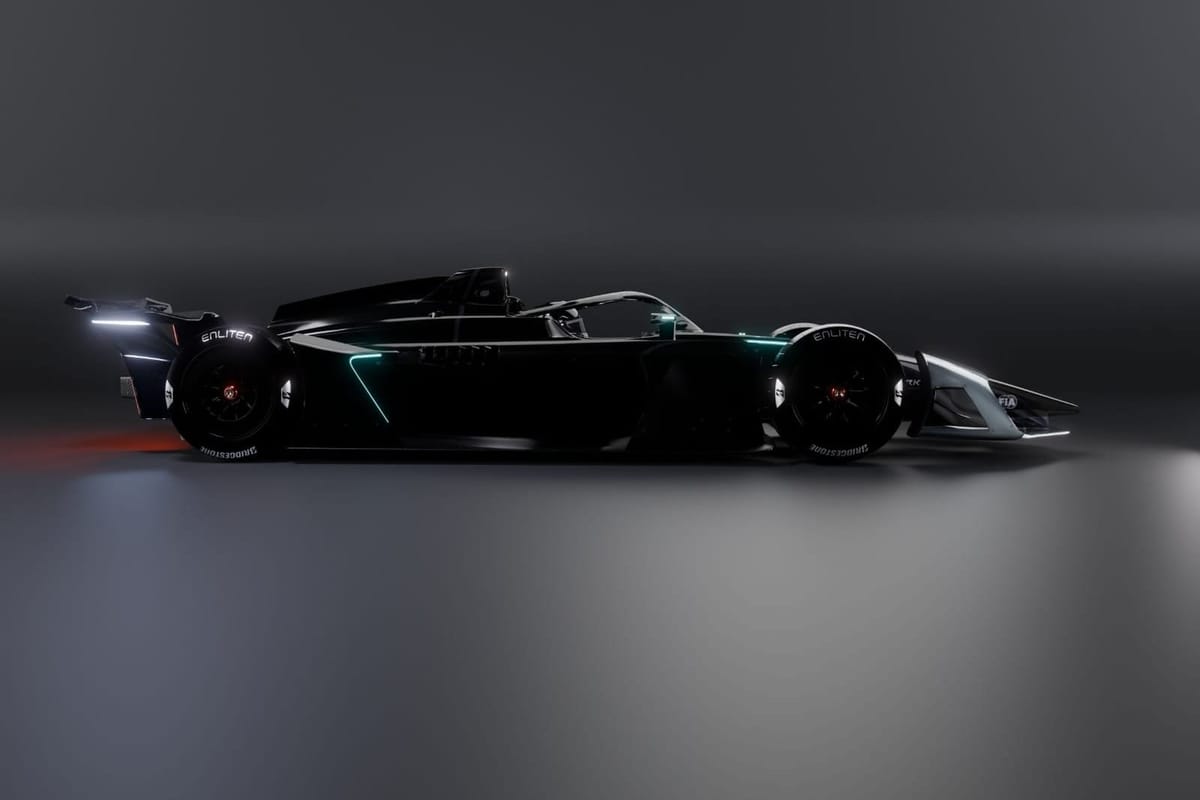
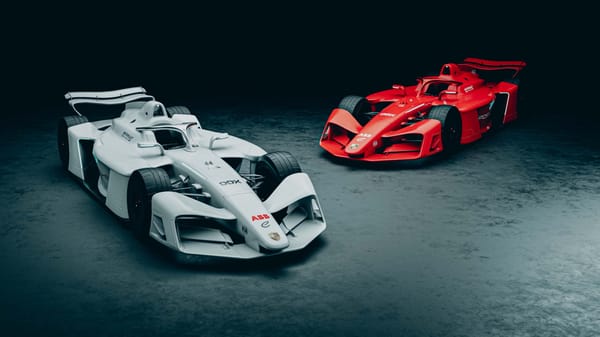
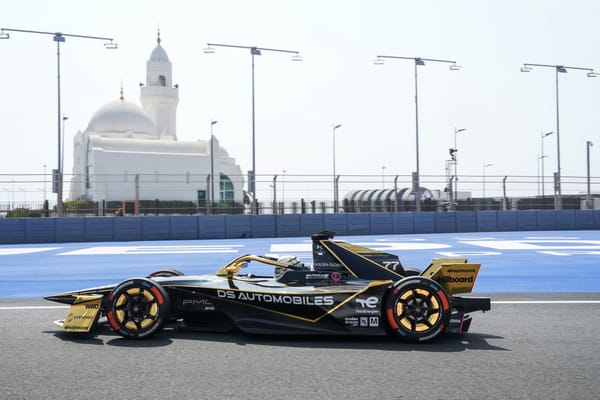
Formula E’s jump from Gen3 to Gen4 spec will be by far its largest since the series was born in 2014. Conservative estimates by some engineers who have recently experienced the car, range from a likely 8-10 seconds faster over a lap.
This gets into game-changer territory for Gen4. So far the only independent driver to sample it and the only one to have accrued serious mileage is James Rossiter. An exponent of all-electric racing, Rossiter has driven both the Gen2 and Gen3 cars, as well as occupying roles as a sporting manager (DS Techeetah) and a team principal (Maserati MSG).
He began testing the mule variation of the car in April of this year before it developed into a pukka test car throughout the summer and autumn. By last month the manufacturers had built up their own test cars and completed several days at Monteblanco in Spain.
Rossiter will continue his involvement by becoming a sporting advisor and Gen4 ambassador for Formula E. He’s also managing Cupra Kiro driver Dan Ticktum. He’s driven a firebrand and now he’s looking after one!
He’s previously been muzzled a bit regarding his experience of the Gen4 car as it went through its secret reliability and development testing. A massive amount of project management has taken place between Spark, the coordinators of the technical side of the project, the battery provider (Podium Advanced Technologies), the tyre supplier (Bridgestone), the spec FPK provider (Marelli), and of course the FIA, who have designed the entire concept.
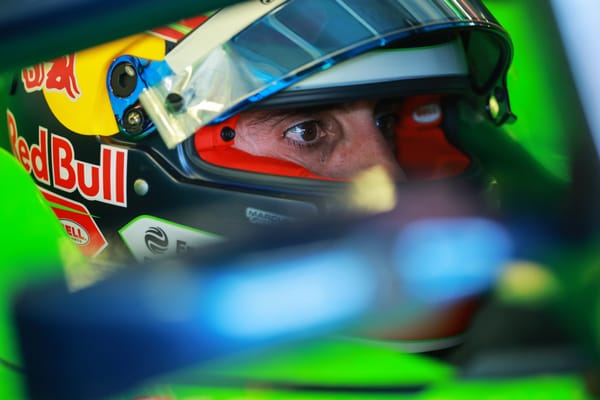
The Race has been the first to get an insight as to what the Gen4 car actually feels like to drive, and Rossiter, a considered and not often hyperbolic character, is effusive in his delight at the car.
“Initially, the feeling was 'this really feels really like a racing car', chassis-wise, mechanically, the way that you as a driver interact with the car, it felt very nice on that first run out,” says Rossiter.
“We were running it in, let's say, the lower power mode as we were getting used to it. It was on quite a small track in the north of France. Then later on that day, we unleashed 600 kilowatts and then I was wide awake. Then it really captured my attention.
“It’s quite difficult to describe. It's a very unique feeling. When you hit the accelerator and you get this feeling, all your internal organs just get crushed into the back of the seat and into the back of your chest. And it never stops. It just keeps going and going and going.
“Because you don't have any gear shifts or anything you're just under constant G-force from the moment you decide to accelerate, which with a four-wheel drive system and you're pointed roughly in the right direction, you can get on it.
It’s fair to say that the Gen4 project has gone much smoother than its predecessor, the Gen3 programme. And frankly, that doesn’t say a great deal considering the early days of that car’s development bordered on the shambolic.
As well as the upgrade in the power, dimensions and weight, there is also the experience, which Rossiter struggles to stop talking about.
“It gives you such a unique feeling. It's the first time ever in a single seater where I've had that feeling of just being crushed into the back of the seat,” he reiterates.
“It is just this relentless acceleration all the way down to the moment where you decide to brake. It was something that I hadn't experienced since I'd driven in Formula 1 [via tests with BAR Honda, Super Aguri and Force India].”
This is clearly a car that leaves a special imprint upon the driver, and one that Rossiter’s racing contemporaries Benoit Treluyer (Nissan) and Andre Lotterer (Stellantis) are also known to have shared at the Monteblanco test last month.
That says a lot considering that both were on the fulcrum of the remarkable LMP1 Hybrid era of sportscar racing when no-holds-barred factory spending on what were essentially spaceships on the ground wowed the world for a fleeting period of time.
The key engineering challenge
Maybe challenge isn’t the right word, perhaps opportunity and exploitation of the Gen4 package is what will really prove to be a winner with teams running the car.
One of the most fun areas for engineers to get their teeth into will be the active differential on the car and how that can be explored with the now always ‘on’ four-wheel drive aspects of the car.
Rossiter agrees, saying that the car “is incredibly exciting as a driver to drive it, but as an engineer, I think there’s going to be such a huge demand on their expertise".
That will, according to Rossiter, come as they try to exploit all the little areas, find all the little details for advantages.
“The opportunity to go into details will come with how the front powertrain operates, how it works, let's say with the front differential, the way that will interact with how you turn, how you have the anti-lock braking and traction control, and all these different systems. They all weave their way together.
“It's going to really open up a huge amount of development, a huge amount of innovation, and it gives a great possibility for all of the OEMs to have their engineers trained up to the highest level, but also to bring that technology directly from the racetrack to their road cars, because all the software you can implement between race and road.”
That final point is a crucial one because the FIA are adamant that Formula E remains relevant to forecasts of electric vehicles expanding more into everyday use.
Presently, by 2030, indications suggest the global electric vehicle (EV) fleet could reach around 250 million (all modes, excluding 2/3 wheelers) or even quadruple from today (2025), with some projections placing EVs at 15% of all vehicles on the road, driven by strong growth in China and Europe and reaching over 40% of global car sales, though specific numbers vary by scenario.
That means Formula E will play a part in evidencing innovation as well as entertainment, something which its founding fathers, Alejandro Agag and Jean Todt, put in place over a decade ago.