What doomed Tsunoda at Red Bull
Yuki Tsunoda's Red Bull Formula 1 career will end after just 22 grands prix, having never really recovered from a mistake five races in.
Given how much of a disappointment the season has generally been, as Tsunoda has been outscored 360-30 by Max Verstappen in their time as team-mates (so far), it's easy to forget that his start at Red Bull was actually pretty reasonable.
He was immediately more competitive than Liam Lawson's horrible first two events, and more or less at the level of Sergio Perez in the back end of last year. Tsunoda scored some points early, got into Q3 three times in his first four weekends, and was on an encouraging initial trajectory.
Our verdict on Red Bull's 2026 F1 line-up + Tsunoda's exit
Though he had a clear problem getting the most out of the car as qualifying progressed and his Q3 deficits were anomalously big, his real margin to Verstappen was around three tenths of a second. It was not a level that would have been good enough if sustained for the rest of the year, but it was a foundation to work from.
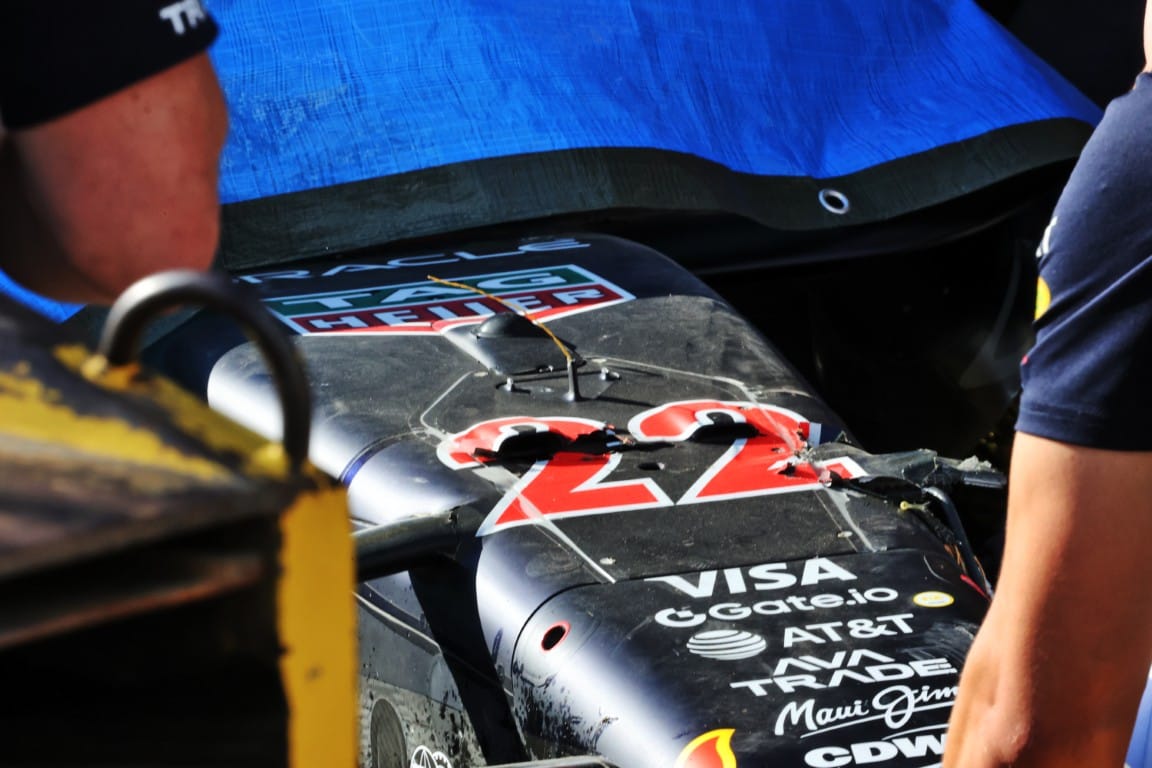
Unfortunately, a crash at Imola in May was a massive setback that Tsunoda still regrets now at the end of the season.
That crash killed the early momentum that Tsunoda had built, and set back his confidence. It was a silly error as Red Bull had changed his car specification and set-up for qualifying to give him the latest floor and bodywork - but Tsunoda attacked his first Q1 lap as though the car was the same.
When he turned into the second chicane, the front was more positive than expected, the rear immediately broke loose, and he crashed dramatically. It was unnecessary, avoidable, and bad for Tsunoda's confidence - for several races after that, Tsunoda seemed to be second-guessing his driving, trying to match Verstappen's style as he became convinced he'd be able to match or beat Max if he did, and was unable to take the car close to the limit.
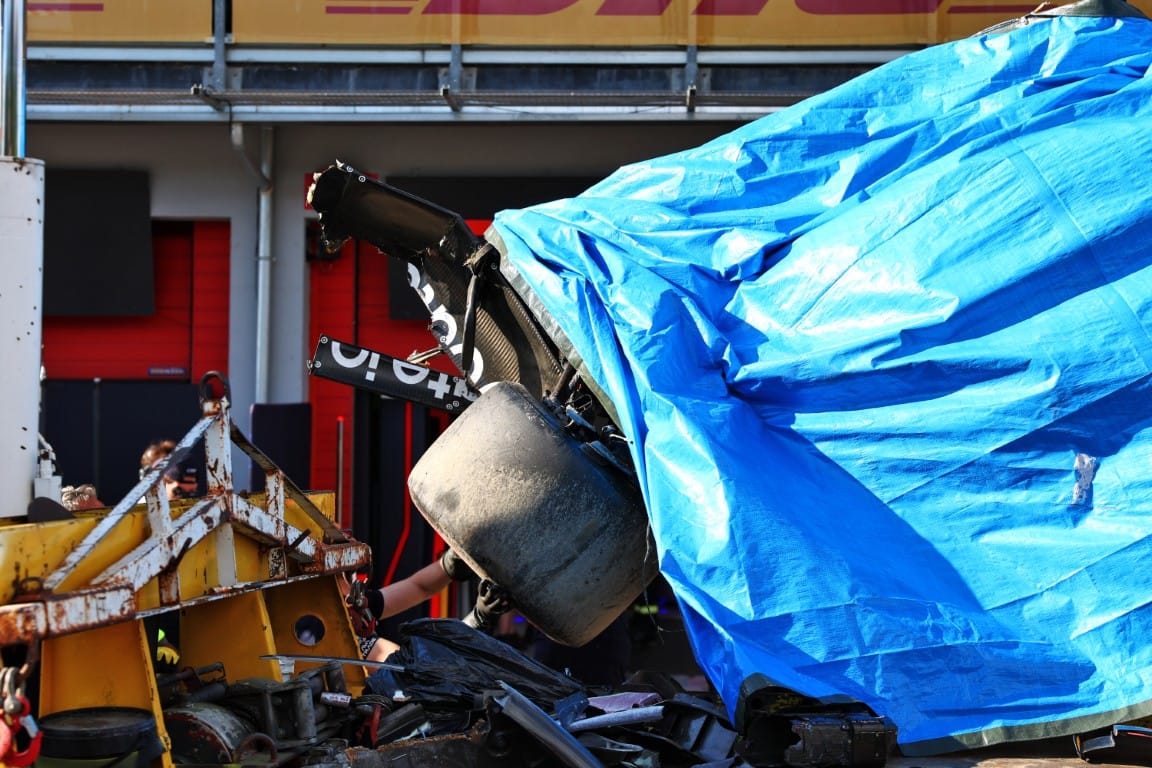
The drop-off over the next six grands prix, a spell in which Tsunoda also fell behind on car specification because of his crash, was stark. From an average grid position of 10.5 and three Q3 appearances in four races, Tsunoda didn't start in the top 10 for the next six. His average grid position fell to 16.3 - unsurprising given he had three consecutive Q1 exits - and after a fortunate recovery to scoring a point at Imola due to the safety car interruption in that race, Tsunoda had a best finish of 12th.
The supply of the new parts that were on the car Tsunoda crashed was scarce. So the crash began the sequence of him constantly lagging behind Verstappen on more than one upgrade. It made Red Bull hesitant to give him upgrades sooner, and so there was an imbalance in what each car was capable of and how they'd respond to certain set-up changes.
It was just before the summer break that, with a change of leadership in the team and Laurent Mekies assuming control, a conscious decision was made to give Tsunoda the latest upgrades as soon as they were available without compromising spares for Verstappen. That sparked an upturn in form and he would have scored points immediately at Spa but for Red Bull's terrible communication causing his switch from intermediates to slicks to be delayed by a costly lap.
So, it's not an exaggeration to say the Imola crash set back Tsunoda at least two months in terms of showing more of what he was capable of. It is the single critical mistake that changed the trajectory of what followed.
Tsunoda never got back to the consistency of that early set of results, even if the occasional peak was higher. And if you were to change one thing in Tsunoda's control to rewrite his Red Bull story, it would be that.
In that sense, the crash was a key turning point. But it did not condemn Tsunoda to a guaranteed failure - there was a lot of time to rectify the situation.
The recovery that didn't kick on
Tsunoda never had the ideal preparation for his Red Bull Racing chance given just three races into 2025 he was suddenly given the seat he had been rejected for just a couple of months prior.
He had to rebound from the disappointment of being overlooked to replace Perez for 2025 and watching Lawson line up alongside Verstappen instead. But Tsunoda did rebound. He was fitter, in a good place mentally, and started the season very strongly in the second team - admittedly alongside a rookie in Isack Hadjar (who will now succeed him for 2026).
When he endured his mid-season suffering, Tsunoda clung to the positivity of his early weekends. And when he finally got closer on car specification again there was a hint of this being the moment Tsunoda's season would properly recover. Instead it was a false dawn.
A run of races after getting equal car specification in Belgium through to then getting the crucial front wing and floor update a race later than Verstappen in Azerbaijan included three Q3 appearances in five events and Tsunoda's best results of the season, qualifying and finishing sixth in Baku. In that run, Tsunoda compared well to Verstappen in Q1 and Q2 several times but yet again could not replicate it when it mattered in Q3.
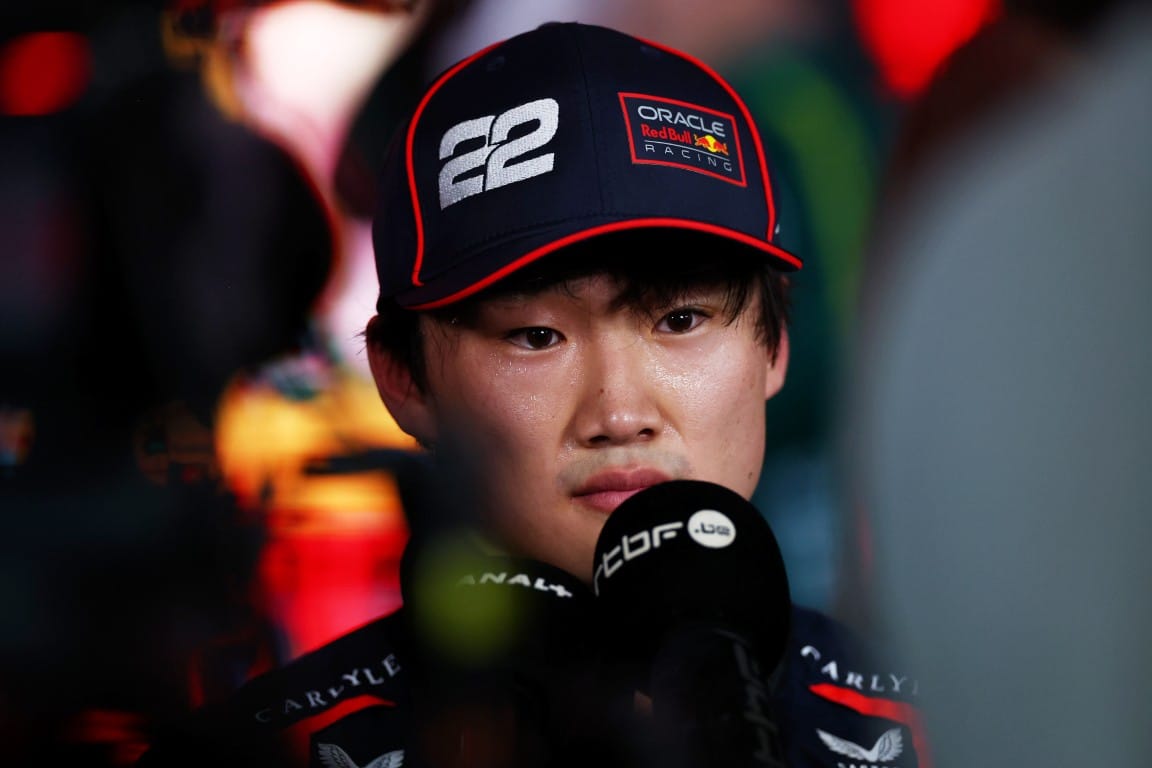
So there was always a limit. And since then, frustratingly, Tsunoda has failed to put two decent weekends together in a row over the rest of the year. His points return has got better, but not stunning, and Verstappen's own upturn in results shows that Red Bull became a much more potent force.
Occasionally he has looked like the Verstappen team-mate Red Bull needs him to be. But there's a limit to the positivity. Tsunoda has only beaten Verstappen in one single qualifying session all year, for the sprint in Qatar, and never looked like beating him over a grand prix weekend. So he has fallen short of Perez's absolute peak, no question, and never consistently pieced together his best moments.
Qatar ended up a great case in point: right where Red Bull needed him to be in the sprint, out in Q1 in main qualifying. Yes, the gap to Verstappen was decent, within three tenths, but not small enough.
It is also worth noting that the moments where Tsunoda has been almost as fast as Verstappen are what he and his camp have clung onto but too often he looked at his best when Red Bull was having a trickier weekend or the field was more condensed anyway.
When the car was more competitive and the gaps opened up, Verstappen took a big step, and Tsunoda couldn’t go with him.
The season he could have had
It's hard to pinpoint exactly what Tsunoda never quite got on top of, because his challenges would shift weekend to weekend. Sometimes he was limited by all-round grip, sometimes it was tyre management in races, sometimes he couldn't attack because he felt that the rear was too unstable - the classic Red Bull problem. Sometimes he was missing an upgrade.
Other times, the team made a crucial mistake, like botching his radio communication in Belgium, or screwing up his tyre pressures in Las Vegas qualifying. It's definitely the case that some of Tsunoda's better moments were undermined by Red Bull itself.
But overall Tsunoda never felt that Red Bull wasn't doing enough to help him. And there's not really much of an indication that Tsunoda had a clear idea of what he needed but didn't have, and what could have helped him more.
Plus, sometimes he was actually fine: two or three tenths off Verstappen, and a bit more if there was a car spec difference. Then, the midfield being really tight, he'd have a bad result on paper even though his pace was actually not awful - although in the middle of the season, at the height of his tyre management woes, sometimes the pace was simply terrible.
It's hard to second-guess Red Bull, but surely Tsunoda would have had a chance of staying on had his best been his baseline: always within three tenths of Verstappen, a regular Q3 presence and healthy point scorer, with the ultimate result swinging depending on what the car was capable of.
Tsunoda is very pleased with his recent performances, in which with car specifications being equal he has averaged a 0.24s deficit to Verstappen across Mexico, Brazil and Qatar. The problem is he's been eliminated in Q1 twice in that run - which puts a low ceiling on what can be compared. It also reaffirms the caveat that Tsunoda has looked better when Red Bull's had slightly tougher qualifying sessions and the field spread is more condensed anyway.
But what if that recent deficit of 0.24s represents Tsunoda's peak potential 'average' - and what if we extrapolated it over a whole season? It requires a lot of assumptions and is a very generous reinterpretation but it presents a semi-useful reference for what might have been possible and for what Red Bull's often asked for.
Sometimes, Tsunoda being 0.24s off Verstappen everywhere wouldn't change much. He was within that gap when he got eliminated in Hungary Q1 and Mexico Q2, for example. But the rest of the time it would be transformative - putting Tsunoda in the top six on the grid more often than not.
Take that even further and turn it into similar race results and Tsunoda would score around half the number of points as Verstappen instead of less than 10%. Red Bull would be second in the constructors' championship. The entire season has a different look.
Would it still be good enough? Not necessarily. But surely enough to get a second chance in 2026, a full pre-season, and a crack at a new set of rules.
Unfortunately, it's an extremely hypothetical argument. All it really serves to underline is that Tsunoda's peak did give him a path to keeping his seat. He just kept falling off it.
And there is responsibility on both the team and driver sides for that being the case.