

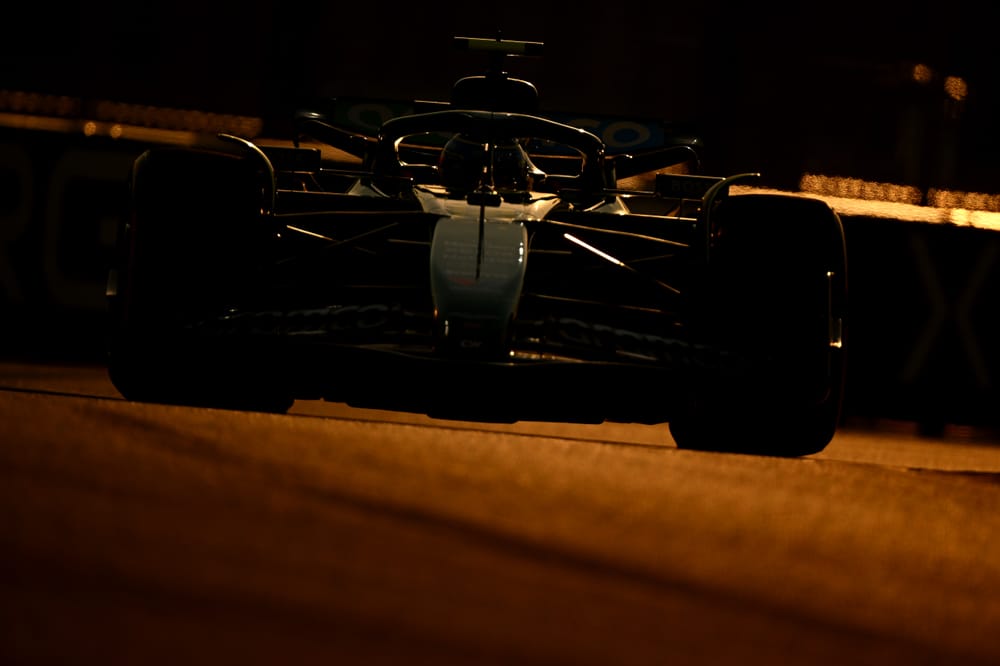
Adrian Newey's would-be Formula 1 superteam has a perfect set of ingredients to thrive in 2026, which probably explains the hype that has filled some of the social media vacuum of the winter in recent weeks.
But there are reasons to be worried that the Aston Martin-Honda era could start in an underwhelming way.
It is a dream set-up on paper for Newey to have free reign to design a car for a major rules overhaul, a car that will be powered by a new works engine from a super successful established manufacturer in Honda, be driven by one of the greatest world champions ever, and supported by partners with seemingly endless resources.
F1 championships aren't won on paper, though.
Beyond just the question of whether Newey as a team principal can turn Aston Martin into one capable of designing a title-winning car, there's also Honda not cottoning on to a key loophole, and being on the back foot in general due to a late start to the project, plus the variable of inexperienced key technical suppliers for a massively underrated element of the new 2026 cars.
Honda is not one of the manufacturers that is set to benefit from exploiting a rule loophole regarding the new 2026 engines. Mercedes and Red Bull Powertrains are understood to be unlocking more performance by achieving a higher compression ratio than rivals think the rules allow.
The compression ratio relates to the volume differences in any engine cylinder between when the piston is at its lowest point and when it is at its highest point. This ratio has been reduced from 18:1 to 16:1 under the new rules and is measured when the engine is not running.
While other manufacturers, including Honda, took that to mean the ratio can never be more than 16:1, the FIA accepts that Mercedes and Red Bull have been fine to interpret it as solely relating to static conditions and ambient temperatures. In other words, when their engines are running, and the metals expand due to the heat that comes with that, the compression ratio grows and in total there's a small but significant power increase to go with that.
So, Honda's missed a trick, and is one of the manufacturers pushing for the FIA to do something about it. But nothing's expected to change for the start of the season and even doing something during the year will be a challenge - so that's a baked-in disadvantage potentially for the whole year.
That means Honda's behind the curve. And additionally to that specific loophole, there are well established question marks over Honda's new engine and Aston Martin's other key partners.
While Honda is the same manufacturer that has gone toe-to-toe with Mercedes as F1's best engine for several years it's not really the same project.
Honda technically withdrew from F1 at the end of 2021, even though its engines continued to be used by Red Bull through to the end of last season.
It was a convoluted and peculiar arrangement that was a consequence of a poorly justified original decision to quit. Honda U-turned on that call in early 2023 when its 2026 project with Aston Martin was announced but the damage had already been done.
From 2022 to 2025, Honda continued to maintain and assemble engines for Red Bull's two F1 teams based off the frozen specification from the title-winning 2021 season. Honda's name disappeared entirely at first, then came back slightly apologetically on the engine itself and with branding on Red Bull's cars.
Behind the scenes, though, Honda's F1 programme had been gutted. Resources were diverted to other R&D projects within Honda as that was the whole point of quitting F1 - which meant when the 2026 programme started in earnest, Honda was starting up again almost from scratch.
The Sakura engine facility that Honda has is raved about by anyone that goes there: even ex-Aston Martin CEO and team principal Andy Cowell, who oversaw Mercedes' initial domination at the beginning of the V6 turbo-hybrid era. And he knows a thing or two about proper engine programmes.
But that same engine facility colossally underachieved in 2015, when Honda made its first hybrid F1 engine, then again in 2017 when it rolled out a brand new design - which nobody needs to remind Aston Martin's lead driver Fernando Alonso about, given his past grievances with Honda from that time.
And Honda can't throw unlimited resources at the 2026 project. There's an engine cost cap now and this Honda arrangement is being run more tightly than the success-at-any-cost project that led to the Red Bull championship wins anyway. With Honda itself more reluctant to spend excessively on F1, it's long been rumoured that the Lawrence Stroll/Aston Martin side is bankrolling development.
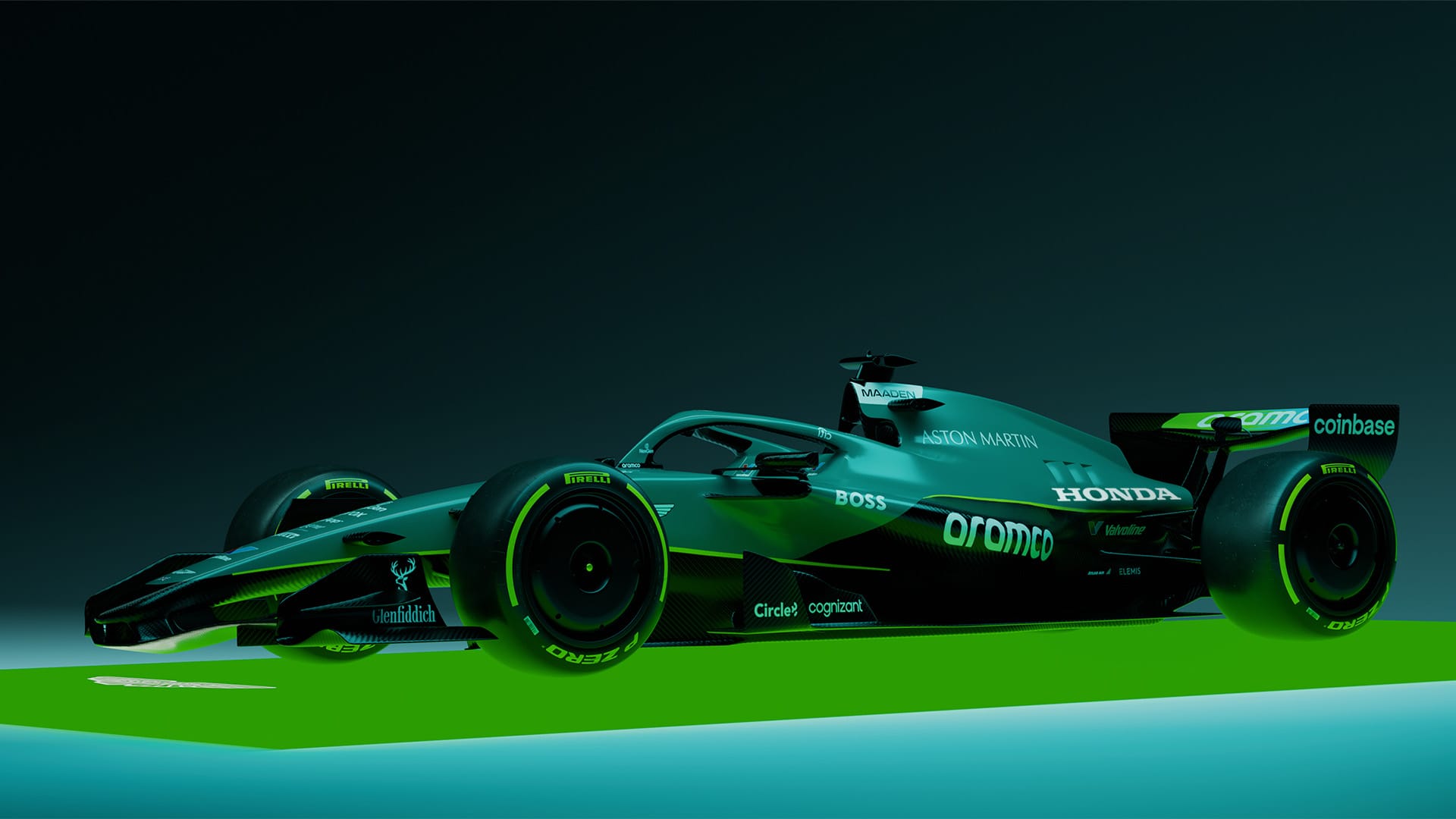
The point is, great technical resources mean nothing without the right leadership, the right investment and the right amount of time to build things up. If Honda's 2026 programme was a proper continuation of its recent success there would be no reason to doubt it, no lag in its development, no risk of it being behind the curve.
But it isn't, and so all of those things are not just a threat: they are Honda's reality.
Various claims have emerged about the 2026 Honda engine including that it is behind on battery technology, with the new designs requiring much greater capacity to cope with the near 50/50 split between combustion and electrical power.
If so, it's a big step back from Honda working wonders to get more from its V6 and its hybrid systems in the previous era. But it tallies with a programme that had its resources significantly reduced in scale, and then gave itself less time than its rivals to get to grips with challenging new technologies. Especially as the new 2026 engines have no MGU-H, the part that recovered wasted heat energy, and that Honda had put massive effort into getting right.
If Aston Martin's car does have an engine deficit, reliability problems, or both in 2025, the blame could quite quickly be put at Honda's door. That's not even necessarily within the team itself. It'll be the automatic assumption outside too.
But there are major unknowns in the equation. Honda is working with two unproven F1 suppliers in Aramco and Valvoline, with Aramco the big factor there as fuel supplier. This will be Aramco's first F1 fuel, although it has worked on the sustainable fuel for F2 and F3 already - useful experience, but not the same thing.
All F1 fuel is custom-made for the engine in question and a close partnership is essential to meet the required standard, maximising the limited technology and chemistry that is available.
It will be a challenge for Aramco to immediately match the pedigree and longevity of rival suppliers such as Petronas for Mercedes, ExxonMobil for Red Bull, Shell for Ferrari and BP for Audi. And being behind on fuel technology would have a tangible performance impact.
No wonder, then, that Cowell has been moved into a different position and is tasked with trying to pull together the various technical elements of this engine project for however long he remains involved.
Cowell's expertise is in managing big technical teams and he has had a lot of visits to Sakura, as we mentioned. Given this Aston Martin project spans multiple locations it makes sense to have someone as focused as possible on trying to achieve a common direction and ensure accountability. There's the team itself and car work going on in the UK, Honda in Japan, and Aramco and Valvoline in multiple locations.
Chassis, engine and gearbox are moving around various places as the development phase goes on and even though the only teams that are really in the same 'facility' as their engine departments are Red Bull Racing and Ferrari, the Aston Martin set-up is the most extreme in its geographical spread and you have to think the least efficient as a result.
That doesn't mean it can't work but Aston Martin surely has the most complicated set of logistics to manage. It's one of many challenges that need to be managed under Newey's leadership, lest Aston Martin's 2026 project become less than the sum of its increasingly expensive parts.
