Williams reveals livery for late 2026 F1 car that's 'most complex' yet
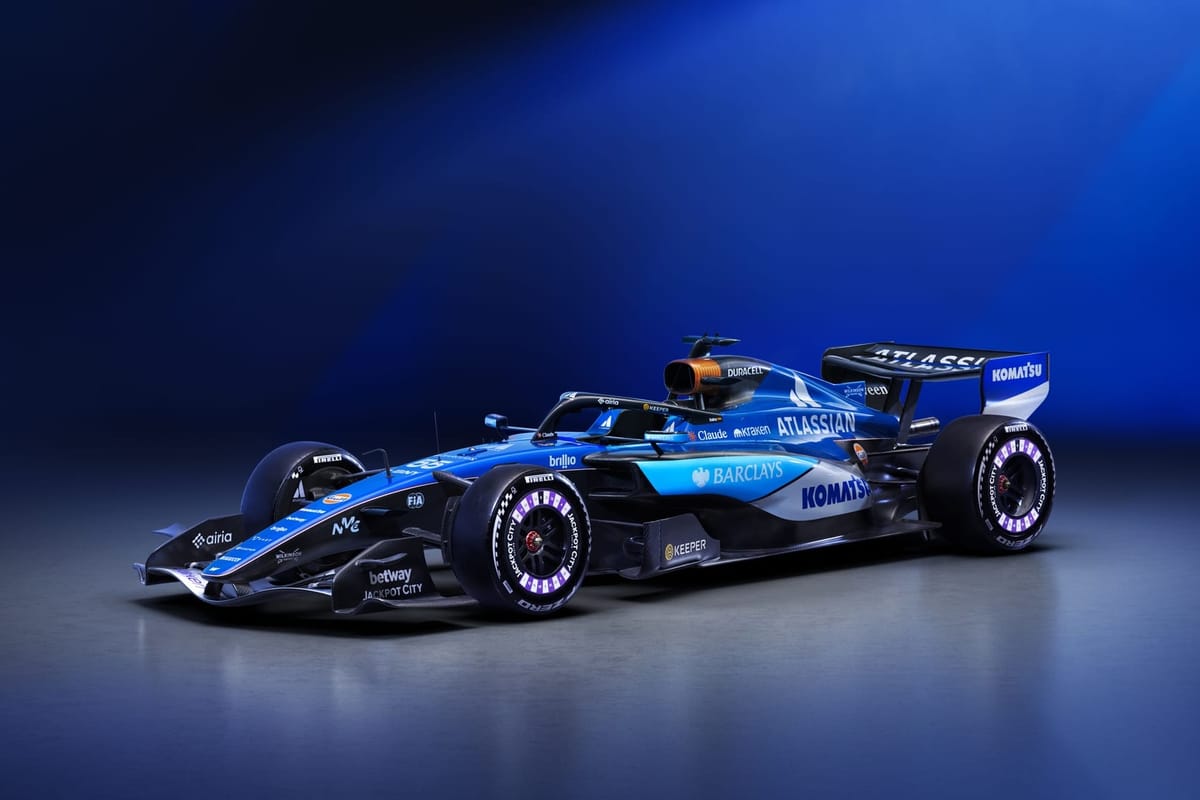
Williams has revealed the livery it will use for its 2026 Formula 1 car, which is the most "complex" and "best" design that team principal James Vowles has seen it produce.
The FW48 itself remains under wraps as Williams missed the Barcelona test last week, when many images of the other 10 teams' cars were shared despite the test itself being closed.
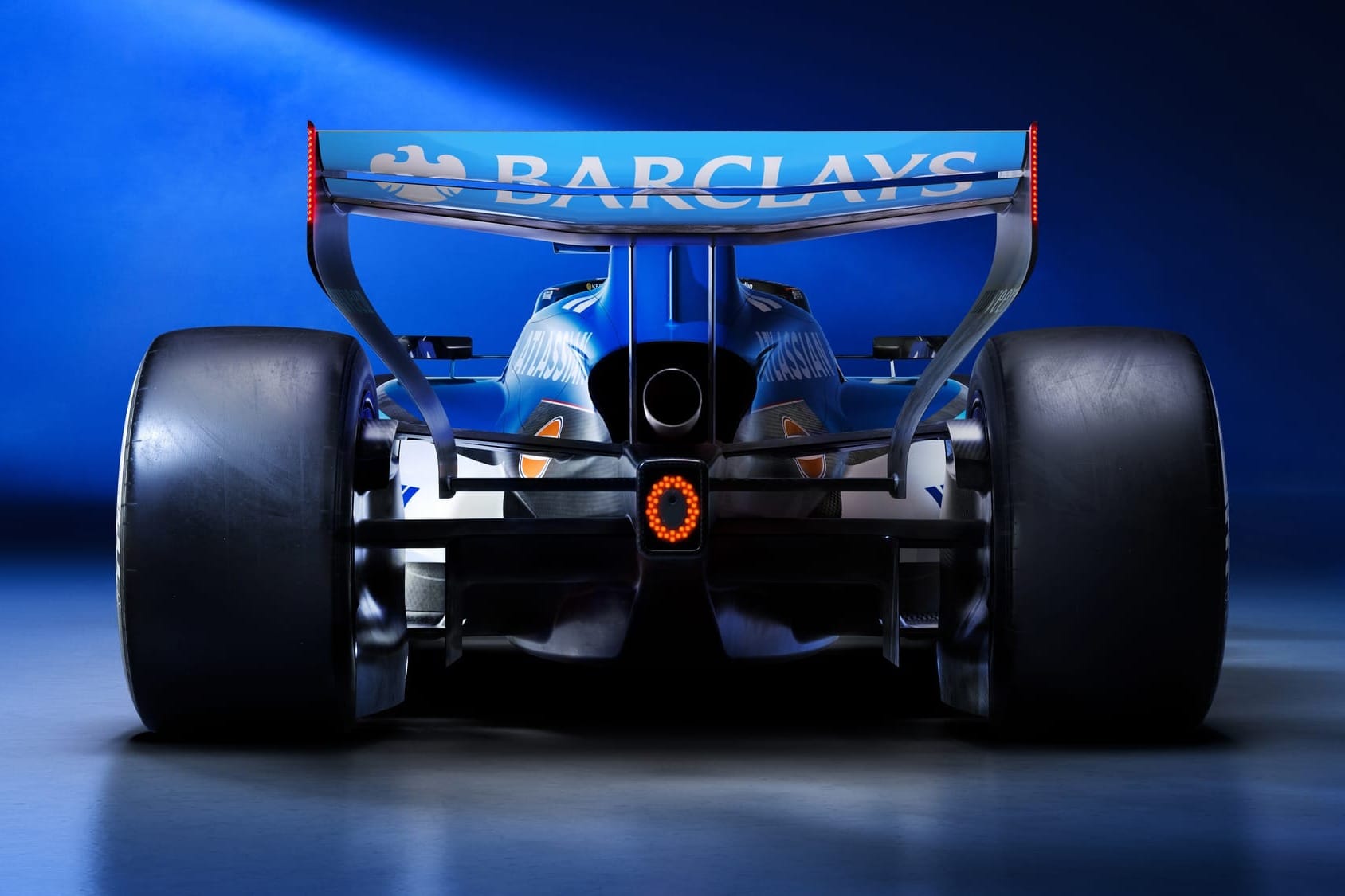
The livery Williams will race with is close to those of previous years, although there is prominent white colouring across the sidepod and rear wing. Both of these elements feature branding from sponsor Komatsu.
The sidepod also carries the cyan blue of Barclays, with which Williams announced a partnership on Tuesday morning. That sponsorship is also visible on the rear wing.
Before the car races, Williams will use a fan-selected design at the two official tests in Bahrain this month. That 'flow state' livery features Williams's navy blue lines on a white background.
Williams has endured delays in the build of its 2026 car and declined to show it as part of a launch event on Tuesday, which was set to be hosted at the team's Grove factory but was switched to being online-only.
The renders of the new livery show a hybrid car design, though, that is more advanced than the basic F1 2026 showcar model but not the FW48 in its final form.
Vowles has said that the delay in getting the car ready is down to the steps Williams is trying to take to become a bigger and more ambitious team.
"Aerodynamically, the car is a lot more complex than anything we've put out before," he said. "And in terms of design, it's a lot more complex than anything we've put out before."
Williams sacrificed development of its 2025 car very early last year to focus on the 2026 design. While that has not translated into a smooth winter and car build, Vowles has insisted the new car's aerodynamic development has been maximised by that decision.
That implies the car that runs in Bahrain and starts the season will feel the full benefit of Williams's development choice last year, it has just been a more troubled winter building the car in reality than anticipated.
On how good the car will be, Vowles said it is "impossible to tell" compared to others, but against Williams's own metrics "realistically, the car itself is the best I have seen us produce here".
"Those are facts I can put down," he said. "But that doesn't indicate where it is on a timing sheet. That's what Bahrain and beyond will tell us."
Williams is behind its 2026 rivals after missing last week's test, where the busiest teams completed hundreds of laps and some racked up more than 2000km over their three days of running.
Vowles said he believes the FW48 will not be compromised longer-term by missing that because there are two three-day tests in Bahrain for it to work through everything required.
He also said the track time in Spain completed by others was still beneficial to Williams in a small way because the Mercedes engine it will use has been thoroughly run-in by others and some of that data will be relevant to Williams itself.
It intends to run the FW48 in a shakedown before the first Bahrain test starts next week and has conducted an intense virtual track test (VTT) programme initiated at Grove in lieu of being at Barcelona for real.
"It is really pretty much most of the physical car," said Vowles. "You don't have wings bolted to it, but you have the chassis, the engine, the gearbox.
"You test your braking systems at the same time, so you have all of the brakes fitted.
"And what you're doing is characterising your cooling system, understanding where that is, running the engine, gearbox under load.
"And what you can do, especially in tandem to those running in Barcelona, is run the same code base that they're running on the power unit and the gearbox to understand the effects, but in a more controlled environment than they are.
"So you still get learning on various systems, energy, ECU as a result of it. It's a valuable learning, but it is not the same as running on track.
"It's just a good use of time."