Why F1's new era has been such a rude awakening for Williams
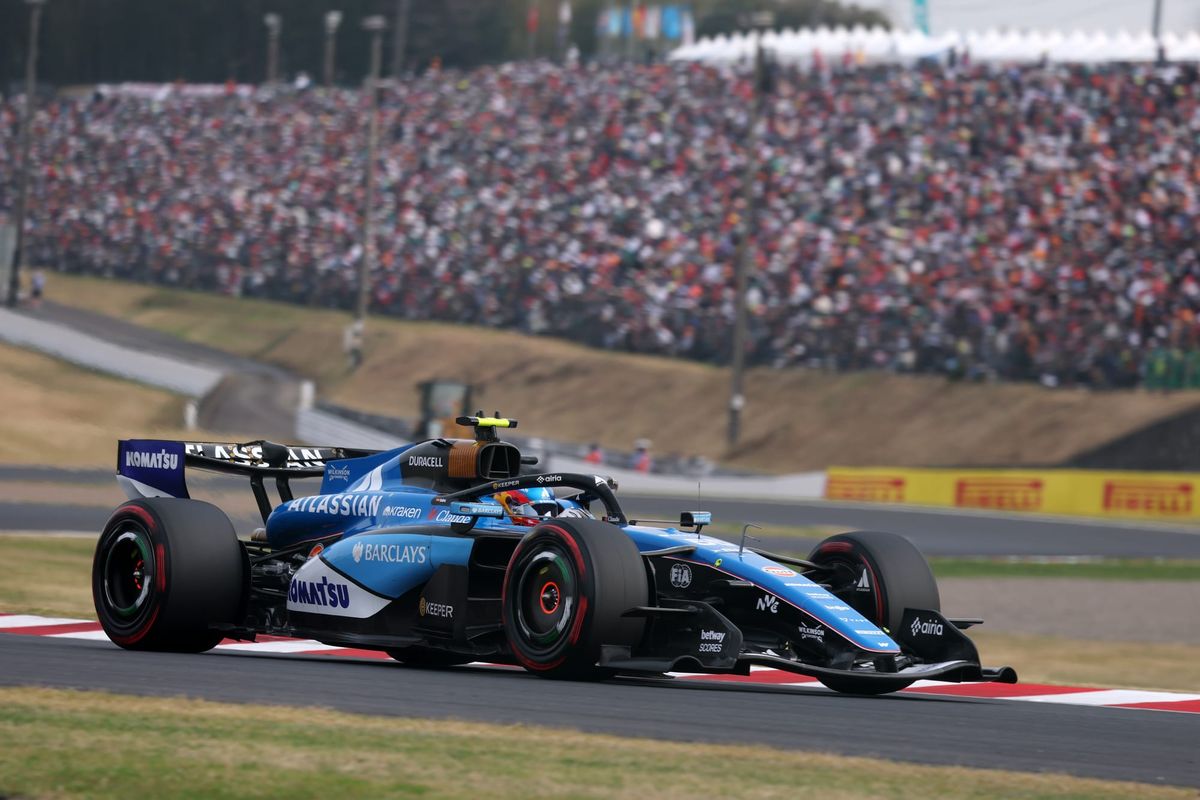
This year was meant to be the start of something significant for Williams, as the biggest regulation change in Formula 1 history presented the perfect opportunity to take a big step forward towards world championship glory in the near future.
Instead, it's been a rude awakening.
Everyone at Williams talked up the importance of 2026 incessantly last year, with good cause. Since being bought by American investment firm Dorilton Capital in August 2020, after the Williams family was forced to sell up after a long, painful, decline, the team has made good progress. Until now.
And according to Carlos Sainz, that shows how far off Williams really is in terms of its capabilities.
"You need a regulation change to realise how far you are from a top team," he said.
Last year was a tremendous success, with Williams taking fifth in the constructors' championship. And, as team principal James Vowles said a year ago, 2025 wasn't even about the "now" - it was about prioritising the long-term. That was what he described as the "only way to win".
This doesn't mean Williams was expecting race wins in 2026; that was always a bridge too far. But it was about taking the next step from its midfield-leading baseline of last year.
That's why Williams poured almost all of its aerodynamic research and development time last year into the 2026 car. The first version of it went into the windtunnel at the start of January 2025.
Therefore, being lumbered with the ninth-fastest car, that's scored just two points in the first three events and is languishing off the back of the midfield, is very far from that masterplan.
So what’s gone so wrong?
The weight issue
The world started to get wind of the trouble Williams was in even before the announcement that it was not ready for the first pre-season test at Barcelona.
Rumours of crash-test problems and being overweight by as much as 30kg - worth nine tenths of a second per lap even by the most conservative estimates - spread like wildfire. And they were at least partly accurate.
Although Williams did eventually pass all the mandatory crash tests, the countermeasures required have instead contributed to the weight problem. But there were also issues with the manufacturing of parts falling behind due to Williams's internal systems being overloaded by a car Vowles described as three times more complicated than anything it had built before.
Williams is trying to catch up with the big teams after years of underinvestment. Its takeover by Dorilton Capital, along with wider financial changes such as a cost cap, the more equitable distribution of prize money, and F1's boom, has finally allowed it to invest.
One of the key changes was in terms of internal planning and communication systems - enterprise resource planning, as it's known - and it's clear these systems have had problems given the load of building an all-new car to new rules.
"We started falling a little bit behind and late on parts," Vowles accepted. "And there's compromises you can make as a result of it."
Those compromises have added weight. Even by the most recent race in Japan, the weight disadvantage is understood to have been around 28kg.
The good news for Williams is that it is set to take a big step towards rectifying that with upgrades for the next event in Miami.
That means its performance should improve in Miami given taking weight off is guaranteed laptime. However, it would be unrealistic to assume Williams will get down to its ideal weight target - which would be below the minimum 768kg, so you could use a little ballast to optimise weight distribution within the permitted window.
What's more, all this comes at a cost. Money spent on rectifying this situation and changes to get the car on track in the first place will have impacted the development budget.
Mechanical and aero issues
But weight isn't Williams's only problem. As Sainz admitted at Suzuka: "Our downforce package is not up there. When I see the gap to the top teams and [Alpine driver Pierre] Gasly 1.2-1.3s quicker than us, that's not all weight."
Considering it finished fifth last year, sacrificing 2025 development for 2026 was the right decision. The only question is whether further aerodynamic research on the 2025 car might have given the team knowledge that would have improved the Williams FW48 - but there's no way to test that suggestion.
However, the biggest problem outside of the weight relates to the mechanical characteristics of the car and how these can also negatively impact the aerodynamic performance.
Williams has run with the most rake of any F1 team in 2026. High rake means the rear is higher than the front of the car, effectively tilting it slightly forward to increase the angle of attack of aero surfaces and therefore improve downforce levels. The downside is that you need to ensure you have good control of the mechanical platform so that both the downforce and the aero centre of pressure are where you want them.
However, the car's troubles cannot simply be blamed on the rake level. That’s because of a longstanding weakness rearing its head, which Alex Albon described as the car three-wheeling.
Three-wheeling is when the car lifts one tyre off the ground in a corner. As Albon explained, the wheel is not literally in the air, but it is lifting slightly from the track surface. This means a reduced tyre contact patch, compromising mechanical grip and disrupting the overall platform and therefore aero performance. That means less grip, and a car that can be unpredictable.
The inside-rear tyre usually suffers in such circumstances, but Albon said Williams has been afflicted by this at both the front and the rear, depending on the corner type.
Identifying the root cause is difficult but excessive roll stiffness and aggressive ride height could be factors during high load transfer. As this is a problem that dogged Williams throughout the previous rules cycle, it's likely to be a reflection of blind spots with its simulation tools.
Whatever the cause, it's a common characteristic of this lineage of Williams cars. It's one that Sainz noticed early on.
"As soon as I jumped in, it seemed like the Williams had this vehicle dynamic characteristic," he said, in reference to his first test for the team post-season in Abu Dhabi in 2024.
Williams runs pullrod suspension at the front and pushrod at the rear, the only team to choose that combination in 2026. It uses the Mercedes gearbox and rear suspension - which appear to work well for the works team - but the front suspension is Williams's own design and build.
That's a piece of work Vowles spoke proudly of as "very different" pre-season, with the top wishbone forward leg mounted high and the rear leg low. If suspension changes are needed to combat the problem, it's most likely to be at the front. But given it's been a persistent Williams concern over a period of years, it's reasonable to conclude the team doesn't entirely understand the source of the problem even though the symptoms are clear.
Driver discontent
Williams has probably the strongest driver line-up in F1's midfield in the combination of Albon and Sainz. But you wouldn't blame them for having their confidence in the team's project shaken by how this year has started.
Sainz has described it as a shock. "I knew at some point Williams was going to hit a bump; not all the roads to success are linear, there was always going to be a bump. [But] this bump is big, probably even bigger than what I expected," he said.
As for Albon, he was vocally frustrated by car problems in China. And in Japan, he believed his complaints were not being taken seriously when it came to the power unit deployment not working as expected despite adapting his driving based on suggestions from the engineering team.
Both could be potential targets for other teams. To lose either would be a blow, but if Sainz in particular were to leave it would signal a lack of confidence in Williams's long-term prospects given how important his recruitment was seen as being by Vowles.
But Sainz and Albon will both be trying to understand whether this is just a temporary setback or symptomatic of bigger problems. The priority is for Williams to prove that it can quickly get back to the front of the midfield.
Vowles's future
Inevitably, Vowles has faced criticism for the team's plight. Given he had plenty of praise heaped on him for the progress made since he joined as team principal in February 2023, that comes with the territory.
He's taken responsibility for what he frames as the failure to "achieve the output" - building the car - by not scaling up the business "in the right way". That doesn't mean that he's a weak link that should be axed, however.
Progress is rarely linear, not least in a sporting arena as complex as F1. Vowles still has credit in the bank given the job he's done at Williams and it would be nonsensical simply to blame him and push him out the door. Taking responsibility doesn't necessarily mean the axe falling.
However, that's not to say there aren't concerns. The problems at the start of this year have eerie similarities to those of early 2024 - by which time Vowles had a year under his belt - and should not have happened. This is therefore a test of Vowles, not just in terms of recovering this year but also getting back to where Williams should be in 2027.
There are many reasons you might want to sack a team principal, but having a poor season is not in isolation one of them. After all, should McLaren have axed Andrea Stella when it made a disappointing start to 2024?
While McLaren still started that year capable of top-six finishes, it too was seen as a team on the up that hadn't started a year as a race-winning threat and some could have taken that as proof the team wasn’t on a trajectory to the top.
What comes next
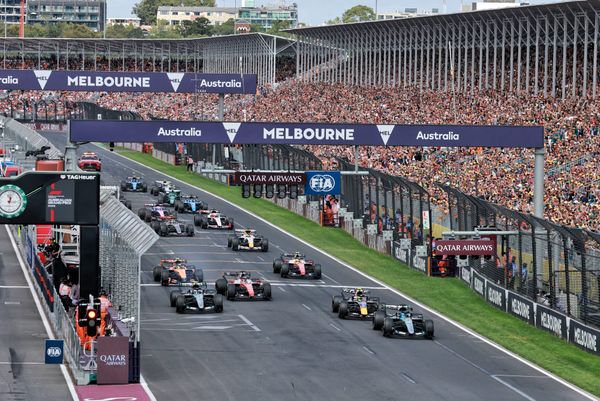
The recovery starts in Miami for Williams, which needs to add to its paltry haul of two points soon. Speaking during the season-opening Australian Grand Prix weekend, Vowles said Williams was still aiming for fifth in the championship.
He accepted "the mountain in front of us is enormous" to do so but it is possible. If Williams gains relative to the pack ahead and starts to score regularly, closing what is a very small points gap of just 18 to midfield leader Haas is achievable.
The key question is whether this is just, as Sainz put it, one of those inevitable bumps in the road Williams had to hit and its big-picture trajectory will continue to point upwards, or a sign of deeper troubles.
"If this is going to kill the little viruses that we had as a team and we recover well, then it could create the opposite effect: a big, big jump in performance," he said.
Having a bad season is never a good thing for an F1 team and 2026 has been a blow to Williams's ambitions. But the old saying about learning the most in adversity and failure applies.
It's now down to Williams to prove that right. And that's the biggest test it has faced in the James Vowles era. It could also be the defining one.