Why Mercedes now looks vulnerable in engine trick row
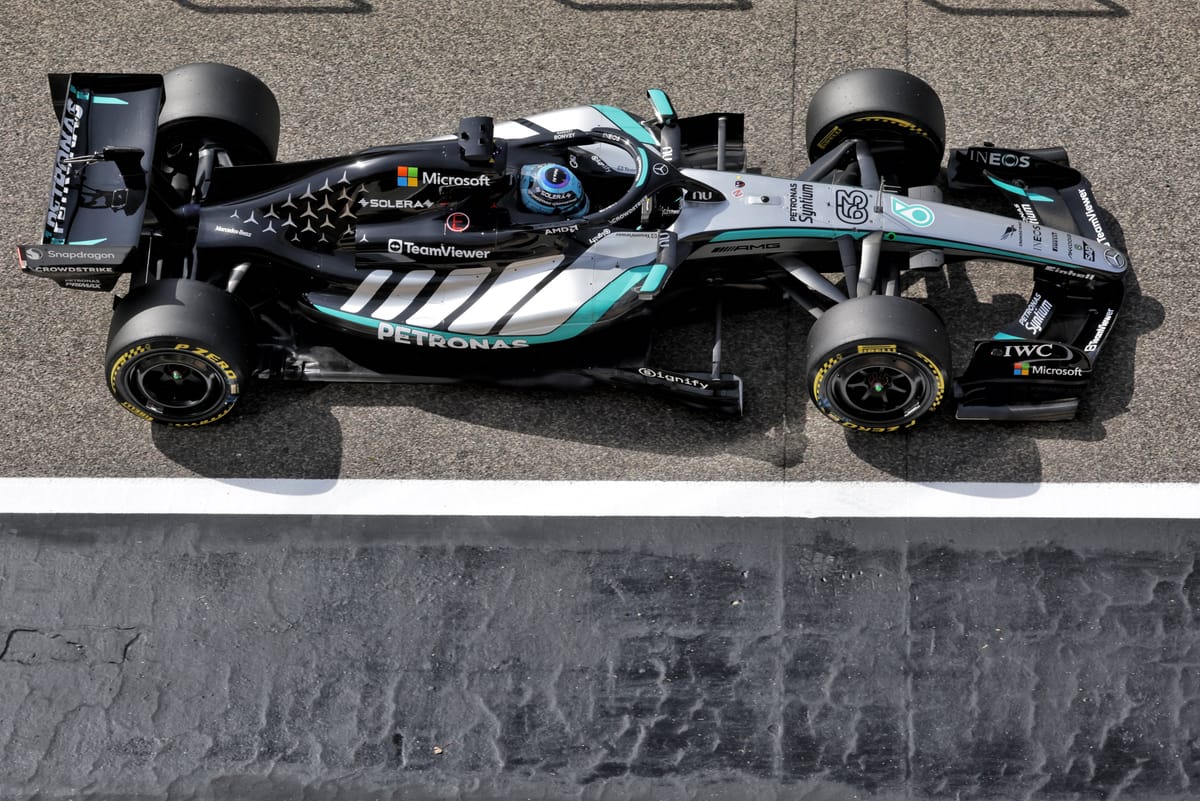
Up until a week ago, Mercedes boss Toto Wolff had felt confident that Formula 1's compression ratio controversy would simply fizzle out without action.
But ahead of what now looks like a key F1 Commission meeting in Bahrain next week, where the topic is set to take centre stage, he is no longer certain that the Mercedes-powered teams are in the clear.
With rivals Ferrari, Honda, Audi and Red Bull pushing to propose a rule change to revamp how the rules are policed, Wolff is well aware that the political tide may have shifted.
That means a new hot test procedure that could hurt the Mercedes-powered teams is no longer off the table.
For regular trackside insight throughout F1 testing, join The Race Members' Club - claim a free 7-day trial here
Speaking in Bahrain during pre-season F1 testing, Wolff said: "I'm a little bit more confused in recent weeks about how it came to the point now that it suddenly became a topic.
"Because until last Friday, I was given the impression that things wouldn't change."
Wolff is referring to the outcome of the most recent Power Unit Advisory Committee (PUAC) meeting, where Red Bull falling in line with the other manufacturers' opinion has opened up the possibility of a super-majority vote that could change the rules.
Red Bull was understood to have found benefits from interpreting the regulations in the same way as Mercedes. However, its potential change of sides could have come from failing to produce the gains it hoped for, and it may decide it's more beneficial to vote against Mercedes than pursue the avenue for development.
Wolff well knows that if Mercedes' 'gang of four' rivals - namely Audi, Honda, Ferrari and RBPT - can convince the FIA and FOM to agree to a change to the regulations and get the compression ratio tests changed from cold to hot for the start of the season, then there is no way to stop it.
As Wolff said: "It's not only the teams. You need the votes from the governing body, and you need the votes from the commercial rights holder. And if they decided to share an opinion and an agenda, then you're screwed."
But is Mercedes really at risk of losing a big political battle on the eve of the season?
Gamesmanship and manipulation
Wolff is certainly not naive enough to think that there is zero chance of FIA president Mohammed Ben Sulayem and F1 chief Stefano Domenicali voting in favour of a change.
The history of F1 shows how political winds can change so quickly, which means what seems set in stone one day is gone the next.
"I've been here for a while, and you're being misled and you're misleading all the time," he said. "So there is no such thing as surprises anymore. The wind can change suddenly.
"Bernie Ecclestone would say 'change of circumstance, I said A yesterday, but today, my opinion is B'. And that happens all the time."
So while Wolff knows that the FIA has backed Mercedes' interpretation of the engine rules all the way through the design process, it does not mean that the governing body is immune to having its mind changed.
He also well understands that serious pressure is being put on the FIA to make a change – and the voices of the major manufacturers speaking out against the status quo are both loud and not without power.
"I think that our colleagues from the other brands have been carried away a little bit that this [advantage] could be embarrassing," Wolff said. "Which I don't think it is at all. But it's OK.
"Let's see how the tests pan out, and then, God knows what next Black Swan event is going to happen to us."
Wolff does have some faith that both Ben Sulayem and Domenicali will take a considered approach to any rule change, rather than simply kowtow to what he says is "gamesmanship or manipulation" from competitors.
"I would say that within the sport, there are individuals which would want it to be a series with a BoP [Balance of Performance rule], but without calling it a BoP; by saying we actually don't want engineering ingenuity," he said. "We prefer to have a level playing field.
"But I believe that fundamentally, the president of FIA and Stefano will look at it in a holistic way and avoid too much gamesmanship."
Legal action or a no show?
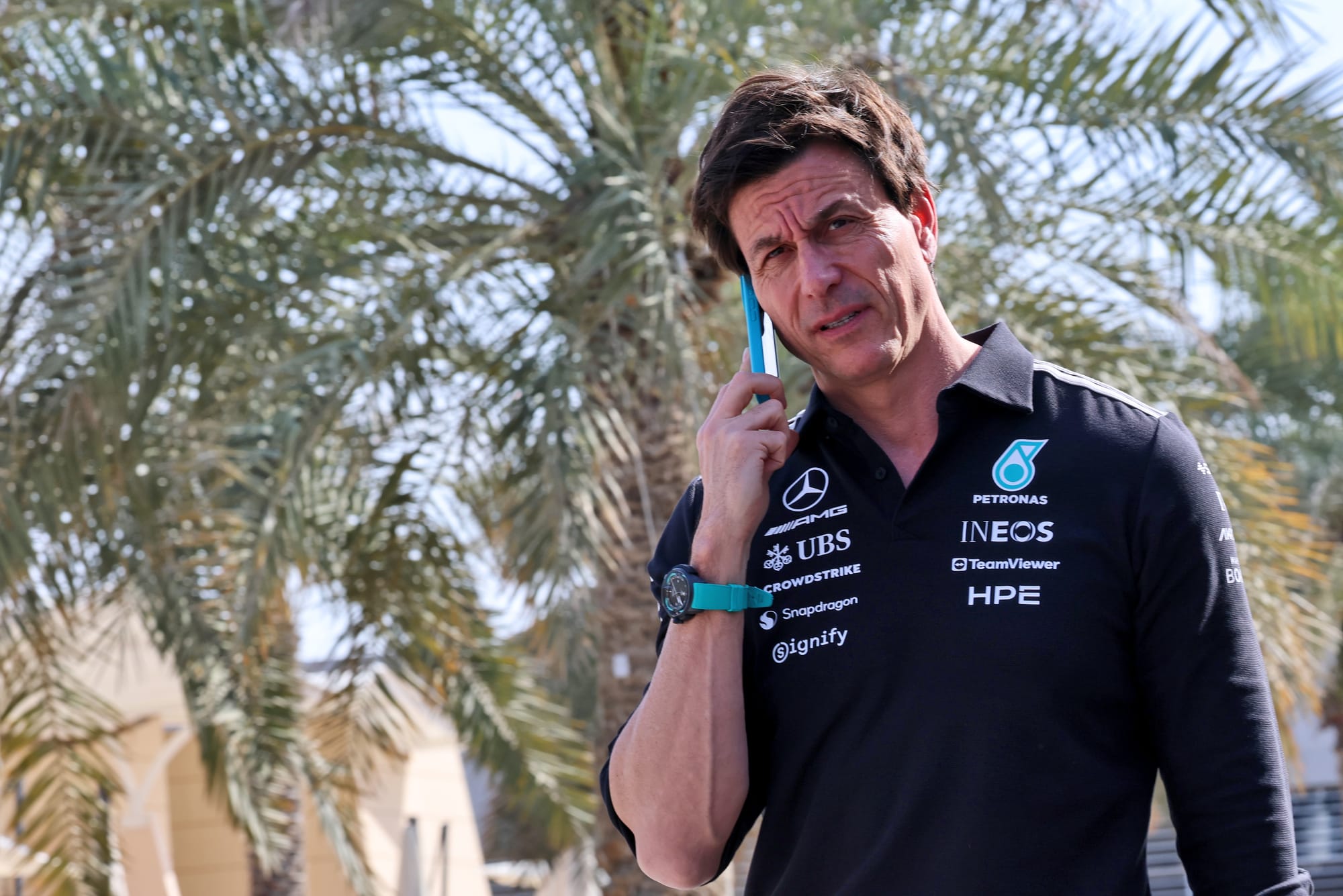
If Mercedes' competitors can convince Ben Sulayem and Domenicali to change the rules though, then there would be no comeback for Wolff's team and its customers.
"If that governance were to vote for an engine regulation change, you just have to take it on the chin," he admitted.
"It is what it is. And obviously, in that case, it would be detrimental for all of the Mercedes powered teams."
What has been ruled out already is any talk of taking the matter to court if the vote went against Mercedes.
"There is no such scenario as we would sue anyone," said Wolff. "In F1, in my opinion, it's more essential than ever that you know what the rules are.
"But engineering ingenuities are always respected and that's why we are always going to respect the governance of the sport.
"And if the governance of the sport decides to change the rules, be it against our position or for our position, you just have to go along with it."
There have been suggestions in recent weeks of a scenario where, if the rules change, the Mercedes-powered cars might be unable to run because of the way the engine has been designed.
Wolff has drawn short of confirming that, but did suggest in Bahrain that there would likely be competitive consequences.
"You develop an engine over a long time, and you have lead times, and if you were to be told you can't operate the engine in the way you have developed it, that could be quite damaging for the performance," he said.
Wolff did suggest though that if the rules change at a time when power units are homologated, it would be down to the FIA to come up with a compromise "invention" for how Mercedes could be able to adjust for them.
Unintended fallout
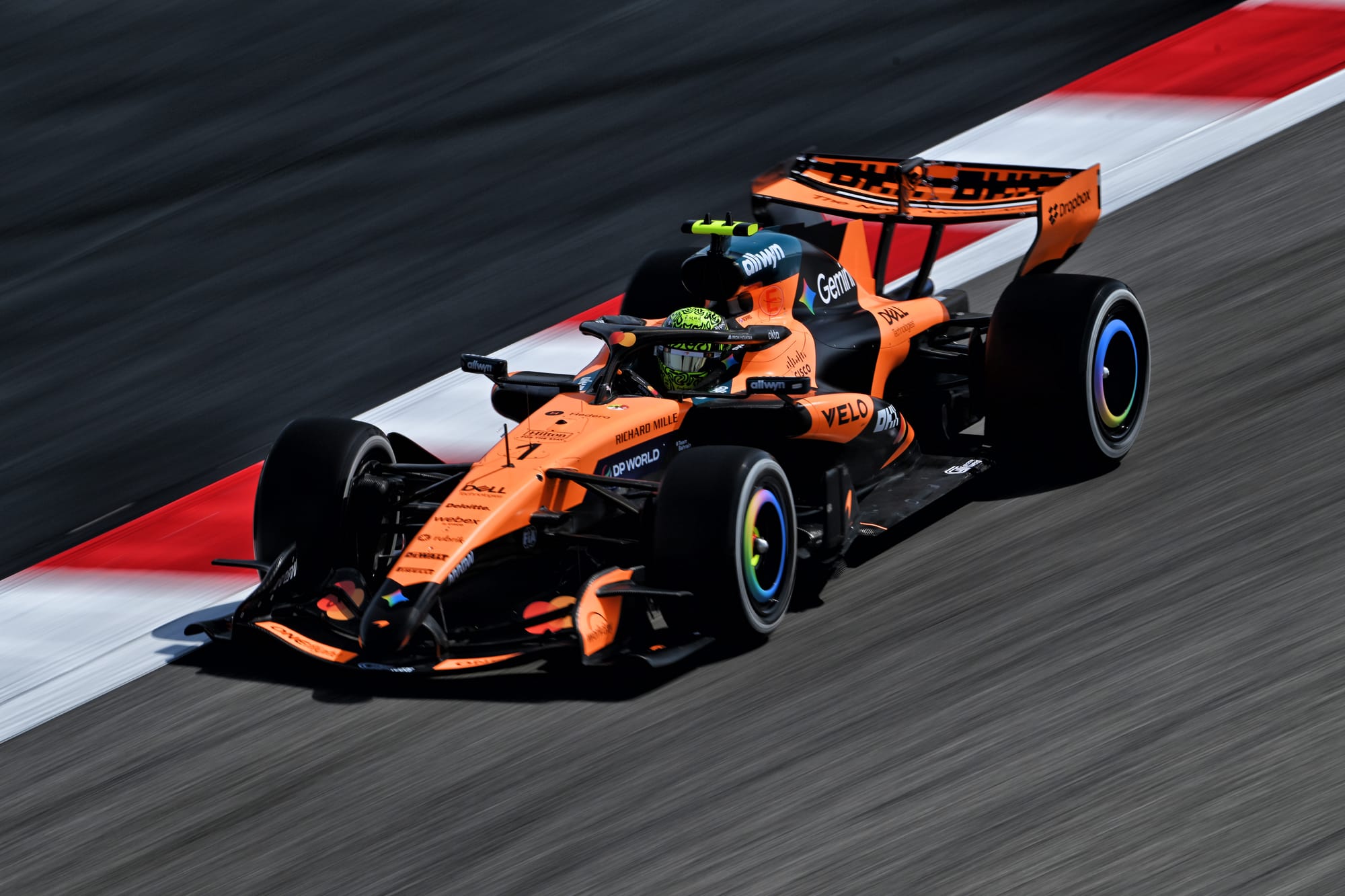
Wolff thinks the consequence of a late rule change would not just be felt by the Mercedes team – because the knock-on impact could even extend to rivals.
He even suggests the opposition should be careful what it wishes for because there is a scenario where hurting Mercedes could backfire.
Engine manufacturers are allowed additional development opportunities if they are behind the benchmark power unit by a certain amount over the early races. Given that, Wolff argued closing the field up by eliminating a Mercedes advantage could actually be bad news for those at the back who want to catch up.
His theory is the small loss of performance that Wolff says Mercedes would take could be enough to close the competitive gap to the point where manufacturers at the back don't get into the deficit range that triggers the additional development allowance – whereas they could gain from exploiting the compression ratio situation themselves under that system.
"It's a few horsepower....in England, you would say a couple, which is more like two and three," he said, when asked about the performance benefit he thinks Mercedes gets from the trick.
"But it's more, what is the precedent we're setting? What are the complications of introducing a new rule? How do you monitor it? And in which way you adjust it if you felt the need to adjust?
- Mercedes claims Red Bull a second faster on straights
- Mercedes rivals plotting F1 engine rule change for Melbourne
- What's been agreed at key F1 engine loophole meeting
"Plus how will it influence the ADUO [F1's new additional development and upgrade opportunities system]? After six months, everybody who believes he's in an ADUO and has the chance to catch up, you could immediately start to look at compression ratio and develop the engine completely differently.
"So the unknown consequences are immense and unquantifiable."
The immense magnitude of a late change to the rules may be the very thing that stops an FIA change of heart in next week's meeting – but right now, there are no certainties.