Where Audi's first F1 car got 'ahead of the game'
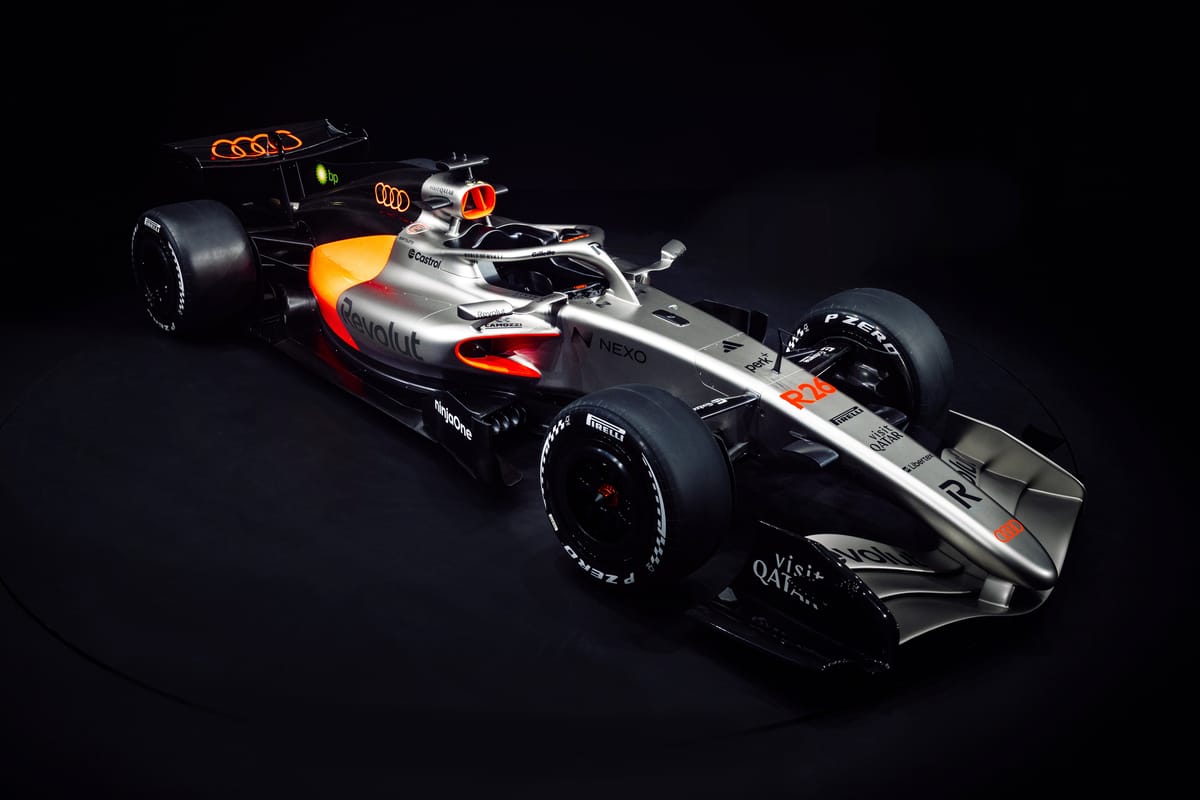
Audi’s 2026 Formula 1 car is being kept hidden even though the team feels it got “ahead of the game” by running it on track earlier than any other.
The Audi R26 completed an early shakedown at Barcelona nearly two weeks ago but the real thing remains a mystery for now as its team-and-livery launch event in Munich on Tuesday night was mainly about showing off its new colour scheme and full range of partners.
From Audi’s perspective, a clear point of pride for the 2026 car is that it was ready so early to be able to test nine days into January.
Team principal Jonathan Wheatley said the reward for a “hugely ambitious” undertaking is “it got us ahead of the game” - with new team Cadillac running a week later, and Racing Bulls shaking its car down on the same day as Audi’s launch event. Nobody else has hit the track so far.
With our launch and test content ramping up, get a 7-day free trial for The Race Members' Club. Experience The Race's unique content, ad-free listening, a chance to get involved in our podcasts and much, much more. Try it out, here
To make that happen, Audi completed its fire-up at the factory in mid-December – a month before reigning world champion McLaren did the same for its car, for example.
This all matched a timeline Audi head of F1 project Mattia Binotto had stated publicly back in early November. But technical director James Key revealed that the January shakedown was first mapped out internally 18 months ago.
“As one of only two new guys on the block with this [as an engine manufacturer], you really do need a track reference,” Key said.
“We agreed, we try and hit the track as quickly as we can. The problem with that when you think about how the development process of these cars has gone, from a technical reg [regulations] point of view, everything was speculative until the first of January [2025], when we could start doing the aero.
“Of course, the aero defines the car. So you've got a very, very late start. You want to go for as long as possible. But then you're running early [in 2026] so everything has been compressed massively over winter.”
There were other challenges too. The final, stressful phase of testing the engine on the dyno and building up the car in November last year, for example, came at the time the factory also had to deal with a massive car rebuild due to Gabriel Bortoleto’s huge crash at the Brazilian Grand Prix.
“At the time that we were trying to build that car, put that powertrain together, we’d had accidents in Brazil, so the factory was also busy and trying to get us back up to speed with parts,” said Wheatley.
“And at the same time that was happening, we had to try to get this car together for a shakedown early. To get a car together like that, you have to pass the crash tests. You have to pass the FIA safety tests early as well.
“It shows the ambition in the project. We’ve beaten other teams on track by some margin.”
The hidden car
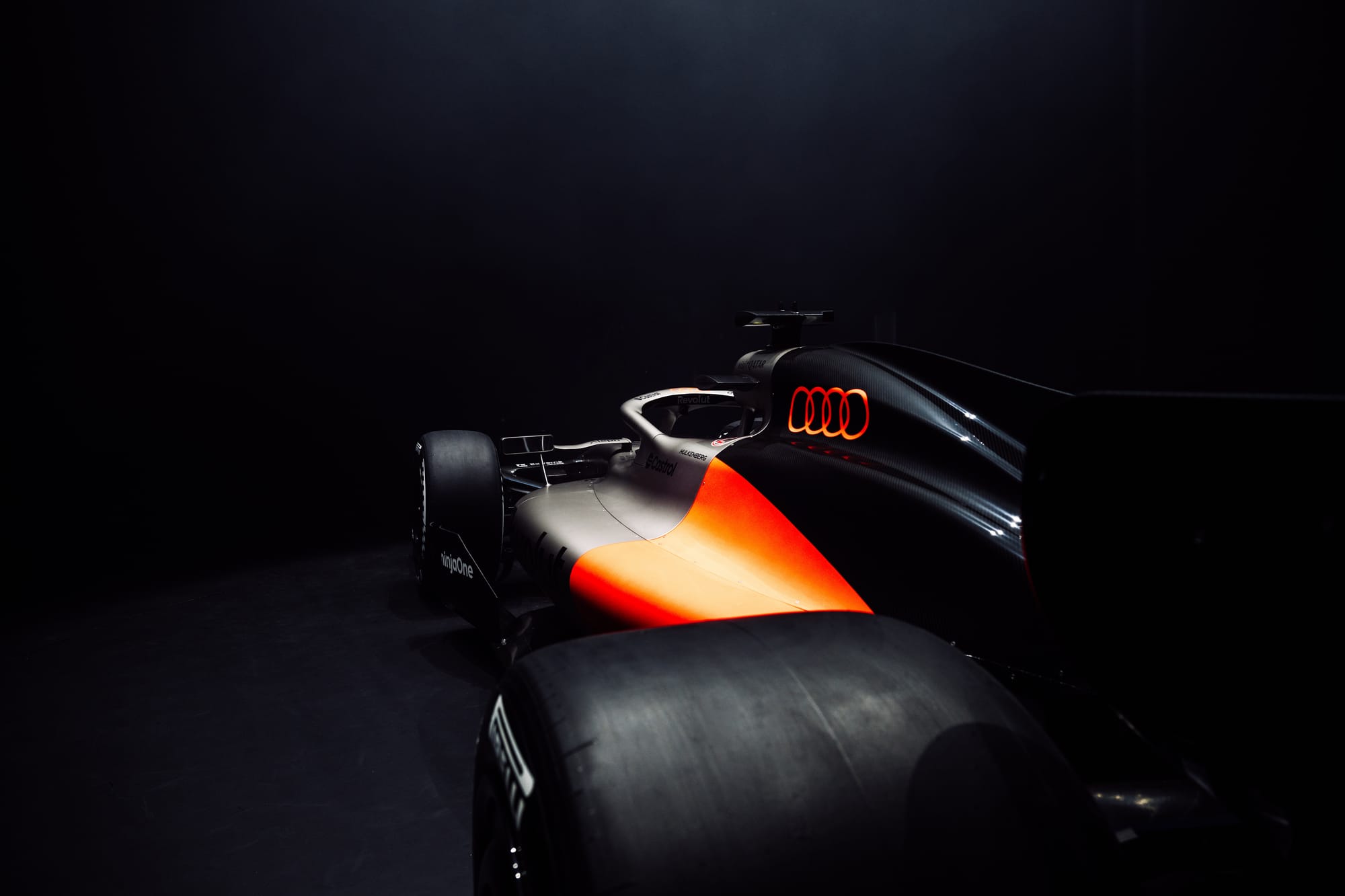
There wasn’t much material released from Audi’s shakedown day, just a few teaser images afterwards, which was fair enough as that wasn’t really the point.
It did also tee Tuesday’s launch event up as a team event, not something for the real car.
But as Audi entering F1 is a big deal, its new car is ready, and it’s playing down expectations for the current version of the R26 anyway, why not show it off?
That would be better than essentially holding two livery launches given this was very similar to October’s event with more stickers on the car.
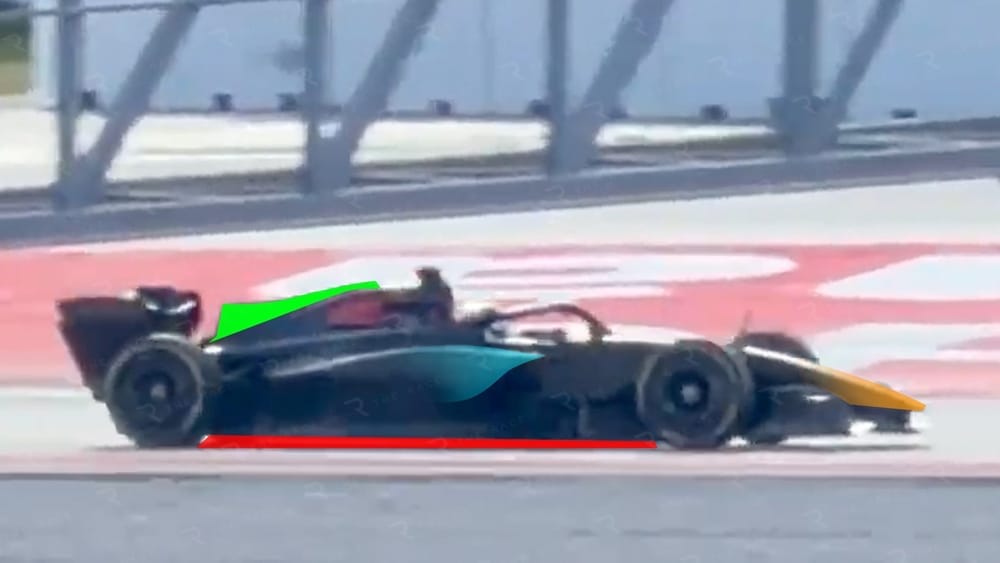
Maybe it’s because of the car’s basic provisional specification but it means the only real Audi insight we have is from that distantly-shot shakedown - which revealed little.
The car seems to have pushrod front and rear suspension, and Wheatley said the big difference to the 2025 Sauber is that Audi’s car looks like one “from front to back that’s been designed with one purpose” - an allusion to the integration and packaging benefits of a full works team.

It has an aerodynamic design that is immature to some degree, though and the car did not run as much as it should have. Those filming days permit up to 200km of running but Audi only managed about a quarter of that.
Wheatley claims Audi still “achieved what we wanted to achieve” in terms of getting both drivers in the car, running through various system checks, and getting initial feedback.
And the emphasis on reliability and mileage extends to Binotto setting modest and intangible targets for Audi’s test programme, race debut and 2026 season as a whole.
“The target is first finishing the race because reliability, at that stage of development, is important,” he said.
“Complete the race distance, complete the race weekend without any significant problems on track.
“In order to develop the car, you need track run time, so being reliable and somewhat competitive, fighting for some positions, whatever will be the position in Australia,.
“I don't think what will count is where we start, it’s how the team will progress.”
Upgrade plan
Audi has clearly been more conservative in some areas to achieve its early mileage. That must be the case to get a car ready to run so early in the year.
It has not pushed its initial engine and car parts because as a new works team and with a complex engine to figure out, reliability and accumulating mileage as early as possible is key.
So when Audi ran at Barcelona it was primarily about gathering initial data on the new engine, rather than chasing any kind of meaningful performance read on the car - even by shakedown standards.
More on Audi's launch:
Audi fears significant deficit if 2026 engine tricks allowed
Audi reveals 2026 F1 livery - but keeps car it's tested hidden
Six things Audi shakedown told us about F1 2026 designs
There are benefits on the car side too, to make sure there are no nasty surprises once you start running through a serious programme.
The base specification will almost certainly be on the car again for the private Barcelona test next week, when teams can run on three out of five days.
“There's still a lot to learn about these cars,” said Key. “We've got a little reference point from that, but it's a bit of a voyage of discovery.
“And for us, as a new power unit company as well, we'll be concentrating on lots of laps and reliability.
“For the guys in Neuberg and on the engine side, they need track data.”
Audi will be ready to run at 9am on Monday of the first test, head of F1 project Mattia Binotto said, although the weather on the day will determine what it actually commits to.
Beyond Barcelona, Audi will roll out upgrades across the two tests in Bahrain.
On the shakedown spec of the car, Wheatley said: “You can imagine that to get on track at that point, you’ve made a decision on the aero level and the configuration of the car early on, and that is a car that you’re going to use for these reliability tests, for these systems tests.
“And then at the right time, we’ll introduce our race update ahead of Melbourne, which will be in one of the Bahrain tests.”