What we've learned about F1 2026 driving styles so far
Oscar Piastri calls it “rewiring your brain”; Kimi Antonelli says “you have to be really-open minded”; Haas team principal Ayao Komatsu describes it as “counter-intuitive”.
These are all references to the driving technique challenge of the new 2026 Formula 1 cars based on what was learned in last week’s Barcelona test, underlining the extent to which those in the cockpit must adapt to get the best out of these cars.
The energy-management demands of the 2026 F1 cars are enormous.
With effectively a 4MJ battery powering a 350kW (469bhp) electric motor providing a little under 50% of the overall power of the cars, you need significant harvesting and discharging to lap quickly.
That will have a profound impact on what those behind the wheel do, but according to Mercedes driver George Russell, not to the extent where those requirements are overwhelming.
“That was a question mark that I had going into the test, whether it would be like Formula E [where] it’s like you need an engineer to drive the car rather than a racing driver,” said Russell when asked by The Race whether the energy-management imperatives of the 2026 cars overpower more traditional driving skills.
“It felt much more intuitive to drive than expected.
“Now, we have a few additional quirks, but you still have to brake as late as possible, carry as much speed through the corners. The faster driver will be the one who still comes out on top. I don't think it will be an engineering race from the cockpit.”
The devil is in the detail. Small differences in braking technique, the way you approach corner-entry to achieve the required rotation, how you overlap throttle and brake and countless other factors all have an influence.
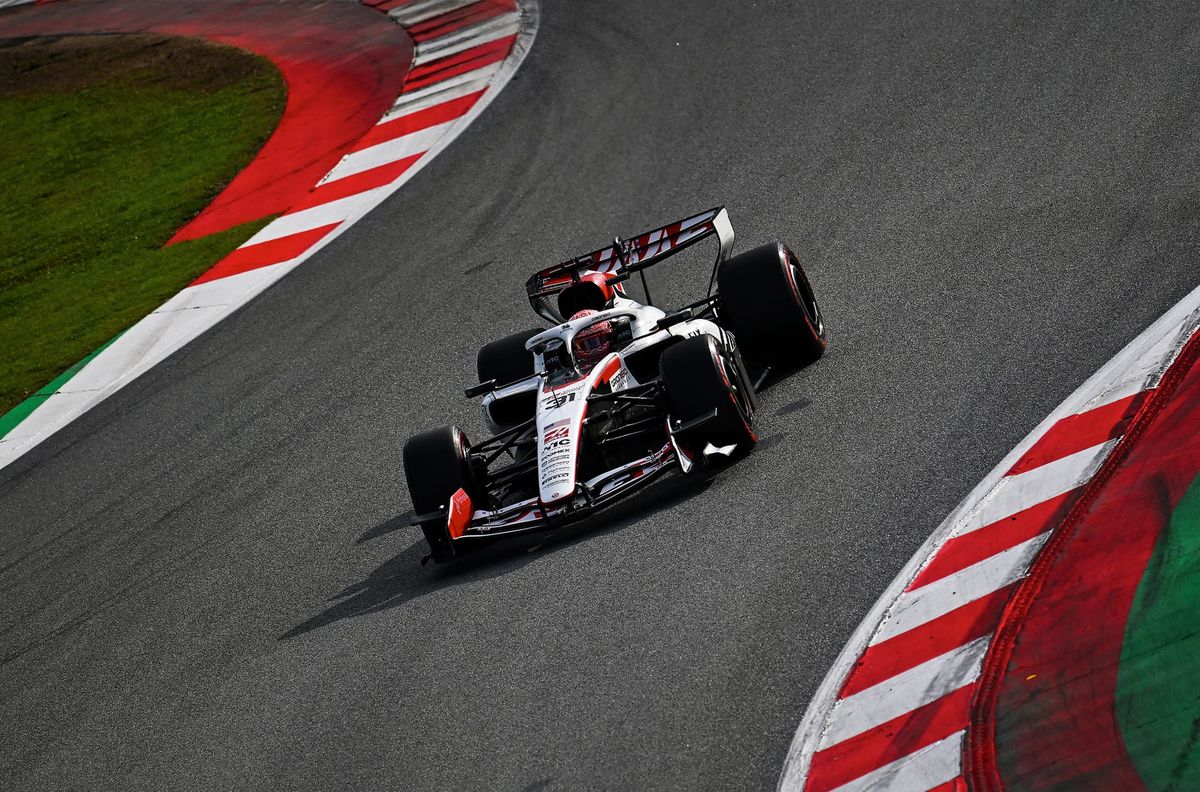
But as Haas driver Ollie Bearman explains, the fundamental feeling of the car and the driving style doesn’t seem too different compared to last year.
“The first sensation is the lack of downforce compared to what we've been used to, particularly in the medium and the low speed [corners],” said Bearman.
“The high speed is what you expect. You have less load, but your braking zones are slightly longer, your combined traction is a bit more challenging just because you have even a bit more power in that phase and less load on the car, so less mechanical grip with smaller tyres.
“It's definitely a bit different. I didn't find the driving style to be too dissimilar. It just was more similar to your Monzas and your Mexicos where you have a bit less downforce.
"It's still very fun to drive. Even if the car's moving around a bit more, that’s not necessarily a bad thing.”
The driver’s domain is the corner, as it’s here that they can express their craft and gain laptime. However, the unusual characteristics of these power units means that the approach to the corner can start earlier than it once did owing to the need to maximise harvesting.
“At times it can,” said Lando Norris when asked about drivers downshifting early towards the end of straights.
“The biggest challenge at the minute is battery management and knowing how to utilise that in the best way. You can explain it in quite simple terms: you have a very powerful battery that doesn't last very long so knowing how to use it in the right times, how much energy, how much of that power you use, how to split it up around the lap, and how you can recover the batteries as well as possible.
"And that's when it comes down to using the gears, hitting the right revs.”
This is complicated further by the fact that different deployment strategies can vary the straightline performance from lap to lap.
As Norris points out, “If you suddenly have a bit more power you can end up going into a corner 5, 6, 7km/h quicker all of a sudden without potentially knowing why."
That then leads into a slightly longer, but still short, braking zone thanks to the reduction in downforce even once the car switches from straightline mode to corner mode.
The downshifts are also complicated by sometimes having to go to a lower gear than would have been the case last year.
The aggression of the downshifts could also change in terms of what revs the change is being made at because this can help increase the energy harvested.
There were occasions under the old regulations when Alpine, struggling with a relatively weaker charging capability in its Renault engine, would have slightly more savage gearchanges as a result.
This can have a dynamic impact on the turn-in of the car.
Then, while you want to maximise the speed carried through and out of the corner, there’s also the question of ensuring you do that in an energy efficient way in terms of both what you are spending, and what you are harvesting. That includes being cautious on the throttle in slow sections given a certain level of pedal demand will mean the MGU-K kicks in when you don't want to be using battery energy.
“It’s definitely challenging for the drivers and you have instances where, when you go around the corners faster, you're spending more energy and you're harvesting less, so you end up over the course of the lap having less energy to spend,” said Russell.
“You may gain a few tenths in the corners, but you may lose a couple of tenths in the straight. So that takes a little bit of time just to get your head around it.
"However, once you do get your head around it, that would just be the normal way of driving. All the teams are having to use quite low gears through the corners, to maximise the harvesting, all of which we had question marks around. But it just feels like a race car.”
Among all of this, the driver must keep in mind what Russell calls “the small techniques that will gain you a couple of percent of energy re-harvesting”.
This could potentially be huge. If you can modify your technique to optimise that while still being quick through the corner, that will pay you back later in the lap.
The drivers who master this will likely be the most effective, but it cannot fail to have an impact on the car dynamically when on the limit and, as the struggle of Lewis Hamilton to adapt to the cars in the ground effect era shows, the requirements of car and driver might not always align.
“There’s lots of counter-intuitive things everywhere in this regulation,” said Komatsu, who had a long history as a race engineer before moving up the team leadership ladder, when asked by The Race about the driving style demands.
“From a pure driving perspective, lift and coasting potential in qualifying, and then gear usage and on throttle, etc.
“There's lots of conflicting objectives the driver needs to achieve. But I'm sure over time, we engineers will be able to design and hone both hardware and software so that drivers are able to do something much more intuitive to get performance out of it.
“It’s the very, very early stages of the regulation. That's why there's lots of this contradiction and counter-intuitive things happening. It’s a lot more hard work. They need to sometimes think differently.
“But then, there's a trade-off. Let's say certain things a driver has to do to maximise recovery makes the car very difficult to drive. Where's the right balance?
"Maybe you have to give the driver a more driveable car and accept that you're not going to be deploying as much energy down the straight? That is a very difficult optimisation problem to solve.”
Then when it comes to getting the power down off the corner, there’s the twin challenge of ideally needing to have the turbo spinning at a decent enough rate to minimise lag and avoid having to use too much electrical energy to compensate for any missing V6 power, and not overstress the tyres.
“We need to be very careful to not kill the tyres completely, because it's so much more than it was before,” said Ocon.
“At the moment, we have less grip than we had in the last couple of years. The car itself is quite nice to drive because it slides a bit more. It's a bit more like the 2020s era, where it was a bit less snappy and a bit more comfortable at high speed. On that side of things, it was quite nice to drive.”
And all that must be done in a race while using tools such as the boost button or, when available, overtake mode to battle with other cars.
Setting aside the energy-management requirements, there’s also the question of whether the move away from low-slung, ultra-stiff venturi tunnel cars will allow a wider range of set-ups and not force the drivers into a narrow driving style window. According to Bearman, there’s an improvement on this score but how big an impact this will have is not yet clear.
“With this generation, we're a bit unsure,” said Bearman when asked by The Race.
“We think as the regs mature a little, we're going to hopefully get a bit more flexibility and freedom with ride heights, but at the moment we don't have a crazy freedom like prior to the '22 regs, we're not anywhere near back at those levels. It's not like we're [at] those crazy rear ride heights as before.
“So we're certainly softer just by virtue of the fact of the SM [straightline mode] meaning you have flexibility to run the car a bit softer [as you are] not limited by ride height at the end of the straight, so that's a nice thing.
"But physics will tell you that the car is fastest at X ride height, [so] we run it at X ride height, our preference doesn't really matter.
“I believe at this stage, there's not really much flexibility to express yourself with set-up and things like that. Maybe as time goes on and maybe the more performant cars will be the ones that can produce load over a wider range of ride height. At this early stage it’s not quite the case.”
With the caveat that there hasn’t yet been the opportunity to observe these cars from trackside to understand more about the driving styles being used, it does at least appear that it’s not simply an energy-management exercise.
Efficiency has always been part of the competitive equation for the person behind the wheel and there’s an artistry to being able to do so while driving these incredibly fast cars to the limit.
However, it’s still early days.
There are legitimate question marks about whether the compromises forced by the need to harvest so much energy over a lap to be quick will be so large a part of the laptime equation that it neuters the best drivers in the world. But based on first impressions, F1 is far from that nightmare scenario.