What we really learned from F1 2026's most confusing Friday
There have not been many Fridays of regular grand prix weekends that have been more confusing to unpick than what we saw in Sepang.
With the world championship leader having a challenging first outing with its upgraded car, a track surface that proved to be a big handful, extreme tyre degradation and heat, plus a seemingly certain rain shower early in FP2 disappearing at the last minute, the day was a hard one to unpick.
As Haas driver Ollie Bearman said: “It’s been a step into the unknown for everybody.”
But as teams got their teeth into the data, and drivers gave feedback to their engineers, some interesting elements have emerged that point to an unpredictable and exciting weekend ahead for F1.
Mercedes chasing answers on upgrade
A superficial glance at the timesheets suggests the long-awaited first major upgrade package for the Mercedes W17 introduced since May’s Canadian Grand Prix hadn’t worked.
But Kimi Antonelli’s best soft-tyre run in FP2 was ruined by traffic and George Russell's by an off that meant he bailed for the pitlane - so neither showed their full potential.
Russell, the faster Mercedes driver, contended that being fourth-fastest car based on single-lap pace, 0.383s down, reveals more about the set-up and tyre struggles than anything fundamental about the package.
“When you bring an upgrade to any circuit it's difficult to know what your pure performance is and what it isn't,” said Russell.
“If we had our new car last week we would have said things were absolutely incredible - and if we had our old version today, I don't think things would have been much different either. We just don't have the car set-up in the right window.
"That has nothing to do with the upgrades and we have to just do a bit of work overnight to try and improve the tyre degradation.”
Given the rapidly-evolving track, having the ideal balance on Friday won't necessarily mean you are in the right place come qualifying, so the track might come to Mercedes given understeer was a particular problem for Antonelli.
However, trackside engineering director Andrew Shovlin made it clear that achieving a good balance was difficult, tyre overheating was a problem and that there was an unusual offset on long-run pace - particularly relative to rapid Red Bull.
“We've got some good ideas for set-up changes to investigate during the overnight simulator work and will continue to analyse today's data to understand why we seem to lack a bit of a pace,” said Shovlin.
“We're optimistic that with such a new package, these analyses will bear some fruit.
“The headline times are not especially representative, and we should be able to make some relatively easy progress on the single lap pace. Our concern is more the long run where we seemed unusually offset on pace, and that is going to be the more challenging problem to solve.”
Why single-lap pace is unclear, and irrelevant
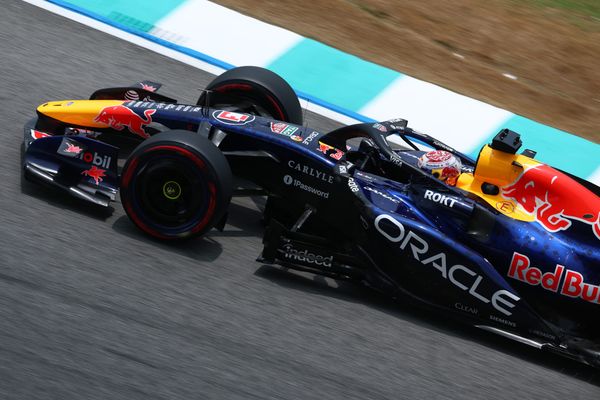
The fastest car on single-lap pace was Max Verstappen’s Red Bull, unusually with a lap set during FP1 that eclipsed Charles Leclerc’s FP2 benchmark by 0.008s.
But while the Red Bull is, by most people’s reckoning, quickest, the overall picture ahead of qualifying is muddy.
Multiple teams throughout the field didn’t optimise their qualifying simulation runs as they should have been for myriad reasons - including Red Bull, given Verstappen didn’t run softs in FP2 thanks to the rain risk and the desire to focus on the long runs.
Fastest single-lap pace by car
1 Max Verstappen (Red Bull) 1m37.520s
2 Charles Leclerc (Ferrari) 1m37.528s
3 Lando Norris (McLaren) +0.137s
4 George Russell (Mercedes) +0.383s
5 Liam Lawson (Racing Bulls) +0.976s
6 Pierre Gasly (Alpine) +1.068s
7 Gabriel Bortoleto (Audi) +1.531s
8 Esteban Ocon (Haas) +1.841s
9 Fernando Alonso (Aston Martin) +1.958s
10 Carlos Sainz (Williams) +2.410s
11 Valtteri Bottas (Cadillac) +2.666s
Mercedes and Audi were among those who also didn’t feel they had shown their best pace, while there were drivers - Franco Colapinto and Arvid Lindblad specifically - whose grid penalties mean single-lap pace is not important.
However, there’s also a balance challenge in that understeer, by necessity, is a limitation. With tyre degradation key to long-run pace, the problem is that if you have the perfect balance for qualifying, you could end up working the rears far too hard on a race stint.
Pirelli’s Simone Berra said that it was probably best to dial in compromising understeer for qualifying so that the car got better for the race.
"You sacrifice the qualifying, but then you know that the balance will go more together for the long stints, and you are able to push more and to be more consistent.”
Berra pointed to those who were struggling to switch on the front tyres for a qualifying lap as being evidence of teams going for this approach.
“It could be the case that [if] you try to find the best balance for the race, you could end up with not a proper balance in terms of temperature for the qualifying,” said Berra.
“I’ve seen a couple of cases, I won't mention the teams, they had some difficulties switching on the tyres on the front, which is very complicated to think about here, because you have the temperatures, you have the roughness of the tarmac, you have the energies, but they didn't correctly set up the car to try to have the front ready for Turn 1 after the long straight and Turn 15.
"So you could see some surprises, like some teams struggling more during qualifying, but then having a better performance for the race.”
Whatever teams can work out overnight, everyone will have to make a compromise somewhere. It means there could be some significant shifts in performance on Saturday even without considering the extent to which the track grip levels might change.
To add to the complicated equation is the fact that you are going to get one fast qualifying lap out of a set of tyres, which means you need to nail it the first time on each run with no opportunity to get a second.
Who holds the advantage, McLaren or Red Bull?
Mercedes' shaky start has potentially left the door open for its closest rivals to think they could have a say in the fight for victory – although it is hard to pick a clear favourite right now.
Mercedes’ George Russell felt honours were split between Red Bull and McLaren.
“I think at the moment Verstappen is looking the quickest in single-lap, and McLaren are looking quickest in the long runs,” he said.
Verstappen certainly looked rapid over a single lap. As mentioned before, his fastest time from FP1 on the soft was eight thousandths of a second faster than Charles Leclerc’s session-topping effort from FP2.
But with Verstappen having been switched to long run preparations on the mediums in the late afternoon session, it would be logical to think he would have gone even quicker.
The Red Bull certainly looks to be in a happier place than it was several races ago, with suspicions from rivals that the Baku upgrade may have been more significant in lifting performance than had been indicated last weekend.
It was not lost on McLaren, for example, that comparison analysis showed that in the high-speed corners where its MCL40 has traditionally excelled, Red Bull was much more of a threat.
Long runs
Antonelli 1m44.340s (5 laps)
Leclerc 1m44.582s (9 laps)
Verstappen 1m44.808s (13 laps)*
Norris 1m44.989 (10 laps)
Piastri 1m45.110s (8 laps)
Hamilton 1m45.115s (8 laps)
Russell 1m45.208s (15 laps)
Hadjar 1m45.549s (9 laps)*
*medium tyres (rest on softs)
On long runs, McLaren certainly looks to be in the mix – having made some good progress over the day. FP1 did not look great, but McLaren did get valuable data on back-to-back tests with its new high-downforce Macarena wing, so committed both drivers to running it later.
A step forward in deployment management, plus winding the engines up a little bit helped on the straights in FP2 and left both drivers to be as comfortable as anybody can be with so much uncertainty hanging over how the weekend rolls on from here.
The unusual hard tyre deg dilemma
The high levels of degradation, which put us in the similar 0.2-0.3 seconds per lap territory to the Barcelona GP earlier this year, mean that extreme management and a lot of stops are on the cards at Sepang.
“It's clear that a baseline strategy is two stops, but it could even push to more than that,” Mercedes deputy team principal Bradley Lord said. “We’ve seen plenty of three-stoppers here in the past.”
F1 teams are clearly being super conservative in how they approach the race, with nobody running the hard tyre on Friday to make sure that they keep two fresh ones for the race.
The hope will be that those saved sets will be enough to cover the majority of the race, with then a short stint on either the medium or the soft.
But there is a scenario in play where that plan backfires because the hard tyre does not work.
With track grip so low, there is a risk that it will slide even more than the soft and the medium – so it suffers even worse degradation.
Berra said: “Generating lower level of grip generates higher level of sliding and so higher surface temperature. And it's something that we have seen also today with the soft and the medium.
“We have seen some cases, even in the back-to-back comparison in the simulations for the race, that the soft had a similar level of degradation, or even lower level of degradation than the medium.
“That is because the medium was sliding more than the soft, and the soft was more controllable. All the options are open for Sunday.”
Berra explained that this phenomenon of the soft offering benefits over a hard in high-degradation circumstances was something that had been experienced at the Bahrain GP before – with Sakhir having a similarly rough surface.
The decision teams needed to make was what type of degradation they preferred to manage.
“Some teams may prefer to have higher grip level and slightly higher degradation level, but more controllable than the hard compounds with lower grip and sliding around,” he said.
Whether the soft remains viable depends on how much the track grip improves over the weekend – because the better things are on that front, the more optimum it is for the hards.
However, teams are certainly not anticipating things improving to the same level it would on a more normal weekend.
This is due to a combination of it not likely to rubber in much because there is only one support race on, plus the small stones pulled off the degrading track surface likely to make the surface very slippery in the race.
Alpine managing director Steve Nielsen said: “At most tracks it would rubber in and that [lack of grip] may drop away. I'm not sure that's going to happen here.”
From here on in, it is going to be as much about anticipating where the track evolution is going to be heading, as it is dealing with the tyres on an individual lap.
That is something that may be very difficult to judge much in advance and means that someone could end up being a hard tyre guinea pig on Sunday.
Track surface break-up out of control
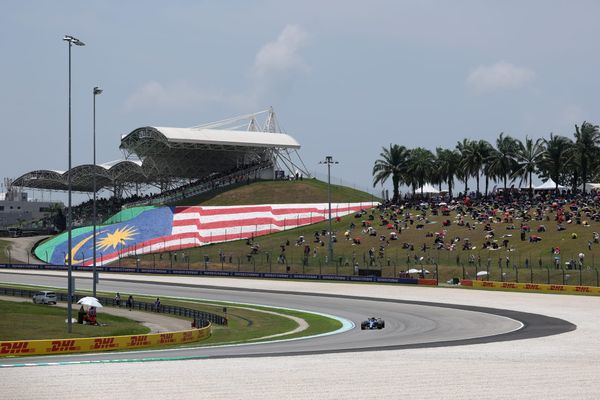
The surface of the Sepang circuit has aged a lot since F1 was last here nine years ago and it’s a big reason why teams are far slower than the simulations predicted.
Alex Albon called the surface “extremely aggressive” and there are plenty of signs of track break-up already.
There’s also lots of stones being dragged onto the track from drivers running off-line. So, combined with the asphalt pulling away, the FIA has agreed that the track will be swept after every session.
“The FIA, they made some, let's say, track inspections during the last two days, and they've seen quite a big amount of these stones all around,” Pirelli's Berra explained.
“They cleaned the track with a sweeper multiple times. They are going to clean the track after each session as they did today. They will do even tomorrow and before the race.
“But the tarmac is anyway degrading quite quickly, even during the session, so it's something that is not really under control at the moment. It's not a big issue in terms of safety, in terms of punctures, etc. It's just a matter of generating low grip level, because you have this high level of roughness.”
Pirelli doesn’t have safety concerns because it hasn’t seen any evidence of the stones causing deep tyre cuts.
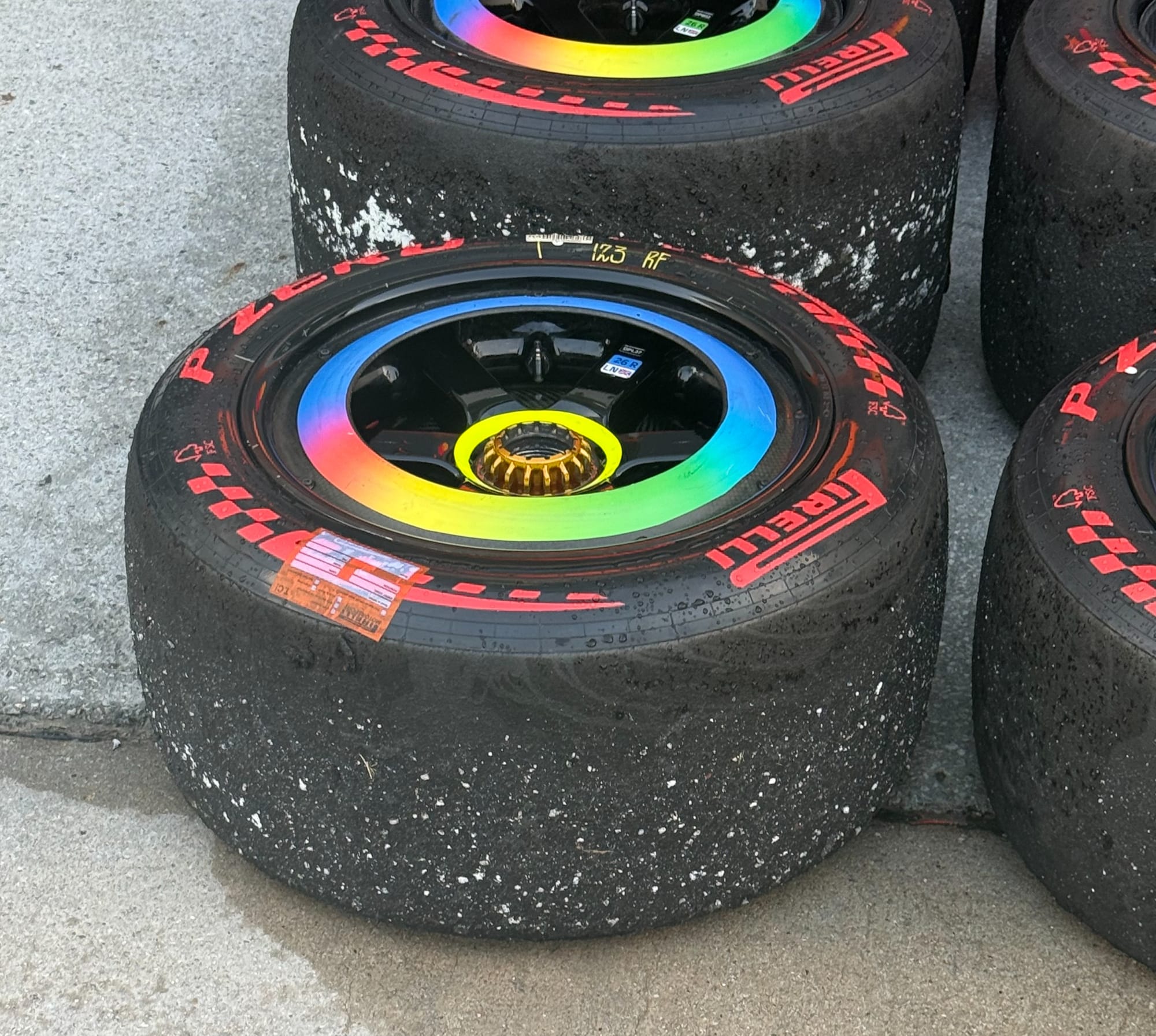
But the dusty, broken-up surface means F1 teams were 4.5 seconds slower than the simulations predicted by Pirelli ahead of the weekend, according to Pirelli.
“They were the qualifying simulations, so we'll see tomorrow, but I don't think we are going to gain 4.5 seconds tonight,” Berra said.
“So, yes, it's basically a matter of the tarmac conditions. Obviously, the teams didn't have the information about what to expect here. But in general, we didn't run here for the last 10 years, so also for them it was difficult to have a proper reference.
“We are checking now the real data compared to the simulation to see also where the main difference was, which part of the track, low-speed corners, high-speed corners, on the straight. We are going to check where the difference was, but four seconds is a lot, and I think most of it is due to the track conditions.”
Rain could reset everything
One further element of uncertainty hanging over the Bahrain GP is the weather – with rain showers having the possibility to throw all the strategy and performance planning out the window.
There have been two days now where the regular early afternoon showers have stayed away – although things got very close on Friday when looming rain clouds steered away from the circuit during FP2 at the last minute.
The chances of a downpour being avoided over the next two days are minimal, and the timing of any shower can be critical for shaping the story of the weekend.
Rain in qualifying could mix up the grid dramatically, and in the race it can change things in a totally unexpected way.
Further adding to the challenge of rain is that not many teams and drivers have proper experience of Pirelli’s wet weather products.
So there will be some learning on the fly, and the big risk of drivers getting put on the wrong rubber if conditions change suddenly in qualifying or the race when there is no time for experimentation.
Let's not forget there have been some negative experiences for drivers that have tried out the wet rubber in cold and low energy conditions, but Malaysia would be the chance to try them in the heat and on a high energy circuit.
Berra did not rule out the possibility of complaints about the wets and inters not getting up to temperature enough to be replaced by an issue in Malaysia of them rapidly overheating.
Or even, if the rain is excessive, of this being a rare occasion when the full wet was a more suitable tyre than the inter.
“When it rains here, it's quite massive,” he said. “I would say that in this case, I would see the wet as the preferred race tyre, probably, for once, because you need to have proper water dissipation.”