Ford's real role in building F1's 'best' engine
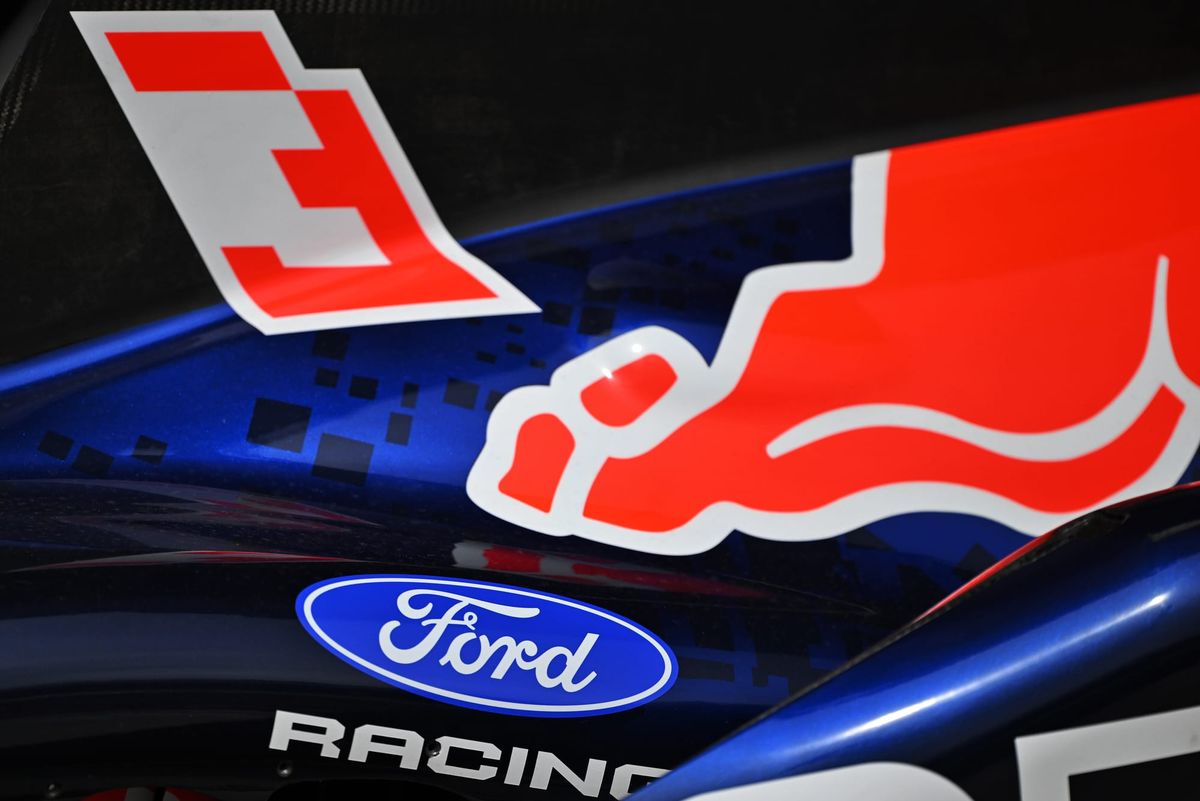
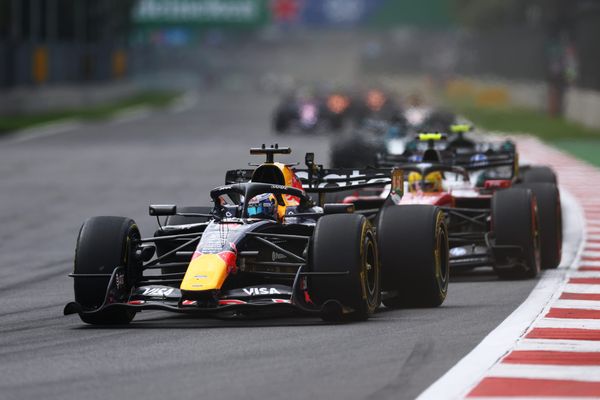
Ford's Formula 1 return could hardly have gone better. The 'best' engine on the grid carries its name, and it has won multiple races in its first season.
The bang Ford has got for its buck is pretty loud – enough to drown out much of the noise about its real role in the Red Bull Ford Powertrains project when it first began.
Historically, Ford's had much more F1 success at a distance than in full control. This union is somewhat ironic given Ford is back with the team it sold to Red Bull more than 20 years ago, but it looks like a much more successful judgement call than Ford's doomed Jaguar F1 era.
"What we've achieved over the last five years to get to this position is remarkable," Red Bull Ford Powertrains engineering director Phil Prew tells The Race.
"We shouldn't underestimate just what we've achieved in a short period of time, which truly wouldn't have been possible without [Ford]."
Ford was not quite there right from inception, but it came on board quickly, and in committed fashion.
Now Red Bull has built an engine that topped the FIA's grading of each manufacturer's internal combustion engine, and won three grands prix – and a tangible Ford contribution runs through it.
Agile as an independent
The suggestion that Ford piggybacked onto that and paying millions just to put its logo on everything was one the company could not shake prior to 2026.
Red Bull Powertrains went from nothing to a full engine facility in just over a year, and Ford joined soon after.
Ford arrived at Red Bull through a door left open by Porsche but it has been more than just a marriage of convenience – from very early on, it was clearly a strong fit.
In September 2022, Ford Racing's global director Mark Rusbrook flew to Milton Keynes for the first meeting. He saw the first engine Red Bull had built, and a month later the two parties met again at the 2022 United States Grand Prix. In February 2023, a deal was announced. The short timeline was telling.
"When I came in October of 2022 and [Red Bull Powertrains boss] Ben Hodgkinson was here, we were sitting down, it was almost as if we assumed it was natural, we're going to be partners," he says.
"We hadn't signed a contract yet, but we knew we had common ground. We knew we would get there.
"So already in October of 2022, we were writing down, 'OK, well, where did Ben need help? Where did we believe we could help or where did we want to help?'
"We already, in that second meeting, had a pretty good list of areas to work together. And started working on some of those even before we signed the contract."
It's important to recognise that Ford came in while Red Bull Powertrains was still building up, not once the engine was done. So there was a role to play and - being Ford, a massive company with a less-than-stellar F1 record, and its own way of doing things, it could have been a bad match.
The biggest challenge was blending into the Red Bull programme and complementing it, not inadvertently derailing it by slowing progress down or imposing its own way of doing things.
Prew says: "It's a huge testament that we had a relatively small, agile business – Ford was a huge company, but actually was able to respond in a really agile way, which has been great."
Specialist help
When the partnership was announced, Ford's role was framed around the electrical side of the new power unit, rooted obviously in self-interest.
"The initial focus was around the electrification side with battery cell chemistry, battery cells, the electrification of it," Rushbrook says.
"But it quickly grew beyond that because that's where we knew we had some strength but also where we wanted to learn given what our cycle plan was at that point.
"So there's a lot of work that's been focused on that and the software controls and calibration."
Prew describes one of the most useful contributions as instant access to one of the deepest pools of engineering knowledge in the automotive world.
"One thing that I take out of the relationship with Ford is the depth of experience and the depth of knowledge that they have on all sorts of engineering challenges," Prew says.
"And whilst Formula 1 is very specialised, it's amazing when we have a specific problem, picking up the phone to our colleagues at Ford and say, 'do you have any experts in this topic?'
"And within half an hour, we're talking to world-renowned experts in very specific projects, which gives us the confidence to move forward and develop solutions together.
"What's so great is that it's not that we have an expert [from Ford specifically] in bearings or something like that. It's anything."
Some help was physical. Rushbrook gives one example from early on, when Red Bull was still building its own facilities and needed help with a gas turbine stand for testing the turbo.
"Well, we have one of those," was Rushbrook's reply. "It's just the resources that we have from 123 years of being a car company to be able to contribute to a programme like that."
There are people too. Ford has a group of engineers embedded at Milton Keynes, which Rushbrook calls "hand-picked engineers that have great pedigree and strength that they're able to bring to the programme".
From Ford's side they're also learning in a fast-paced pressure environment.
What Ford didn't expect
The area neither side anticipated mattering so much was manufacturing. The output is significant. By early 2025, Ford said it had produced around 1000 3D-printed metal and polymer parts for the project, including cold plates for batteries, and they were tested using methods borrowed from aerospace.
"What we didn't expect from that initial discussion four years ago was everything that we've been able to do with advanced manufacturing or additive manufacturing," Rushbrook says.
"And we had some resources there. So in the early days it was like, 'oh, yeah, we can make those parts for you'.
"But what we didn't realise to start with is the pace for all these parts that were literally being made daily and shipped daily."
And changed daily, too, thanks to F1 teams' infamously shifting deadlines and rapidly evolving design directions.
"But also the quality control, the precision for that," Rushbrook says.
"So it forced us to up our game in terms of what work we're able to do, in terms of the materials that we use, the machinery that we use, and then the dimensional control for it.
"And that was a lot of hard discussions in the early days to really raise that level."
It's a good example of this partnership being mutually beneficial. Typically, big manufacturers bring the expertise and plug in gaps. Red Bull's F1 demands dragged Ford's own standards up too.
Rushbrook says that Ford's not using F1 to sell cars or parts like when it races its Raptors off-road, but "we're learning about the advanced electrification in this case, and it's making our processes better, it's making our people better".
The process now runs both ways, according to Prew, with designs being drawn in Milton Keynes and the performance profiles defined and shared with Ford.
"That exchange of, 'well, we need to change the design here for manufacturing, etc', the speed at which we can turn those things around now is really impressive," Prew says.
"And the quality has just grown as we're racing around now."
Multiple projects at once
As this year has gone on, Red Bull and Ford have been pushed into whole new areas of development and challenges.
Red Bull Ford Powertrains has done a great job building up one engine with a good lead time, now it's in the middle of learning how to successfully manage multiple development projects at once.
Until January this year, all the work came from simulation and dyno/rig testing. Red Bull Ford Powertrains was working from less experience as a unified operation for starters, and it also opted against its own private shakedown unlike others.
"One thing to think about is with this effort, right, it was starting from scratch, from nothing, through the full development programme," Rushbrook says.
"So a lot of assumptions had to be made based on experience and data but all of the work was limited to the dynos and not being able to put any of the '26 power unit in a car on track before the Barcelona test earlier this year.
"So it definitely was that development with limited resources in terms of what we could really get feedback on.
"Then as soon as we got to that first test in Barcelona..."
Prew interjects: "The job list got longer!"
"Exactly," Rushbrook says. "And a lot of the assumptions were right. Some of them weren't.
"But that's what this process is because we had to go from Barcelona and then test, two tests, again and race again. So it's just that rapid adaptation."
The biggest area of in-season learning has been energy deployment, with significant gains made over the year from calibration work: marrying up power output, fuel consumption, energy harvesting and deployment strategies.
"That's something that very much we've learned so quickly and continue to learn, if I'm honest, about optimising that through track running, through interaction with the drivers, through interaction with the racetracks," Prew says.
"And the fundamentals that we've defined in the early stages of the calibration process and deployment process has evolved and the framework that existed has allowed us to evolve quickly.
"It's really important to understand that in the cycle up until March 2026, it was a development phase. But that development phase has not stopped.
"That continues for '27, '28, and all the work that we've spoken about already about testing and manufacturing, that continues on a new sequence.
"And then on top of that we have to go racing and that's brought new learning that we then feed into that development cycle.
"So for us as an organisation actually it's very different now than it was this time last year because you're still racing and you're developing.
"We have at least two projects running concurrently right now."
Ford's scope will likely grow
Greater investment or involvement from Ford could help with these realities.
The deal runs until at least 2030 but with more rule changes on the horizon at the start of the new decade, right now it looks a no-brainer for Red Bull Ford Powertrains to continue – and its work will be scaled up based on what's considered necessary.
"Any time there's a need, there's constant communication daily," says Rushbrook.
"And any time there is a need, we're able to dig into our resources to provide help.
"Maybe it's help for an hour or help for a day or help for three weeks, depending on what it is.
"We've got the ability to do that. And as the regulations are changing a little bit year by year here and with the future regulations, there's a lot of programmes going on and a lot of opportunity for the partnership to be able to cover all of those."
More tangible examples of that would surely eradicate any lingering question marks over how 'real' the Ford role is. Red Bull built this engine. Ford did not design it – but it does not claim to have done so, either.
What it has done is been on call with expertise, people, test hardware and manufacturing capacity, and it had its own standards raised in the process. And it does not sound like it will stop there.
"There's so much more that is possible," says Prew.
"Our target is to win championships and keep moving forward.
"And as such our relationship and partnership with Ford will continue to evolve as well."