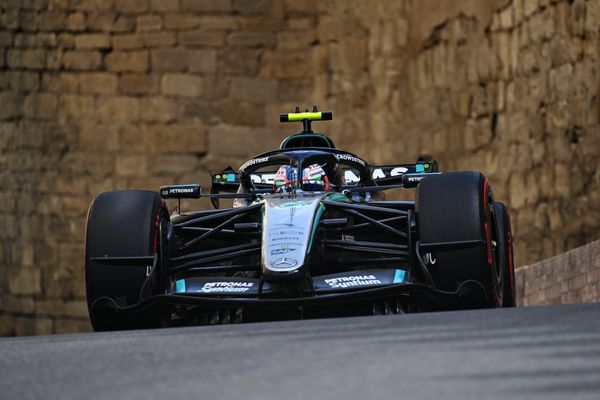
The full extent of Aston Martin's brutal 2026 F1 car problems
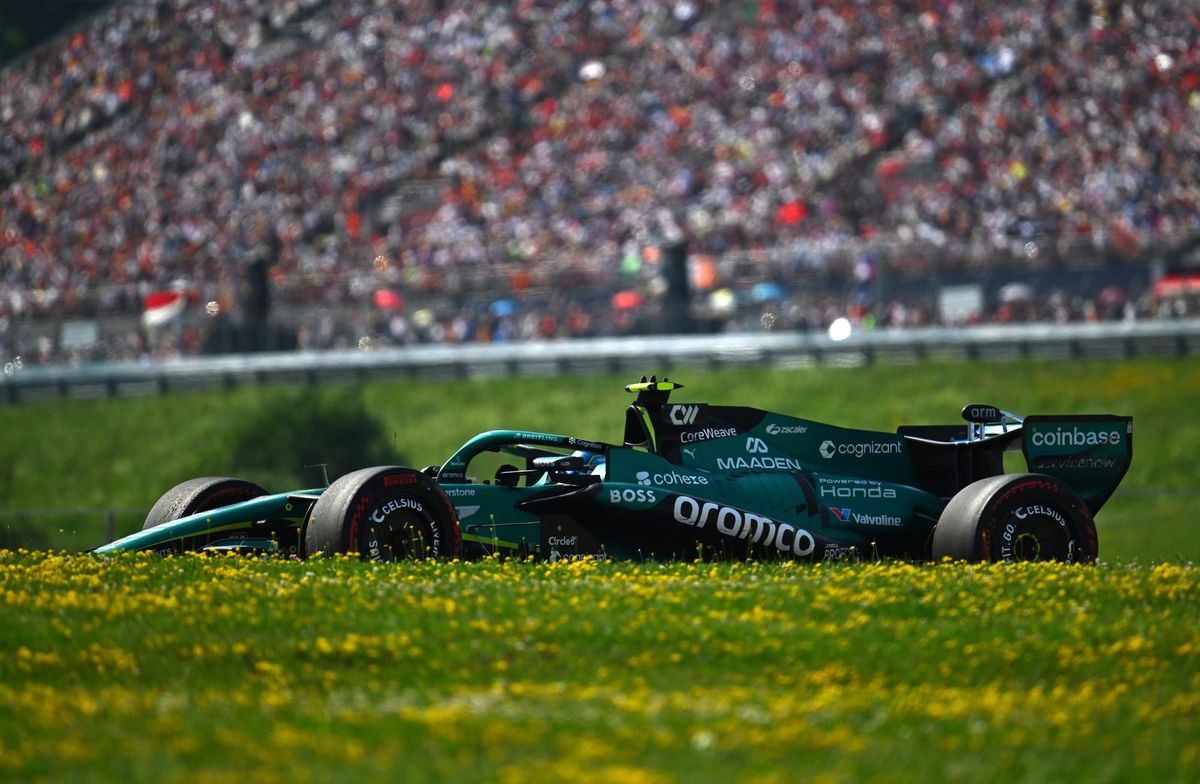
Aston Martin's Formula 1 upgrade plans are now taking shape, with a lighter and reworked AMR26 set to debut at the Hungarian Grand Prix before the summer break.
The decision on introducing the new car is also no longer wedded to when a new Honda power unit will be introduced.
Previously it had been thought that Aston Martin, which has been F1's slowest team so far this year, would align both the new car and new engine for one significant performance step.
It was widely anticipated that the Belgian GP next month was the most likely event for the new engine and new car to run together.
However, the timetable for the car and power unit changes has diverged.
As Honda continues work on its engine and is unsure about when its upgrade will be ready for introduction, Aston Martin feels that getting its revised car out before the summer break is important as that will help establish a development path over the remainder of the season.
The team wants to get itself into a position to be able to fight for points as soon as possible, especially with Audi only just ahead of it, having not scored since the season-opening Australian GP in March despite having the seventh-fastest car on average.
Track-dictated choice
The uncertainty over when the power unit step arrives is understood to have had an influence on Aston Martin's call on when the new car comes, a decision that has been influenced by the nature of the tracks coming up.
Without a better engine, Aston Martin knows it is likely to struggle on the long straights at Spa-Francorchamps regardless of which car specification it has - so it does not make sense to rush car parts for the Belgian GP.
But an improved car would be better-suited to the tight and twisty layout of the Hungaroring just a week later, so it is a more logical place to bring things.
"We are not so far away," Aston Martin's chief trackside officer Mike Krack said, when asked by The Race about the psychological challenges of repeatedly going into battle with its current uncompetitive car.
"Let's say there is light at the end of the tunnel. We will get through the next two events with the situation we had already."
The car changes
While there has been lots of talk of the Aston Martin upgrade being a B-spec car, it is understood that the changes being worked on by team principal Adrian Newey do not amount to such a major departure nor a concept shift.
The revisions are instead focused more on addressing key weaknesses that emerged with the AMR26, which include a lack of downforce and being too heavy.
"The main structural elements remain the same – the chassis and gearbox architecture don't fundamentally change – but we've taken weight out of both, which required re-homologating and crash testing the forward chassis," Newey told Aston Martin's own website.
"The front suspension is unchanged. The rear suspension is slightly revised. We've developed a new nose and substantially revised aerodynamic surfaces. So, while the core structure is similar, it's a big aerodynamic package coupled with significant weight reduction. The target is to get very close to the weight limit."
Newey added: "We're predicting a large step, but I'm reluctant to put specific numbers out there because our simulation tools aren't yet as sophisticated or well correlated as they need to be.
"Historically, at this team, there hasn't been enough investment in engineering simulation tools – not just project management systems, but the core physics tools themselves. We're putting that investment in now, but you don't rewrite and validate those tools overnight. Correlating them properly with the real car takes time.
"At the moment, they're improving, but the real gains from that work will come later in the year."
The Race has learned that the decision to go for a car revamp was made as early as before the season opener in Australia, as soon as it became clear how big Aston Martin's troubles were with its new car.
The troubled testing period at Barcelona and in Bahrain, which was not helped by vibration issues triggered by the marriage of the Honda engine to the chassis, exposed not only weaknesses with its car but also the Aston Martin organisation.
Newey has been known throughout his career for wanting to push things to the limit when it comes to car designs, but this approach within a relatively immature organisation like Aston Martin's triggered some unintended consequences.
He explained: "Aerodynamically, we also took a bold direction – which was largely pushed by me – without the luxury of exploring multiple concepts in depth because time was against us. I wouldn't say the direction we've taken is fundamentally wrong, but it has thrown up challenges we didn't anticipate."
Newey also revealed he'd suffered some health issues in 2025.
"I'm OK now, but it's been a difficult period. It never rains but it pours," Newey said.
"In truth, I was not 100 per cent last year. I had to balance health and work much more carefully.
"The team handled it incredibly well. I kept a very good relationship with the engineers and I don't feel it caused too much of a blip. That's a testament to how adaptable and supportive everyone here is."
A 'frustrating' car build
Weaknesses with the team's simulator, the need to better understand feedback from its relatively new windtunnel, the requirement to improve design and manufacturing processes, plus staff interaction, all contributed to a car that did not work as intended and that was overweight.
"We were relying on tools and processes that had been patched and bodged for years – you could trace some of them right back to the very early days of the Jordan team that was based here in Silverstone, long before Aston Martin returned to the grid," Newey said.
"At some point, a system that's just patch‑on‑patch stops being fit for purpose. That's where we had got to.
"The result was a very frustrating car build. Parts weren't being ordered at the right time – not because people weren't doing their jobs, but because the underlying system was failing them."
While there has been no official word on how far over the 768kg weight limit it is, there are suggestions it is somewhere between 10-15kg too heavy.
Once committed to going for a new car - which meant not bringing any significant upgrades to the current AMR26 - Newey's focus at its Silverstone factory has been as much about improving systems and working practices back at base as designing new parts.
Once a baseline is established with the revamped car, the team has scope to bring further improvements over the second half of the year.
Krack said that Aston Martin, which has fallen away from the pack at the back of the grid, was counting down the days until the improvements arrive.
"Everyone is flat-out because we want to get the maximum out of it, obviously," he said.
"So you always push the deadlines as much as you can. And we will bring it as soon as it is ready."
No money to spend
Aston Martin's early decision to throw everything at a major car revamp rather than improve its baseline AMR26 in incremental steps was heavily influenced by cost-cap limitations.
Teams are now restricted in terms of how much resource they can throw at car developments, and have to be meticulous in terms of balancing out what to spend and when to spend it so they don't run out of money too early.
Every part that is introduced in F1 is approved by a team's accountants to make sure that its cost versus performance-gain ratio is good enough.
Front-loading development expenses has its advantages in terms of making the most of a car advantage. But for Aston Martin, aware of how far off it was and how much was needed to get itself into a position to score points, any early expenditure made no sense.
This view was further embellished by the fact that reducing car weight, one of the big problems with its current car, is an expensive and complicated thing for teams to execute.
As an example on this front, it has taken a frontrunning squad such as Red Bull until the Austrian GP - round eight of the season - to shed excess bulk from its RB22 to get itself pretty close to the weight limit.
Aston Martin's decision to delay spending may have been annoying for the competitive mindset of its drivers, who want faster machinery immediately - with Fernando Alonso saying he was particularly irked every race weekend when he is forced to see how much other teams were bringing into play while being told by his bosses there is nothing Aston Martin can spend.
"[It] is surprising to see the FIA [upgrades] page on Friday every race because maybe they have the money machine in the minus one [floor] in the factory," he said about other teams.
However, Alonso understands the bigger picture in play.
Yes, spending money on upgrades now would have delivered small gains in performance, but Aston Martin knows that only a truly big step is going to put it in contention to add to its current tally of one solitary point.
The hope is clear that once Newey's revamped package finally appears, having not spent money in the first half of the year, that could then allow Aston Martin to keep up a rate of development after the summer shutdown for longer than rivals that have been freely spending more recently and could hit their limit.
Single Honda upgrade
Honda's upgraded power unit, which is believed to revolve around improvements to combustion and friction reduction, may now not come until after the summer break.
While the final timetable for its introduction has not yet been set in stone, the schedule of races before the shutdown means there is little point bringing it to the Hungarian GP if it is not ready in time for Belgium the week before.
Even after the break, high-speed Monza in September is a more logical place to bring an engine upgrade than the tight-and-twisty Zandvoort in late-August.
Honda itself has remained coy about when the upgrade will arrive, with work ongoing on its dynos at its R&D facility in Sakura in Japan. Its repeated line is that the upgrade will appear "around summer".
What Honda is more definitive about, however, is that it is not going to make full use of it allowances under F1's Additional Development and Upgrade Opportunities system (ADUO) to introduce two new specifications this year.
Having been deemed to be more than 4% adrift of the benchmark Red Bull engine, Honda joins Ferrari and Audi in being allowed a double step over the remainder of the 2026 campaign, as well as two more upgrades in 2027.
However, it has laid out that the upgrade coming later this year will be its only homologation change for the current campaign - with the development focus from then on shifting towards next year.
Honda's trackside general manager Shintaro Orihara said: "For the first one [new engine], we just focused to bring a lot of update points.
"Then, after the summer shutdown, we have another strategy for next year rather than put a small update each time. So I have to say, we have a long-term roadmap to improve our performance."