What Barcelona exposed about every F1 team's car
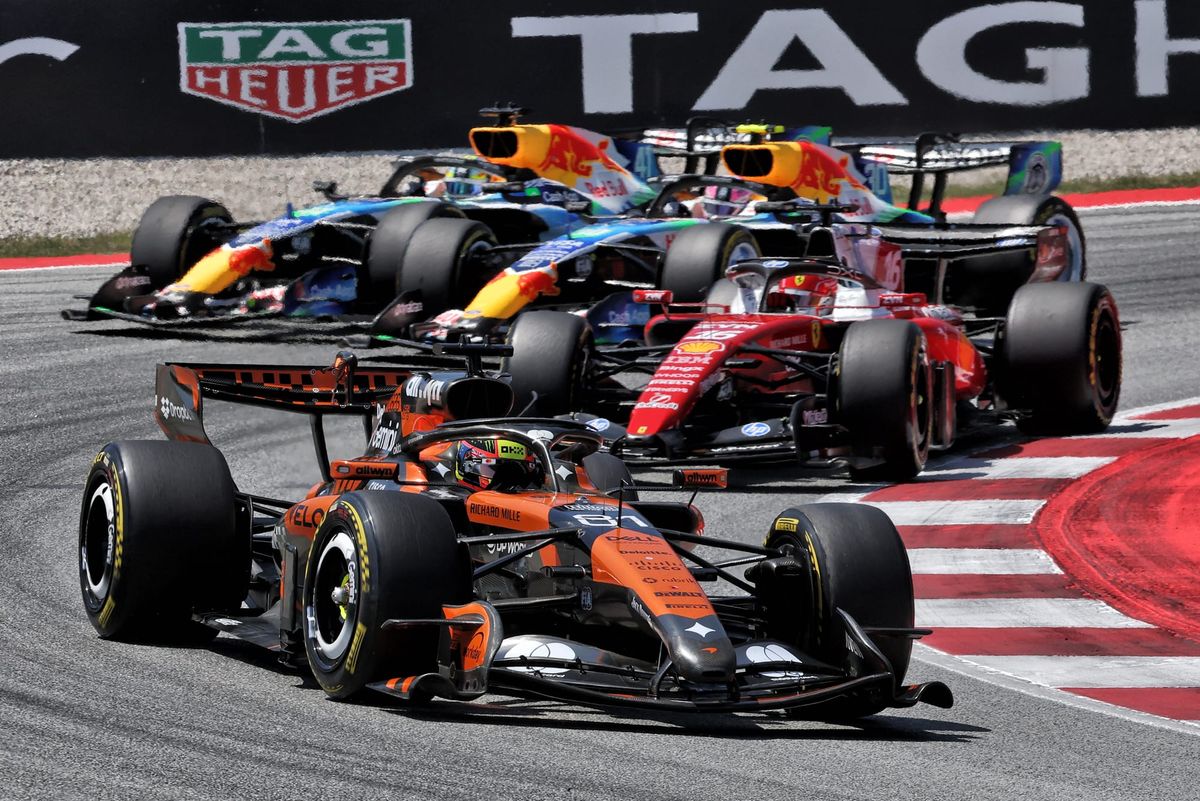
Barcelona gave F1’s 11 teams the most brutal test of their cars so far this year - and exposed some serious weaknesses.
The Spanish circuit is a proper stress test of aerodynamic performance and the all-round car and engine package, giving us the clearest read of every team’s main limitations yet - and dishing out a few painful reality checks...
Mercedes' 'big concern'
Barcelona was the first race since it was decreed that Mercedes doesn’t have F1’s best engine. So there’s a twisted kind of humour about it finally being defeated - because someone else’s car was simply faster.
The W17 is clearly a good car, not just a mediocre one elevated by a mega power unit.
There was already more than a hint of its impressive downforce in Monaco, where Kimi Antonelli blitzed the opposition on a track that obviously isn’t power sensitive.
Putting three tenths of a second on customer McLaren at a proper aero track like Barcelona showed the car’s one-lap potency.
Mercedes’ bid to win faded when early race leader George Russell started struggling in the second and third stints, though. Its faster driver Kimi Antonelli was happier with the pace of the car, so this was a silver lining - but he retired late on with yet another Mercedes technical problem.
That is particularly alarming, given that Russell failed to finish in Canada a couple of weeks ago, and McLaren has had several Mercedes electrical problems this year.
Russell called it “a big concern”, and the lack of pace he had on the hard compound gives Mercedes homework to do on the car side, too.
'Class leader' Ferrari needs new engine
The early-season narrative that Ferrari had F1’s best chassis was reignited by Lewis Hamilton’s Barcelona win - but the SF-26 had already won serious praise earlier in the weekend.
McLaren’s Lando Norris called the Ferrari the “class leader” in cornering performance after qualifying, when Hamilton only narrowly missed out on pole.
Given there remains a presumed deficit of a few tenths of a second on the engine, depending on circuit layout, this weekend was massively encouraging as Ferrari’s significant car upgrade lifted its overall performance level and seemed to give it a tyre degradation edge, too.
The latter was exaggerated by a mix of the extremely hot conditions and favourable circumstances giving Hamilton an advantage in the final stint, but Charles Leclerc still felt there was a “big step” with the car this weekend.
Now it just needs a new engine. Everyone acknowledges Ferrari is better in the corners than on the straights, which is partly due to a draggy car, but the power unit is weaker overall.
Ferrari has been permitted two upgrades due to the FIA measuring the V6 as weaker than the Mercedes and, controversially, the Red Bull Ford engine in particular.
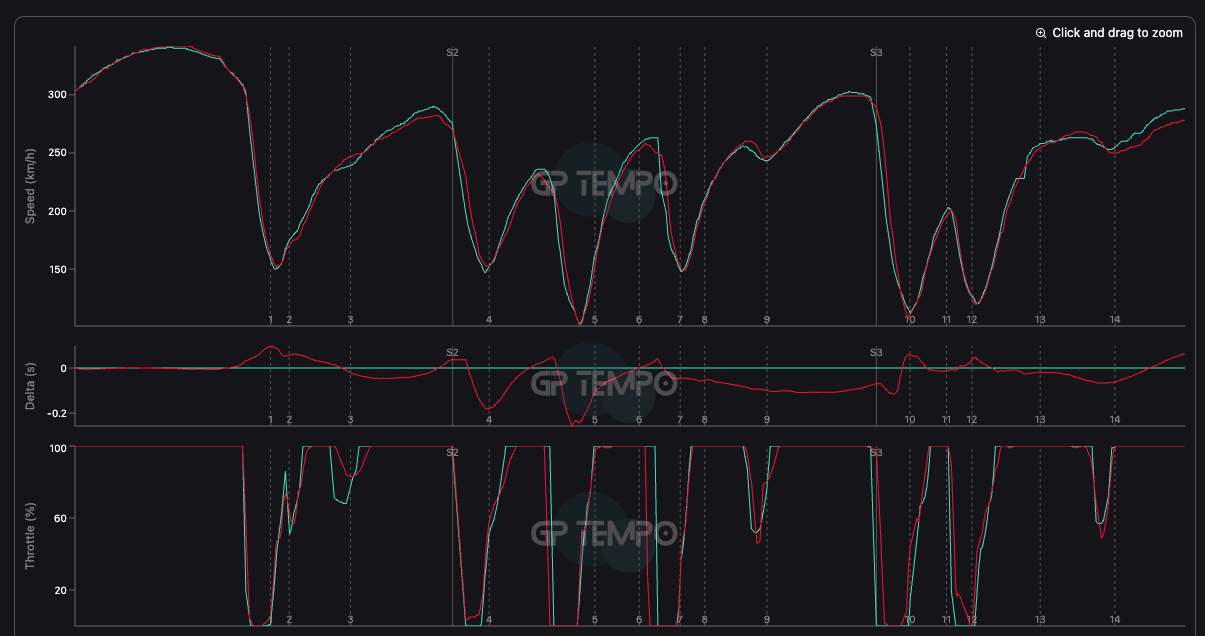
But it has a deployment deficit to overcome too, judging by how little Russell (green) had to sacrifice on the run to Turn 1 in qualifying to then be faster down every single straight thereafter than Hamilton (red).
'Brutal' Aston is simply F1's worst car
The long wait for Adrian Newey’s Aston Martin team to upgrade its woeful car has left it with the worst car on the grid, irrespective of Honda’s engine deficit.
Aston Martin warned from the start that this would be a bruising weekend, and so it proved. It barely improved from four seconds off the pace in practice, and wasn’t just the slowest car - it was a second off Cadillac.
Fernando Alonso said it’s the worst car, married to the worst engine. There are problems on both axles, in ride quality, traction, braking, downshifting, and sheer high-speed performance.
It leaves Alonso and Lance Stroll as lambs to the slaughter - only put out of their misery here by a return of Honda’s reliability woes that caused a double DNF…
Qualifying complication for Alpine
Alpine rescued another weekend from a bad start and this one took a particularly big salvage job.
The retirements for Antonelli, Charles Leclerc and Nico Hulkenberg all helped, as did the timing of the first virtual safety car, so that flattered the Alpine double-score.
But Pierre Gasly and Franco Colapinto were working their way to the front of the midfield anyway with superior race pace, as once again the Alpine was better on Sunday than Saturday.
What is vexing the team most is why its one-lap pace is so inconsistent and, at its worst, so mediocre.
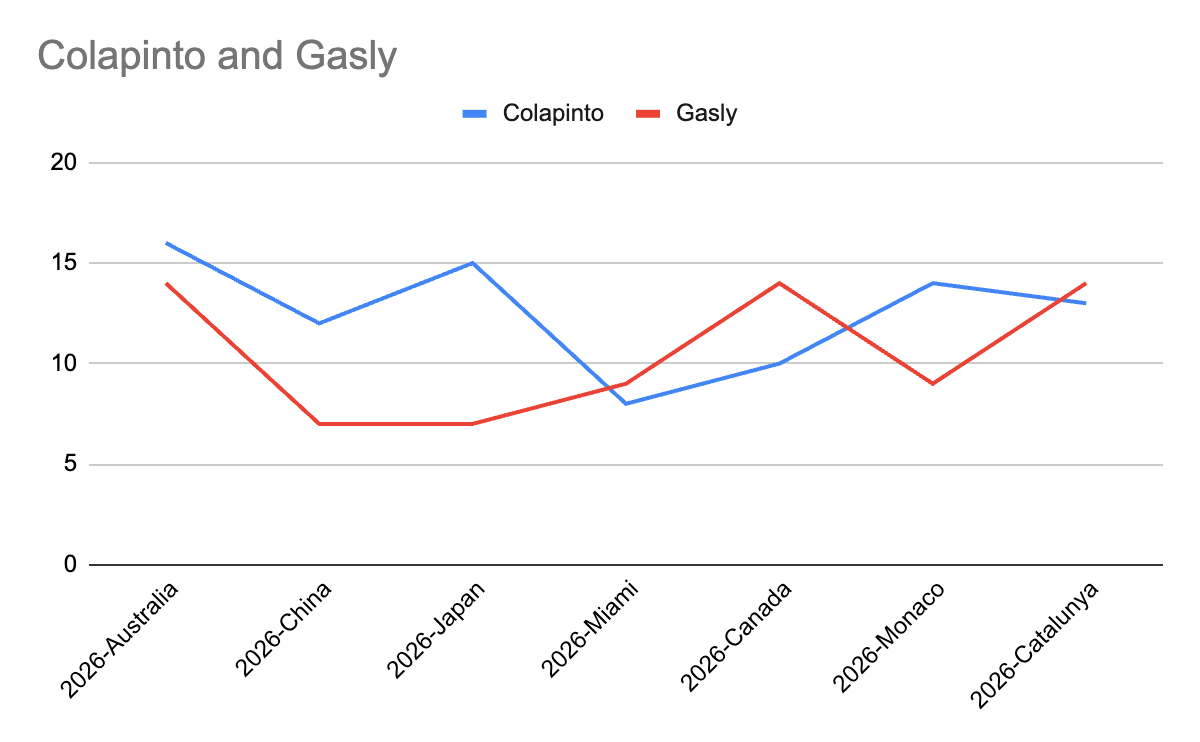
Its car has tended to sap the confidence of one of its drivers on any given weekend but here, both struggled in qualifying and then were much happier with the balance on high fuel.
Alpine is somewhat out of sync with other teams on upgrades, bringing its next one next time out in Austria, so this might have exaggerated this specific qualifying struggle - but it doesn’t change the underlying trend.
'Double' wear for Williams
Williams suffered a specific knock-on consequence of its underdeveloped, overweight car at Barcelona as tyre degradation being so high, even over a single lap let alone a race stint, left it badly exposed.
Carlos Sainz said “everyone’s degging, we’re just degging two times more” - as the compound losses of a car that’s light on downforce, and heavy, led to more sliding and more tyre problems. Alex Albon suffered from this even worse than Sainz.
Williams just had no answer to the tyre demands of this race, which inevitably meant a painful grand prix too.
Sainz said that at a track like this, “you finish where the car deserves to finish” - which was 12th for him, even with the retirements of the others, and an unclassified 18th for Albon 11 laps down after a camera issue just to make things even worse.
McLaren's lost its tyre mastery
This was the weekend Lando Norris admitted it’s “tough” for McLaren to “realise we’re not at the same level as what we were” - even though the race offered a silver lining.
Though Norris inherited a podium through Antonelli’s late failure, and was close enough to be a nuisance to Mercedes in this race, the momentum McLaren built across Japan, Miami and Canada has been replaced by the realisation of clear tyre-related issues.
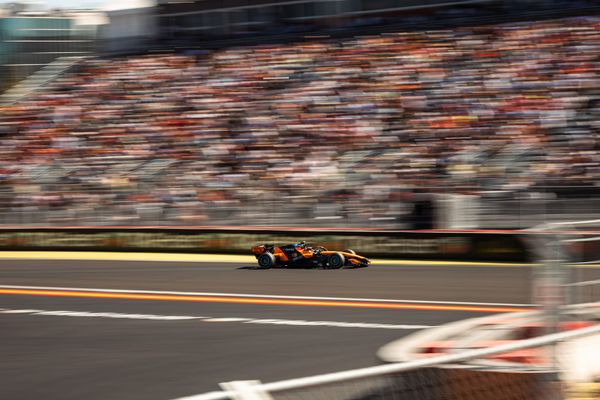
Barcelona’s faster, sweeping layout suited the car better, but McLaren’s tyre temperature control is not as masterful as in previous years. In Monaco, McLaren couldn’t switch the tyres on. In Spain, McLaren was hit-and-miss at keeping them alive.
When it was bad, it was really poor. Oscar Piastri finished more than half a minute adrift of his team-mate and more than 18 seconds behind Max Verstappen’s Red Bull, and was at a loss to explain why.
McLaren didn’t have much of an answer either - only admitting a development priority with the car is finding a way to put the tyres in the right range.
Saturday star slipping on Sundays
This was the first time Racing Bulls got to run the upgrade package it introduced a couple of races ago on a high-speed circuit. And it revelled in how well this worked…at least in qualifying.
For the third time this season, it qualified as the lead midfield car, with the only downside being Arvid Lindblad missing out on Q3 due to a deployment issue. It was so quick that it’s now the fastest midfield car on average this season.
But this didn’t translate into as strong race pace, even though the final result was still a double points finish.
It was beaten by Alpine, which came as a surprise given how far apart they’d been in qualifying - and the degradation challenge here should have meant having a faster car was beneficial for backing the pace off and looking after the tyres.
A couple of races ago, Liam Lawson wasn’t too thrilled after a strong seventh place in Canada, precisely because the result flattered a tricky race - so there’s definitely something not quite optimal about where this car’s Saturday/Sunday balance is pitched right now.
Audi leaves itself too exposed
It feels really uncharitable to be critical of Audi when Nico Hulkenberg only lost a points finish because of a freak incident.
Gravel kicked up by Lawson’s Racing Bulls penetrated the cockpit of Hulkenberg’s car and even managed to hit its electric kill switch, which shut the car down and it couldn’t be restarted!
In isolation, this is just terrible luck. However, it serves as an extreme example of how Audi leaves itself too exposed, because its car is quick enough that it should have two in the mix for points at every race - but yet again one wasn’t in the picture because of a terrible start.
Gabriel Bortoleto went backwards off the line, which seemed to be just another case of ‘big Audi turbo = bad start’. That meant when it went wrong for Hulkenberg, other teams picked up the pieces instead.
It’s a shame because this is, clearly, the most well-rounded car in the midfield. It is near the front of it at every type of track, with Barcelona checking yet another box.
Cadillac drops off a cliff
Cadillac is properly on the fringe of the midfield now, but still operationally light, as some deployment issues in qualifying and a brake problem in practice show.
More concerning performance-wise is that its pace falls off “a massive cliff”, Sergio Perez says, whenever stints run longer than 15 laps - which forced Cadillac to run shorter stints than its immediate rivals and onto a three-stop strategy.
He believes the team understands why, but thinks it’ll take a few races before anything arrives to help with that. So that’s clearly the main limitation for the package as it exists right now, beyond the obvious ‘lack of downforce’.
Still, this was another impressive weekend pace-wise. Aside from thrashing Aston Martin, Cadillac flirted with beating cars from Haas and Williams in Q1, on a track that should have ruthlessly exposed any massive downforce deficiency.
The fact Cadillac was better here than it has been on average shows that the worst of its aerodynamic load weakness at the start of the year has definitely been eradicated.
Haas became 'worst car ever'
Monaco robbed Haas of the chance to check the lessons from its troubled upgrade debut back in Canada, because the slow-speed street track is a challenge all unto itself.
Spain, though, has underlined the suspicion that this car has a fundamental weakness linked to how usable the downforce it produces is.
The car has what Ollie Bearman calls “a very incredibly narrow window”. It is tricky to drive, with instability on entry that becomes understeer mid-corner - but can still be quick. Fall off the knife-edge, though, and you have what Bearman called “the worst car I’ve ever driven in my life” in Barcelona FP3!
Haas already had a strong inkling of this pre-weekend, though, hence running a few tests through practice because it knew Barcelona would provide clear data - and help it map out a development solution over the coming weeks and months.
But a tricky car is not being helped by messy operations as Ayao Komatsu was critical of the job Haas did as a team in Spain too.
"This weekend the car wasn't quick enough and I think operationally we weren’t good enough," Komatsu said.
"If you look at part of the race where Ollie was on the hard tire, his pace was decent, but from day one this weekend we didn’t operate at the level we should be operating at and that has had a knock-on effect into today.
"In the race, communication wasn't good enough. Yes, the car needs to be improved and be faster, but we're not getting the best out of it. As a team we need to look at ourselves and improve very quickly."
Red Bull needs more than set-up work
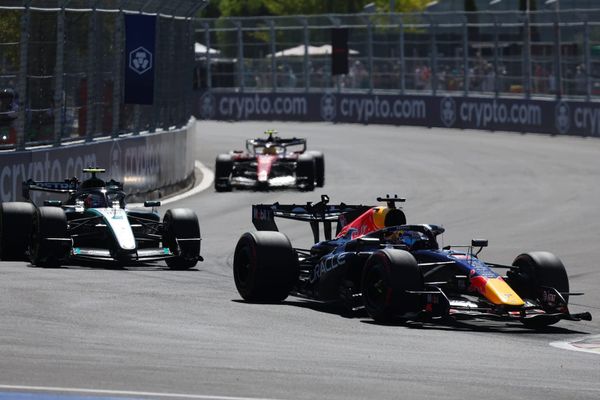
Red Bull had low expectations for Barcelona as Max Verstappen described its car as “not particularly great in high-speed corners”.
This seemed to be confirmed on Friday, where Red Bull was “still a bit behind” the other top teams on a track that has a bit of everything, although it made a good step come qualifying to split the McLarens and be only three tenths off.
Verstappen was surprised the gap shrank the way it did, while Isack Hadjar suggested the result was better than the feeling he had in the car.
But three tenths is still a reasonable margin around a short lap and that showed in the race as Verstappen gradually faded away from the lead Mercedes, Ferrari and McLaren.
He reckons that high-energy tracks with high degradation are exposing Red Bull the most right now, but it is simply the fourth-fastest team - and admitted “we're not going to solve it with just changing the set-up”.