The major unknown as F1 braces for "sandpaper" rough Sepang track
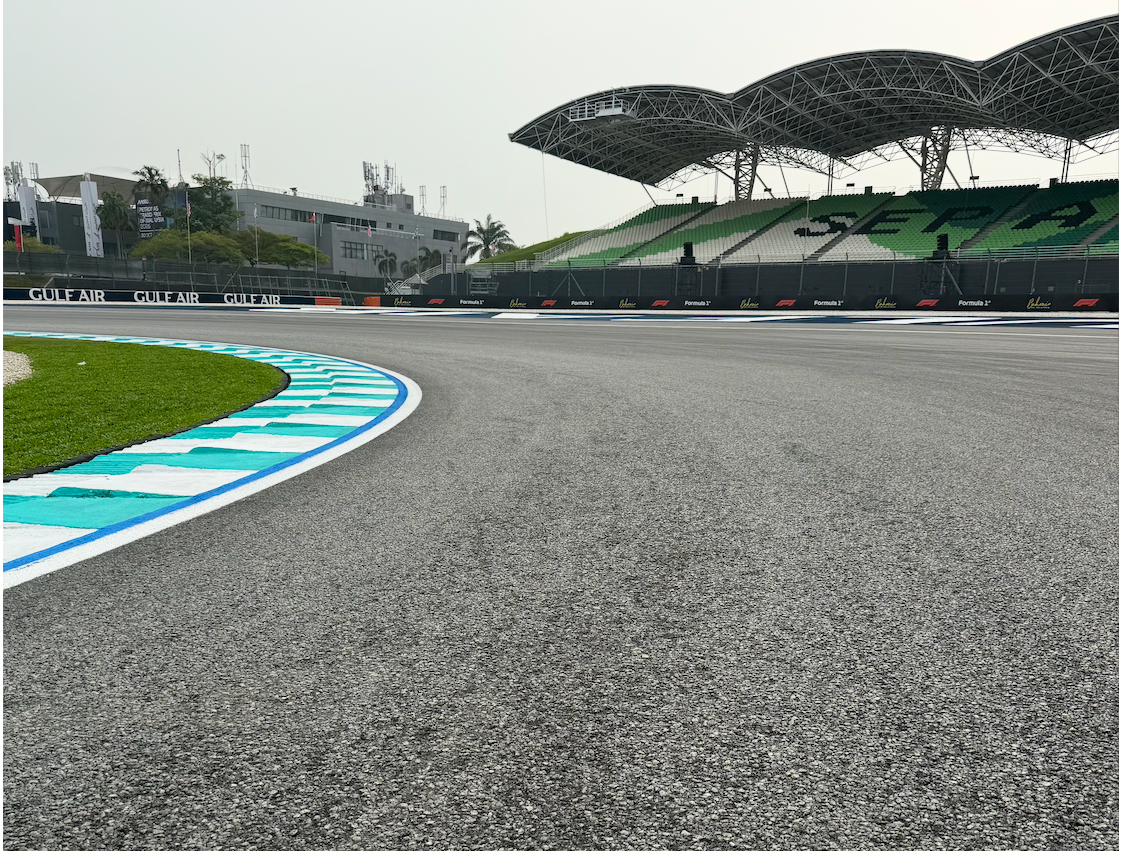
A track surface of which roughness has been likened to “sandpaper” by Oscar Piastri has thrown a strategy curveball into Formula 1’s return to Malaysia.
The comeback of the iconic Sepang track has been welcomed by drivers and teams, because of its challenging layout and old-school charm.
But one of its old characteristics, of an asphalt that was particularly rough, has moved up another level since it last featured on the F1 calendar in 2017.
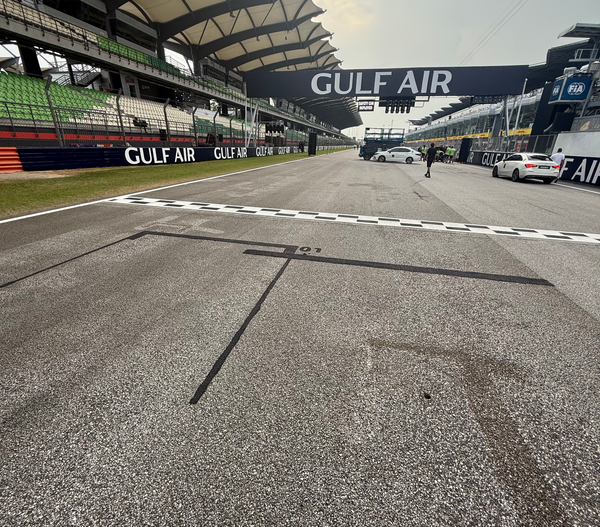
Track walks conducted by engineers and drivers ahead of the weekend have all told the same story – of a very weathered and out of sorts surface with bumpy sections and areas where the upper layer of stones have worn away.
Things are not too bad in sections that were resurfaced in 2023, like between Turns 7 and 12, but some of the original asphalt, especially into the first sequence of corners, is very rough.
As Piastri said after seeing things for the first time: “It looks like sandpaper out there. I definitely think it's going to be challenging with tyre deg.”
When it comes to the impact on tyres, more roughness equals less grip for tyres, more sliding and more overheating. But it is not just about deg – because wear rates go up too.
The situation is amplified if there are bumps, of which Sepang has a few despite work being done ahead of the weekend to flatten the surface in areas where there were major undulations.
With bumps, tyres face the extra variable of vertical loads which, along with more sliding, has an impact in delivering extra movement and stresses. It is a phenomenon that has happened at Austin's Circuit of The Americas in previous years.
Bahrain takes Bahrain's crown
Pirelli’s final track surface analysis done ahead of the Malaysia weekend shows that roughness has increased compared to F1’s last visit in 2017.
The Race has learned it is now, thanks to Sakhir’s absence, the highest of the season – ahead of Barcelona.
So, there is a certain irony that the Bahrain Grand Prix in Malaysia has inherited the crown of having the roughest track surface from the Bahrain Grand Prix in Bahrain!
The roughness has opened the prospect of a totally different type of race to how things have been recently – like in Italy, Spain and Azerbaijan – where drivers could push pretty much flat out for an easy one-stopper because degradation was so low.
Higher tyre deg increases the prospect for more changes – and this will be especially true for Malaysia with Pirelli having elected to be aggressive with its compound selection in bringing the C2/C3/C4.
Teams will have a much better idea about the potential impact of the higher degradation on Friday when track running begins, but several in the paddock on Thursday were not ruling out a three-stopper being on the cards.
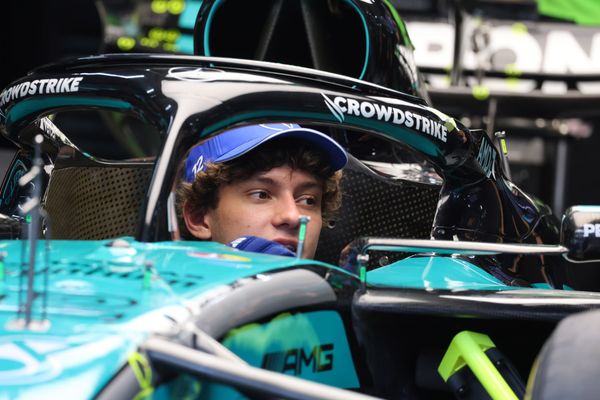
World championship leader Kimi Antonelli predicted the F1 race in Malaysia to be nothing like recent battles in Monza, Spain and Azerbaijan.
“They were all new tarmac, no deg,” said the Mercedes driver. “Baku was a funny one because the more you pushed, the better it was for the tyres. This one is going to be completely different.
“I just did the track walk and it's the roughest track tarmac that I've seen. It’s similar to Bahrain in some places, maybe even more. So it might be a scenario where we see two or three stops in the race also because it's so hot. It's going to be interesting.”
While high levels of degradation are going to make things much more of a challenge, there are some in the paddock who are excited by it.
Williams driver Carlos Sainz smiled when the topic of the rough track surface came up during his media briefing on Thursday.
“Good,” he said. “Maybe finally we see some deg, because it's been a few weekends now in a row where there has been zero deg and it makes the racing a bit less driver-dependent; it's just about pushing flat out and the car you have. You cannot manipulate the strategy or anything, so I wouldn't mind seeing a bit of deg.”
The situation being faced now, in terms of how the tyre compounds will behave compared to the track demands, is most similar to how things were at the Barcelona Grand Prix, which turned into a strategy thriller.
Sainz reckoned that when strategies open up, that is a catalyst for a better spectacle.
“I've always said the best races in Formula 1 have been the races where there is a bit of deg and it's always between a one and a two-stop strategy,” he said.
“When there is no strategy flexibility, always the show takes a hit because then there's nothing you can do apart from overtaking on track, and we all know overtaking on track is difficult.”
If early predictions come true, Malaysia could throw up plenty of action – especially if, as some drivers suggest, it becomes a challenge to even keep the tyres alive in qualifying.
Right now, nobody is sure.
As Mercedes driver George Russell said: “You'll be overheating the tyres even on the outlap of a qualifying session, which may make it more challenging to follow closer and to re-attack [in the race] once you've been overtaken. But that's the total unknown currently.”