How Madrid F1 race’s economic impact compares to Barcelona’s
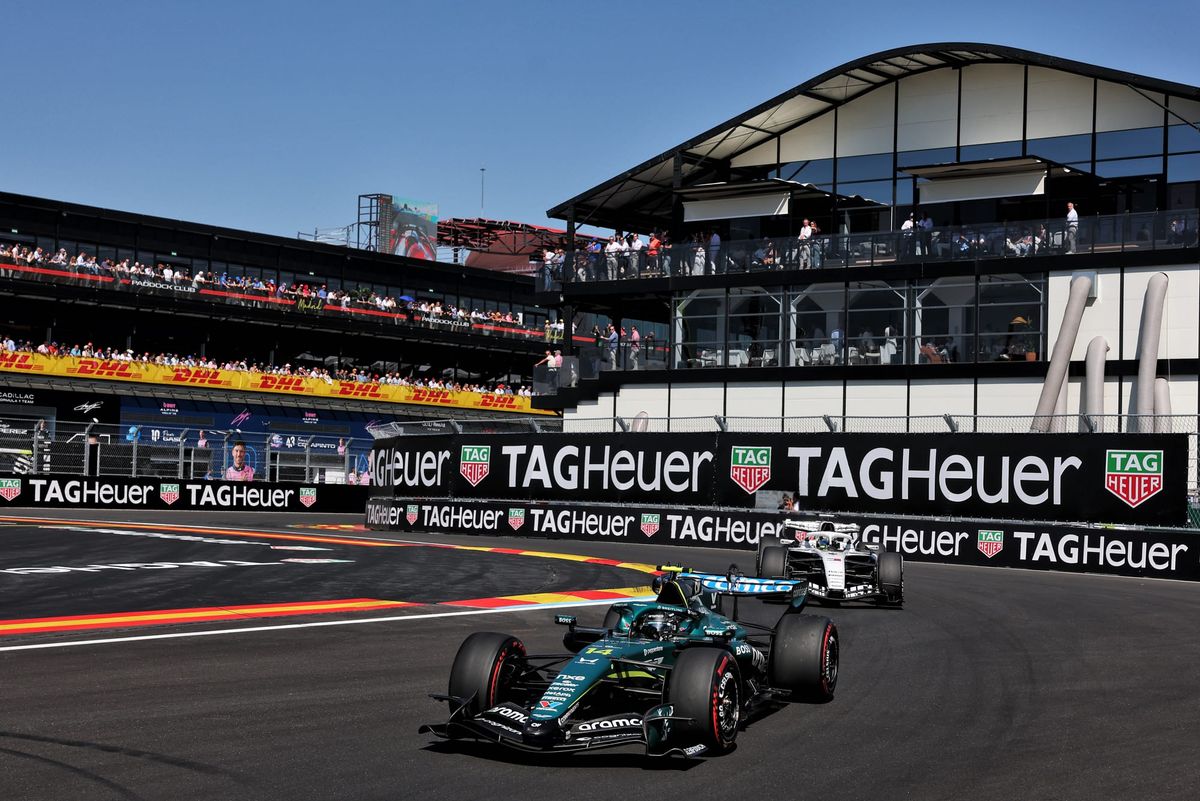
The inaugural 2026 Spanish Formula 1 Grand Prix at the Madring created €544 million in economic activity, supported 10,948 jobs, and generated €95m in tax revenue, according to its organiser.
The Madring is a part-street circuit built around the IFEMA conference centre - with the track layout set to be changed for 2027 to improve the quality of racing and frequency of overtaking.
The grand prix promoter ran a study conducted by PwC showing that, for every €1 of economic activity directly linked to the event, €4.60 was generated across Madrid’s wider economy.
The total economic impact was 16.5% larger than expected, the grand prix supported 23.7% more jobs than anticipated, and the overall tax contribution was 14.5% more than predicted.
In comparison to Madrid’s figure of €544m in economic activity for 2026, the Barcelona GP generated over €300m in local economic activity in 2024, according to its own reports. This was reaffirmed by Barcelona circuit CEO Pol Gilbert as part of the track’s recent extension announcement, where he said that “Formula 1 generates an economic impact of more than €300 million per edition” at the venue.
F1 CEO Stefano Domenicali recently said the US GP at Austin generated “over $1 billion” for the local area in 2026, while the Las Vegas GP has generated over $3.2bn cumulatively for the local area over its three editions.
IFEMA Madrid chairman Jose Vicente de los Mozos said that the figures “confirm the strategic importance the Grand Prix has gained for Madrid’s economy and international profile from its very first edition, generating economic activity equivalent to 0.16% of the Madrid Region’s GDP and 0.30% of the city of Madrid’s GDP”.
The grand prix attracted 353,000 attendees. The survey estimates that 35% of visitors were from overseas and 20% travelling from elsewhere in Spain - meaning 45% were from Madrid and its immediate vicinity.
International visitors spent an average of €2,772 per person over the course of their stay - compared with €1,099 from Spanish visitors and €659 among Madrid residents - with those figures including the estimated average ticket price, which is not stated.
International visitors to the grand prix therefore spent 1.7 times that of an average international tourist to Madrid, and 2.9 times more than an international tourist visiting Spain. Domestic visitors spent 3.8 times more than a domestic tourist would on a trip to the Madrid region.
Local digital publication Democrata found that hotel prices averaged €485 - 70% more than usual - for the grand prix.
Around 49% of visitors stayed in hotels, 32% in short-term rental accommodation, and 19% with family and friends - generating €95m in tax revenues.
Short-term rentals have been a contentious issue for the local area in recent years as, in 2025, the Spanish government cracked down on Airbnbs, removing nearly 66,000 listings across the country and fining the company €64m for illegal listings.
Furthermore, residents local to the Madring protested its environmental and societal impact, including noise concerns.
The survey found that 95.3% of international attendees said the grand prix had ‘enhanced Madrid’s international image’ and 98.1% would recommend Madrid as a tourist destination, with 86% of attendees saying they were likely to return.
PwC partner Jordi Esteve said: “Through extensive fieldwork, we have found that grand prix visitors spend more and stay longer than the average visitor. This is helping Madrid attract high-value tourism, generating greater economic activity and supporting employment.”
PwC conducted 1,102 face-to-face surveys between the Friday and Sunday of the race weekend.